That dead triangle under your staircase is probably the largest chunk of unused space in your home — often 25 to 40 square feet hiding in plain sight. This guide covers under stairs storage ideas that treat the slope as a solvable puzzle: measured height zones, deep pull-out drawers, a closet conversion, shelving for the tall end, hidden nooks, and the lighting that makes it all usable. You will leave with a plan matched to your exact stair dimensions, not a generic wish list.
Measure the slope: zones by height
Before you buy a single bin, spend twenty minutes with a tape measure — everything about under-stair storage depends on clearances, and guessing produces shelves nothing fits under. Measure floor-to-underside height at several points along the slope, the total depth from the front face to the back wall, and the width between any studs, pipes, or electrical runs you can feel through the drywall.
Divide the space into three zones and plan each one separately: the tall end (48 inches and up) for hanging clothes or an office nook; the middle band (24–48 inches) for drawers, pull-out bins, and low bookshelves — most of your capacity lives here; the low wedge (under 24 inches) for rolling flat bins or shoes only.
Check for hazards while you measure: warm spots mean hot-water pipes, and confirm no electrical panel hides inside — code typically requires about 3 feet of clear working space in front of one.
Pull-out drawers for deep under-stair space
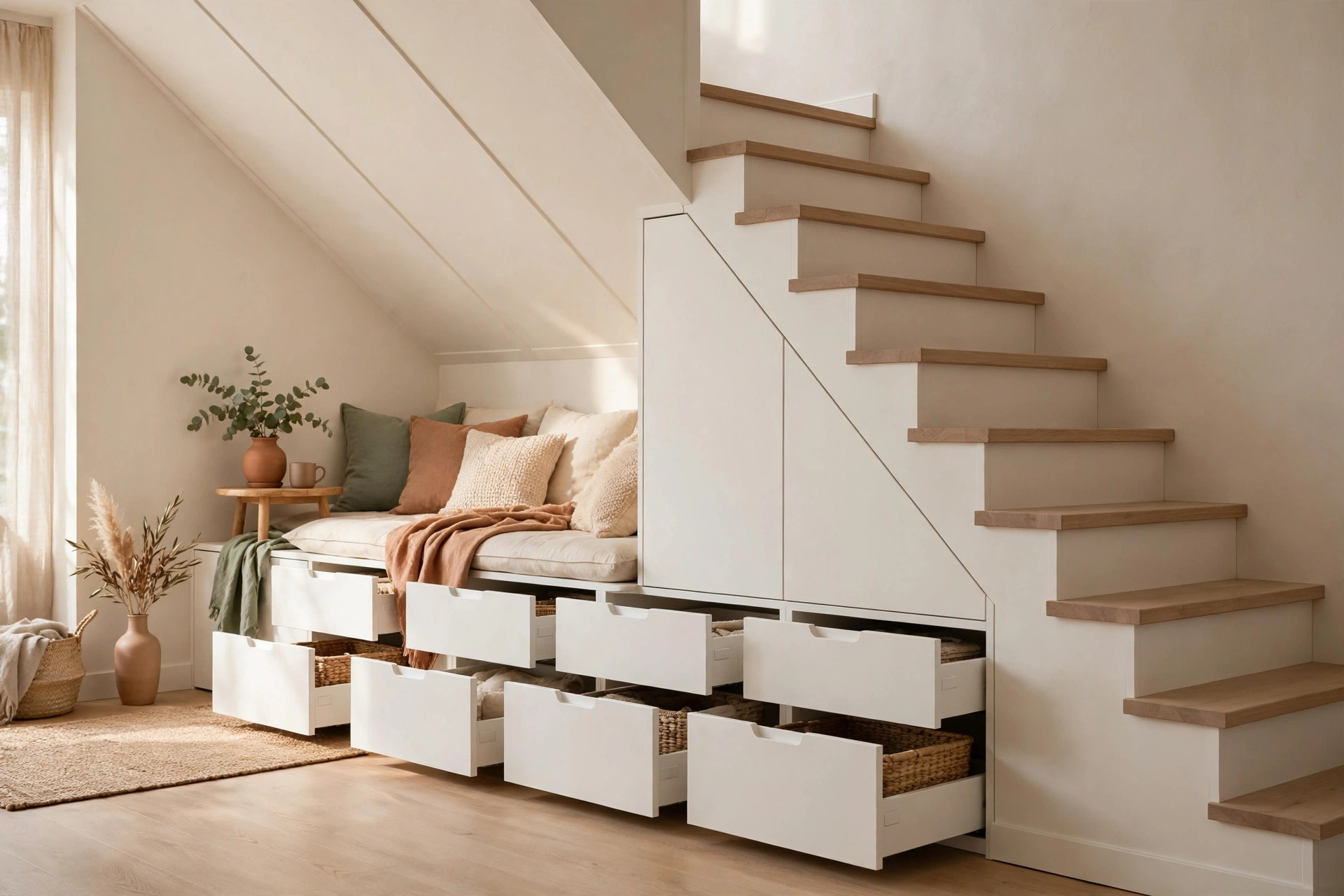
The most functional use of the middle band is pull-out drawers on full-extension slides: they fix the number-one problem of under-stair storage — depth you can’t reach into. A typical under-stair run is 3 to 4 feet deep, so anything set at the back without a slide is effectively lost.
The DIY route is stacked drawer units — unfinished wood drawer chests from a home store, shimmed to match the slope on a leveled plywood base. Three or four graduated boxes, each about 18–22 inches wide, usually fill a standard stair run at roughly $60–$150 per box. The custom route is a carpenter building graduated drawer fronts that follow the slope exactly, with push-to-open hardware.
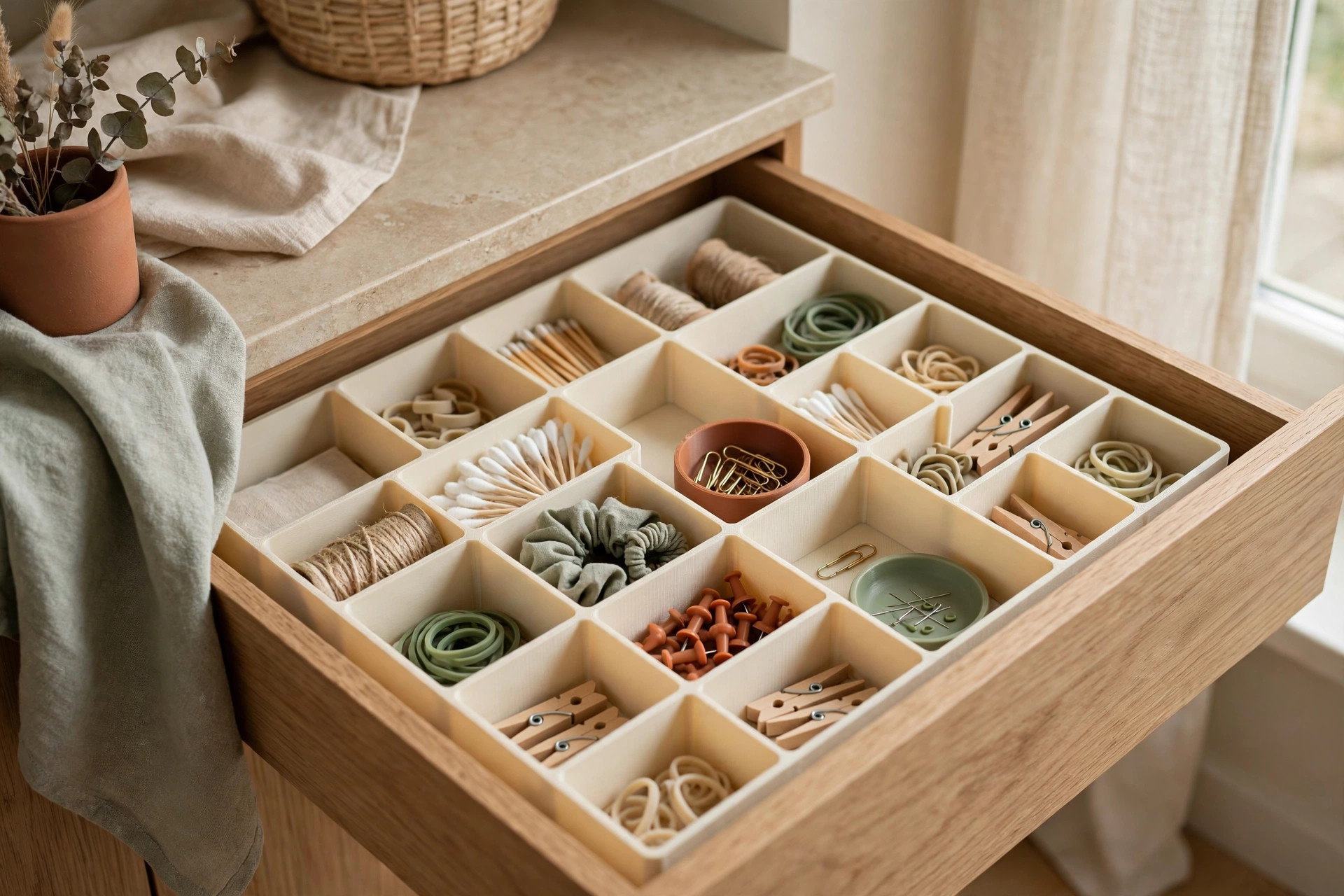
Size drawers to their contents: deep drawers (10–14 inches tall) for board games, off-season clothes, and wrapping-paper rolls laid diagonally; shallow drawers (4–6 inches) for batteries, chargers, and junk-drawer overflow. Line drawer bottoms with adhesive liner — wood drawers in a dusty space get grimy fast, and wipeable liner beats sanding.
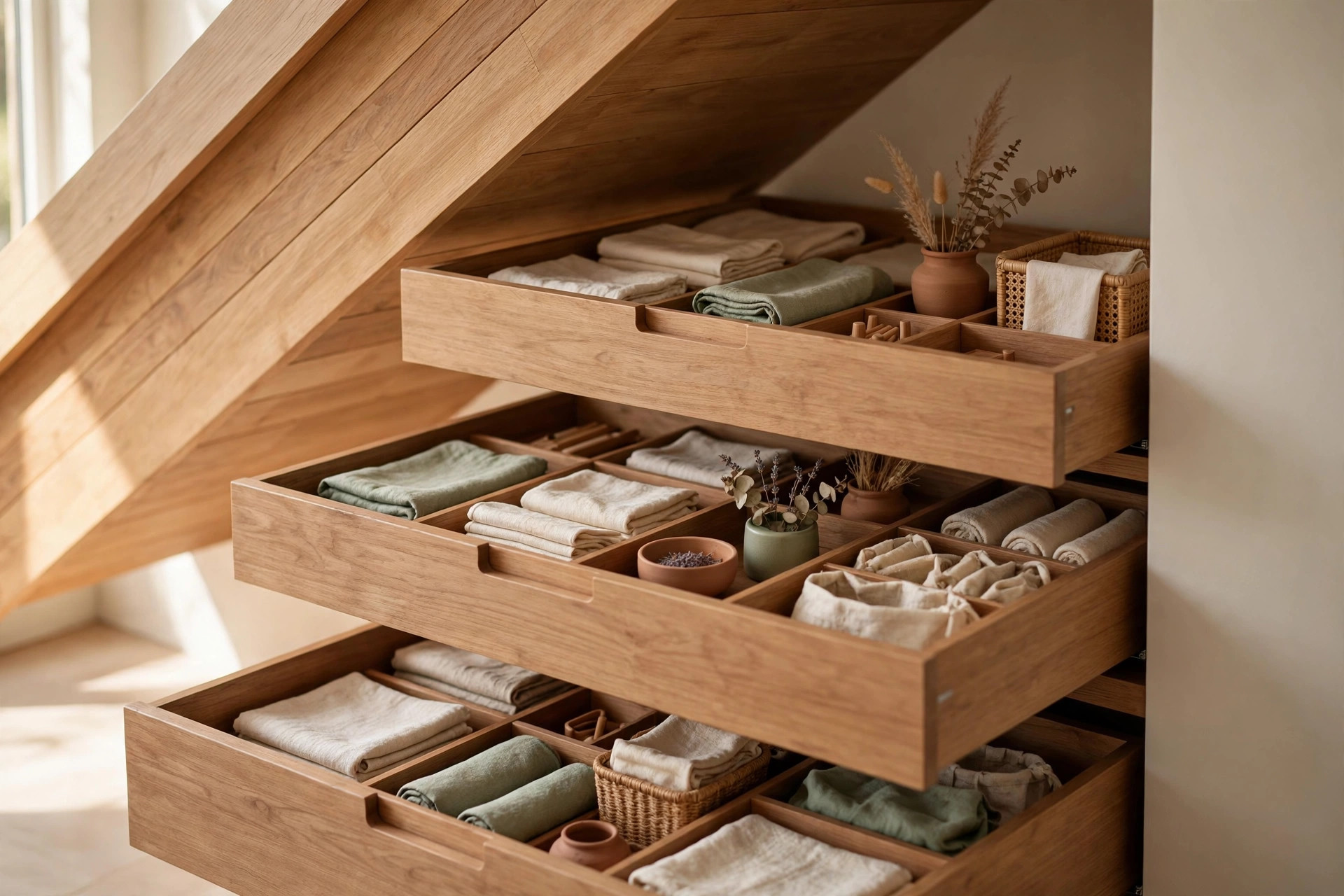
If drawers feel like too much construction, use rolling flat bins on casters in the low wedge plus a row of pull-out wire baskets in the middle band — the same reach-in principle with less carpentry. Our guide to 17 Under Bed Storage Ideas for Small Bedrooms covers low-clearance rolling storage, and most of those bins work identically under stairs.
The under-stair closet conversion
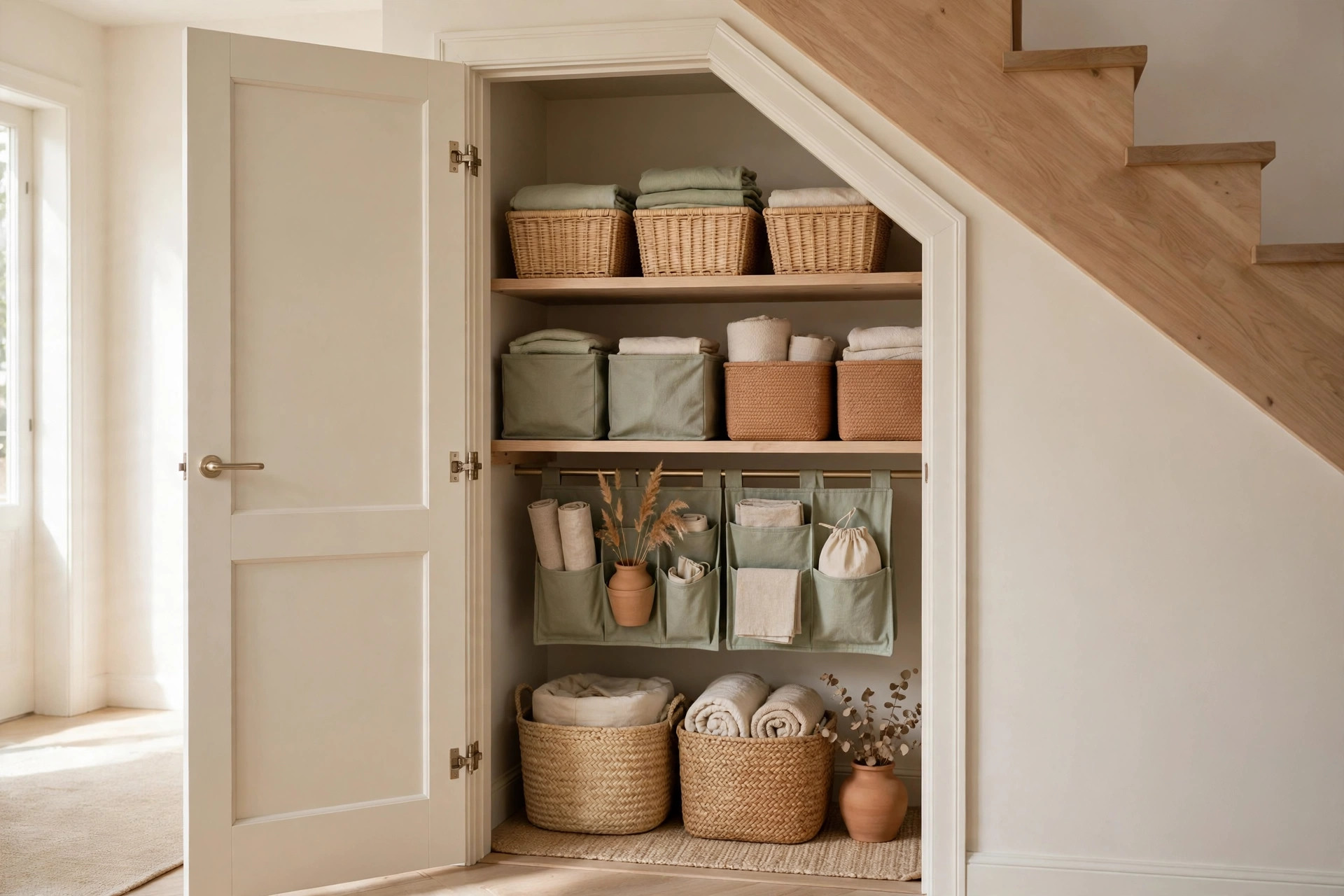
Turning the tall end into a real closet gives you under stairs closet organization that behaves like a normal storage room instead of a crawlspace. One enclosed closet at the tall end can replace an entire freestanding wardrobe in a small home.
Fit a 24-inch slab or louvered door to keep dust out and make the space feel intentional. Louvered doors are worth the small premium — under-stair spaces trap humidity, and airflow keeps coats and shoes from going musty. Inside, use the standard formula: rod for hanging (about 60 inches for coats, 40 for shirts), a shelf above for luggage, shoe storage on the floor — plus a motion-sensor puck light from day one, since a dark closet becomes dead space within a month.
Renters: check your lease before cutting drywall, but most landlords approve a freestanding wardrobe-style enclosure or a tension-rod-and-curtain version since it’s removable. For fully removable systems, our 17 Renter-Friendly Closet Organization Ideas (No Drilling Required) shows how to get real closet function with zero permanent changes.
Open shelving for the tall end
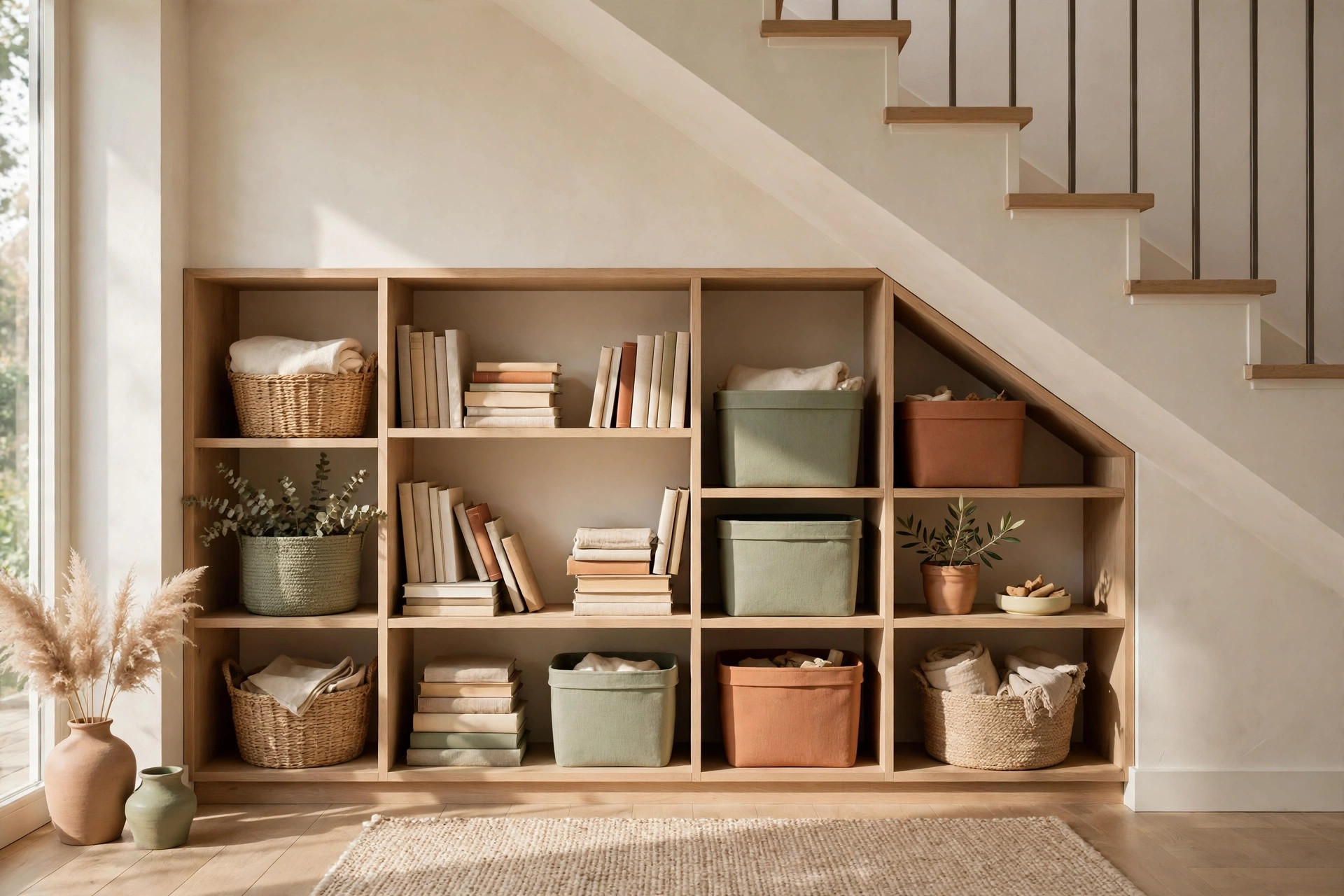
If you don’t need a closed closet, open shelving at the tall end turns the staircase wall into display and daily-use storage. This works especially well on entry-adjacent staircases, where the tall end sits right where you walk in — it absorbs coats, bags, and keys that would otherwise colonize your hallway. For more on taming that zone, see our 15 Small Entryway Organization Ideas (Even With No Foyer).
Build or buy graduated shelves that step up with the slope — each about 10–12 inches deep, spaced 12–16 inches apart, anchored into studs because a shelf full of books on drywall anchors alone is an accident waiting to happen. Closed woven baskets go on the lower shelves for the clutter you don’t want to see (chargers, mail, cleaning supplies); open display above: low-light plants like pothos, a few books, one decorative object per shelf.
Leave breathing room — packing every shelf edge to edge reads as visual noise. Aim to fill roughly 70 percent of each shelf. If your stairs open onto the main living area, paint the shelving to match your trim so it reads as architecture, not furniture.
Hidden nooks: reading, office, bar
Here the under-stair space stops being storage and starts being square footage — the tall end of a standard staircase is roughly 4–5 feet wide and 6-plus feet high at the tallest point.
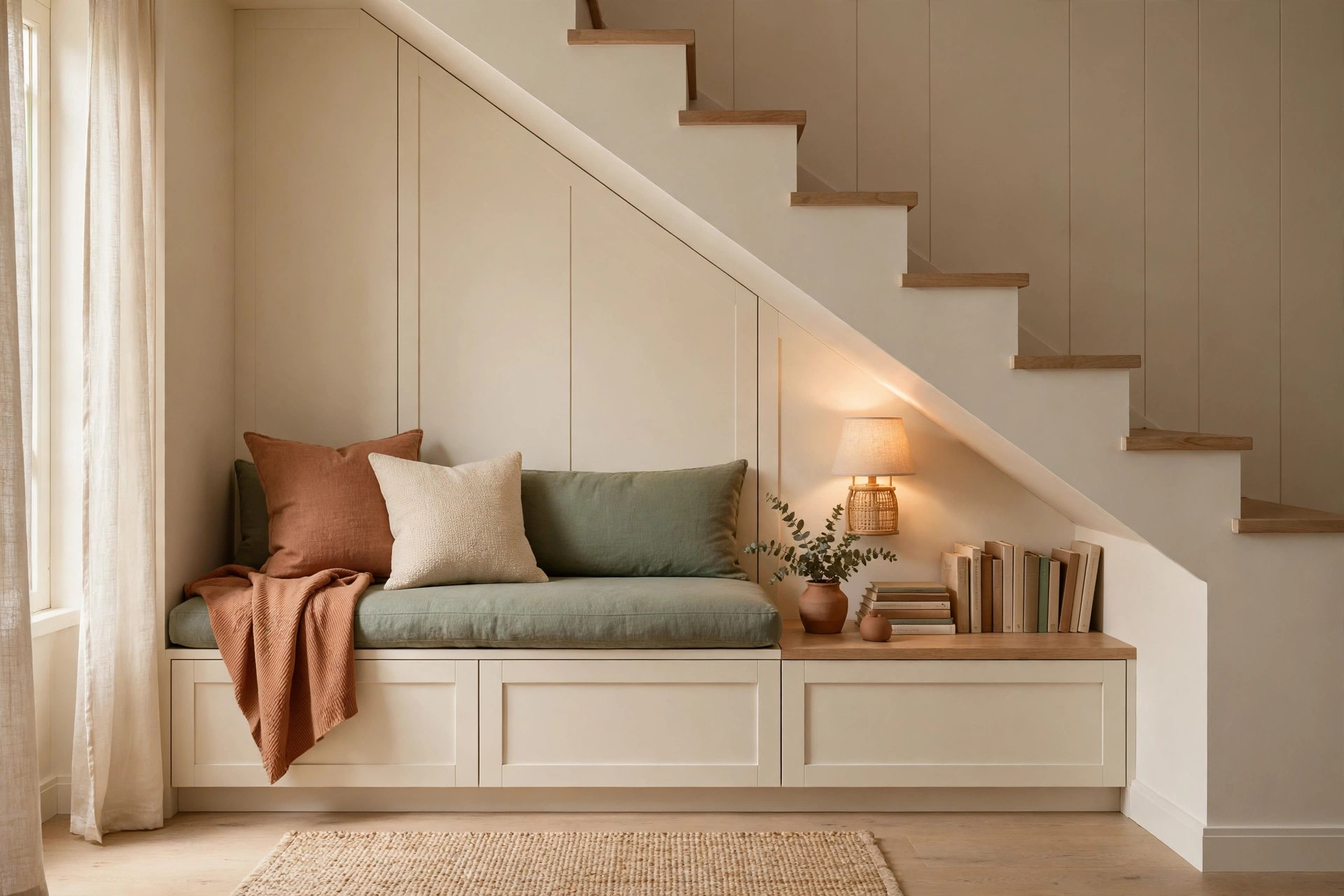
The reading nook is the simplest win: a cushion or low bench seat (about 18 inches deep) along the back wall, a wall-mounted reading light, one narrow shelf for a book stack, and a curtain on a tension rod.
The hidden office fits a floating desk 20–24 inches deep and about 36 inches wide in the tall end, with a compact chair that tucks fully under. Run power through a surface-mounted cable channel — cutting into stair structure for outlets is a job for a professional. Our Small Home Office Organization in a Corner covers desk zones, cable control, and paper systems for a nook this size.
The bar or coffee station: a countertop-height cabinet (34–36 inches) in the tall end with glassware on a graduated shelf above. Plumb nothing — a self-contained setup avoids permits and leaks. Insulate the underside of the stairs above any nook: stair treads transmit every footstep.
Lighting awkward spaces
Natural light doesn’t reach under stairs, so layer it: an LED strip along the underside of each stair tread or shelf edge for task light, plus one brighter source at the tall end (a motion-sensor puck or small flush-mount fixture) so the space is visible the moment the door opens. Motion sensors are nearly mandatory here — your hands are full whenever you reach under stairs.
Choose warm light (2700–3000K). Cool white LEDs in a windowless wedge feel like a basement interrogation room; warm light makes wood tones glow and the space feel larger. If you do one thing, add motion-sensor strip lights along the shelf edges — peel-and-stick, rechargeable via USB, roughly $15–$30 per strip.
What not to store under stairs
Not everything belongs here, no matter how well you organize it. Under-stair areas run warmer, dustier, and damper than the rest of the house, and they’re often the least fire-safe storage you own.
Keep out: paint cans, solvents, cleaning chemicals, and anything flammable — heat plus a confined space is a bad combination, and stored fuel under your primary escape route is exactly what you don’t want in a fire. Skip important documents and photo originals; a burst pipe or roof leak hits low enclosed spaces first. Don’t store anything needing stable temperature or humidity: electronics you care about, or leather goods that will mildew. Keep the stairway itself clear — fire codes treat the stair path as a protected escape route.
Safe bets: hard goods, sports equipment, board games, wrapping supplies, off-season coats in sealed bins, luggage, and cleaning tools — anything in airtight containers you access weekly or monthly.
Mistakes to avoid
Building before measuring. Every failed under-stair project started with a unit that was two inches too tall or a shelf plan that ignored the slope. Tape measure first, shopping second.
Sealing it up without ventilation. A fully enclosed closet with a solid door and no airflow becomes a musty box within a season. Louvered doors or a vent grille solve it.
Ignoring the structure. Staircases carry load. Never cut stringers, notches, or support posts to gain storage depth — the repair costs far more than any space you gain. If a project involves cutting into the stair structure, get a contractor’s opinion first.
Making the deep parts unreachable. The number-one design error is deep fixed shelving with no slides, drawers, or wheels. Full-extension hardware on everything deeper than 18 inches.
Forgetting dust. This space collects dust faster than any closet in the house. Choose closed fronts or lidded bins for anything you don’t use weekly, and wipe surfaces twice a year.
Frequently asked questions
How much does under stairs storage cost?
A simple setup — rolling bins and a tension-rod curtain — runs roughly $50–$150. DIY graduated drawers land around $200–$500 for a full stair run. A custom carpenter-built system typically starts around $1,500.
Can I put a closet under the stairs if I rent?
Usually yes, with a removable approach. A freestanding wardrobe-style frame or tension-rod shelving with a curtain gives you real under stairs closet organization without touching the structure — check your lease first. Battery-operated lighting keeps the whole project damage-free.
How do I keep under stairs storage from getting dusty?
Use closed fronts, lidded bins, or doors wherever possible — open shelving here needs dusting far more often than a regular bookshelf. Wipe drawer tops and shelf edges twice a year, and add a vent or louvered door so stagnant air doesn’t settle.
What is the minimum height for usable under stairs storage?
Above about 24 inches of clearance you can fit pull-out drawers or low bins; the 12–24 inch wedge fits flat rolling bins and shoes; below 12 inches is effectively dead space. Hanging clothes needs roughly 40 inches for shirts and 60 for coats — only the tall end.
In a small home, the under-stair triangle is one of the few genuinely free square-footage gains left. Measure the three height zones, match each zone to its best use, light it, and keep the flammables and heirlooms out. Browse more in our storage ideas collection, and save this pin for later so your measurements are on hand when you’re ready to build.