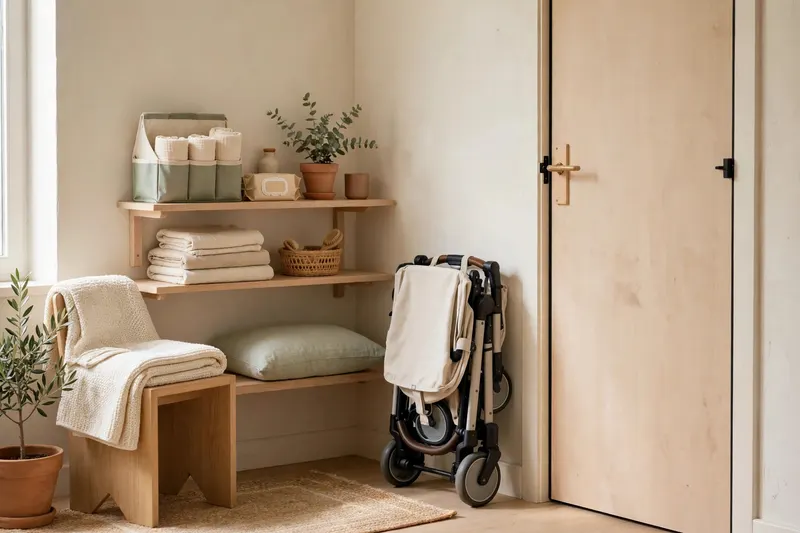
Small apartment shared laundry organization is a different skill from organizing a laundry room you own. You have no machines, no shelves, and no permanent spot for anything. Every load means a trip down the hall or downstairs with everything you need, and back again. A system that depends on a room you do not control falls apart the first week someone else is using the only working washer.
The fix is a portable system: one caddy that holds every supply, one sorting hamper that travels with you, and a drying rack that folds flat when you are done. These 15 ideas build that system, so laundry day becomes a routine you run on autopilot.
The shared-laundry problem: no machines of your own
A shared laundry room gives you access to machines, not ownership of the space. You cannot leave detergent on a shelf or count on the same machine being free twice in a row. Your system must live in your apartment and travel with you, so everything stays light, compact, and ready to grab.
1. Accept that your apartment is the laundry room
Stop waiting for a free shelf in the shared room and build your storage at home. Pick one spot near your front door or closet — a 12-inch-wide shelf, the top of a dresser, or a single storage cube — and make it laundry headquarters. Every supply lives there, so you never hunt for detergent five minutes before a machine frees up.
2. Time your loads around the room, not the other way around
Watch the shared room for one week and note when machines sit empty — usually weekday mornings before 9, afternoons between 2 and 4, and late evenings after 9. Pick two regular slots and treat them as appointments, so you never haul a full hamper down to find every washer running.
The carry-down caddy: one kit, every trip
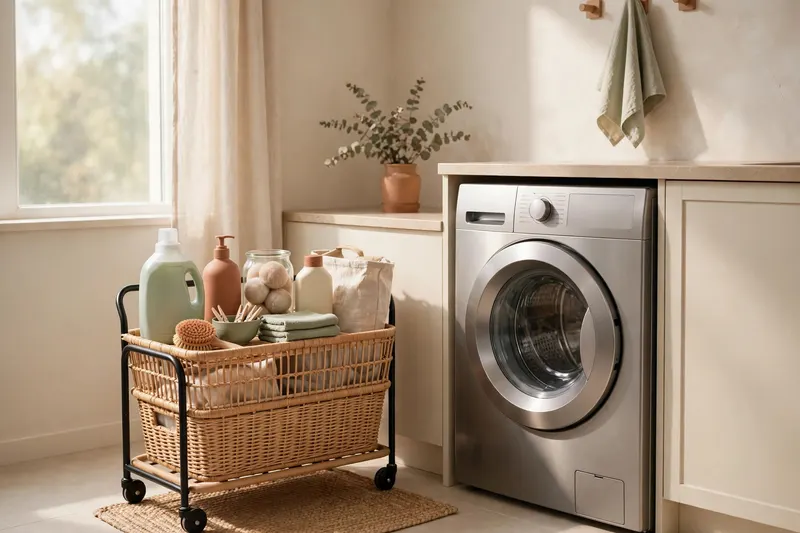
The caddy is the heart of the whole system. If your supplies are scattered across three cabinets, you will forget something every trip. One container holding everything turns laundry into a single grab-and-go motion.

3. Build one caddy with a handle and a flat bottom
Choose a sturdy handled bin about 12 by 8 inches with a flat bottom so it stands on a washer without tipping. Inside, keep only what one load needs: a small detergent bottle or a week’s worth of pods in a sealed jar, a stain stick, a mesh bag for delicates, and a handful of dryer balls. Keep the caddy packed between loads: grab it, grab the hamper, and go.
4. Keep a “forgot it” checklist taped inside the caddy lid
Tape a short list inside the lid — detergent, stain stick, mesh bag, quarters or laundry card, dryer balls — and glance at it before you leave. This two-second check replaces the mid-cycle trip back upstairs. A payment card lives in the caddy too, never in a jacket pocket.
Portable sorting: hampers that travel
Sorting at home saves time where counter space is limited and others are waiting. The right hamper sorts for you before you leave the apartment.
5. Use a divided hamper with two or three compartments
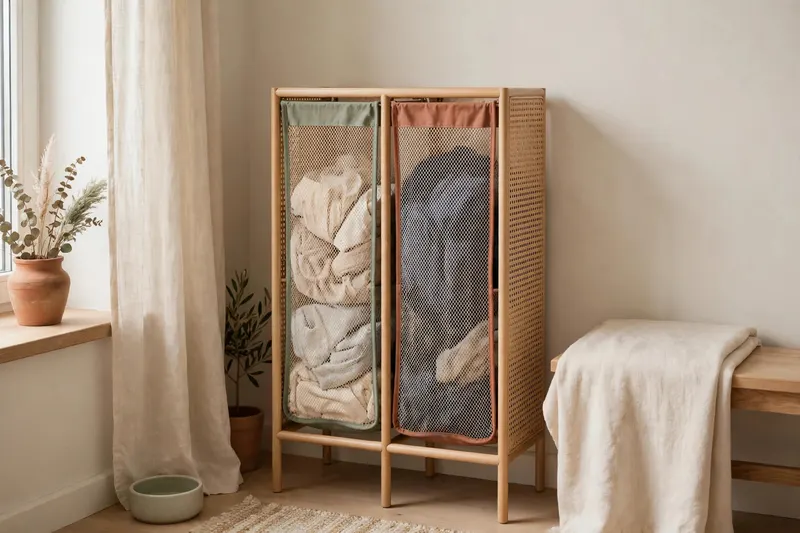
A divided hamper with sections for lights, darks, and delicates means a load is sorted the moment you fill it. Look for a slim model, about 22 inches tall and 15 wide, with removable bags that lift out individually. You carry one bag down, not the whole hamper.
6. Add a collapsible hamper for the trip back
A second, collapsible hamper folds to under 2 inches thick and lives in your main hamper or on a hook by the door. Use it for clean clothes on the trip back, while the dirty bag goes straight into the wash, so clean and dirty laundry never share the same bag.
Drying without a dryer: racks that fold flat
Dryers in shared rooms cost money per cycle, break down, and are often busy. A folding rack in your apartment is a free backup that works on your schedule, not the building’s.
7. Choose an accordion rack that folds to 3 inches flat
An accordion-style rack opens to about 30 inches wide, holds a full load of shirts and underwear, then folds flat enough to slide behind a door or under the bed. Set it up near a window or fan for airflow, with heavier items like jeans on the outer bars where they get the most air.
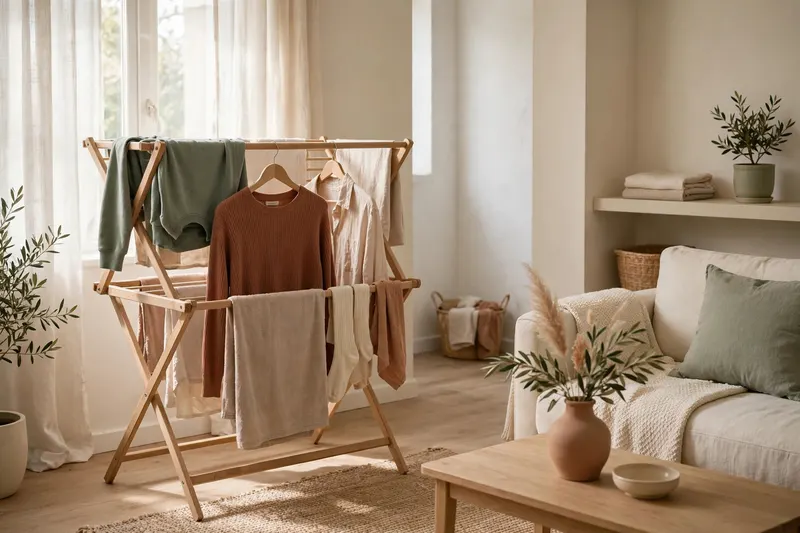
8. Dry delicates on a mesh sweater rack that hangs on a door
A mesh rack that hangs over a door needs zero floor space and keeps sweaters and bras flat so they hold their shape. Hang it inside a closet or bedroom door, lay items flat across the tiers, and take it down when dry. It weighs almost nothing and saves delicates from the shared dryer’s high heat. For more drying ideas, 16 Laundry Room Wall Organization Ideas for Small Laundry Spaces shows how renters use vertical space without drilling.
Stain and supply kit: what lives in the caddy
A shared laundry room has no supply shelf to borrow from, so your caddy must carry the full kit: a small, complete set that handles common problems without weighing five pounds.
9. Stock a five-item stain kit and nothing more
Five items cover nearly every stain: a stain-removal stick, a small bottle of oxygen-based stain remover, a white vinegar spray for odors, a clean white cloth for blotting, and a travel-size bottle of dish soap for grease spots. Keep them in a zip pouch inside the caddy so they do not leak onto detergent. For a tidy home base, 15 Cleaning Supply Storage Ideas for Small Apartments (No Cluttered Closet) has caddy and door-rack setups for the same small footprint.
10. Measure detergent at home, not in the shared room
Pre-measure detergent into small reusable containers or use single-dose pods, one per load. Measuring at the machine wastes time, risks spills on a shared counter, and tempts you to pour too much, leaving residue on clothes and in machines others use. Keep a week’s pods in a small jar in the caddy; refill it Sunday night.
Timing and etiquette: the shared-room rules
Shared laundry works only when everyone follows the same unwritten rules. Good etiquette protects your clothes and your time.
11. Set a phone timer and return before the cycle ends
Set a timer for five minutes before your washer or dryer finishes, and be back when it stops. Clothes left in a machine block the next person and invite someone to move them. A phone alarm costs nothing and prevents nearly every conflict in the room.
12. Leave the room cleaner than you found it
Wipe the washer rim and lint trap, pick up dropped socks or dryer sheets, and pack your caddy before you leave. Shared spaces stay usable only when everyone does a 30-second reset — the nightly reset in 16 Small Bathroom Storage Ideas for Shared Bathrooms (No More Counter Wars) works the same way.
Folding and putting away in a small apartment
The trip back upstairs is where clean laundry becomes clutter. Without a folding plan, clean clothes sit in the hamper for three days and you live out of a bag. A short folding routine closes the loop.
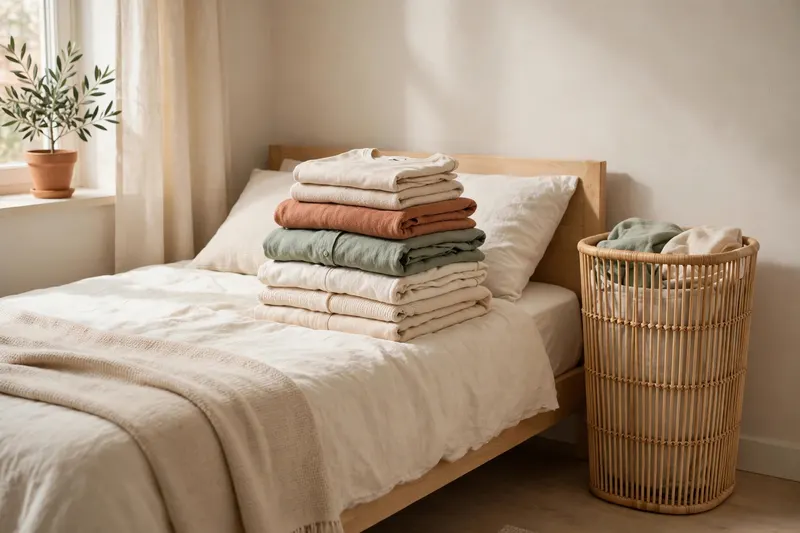
13. Fold on the bed the moment you get home
Put the clean load on the bed and fold it before anything else. Folding on a flat, waist-high surface takes about eight minutes per load and keeps wrinkles from setting in. Start with the biggest items, stack by category, and carry each stack to its drawer.
14. File-fold clothes into drawers instead of stacking them
File folding — standing clothes upright like files — lets you see every item and pull one out without disturbing the stack. Fold shirts into 6-inch-wide rectangles, stand them in rows, and use a divider or shoebox to keep rows upright. One dresser drawer holds roughly twice as many file-folded shirts as stacked ones.
15. Do a two-minute put-away before the next load
Before the next load, spend two minutes putting away anything still out from the last one: hang the jacket, shelve the folded stack, return the caddy to its spot. This tiny reset means the next trip starts from a clean slate, not a pile.
Mistakes to avoid
Leaving wet clothes in the washer. Even 30 minutes wet breeds mildew smell that survives a second wash. Set the timer and show up.
Overfilling the shared washer. A drum packed past three-quarters full does not clean properly and wears out machines everyone shares. Split big loads into two.
Using too much detergent. More soap does not mean cleaner clothes. It leaves residue and wastes money. One measured dose per load is enough.
Leaving supplies in the shared room. Anything left behind will be borrowed, moved, or thrown away. Your caddy goes home with you every time.
Washing everything on hot. Hot water shrinks cotton and fades colors. Cold water handles most everyday loads and protects your clothes longer.
Frequently asked questions
How do I organize laundry in a small apartment with a shared laundry room?
Build a portable system: one packed caddy, one divided hamper that sorts at home, and a folding rack that stores flat. Everything lives in your apartment and travels with you.
What should I put in an apartment laundry caddy?
A small detergent bottle or a week’s pods, a stain stick, a mesh bag for delicates, dryer balls, and your laundry card or quarters, plus a five-item stain kit in a zip pouch. Keep the caddy packed between loads.
Can I air-dry clothes in a small apartment?
Yes. An accordion rack that folds to about 3 inches flat holds a full load and slides behind a door when not in use. Place it near a window or fan, and use a mesh rack over a door for sweaters and delicates that should dry flat.
How long can I leave clothes in a shared washer or dryer?
No longer than the cycle itself. Set a phone timer for five minutes before it ends and return on time. Left sitting, clothes block the next person, smell of mildew within about 30 minutes, and risk being moved.
What is the best hamper for shared laundry?
A slim divided hamper with two or three compartments and removable bags: sort at home, carry one bag down per load, and pair it with a collapsible hamper for the clean trip back.
Wrapping up
Shared laundry works when the system is portable: one caddy, one sorting hamper, and a rack that folds away. Pick two regular time slots, pack the caddy the night before, and fold on the bed the moment you get home. Save this pin for later, and browse more ideas in the small-spaces category.