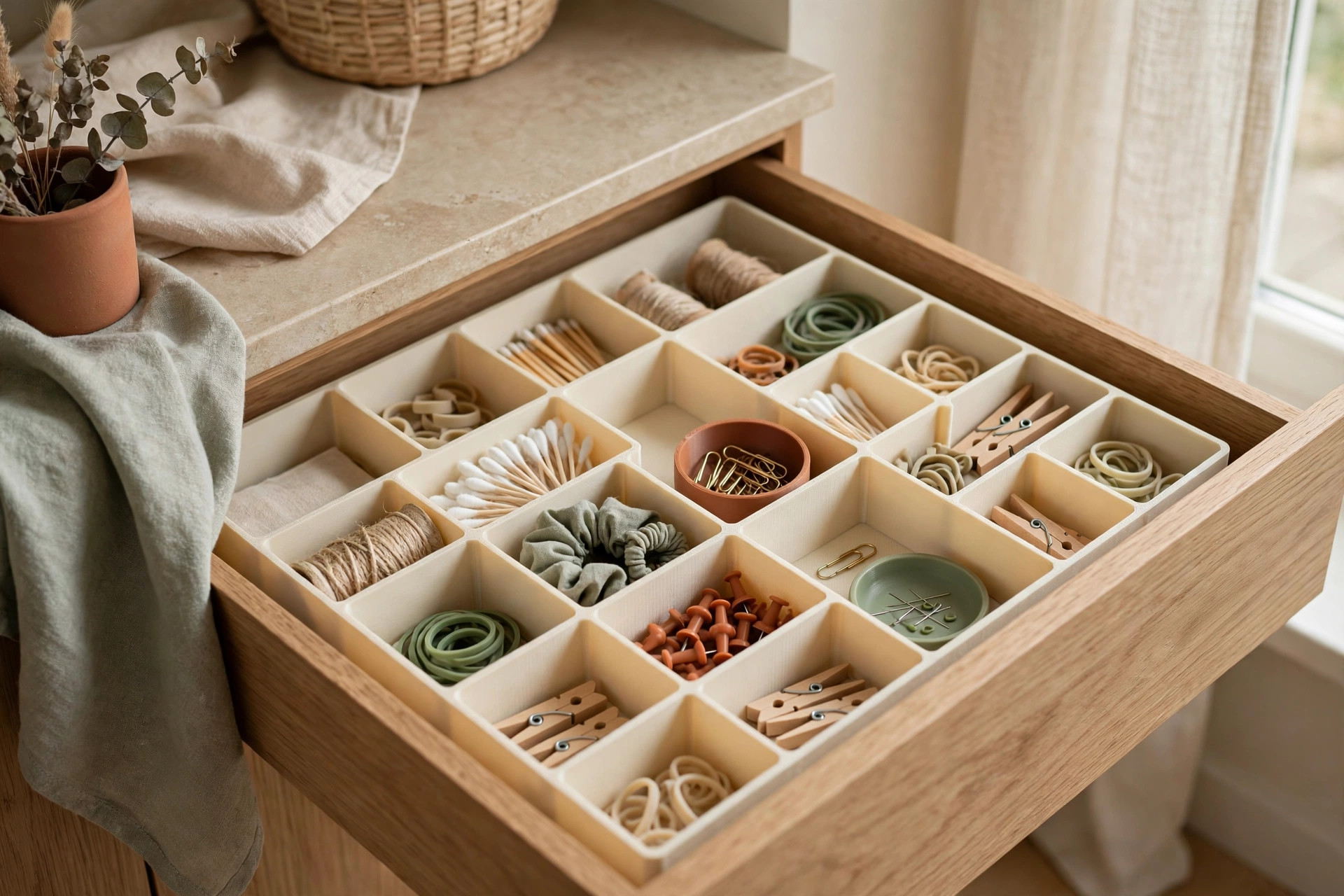
If your closet is bursting with heavy coats in July and sandals in January, the problem is not that you own too much — it is that every season is competing for the same small amount of space at the same time. A small apartment seasonal storage rotation solves this by giving each season its turn: only the current season lives within easy reach, and everything else waits in a labelled, out-of-the-way home until its turn comes back. Done twice a year, this swap keeps your closet breathable and your mornings faster. Below are 18 practical ideas that build one complete rotation system, from the first swap weekend to the rule that keeps it from creeping back into chaos.
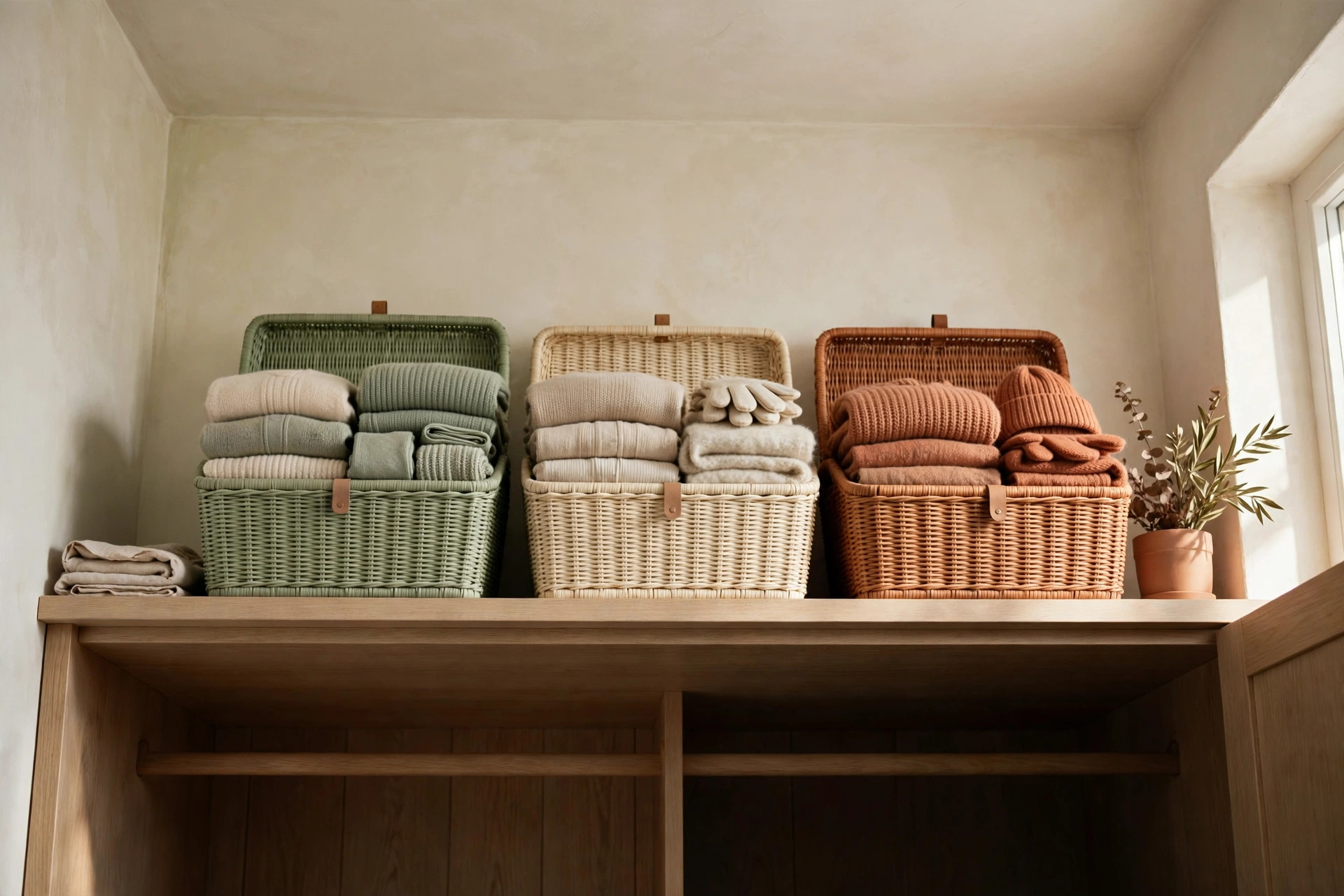
The rotation rule: only the current season lives within reach
The whole system rests on one rule: prime real estate — your closet rod, your most-used drawers, and your entryway hooks — belongs only to what you are actually wearing and using right now. Everything else moves to a secondary home, so the things you need today are easy to grab and easy to put back.
1. Define your two seasons, not four
Most small apartments work best with two rotations — warm season and cool season — rather than four separate ones. Rotating four times a year doubles the work and leaves you swapping lightweight jackets every few weeks. Pick two swap dates that suit your climate, such as late October and late April, and treat shoulder-season pieces (a light jacket, one cardigan, one pair of closed shoes) as year-round residents that never rotate.
2. Give every item a “current” or “stored” verdict
During your first swap, hold each item and decide: have I worn or used this in the past month, or will I in the next month? If yes, it stays; if no, it goes into storage. Grey-zone items — worn once, might wear again — get one season in storage; if you never go looking for them, they are donation candidates at the next swap.
3. Keep one “bridge box” for unpredictable weather
Weather rarely respects your swap date. Keep one small, clearly labelled bridge box near the front of your storage area with two or three transitional pieces: a light jacket, a scarf, and a pair of closed shoes in the warm season, or a lighter layer and sunglasses in the cool season. When an unseasonal cold snap or heatwave hits, you open one box instead of tearing through every bin.
The twice-a-year swap: a step-by-step weekend plan
A rotation swap sounds like a big project, but with a plan it takes about two to three hours, and most of that is deciding, not hauling. Block a Saturday morning and work in this order so you never end up with clothes on every surface at midnight.
4. Empty one zone completely before you refill it
Do not try to swap by shuffling items around inside a full closet. Take everything off the rod and out of the main drawers first, wipe the shelves, and sort items into three piles on the bed: current season, off-season, and donate or repair. An empty closet forces honest decisions and shows exactly how much rod and shelf space the current season needs.
5. Wash, dry, and repair before anything goes into storage
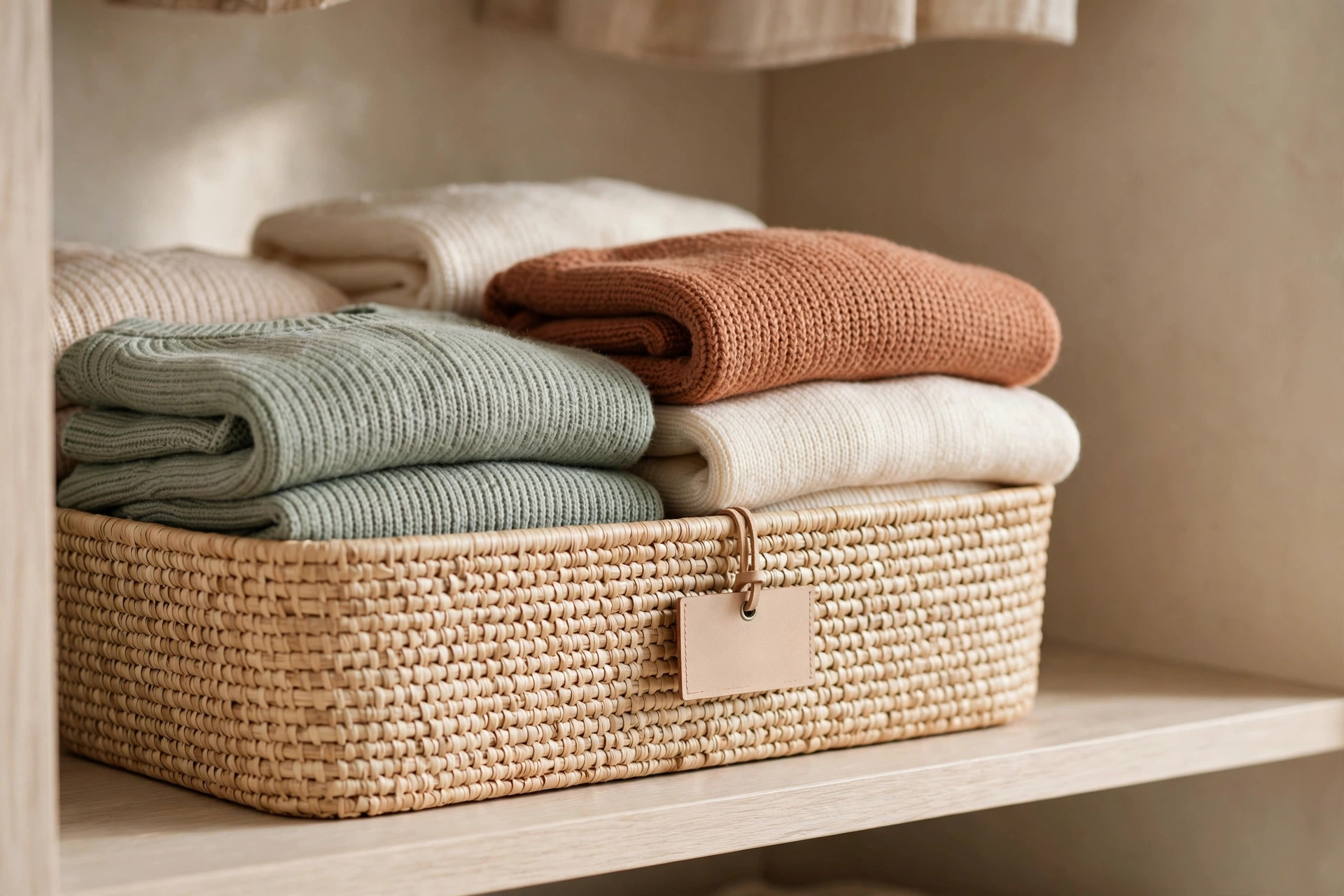
Off-season clothes stored dirty come back stained, musty, or moth-damaged. Wash or dry-clean everything going into a bin, make sure it is fully dry, and fix loose buttons or small tears now — a six-month wait turns a loose button into a lost one. Slip a cedar block or lavender sachet into each bin to discourage moths.
6. Swap in this order: closet, drawers, entryway, decor
Work from the most-used zone outward. First the closet rod and shelves, then dresser drawers, then the entryway hooks and shoe area, and finally seasonal decor and gear. This order means that even if you run out of time, the spaces you use every morning are finished, and the remaining decor swap can wait a day without disrupting your routine.
Labelled bins that actually get found again next year
A bin without a useful label is just a box you will dread opening. The goal is that six months from now, you can read one label and pull exactly the right bin on the first try — no unstacking, no guessing, no “winter stuff (maybe).”
7. Label by season and contents, not by vague category
“Winter” is not a good enough label when you own three winter bins. Write the season plus the two or three main contents, for example “Cool season — heavy coats, scarves, gloves” or “Warm season — swimwear, shorts, sandals.” Put the label on the short end of the bin, not just the lid, so you can read it while bins are stacked on a shelf.
8. Use one bin size so bins stack safely
Mixed bin sizes create wobbly towers and wasted gaps. Choose one stackable size that fits your storage spot — a roughly 16-by-11-by-12-inch bin works on most closet top shelves and under most beds — and buy the same bin for every season. Same-size bins stack flush, slide in and out without catching, and make it obvious at a glance if you have added a bin you do not have room for.
9. Keep a one-page rotation list on top of the stack
Tape a simple list inside the lid of the top bin, or keep it in a notes app: which bins exist, what is in each, and where they live. When you buy a new winter coat mid-season, add it to the list instead of trusting your memory. This list is also what makes the next swap fast — you are following notes from your past self, not re-inventing the system.
Closet rotation: coats, shoes, and accessories by season
Clothes are the biggest part of any rotation, and also where most systems fall apart, because coats, shoes, and accessories all need slightly different handling. Treat each group on its own terms.
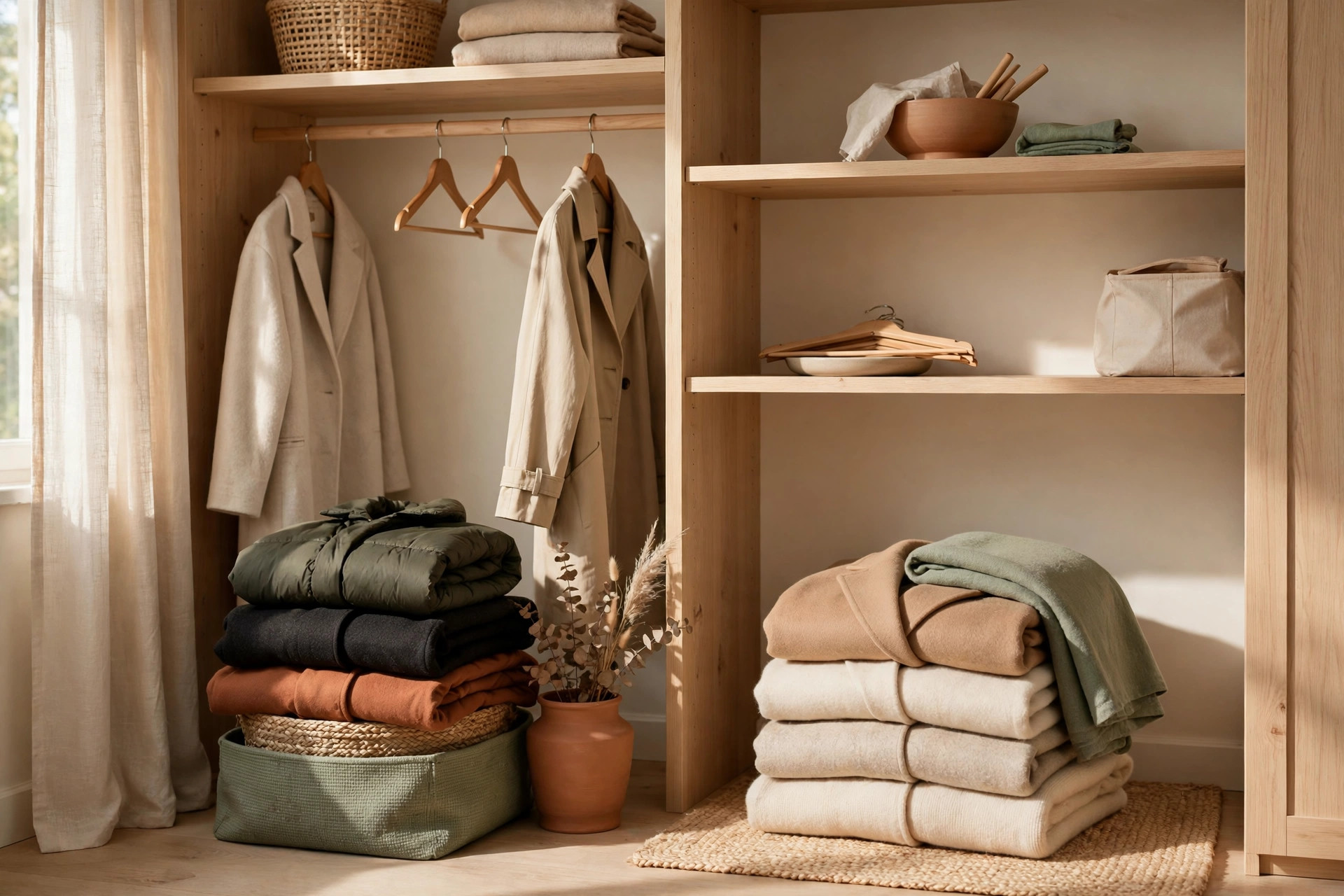
10. Rotate coats by weight, not by calendar date
Hang only the coats you will reach for this season: heavy wool and puffer coats in the cool season, rain jackets and light layers in the warm season. Use slim, matching hangers so coats take up less rod space, and store off-season coats in a garment bag or large bin rather than on a second rod, which just moves the crowding elsewhere. If a coat has not been worn for a full season, it is a donation candidate, not a storage candidate.
11. Swap shoes in complete sets, and clean them first
Shoes are the fastest way to lose a closet to clutter because pairs accumulate at the door. At each swap, move the whole off-season set — boots in spring, sandals in autumn — into one labelled bin, cleaned and stuffed with paper to hold their shape. Keep only the current season’s daily pairs by the door, ideally no more than three or four pairs per person, plus one pair of all-weather shoes. For more shoe-specific layouts, see Shoe Storage Ideas for Small Apartments.
12. Corral accessories in small labelled pouches inside the bin
Scarves, gloves, hats, and belts vanish inside big bins. Pack each accessory group in its own zip pouch or small fabric bag, labelled by type, and place the pouches on top inside the seasonal bin so they are the first thing you see when you open it. One pouch for winter accessories and one for summer accessories is usually enough, and it stops the familiar hunt for the one missing glove every November.
Off-season homes: top shelves, under-bed, and high zones
In a small apartment, off-season storage has to live in the “dead zones” — spaces you cannot comfortably use every day. The trick is choosing zones that are out of the way but still reachable without a ladder.
13. Claim the top shelf of every closet first
The top shelf of your bedroom or hall closet is the best off-season home in most apartments: it is dry, dark, and out of daily reach, but you can still get a bin down with a sturdy step stool. Reserve it strictly for seasonal bins, not for everyday overflow, or it will fill up with things you need weekly. If the shelf is deep, store bins two deep with the next season’s bin in front. For a full rundown of what fits underneath instead, see Under-Bed Storage Ideas for Small Bedrooms.
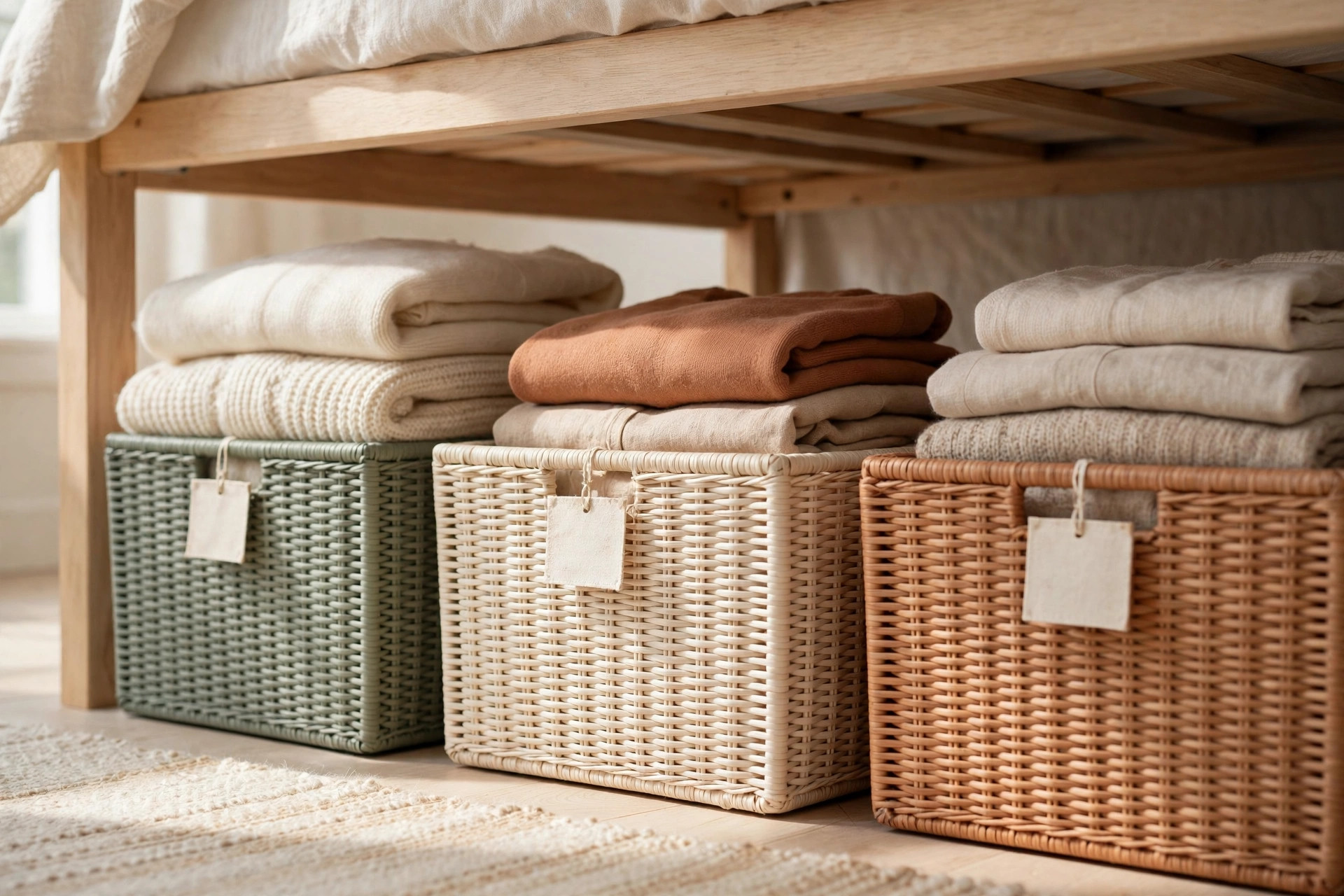
14. Use flat under-bed bins for bulky soft items
Under-bed space is ideal for the soft, bulky things that eat closet space: off-season bedding, heavy sweaters, and puffy jackets in flat, lidded bins or vacuum-sealed bags. Measure your bed clearance first — many bed frames give you only about 6 to 8 inches — and choose low-profile bins with wheels or handles so you can pull them out without moving the bed. Keep one under-bed bin per season so you never have to dig through summer clothes to reach winter ones.
Seasonal decor and gear without a storage unit
Clothes get most of the attention, but seasonal decor and gear — holiday decorations, beach bags, fans, and heaters — are what quietly fill the remaining corners. They need the same rotation logic, just with sturdier bins and stricter limits.
15. Give decor one bin per holiday, and nothing more
Holiday decor expands to fill whatever space you give it, so give it a hard limit: one medium bin per holiday, or one bin total if your apartment is very small. When the bin is full, something must leave before anything new comes in. Pack fragile items in the centre, surrounded by soft decor, and label the bin with the holiday. The same one-bin discipline works for Holiday Decoration Storage Ideas for Small Apartments.
16. Store seasonal gear where you use it, in a grab-and-go kit
Beach gear, winter gear, and fans or portable heaters work better as kits than as loose items scattered across closets. Pack each kit in its own bag near the door during its season, and move the whole kit to high storage when the season ends. A single winter kit — gloves, hat, hand warmers, and a snow brush — beats four separate drawers you raid every frosty morning. For bulky cold-weather kit, see Winter Gear Storage Ideas for Small Apartments.
The one-in, one-out rule that stops rotation creep
Every rotation system slowly grows. A new sweater here, a sale coat there, and suddenly two seasonal bins are four, and the swap no longer fits its shelf. One simple rule holds the line.
17. Match every new seasonal item with one item out
When a new coat, pair of boots, or holiday decoration enters the apartment, an old one in the same category leaves — donated, sold, or recycled — within the same week. Do not wait until the next swap, because by then the extra item has already found a home on a chair or a shelf. Keeping the count steady is what keeps the bin count steady.
18. Audit the bins at every swap, not just the closet
Before you seal the off-season bins, take two minutes to scan each one: is everything inside still worth storing? Styles change, sizes change, and items wear out. Pull anything damaged, dated, or unworn for two full seasons and put it in the donate bag on the spot. A rotation system that never sheds is just delayed clutter.
Mistakes to avoid
The most common rotation mistake is storing items damp or dirty, which invites mildew and moth damage over six months. The second is labelling bins vaguely, so every swap starts with opening every bin. The third is rotating only clothes while decor and gear pile up elsewhere. Finally, do not buy a full set of matching bins before your first swap; sort first, count how many bins you actually need, and then buy that number in one size.
Frequently asked questions
How often should I rotate seasonal storage in a small apartment?
Twice a year works for most climates and most apartments: once in spring, once in autumn, with a small bridge box for unpredictable weather in between. Four rotations a year usually create more work than benefit.
Can I do a seasonal rotation without an extra closet or storage unit?
Yes. Most small apartments already have enough dead-zone space: closet top shelves, under-bed clearance, and the top of a wardrobe. Two to four medium bins fit those zones, and that is all a two-season rotation needs.
What should I do with off-season clothes I might wear again?
Store them for one full season and see whether you go looking for them. If you never open that bin between swaps, those clothes are donation candidates at the next swap. If you do reach for something, it belongs in the bridge box or the current-season closet instead.
How do I stop my seasonal bins from getting damp or musty?
Make sure everything is fully dry before packing, use lidded bins rather than open baskets, and store bins on a shelf rather than on the floor. A cedar block or silica gel packet in each bin helps, and avoid exterior walls that get condensation in winter.
Conclusion
A small apartment seasonal storage rotation is simply a promise to your future self: only the current season within reach, everything else labelled and waiting in its own home, and one item out for every item in. Run the swap twice a year, audit the bins each time, and your closet will stay breathable no matter how small the apartment. Save this pin for later, or browse more ideas in the storage ideas category.