A small apartment recycling station usually fails the same quiet way: a bag of cans by the door, a tower of cardboard on the fridge, and one open bin smelling faintly of yesterday’s soup tin. It is that the system was never designed for a space this small. A station that works hides the mess and empties in under two minutes. These 18 apartment recycling ideas cover the whole loop.
Know your building’s rules before you build the system
The fastest way to waste money on bins is to buy a sorting station for streams your building does not collect. Some buildings take single-stream recycling, others want paper, containers, and glass separated, and some offer no collection at all. Check what yours accepts, where it goes, and what it rejects first.
1. Read the chute-room sign, then ask the super one question
Photograph the sign in the trash room and ask your building manager: “What gets rejected most often?” The answer — greasy pizza boxes, plastic bags, batteries in with cans — tells you what matters in your building. Build around that, not a generic chart.
2. Sort by your building’s streams, not by material science
If your building collects single-stream, you need one big bin, not five. If it wants paper separate from containers, you need two. Matching your station to the real streams saves the most space.
Pull-out cabinet recycling: the hidden station
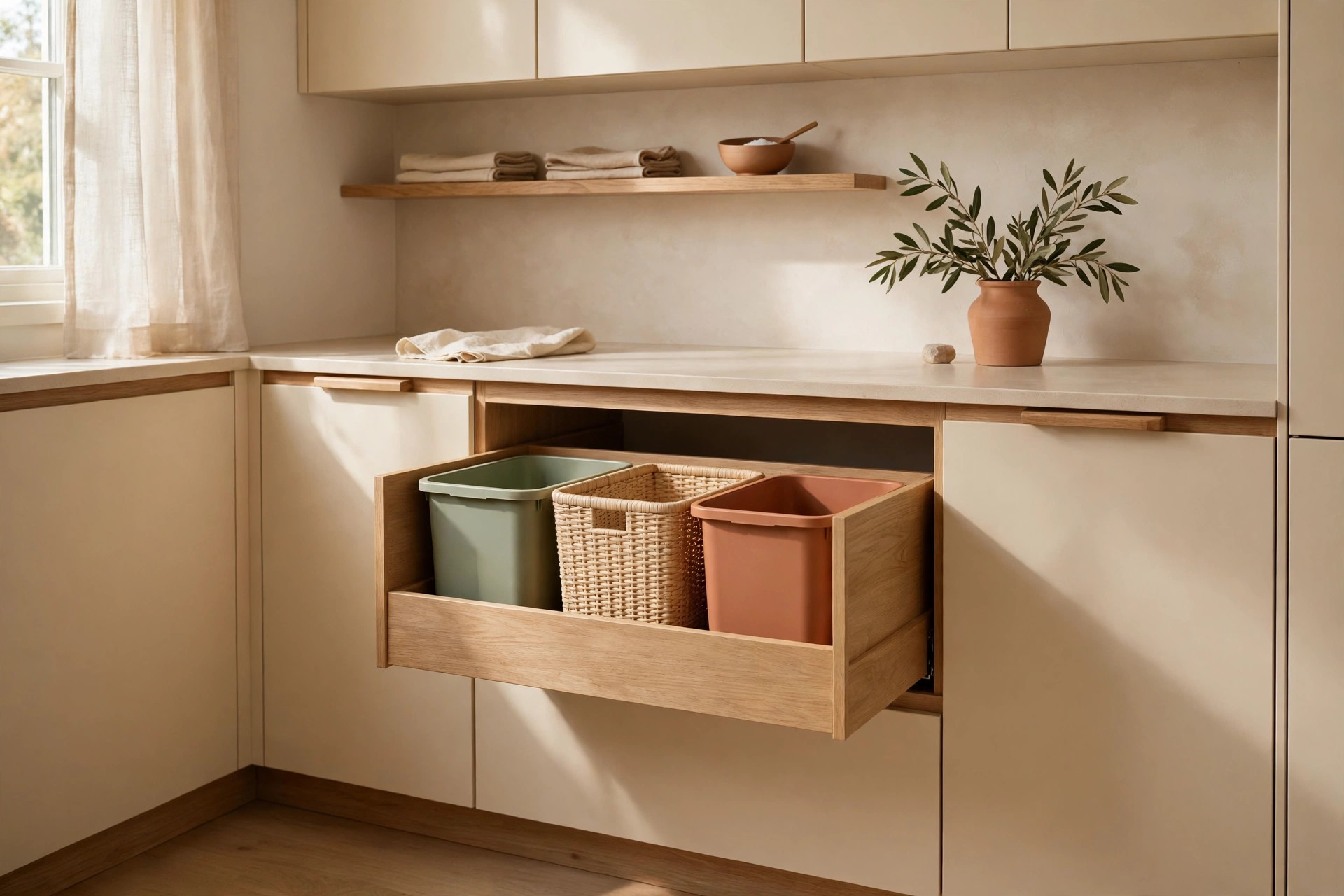
A pull-out cabinet is the closest thing to a station that disappears: bins slide out on a rail, you sort, you push them back. It works best under the sink or beside the dishwasher.
3. Fit a two-bin pull-out under the sink
A standard under-sink cabinet, roughly 24 inches wide, fits a pull-out frame holding two 7-to-10-gallon bins: one for paper and cardboard, one for containers. Measure interior width, depth, and height first, minus about an inch for rail hardware. If pipes eat into the space, choose a frame with a U-shaped cutout — the same fit problem in our under-sink kitchen organization guide.
4. Use a narrow pull-out for the gap beside the fridge
The 6-to-9-inch gap between fridge and counter is dead space in most kitchens, and it is perfect for a slim vertical pull-out with two stacked bins. Tall and narrow beats wide and shallow: a 6-inch-wide, 18-inch-tall bin holds plenty of flattened cans.
5. Label the bins on the inside of the door, not the front
Labels on the front of a pull-out look tidy in photos and peel off in real life. Put a small label inside the cabinet door, at eye level when open, so anyone opening it sees “paper” and “containers” first.
Stacked and tiered bins for tight corners
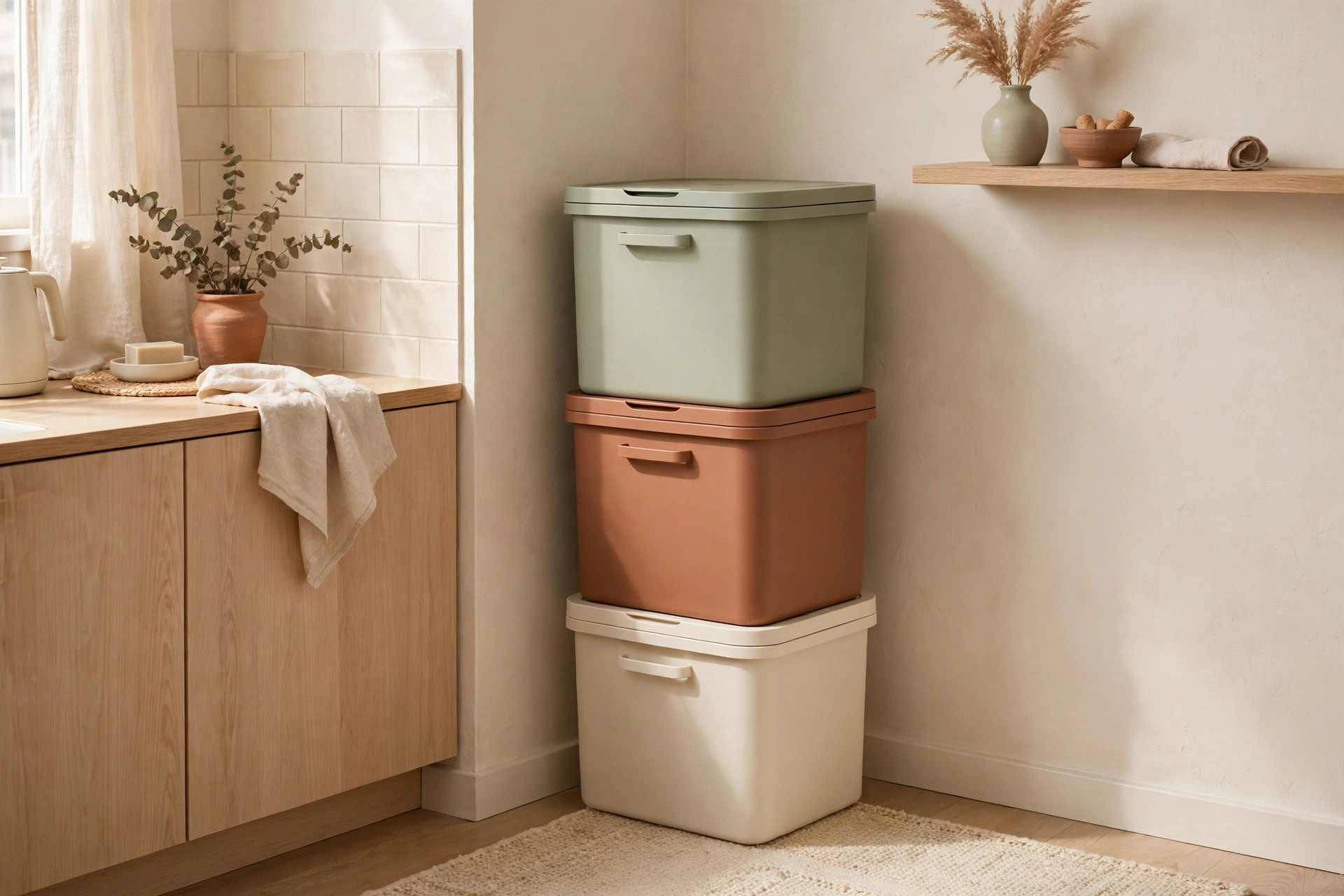
When you cannot hide the station in a cabinet, go vertical. Stacked bins use one bin’s footprint but hold two or three streams, and tiered bins fit an otherwise empty hallway corner.
6. Stack two bins with a lid that becomes a shelf
A lidded bin with a second bin on top works only if the lid is flat and rated to hold weight — a flimsy lid bows and the top bin slides. Look for stackable bins with interlocking rims, roughly 12 by 16 inches, and put the heavier stream (glass, cans) on the bottom.
7. Use a three-tier step bin in a hallway corner
Step-style sorters, where each tier is set back like stairs, let you toss into the back bin without lifting the front one out. They fit a hallway corner or counter end, and you can see all three streams at a glance. Keep the footprint under 18 inches wide.
8. Hang a slim bin on the inside of a pantry door
An over-the-door hook holding a slim 3-to-5-gallon bin turns wasted door space into a paper-only station. Paper is light, so the door handles the weight, and separating it frees your main bins for heavier streams. If your pantry door already does storage duty, our small kitchen cabinet organization ideas show how to balance door racks and shelves.
Sorting without five bins: the 2-bin + bag system
Most apartments do not need five bins — just a system simple enough to follow when you are tired: two bins for your building’s two main streams, plus one reusable bag for extras.
9. Run two bins and let a bag handle the exceptions
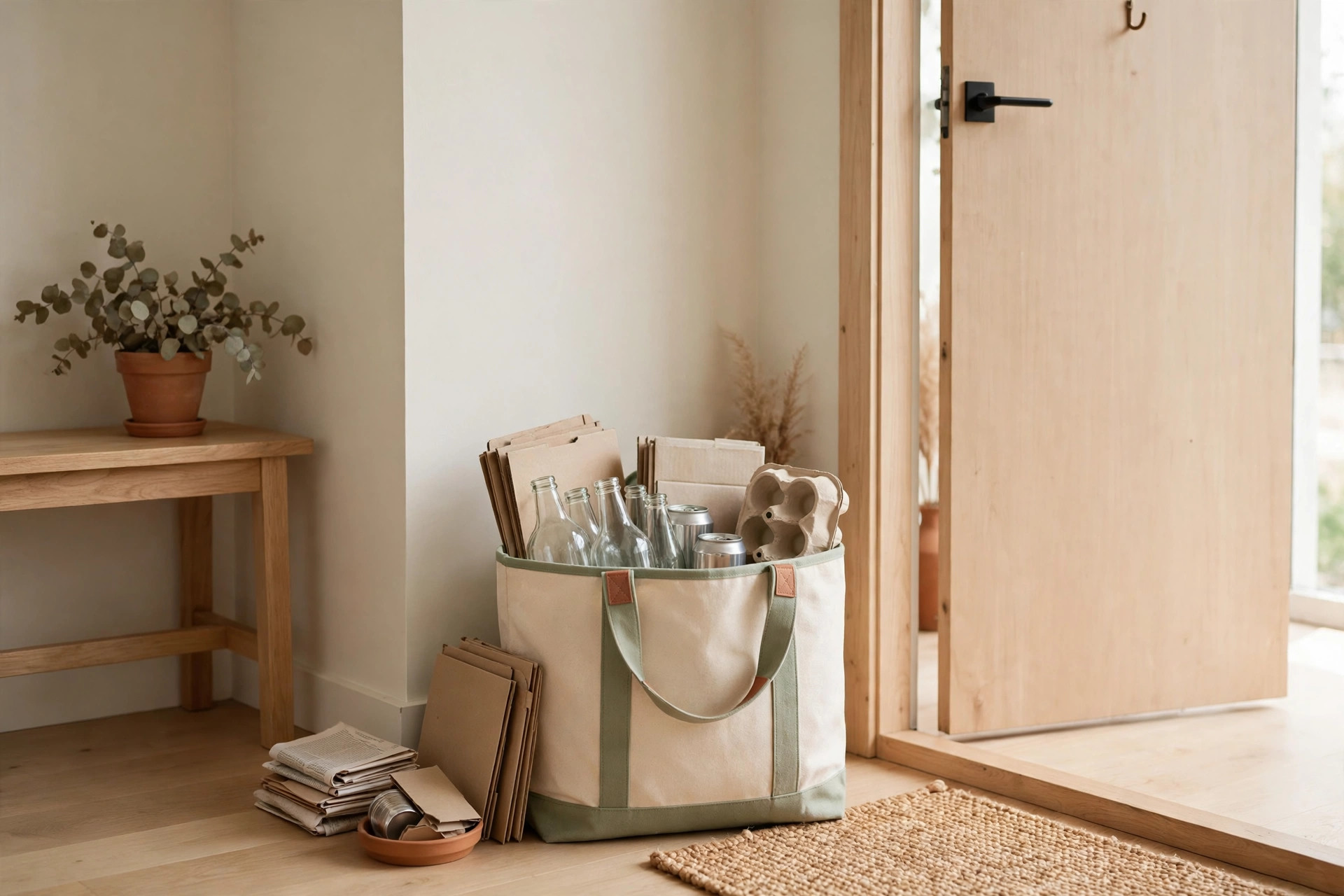
Bin one takes your building’s main stream, bin two takes the second, and a sturdy reusable tote on a hook takes everything else — batteries, plastic bags, bottle caps, or glass if your building excludes it. When the tote is full, it goes on the next errand run.
10. Keep a small “not sure” box, and empty it weekly
Every household has items nobody is sure about: coffee pouches, foil-lined bags, broken hangers. Instead of guessing wrong at the bin, keep a shoebox-sized “not sure” box on top of the station and check your city’s recycling guide — most publish a searchable list — once a week.
Bottle and can storage that doesn’t clatter
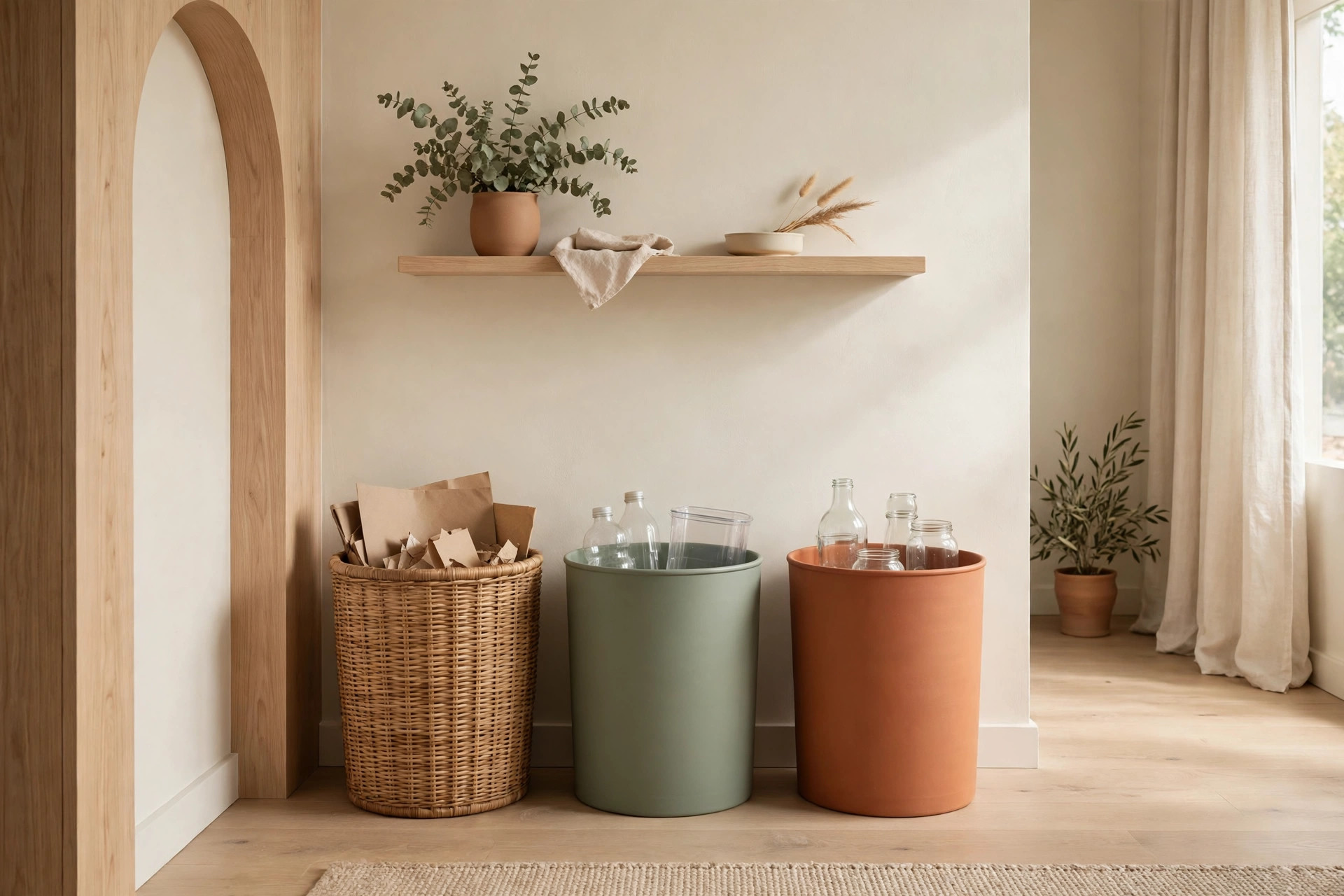
Bottles and cans are the noisiest, heaviest part of recycling. The fix is containment.
11. Stand bottles upright in a divided crate
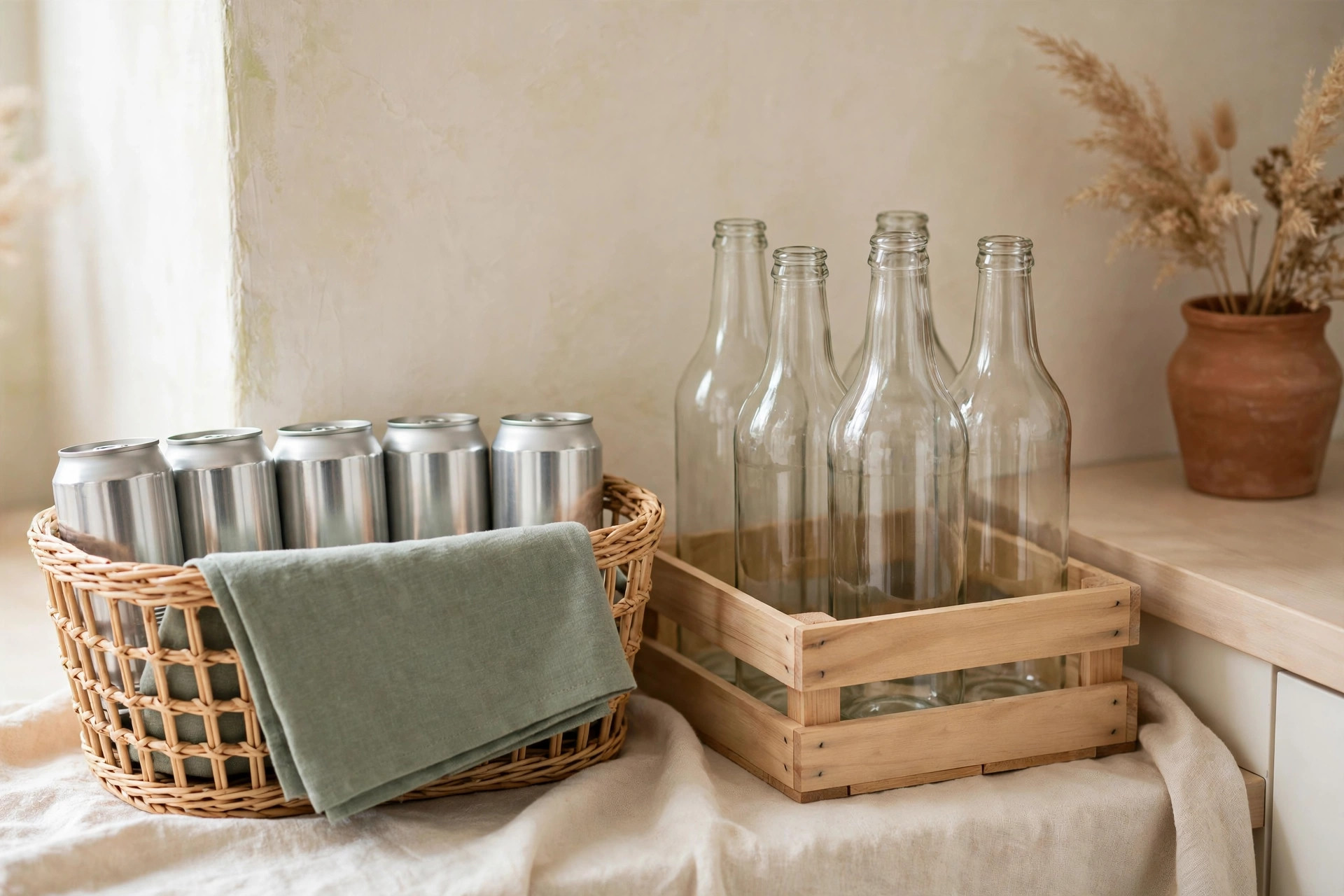
A small divided crate — the kind sold for wine bottles, about 12 by 12 inches — holds glass bottles upright so they do not roll, clink, or chip. One crate holds roughly 8 to 12 bottles, about a week’s worth, and carries to the chute room in one trip.
12. Crush cans flat and store them in a tall, narrow bin
A can crusher mounted inside a cabinet door flattens cans to a fraction of their size. Crushed cans go into a tall, narrow bin — a 5-gallon container about 10 inches across — where they pack tightly instead of forming a noisy pyramid. If your station lives on a balcony, the same crate trick works if it is weatherproof; our apartment balcony storage ideas cover which containers survive outside.
Paper and cardboard: flat, bundled, out of sight
Paper and cardboard are bulky but light, so they take up the most visual space while weighing almost nothing. The goal: flat, bundled, and invisible.
13. Break boxes down the day they arrive
A cardboard box takes up roughly ten times more space assembled than flat. Break every box down the day it arrives, before it joins a pile, and keep a box cutter in the station itself — walking to another room for scissors is why boxes pile up.
14. Bundle flat cardboard with one loop of twine
Flat cardboard sheets slide, lean, and eventually avalanche. One loop of twine or a large rubber band around a bundle keeps the stack tight enough to stand behind a bin or slip into the gap beside the fridge, and it carries in one trip.
Smells and drips: keeping a recycling station clean
Recycling smells for one reason: residue. A rinsed soup tin does not smell; an unrinsed one does within a day in a warm apartment. So cleaning is mostly about stopping residue at the source.
15. Rinse containers for five seconds before they go in
A five-second rinse removes most food residue and nearly all of the smell problem — just a quick swirl and shake, part of the same motion as tossing the item in. Unrinsed stations start to smell within 24 to 48 hours in summer; rinsed ones generally do not.
16. Line bins with a washable liner and wipe the station weekly
A washable bin liner — a reusable bag that fits the bin — catches drips a bare bin would not, and it goes in the laundry with the towels. Once a week, wipe the bins and cabinet floor with a damp cloth and a drop of dish soap.
The weekly drop-off routine
A station only stays tidy if it empties on a schedule. Without one, bins overflow and the system collapses back into bags by the door. Tie the routine to something you already do weekly, so it needs no willpower.
17. Tie drop-off to an existing weekly errand
Pick the errand you never skip — grocery shopping, laundry, or taking out the trash — and attach drop-off to it. If the chute room is on your way to the laundry room, carry the glass crate with the laundry basket. If you drive to a drop-off point, put the bundled cardboard in the car on grocery day.
18. Do a 60-second station reset every Sunday
Once a week, spend sixty seconds on the station: pull out anything that does not belong, wipe one surface, and check the labels and the “not sure” box. Sixty seconds a week keeps it working in month six.
Mistakes to avoid
The most common mistakes are not about the bins — they are about the system. Do not buy a five-bin sorter for a single-stream building; you will use one bin and resent the rest. Do not use open-top bins for anything that held food — they smell and attract fruit flies in summer. Do not store recycling on the balcony in an open bag, where wind scatters it and rain turns paper to pulp. And do not let the station grow: a full bin means a trip to the chute room.
Frequently asked questions
Can you put a recycling station in a studio apartment?
Yes — a studio needs the smallest version of this system, not no system at all. One pull-out or stacked two-bin station in the kitchen, plus a hanging bag for exceptions, covers most buildings’ streams.
How do I stop my recycling bin from smelling?
Rinse every food container for five seconds before it goes in, use a washable liner to catch drips, and wipe the bins weekly with a damp cloth and dish soap. If the smell persists, the cause is almost always one unrinsed item.
What is the best recycling bin for a small apartment?
The best bin is the one that fits your cabinet and your building’s streams. For most small apartments, that is a two-bin pull-out under the sink or a stackable two-bin tower in a kitchen corner, sized at roughly 7 to 10 gallons per bin. Measure before buying.
Can I recycle on a balcony without it looking messy?
Yes, if everything is contained and weatherproof. Use a lidded crate for bottles and a bundled stack for cardboard, never open bags, and bring paper inside during rain.
Conclusion
A small apartment recycling station does not need to look like trash, nor need five bins or a remodel. Match the station to your building’s real streams, hide it in a pull-out or stack it vertically, rinse before you toss, and empty it on a weekly routine you already follow. Pick one idea today — the pull-out, the 2-bin + bag system, or the Sunday reset — and start there. Save this pin for later, and explore more storage ideas.