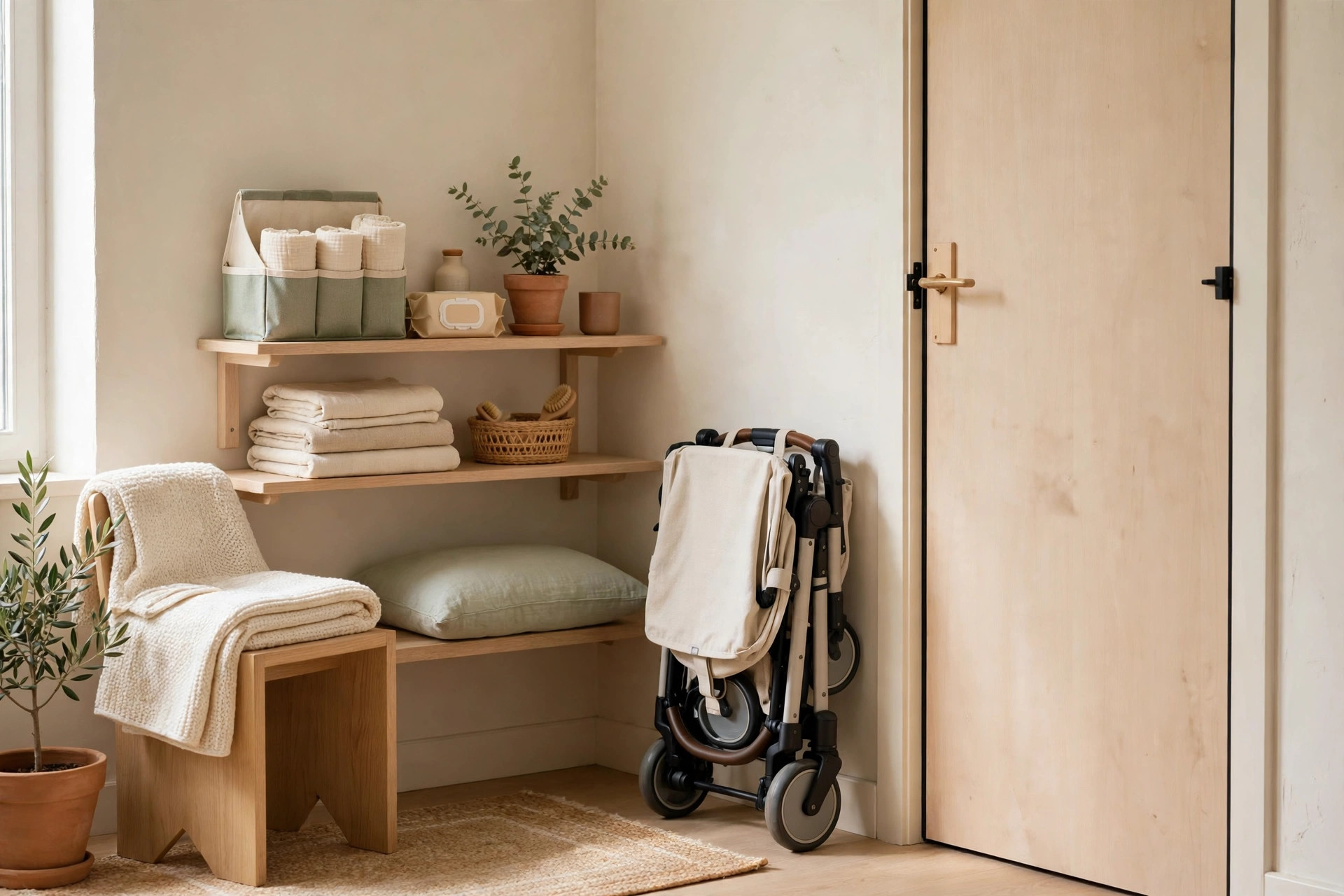
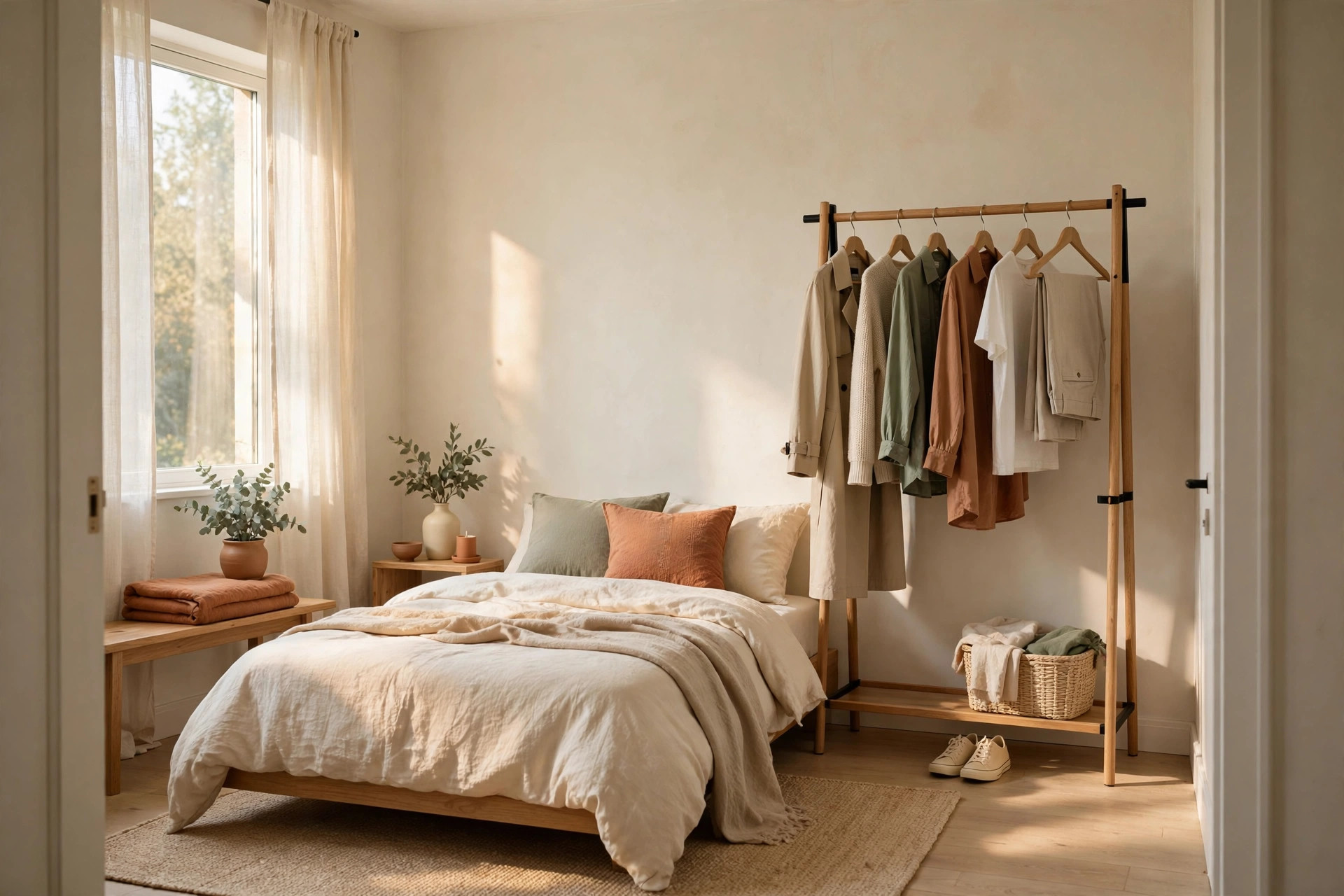
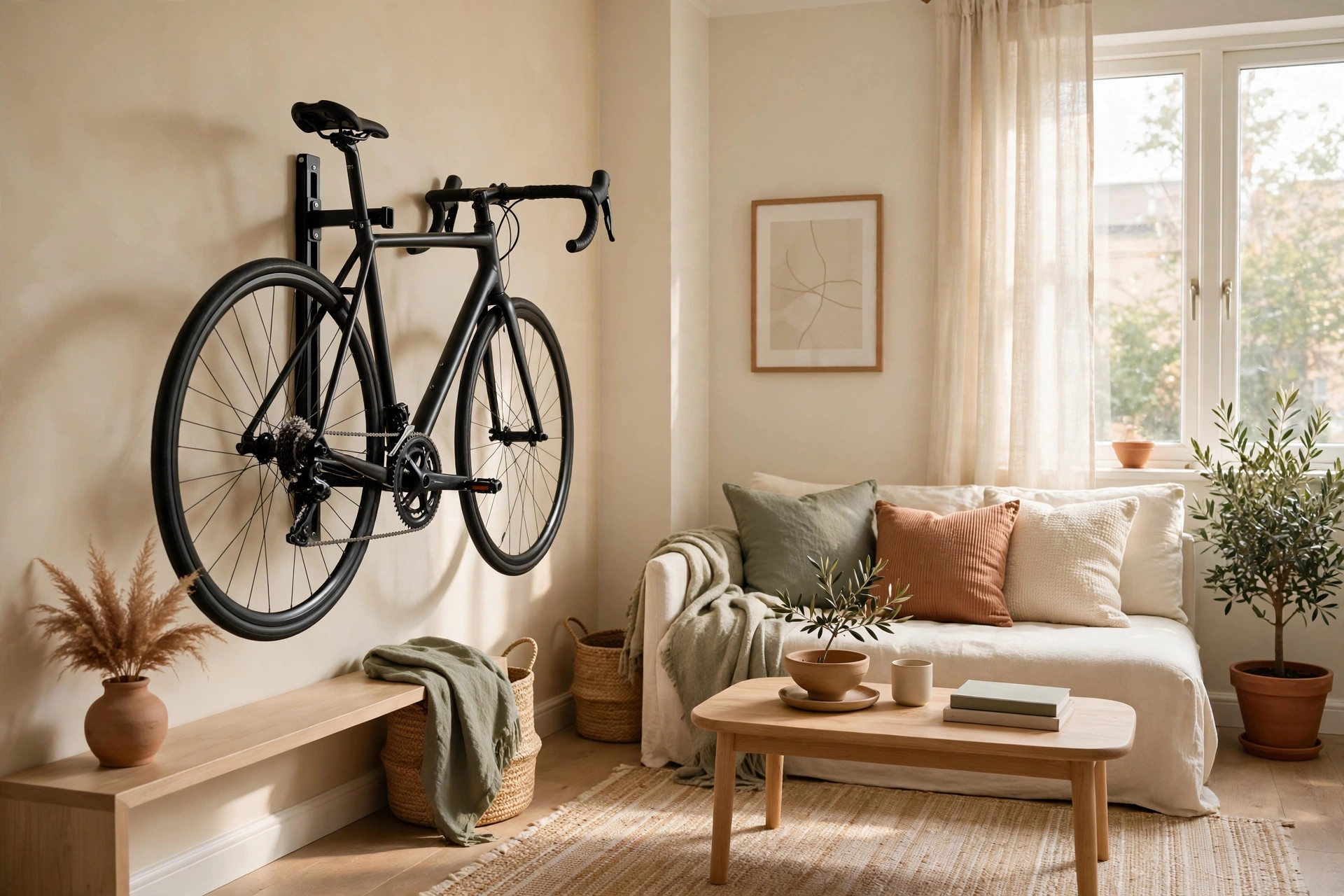
A one-bedroom apartment is big enough to live in comfortably and small enough that every bad storage decision shows up twice: once as clutter, and once as the feeling that the place is closing in on you. The problem is rarely that you own too much. It is that a one-bedroom has no spare room to absorb the overflow, so coats, shoes, kitchen gear, and laundry all compete for the same few square feet. Below are small apartment storage ideas one bedroom renters and owners alike can use, room by room and zone by zone. Eighteen ideas, in the order you should tackle them.
The one-bedroom audit: where your stuff actually lives now
Before you buy anything, find out what you actually have and where it piles up.
1. Walk the apartment with a laundry basket and collect every homeless item
Carry an empty basket through every room and pick up anything with no assigned spot: chargers, mail, shoes, bags, stray clothes, cleaning bottles. Sort it on the bed into piles by room. The biggest pile is your first project. This takes about 20 minutes.
2. Measure your three dead zones before you shop
Measure the space under your bed, the gap between the top of your closet shelf and the ceiling, and the inside of your deepest kitchen cabinet. Write the three numbers on your phone. In a one-bedroom, nearly every storage purchase fails because it is an inch too tall or two inches too deep. Buy to the measurement, not to the photo.
Entryway in 3 square feet: the drop zone that protects the rest
The entryway is the smallest space in the apartment and the one that decides whether the rest stays tidy.
3. Build a vertical drop zone on one wall, not a console table on the floor
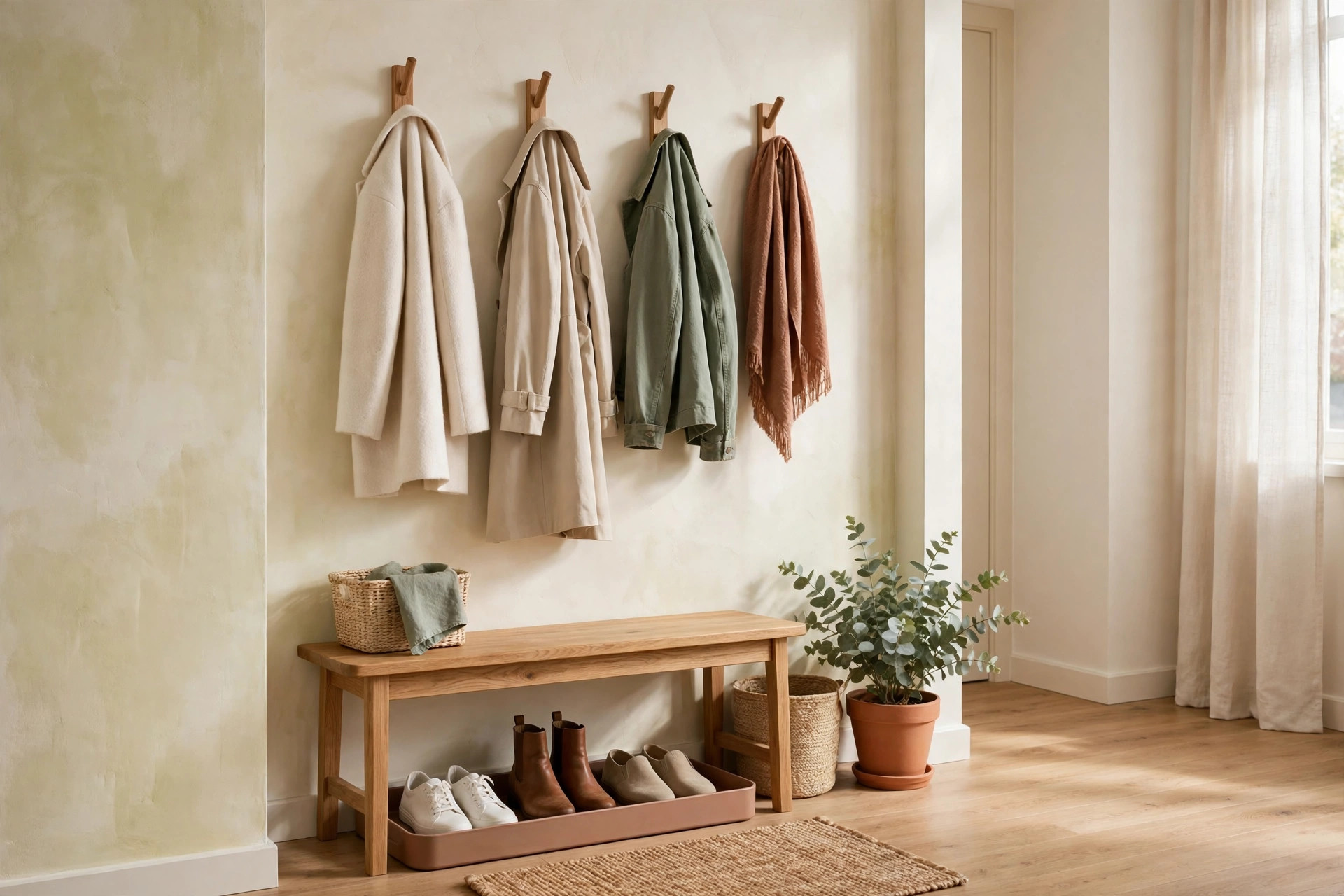
Mount two or three hooks at staggered heights (about 60 and 66 inches) for coats and bags, a small floating shelf at chest height for keys and sunglasses, and a slim shoe tray underneath. The whole station takes about 24 inches of wall and zero floor space beyond the tray. If your lease forbids drilling, use heavy-duty adhesive hooks rated for at least 5 pounds each. For more entryway options that work without a foyer, see these 15 small entryway organization ideas.
4. Give every person one shoe pair at the door and rotate the rest
The door pile is almost always shoes, not coats. Keep one pair per person on the tray and store the rest in the bedroom closet or under the bed in a labeled bin. A two-tier shoe rack holding four pairs fits in about 24 by 12 inches and clears the floor visually. A clear entryway floor makes the whole apartment feel bigger the moment you walk in.
Living room: hidden storage furniture that earns its footprint
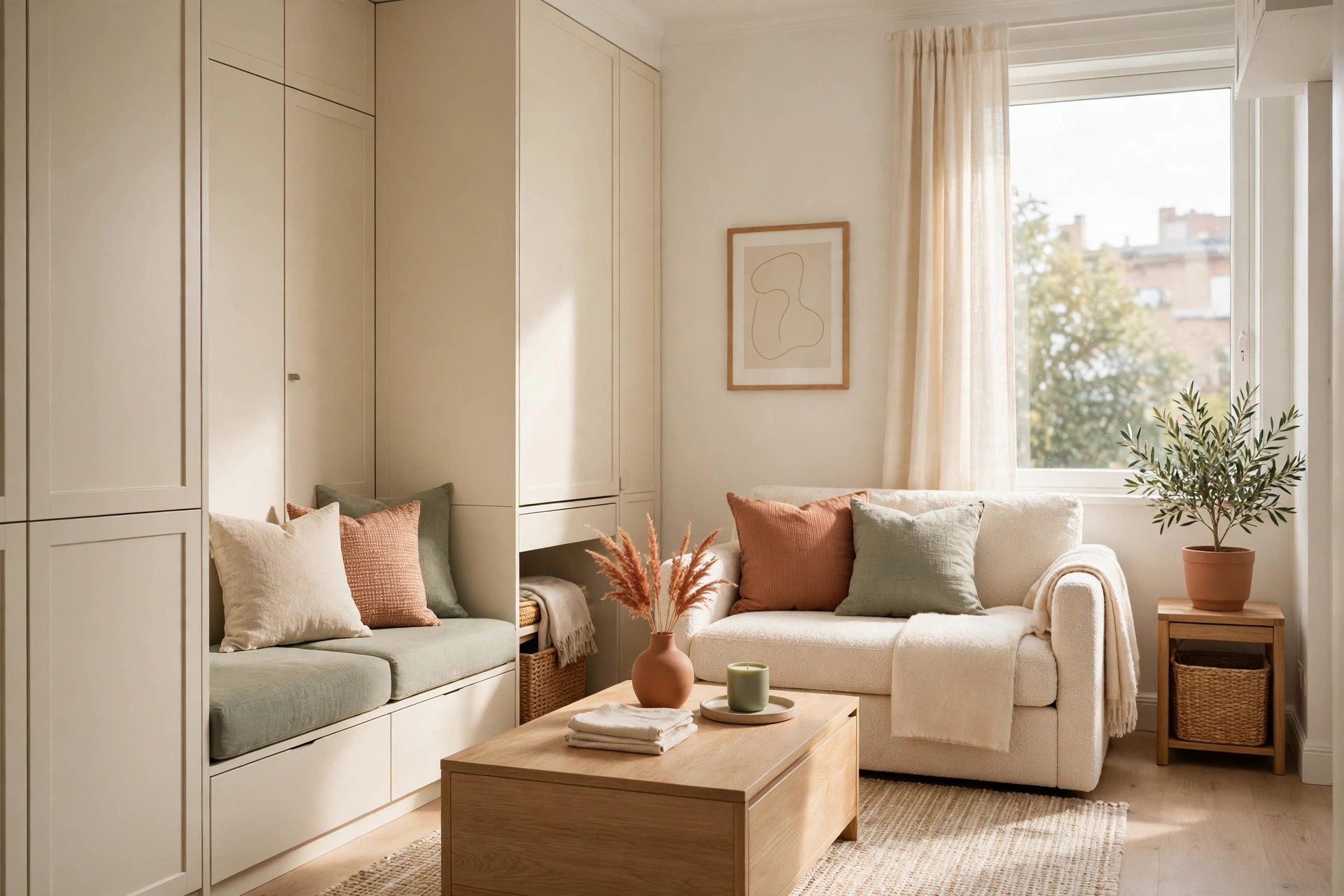
The living room is a living room, dining room, office, and guest room at the same time, so every piece of furniture has to do two jobs.
5. Choose a lift-top coffee table over a flat one
A lift-top coffee table rises to about 28 inches for laptop use and hides a storage cavity underneath roughly 30 by 16 by 6 inches deep. That cavity holds remotes, chargers, board games, and the throw blankets that otherwise live on the sofa arm.
6. Swap one decorative piece for a storage ottoman with a lid
An ottoman about 30 by 18 inches holds two throw blankets, spare pillows, or a stack of magazines, and it works as extra seating and a footrest, so it earns its floor space three ways. Keep it closed.
7. Use the wall behind the sofa as a shallow library, not a gallery
A picture ledge or shelf about 6 inches deep mounted above the sofa holds books, a small plant, and one or two framed photos without taking any floor space. Keep it to two shelves maximum and leave about a third of each shelf empty, or the wall starts to feel like a storage unit instead of a living room.
The one bedroom: closet, under-bed, and wall zones
The bedroom has to store clothes, off-season gear, linens, and luggage, so you need three zones: the closet, the under-bed space, and the walls.
8. Double your closet rod with a hanging organizer and a second rod
A hanging organizer with five or six cubbies takes about 12 inches of rod width and holds folded sweaters, jeans, and bags that would otherwise pile on a shelf. Add a second tension rod about 30 inches below the main rod for shirts, and you have doubled the hanging space without touching a wall. If your closet has no door, or no closet at all, these bedroom storage ideas for small rooms with no closet cover freestanding alternatives that work in rentals.
9. Treat under-bed space as a real closet, not a junk drawer
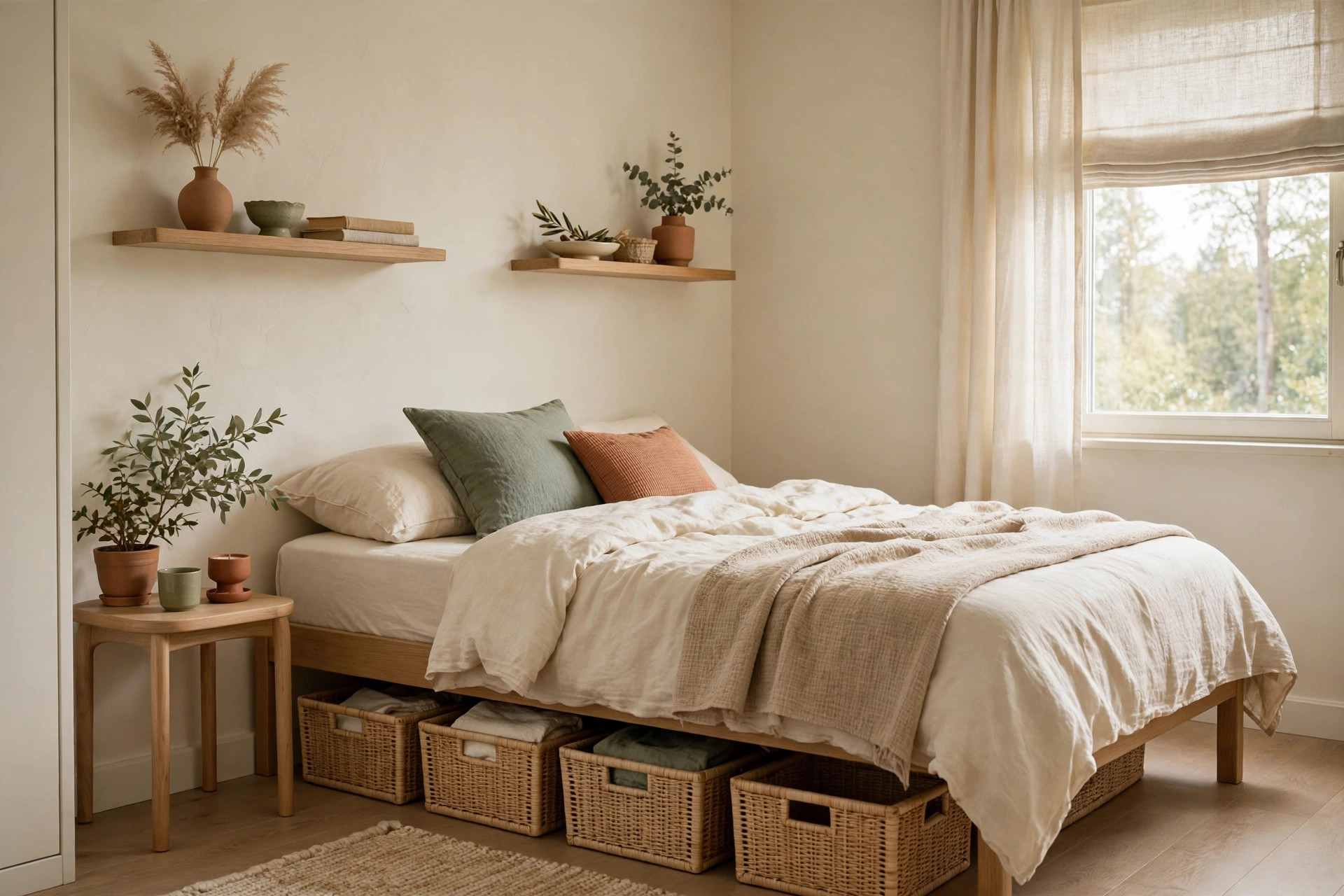
Under-bed bins that are 32 by 16 by 6 inches slide under most standard bed frames and hold out-of-season clothes, extra bedding, or shoes in labeled pairs. Use bins with lids, and label each one on the short end so you can read it without pulling it out.
10. Put a narrow shelf above the bed or the dresser for the overflow
A single floating shelf about 36 inches wide above the dresser holds books, a jewelry tray, and a small basket for the items that otherwise spread across the dresser top. Keep the dresser top itself to three things: a lamp, a tray, and one decorative item. Everything else goes in a drawer or on the shelf.
Kitchen: zones, vertical storage, and the no-pantry workaround
A one-bedroom kitchen is usually a galley or a single wall with a handful of cabinets and no pantry, so every item must live where it is used.
11. Set up a rolling cart as a movable pantry
A three-tier rolling cart about 18 by 12 inches holds dry goods, snacks, or cleaning supplies and rolls into the gap beside the fridge or between the counter and the wall. Label each tier by category, not by item, so anyone in the household can put things back correctly. When you need the floor space, it tucks away in about 15 seconds. It is the single best workaround for a missing pantry.
12. Move everyday tools to the wall and keep the counter to three items
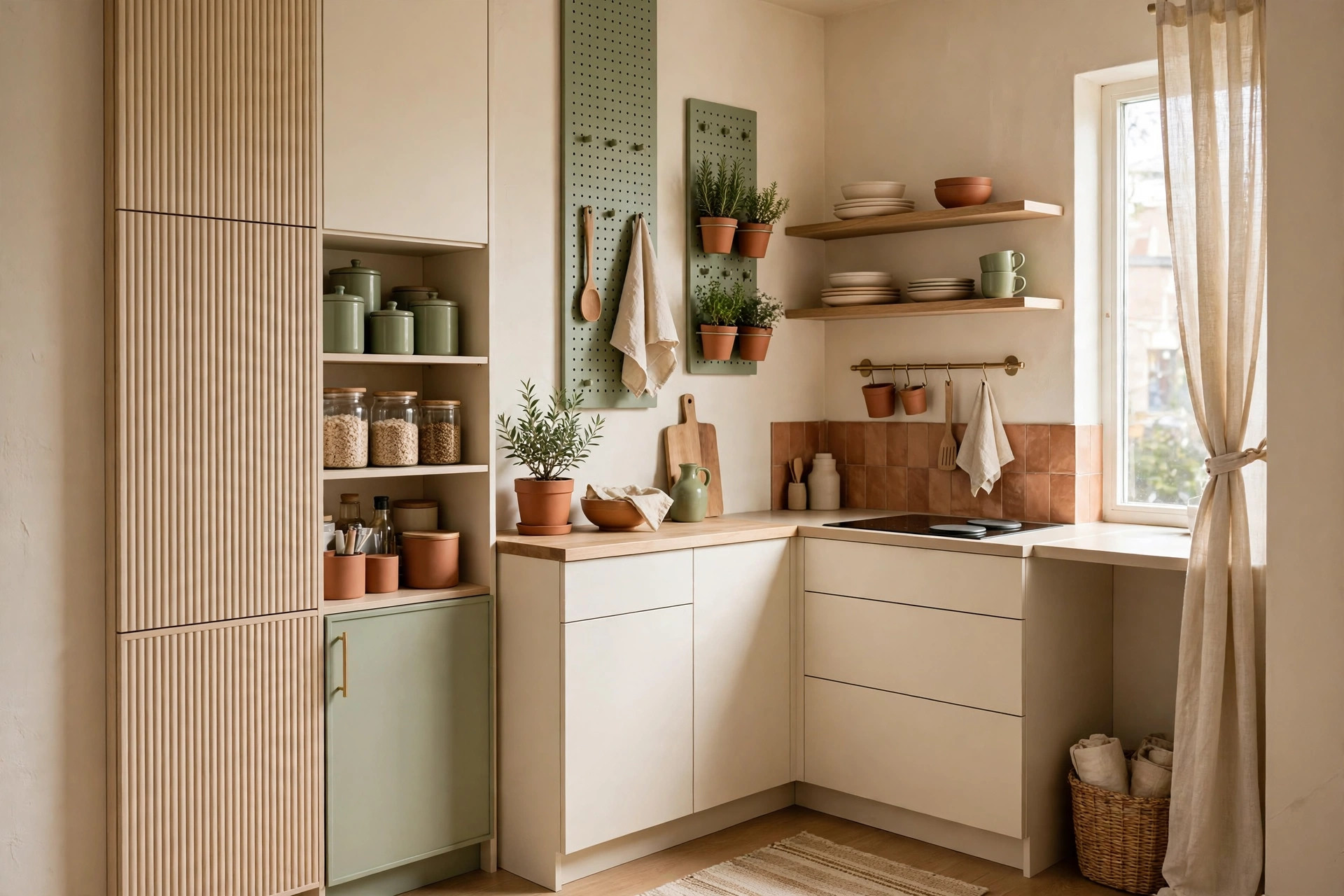
Mount a magnetic knife strip and a rail with S-hooks for ladles, spatulas, and measuring cups on the backsplash wall or the side of a cabinet. That clears a full drawer and a countertop corner at once. Then enforce the three-item rule on the counter: coffee maker, cutting board, and one more item you genuinely use daily. For more renter-safe kitchen ideas, see these renter-friendly kitchen organization ideas.
13. Decant dry goods into uniform square containers and label the fronts
Square, stackable containers in one size (about 32 ounces for pasta and rice, 16 ounces for spices and baking) use cabinet space far better than a mix of bags and boxes, because squares leave no dead corners. Label the front of each container with the contents and the date you filled it. You will stop buying duplicates of things you already own.
Bathroom and laundry: small-space systems that stack
One bathroom and no laundry room means the bathroom does double duty, so stack vertically and keep laundry to one contained system.
14. Add an over-toilet shelf unit and a door rack, not a bigger vanity
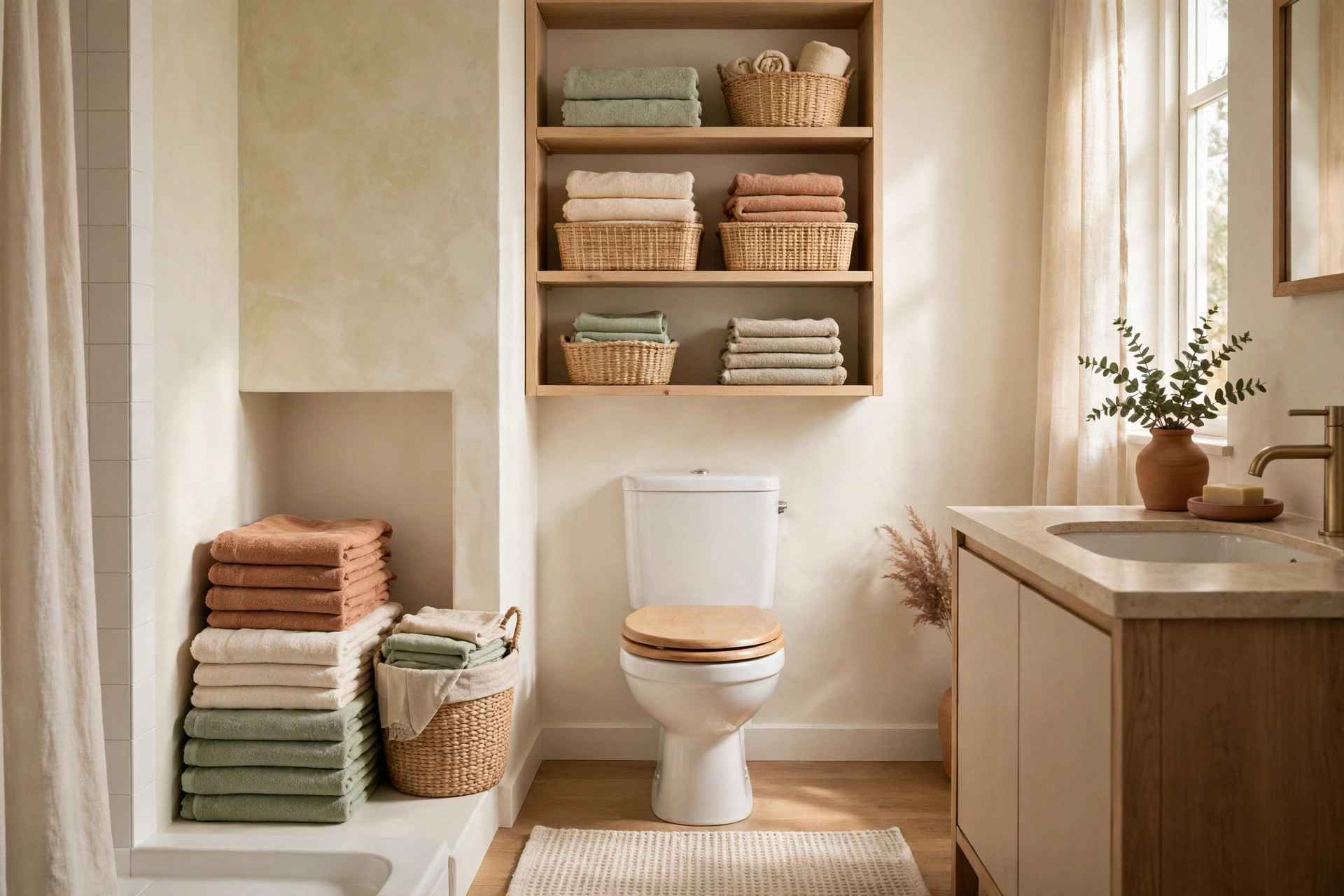
An over-toilet shelf unit about 24 inches wide adds three shelves above the tank without touching the floor, and a hanging rack on the back of the door holds towels, robes, and cleaning supplies. Together they add more usable storage than replacing the vanity would, for a fraction of the cost and with zero plumbing. These small bathroom storage ideas for renters cover no-drill versions of both.
15. Contain laundry in one tall, divided hamper with a lid
A divided hamper about 24 inches tall with two compartments (lights and darks) and a lid keeps dirty laundry invisible and pre-sorted, which means wash day starts at the machine instead of at a sorting pile on the floor. In a one-bedroom, a lidded hamper can also double as a side table: put a folded towel on top and it disappears into the room. When the hamper is full, that is wash day.
16. Keep a caddy of cleaning supplies in the bathroom, not under the kitchen sink
A small caddy about 12 by 8 inches holding a bathroom cleaner, a toilet brush, microfiber cloths, and gloves lives on the bottom shelf of the over-toilet unit or inside the vanity. Cleaning the bathroom takes five minutes when the supplies are already there; it takes twenty when they are in another room, so it gets skipped. Refill the caddy on the first of the month so it never runs dry mid-clean.
The whole-apartment reset: one routine that holds it together
Storage systems fail slowly, not all at once, so you need a routine short enough that you actually do it.
17. Run a 10-minute nightly reset, room by room, in the same order
Every night, set a timer for ten minutes and walk the same route: entryway, living room, kitchen, bathroom, bedroom. Shoes to the tray, dishes to the sink or dishwasher, laundry to the hamper, surfaces cleared. Ten minutes is short enough to do after a long day, and doing it in the same order every night turns it into muscle memory within about two weeks.
18. Do a 30-minute seasonal swap every three months
Four times a year, spend half an hour swapping the under-bed bins: winter clothes out, summer clothes in, or the reverse. While you are there, pull one item from each room that has not been used in three months and put it in a donation bag by the door. Four swaps a year, one bag each time, and the apartment never quietly fills up again. This is the idea that makes the other seventeen last.
Mistakes to avoid
The most common mistake in a one-bedroom is buying storage before measuring, which fills the apartment with bins that do not fit and organizers that solve a problem you do not have. The second is buying open baskets for everything: open storage looks tidy on day one and cluttered by day thirty. The third is treating the apartment as five separate rooms instead of one system.
Frequently asked questions
How do I organize a one-bedroom apartment with no storage?
Start with the audit in idea 1, then build the entryway drop zone and the under-bed storage first, because those two zones absorb the most overflow for the least money. Add one room per weekend after that.
Can I organize a small one-bedroom apartment as a renter?
Yes. Every idea in this article is renter-friendly: tension rods, adhesive hooks, freestanding shelves, rolling carts, and under-bed bins. Nothing here requires drilling, painting, or permanent changes, and everything comes with you when you move.
What is the best storage furniture for a one-bedroom apartment?
Furniture that hides storage: a lift-top coffee table, a storage ottoman, and a bed frame with drawers or under-bed clearance of at least 6 inches. One piece that does two jobs is worth more than two pieces that each do one.
How do I keep a one-bedroom apartment tidy long term?
The 10-minute nightly reset in idea 17 does most of the work, and the quarterly seasonal swap in idea 18 stops the slow buildup. Storage systems hold the stuff; routines hold the systems.
Where should I start if I can only do one thing this weekend?
Build the entryway drop zone from ideas 3 and 4. It takes about an hour, costs less than most single storage purchases, and it protects every other room.
A one-bedroom apartment does not need less stuff or more square feet. It needs a home for everything, in the room where it is used, and a ten-minute habit that keeps it there. Work through the eighteen ideas in order, starting with the audit and the entryway, and browse the full small-spaces collection for room-by-room guides. Save this pin for later, and start with the basket walk tonight.