Your apartment is short on storage and your lease is short on patience: no holes, no anchors, no “we’ll just spackle it later.” Every screw you put in the wall is a line item on your move-out bill — most landlords charge $25 to $50 per hole. The good news is that small apartment storage ideas for renters don’t need a drill at all. Tension, gravity, adhesive, and freestanding furniture can add a whole extra closet’s worth of storage — and every bit lifts out cleanly when you move. These 15 ideas are grouped by system, so start with whichever room bothers you most today.
The renter’s storage rules: no holes, no damage, everything removable
“No damage” covers more than holes: paint pulled off by an adhesive strip counts too. Renter-safe storage installs without tools and removes without a trace.
1. Audit your lease and photograph every wall before you hang anything
Most leases ban holes and wall anchors but say nothing about adhesive hooks, tension rods, over-door hardware, or freestanding furniture — that silence is your working space. Photograph every wall on move-in day and test each new system in one spot for 48 hours first.
Command hooks and adhesive systems that actually hold weight
Adhesive hooks fail when used wrong: wrong surface, overloaded, or loaded before the adhesive cures.
2. Match the hook to the surface — and respect the weight rating
A medium hook is rated for about 3 pounds, a large one for about 7 — on a clean, smooth, painted surface. Textured walls, brick, and wallpaper cut holding power sharply. Clean the spot with rubbing alcohol, press the strip for 30 seconds, and wait the full hour before hanging anything. Never exceed the rating: a coat plus a bag plus a scarf on a 3-pound hook is a coat on the floor by morning.
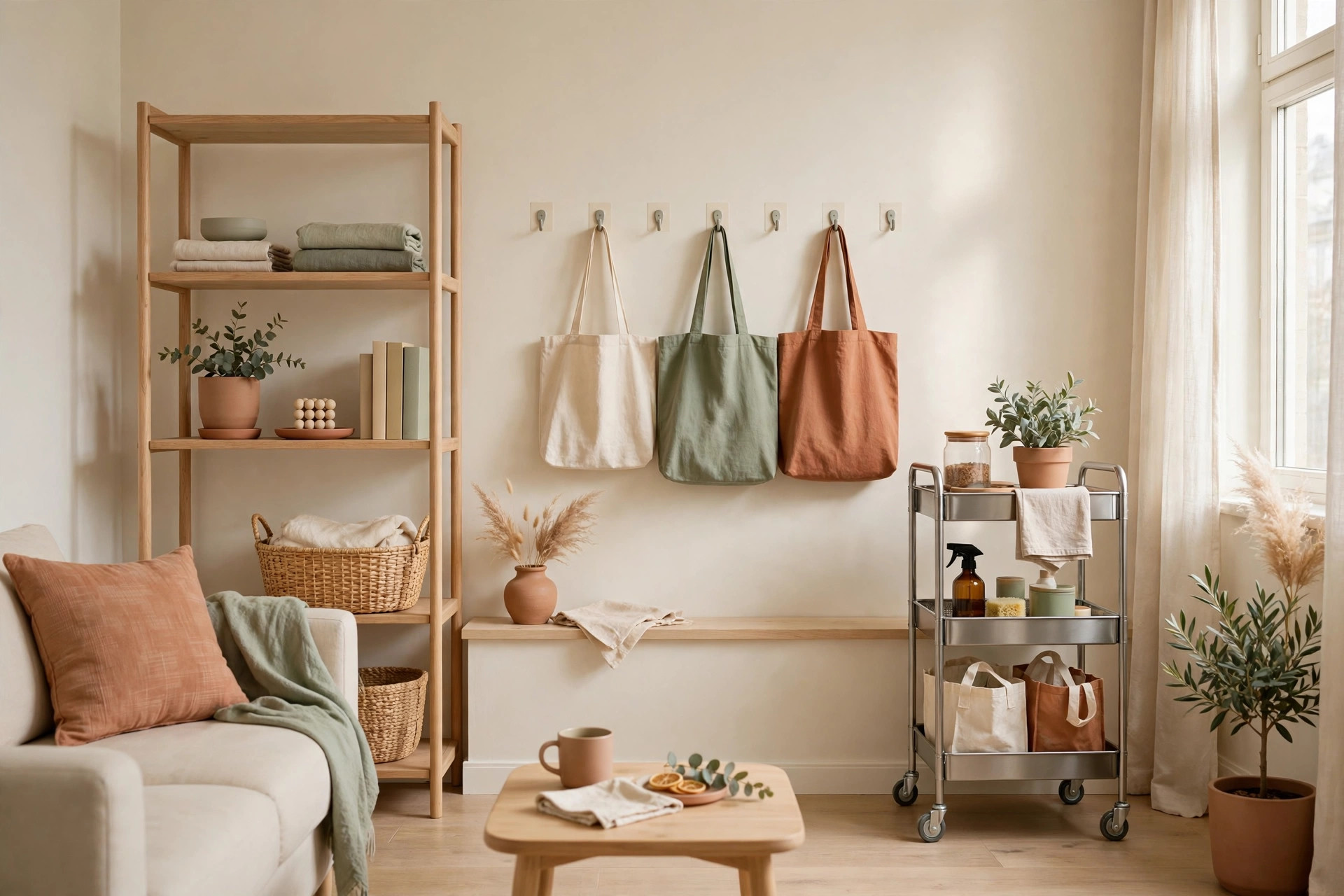
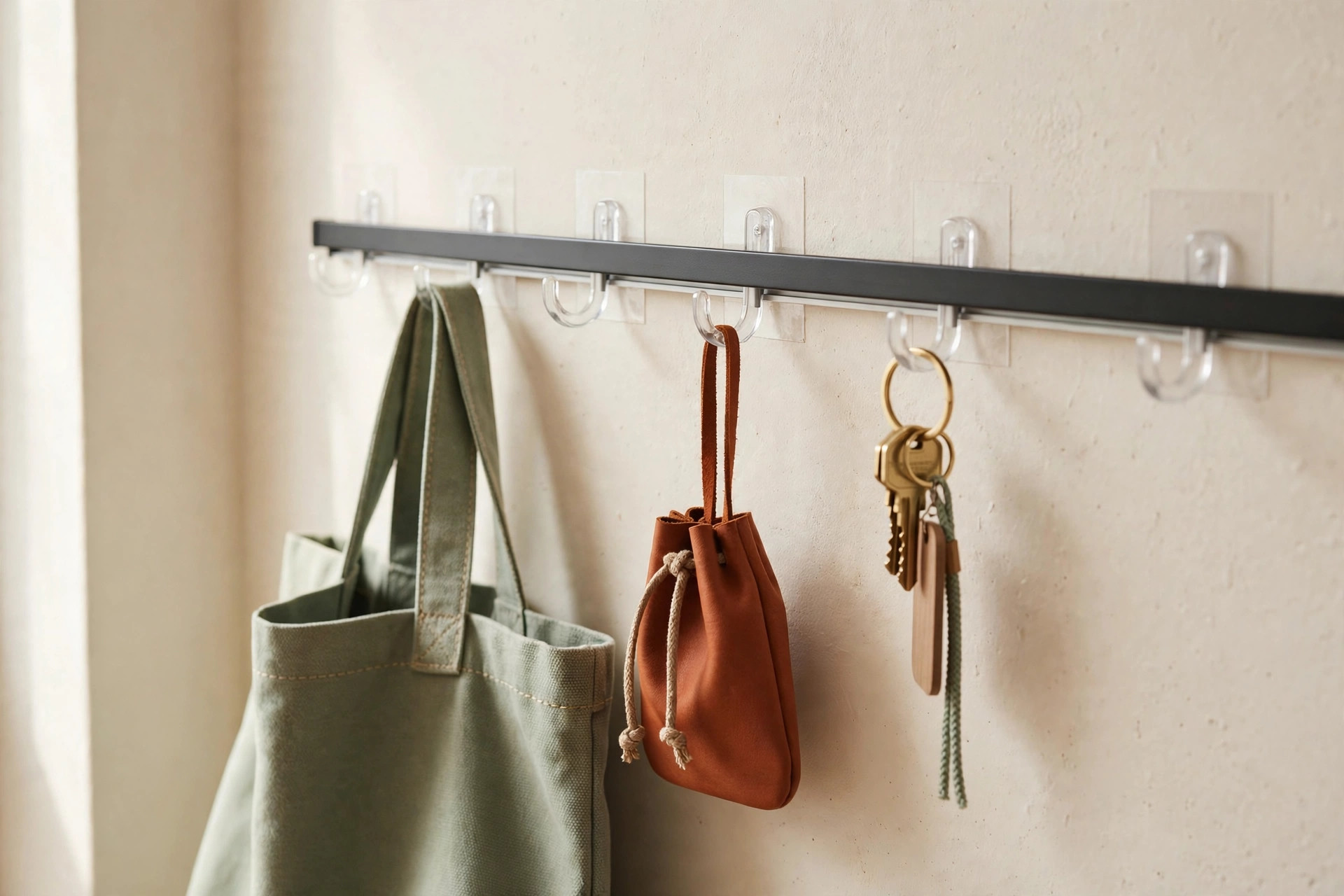
3. Build a vertical hook ladder in dead wall space
One hook holds one thing; a column holds a whole system. Pick a narrow strip nothing else can use — beside the bedroom door, between the fridge and the wall — and run hooks from shoulder height to knee height: bags at the top, totes in the middle, a basket at the bottom.
Tension rods: the renter’s secret weapon in every room
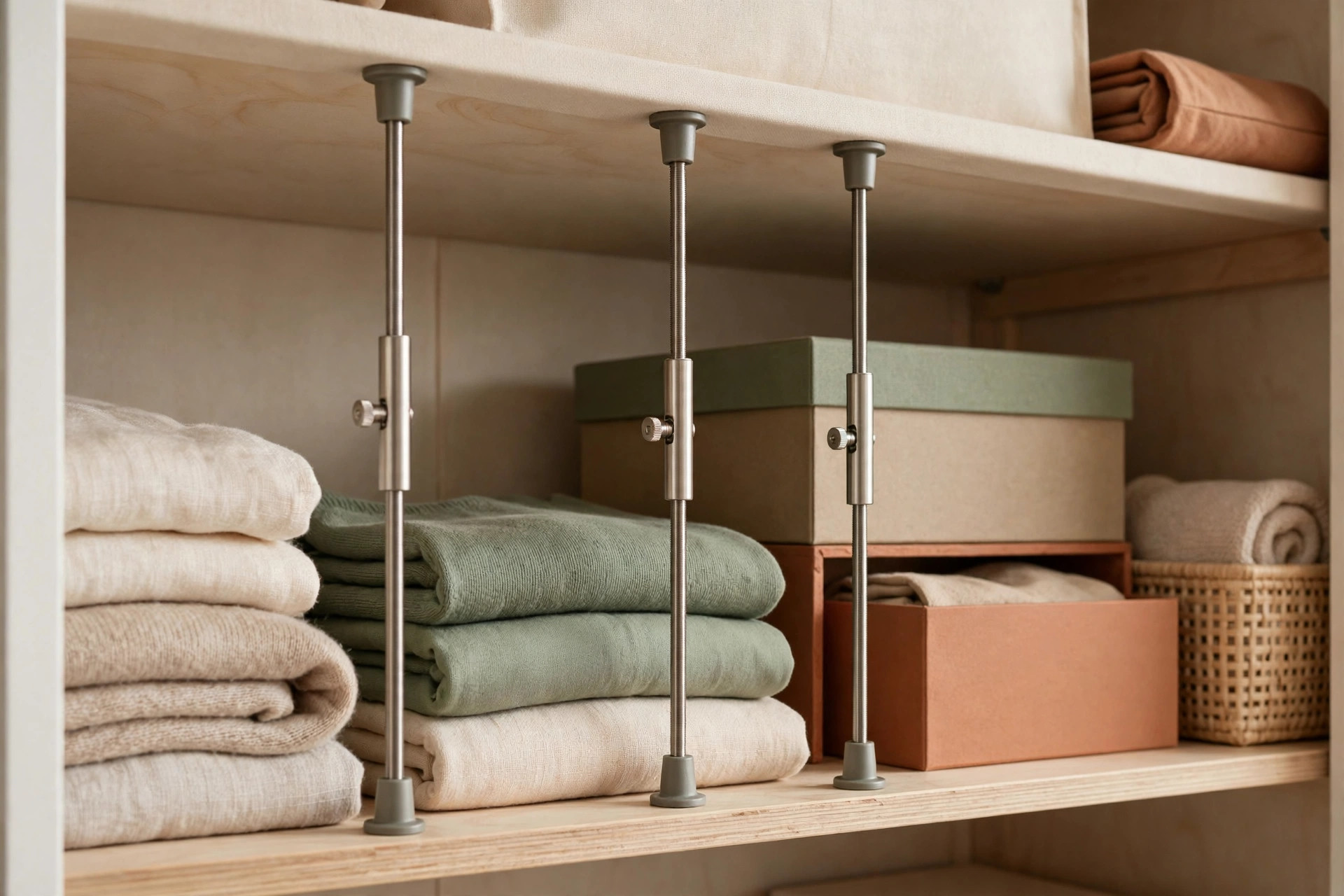
A tension rod is a spring-loaded bar that wedges between two surfaces — no screws or brackets — and works anywhere two flat surfaces face each other within 18 to 36 inches.
4. Double your closet with a second tension rod
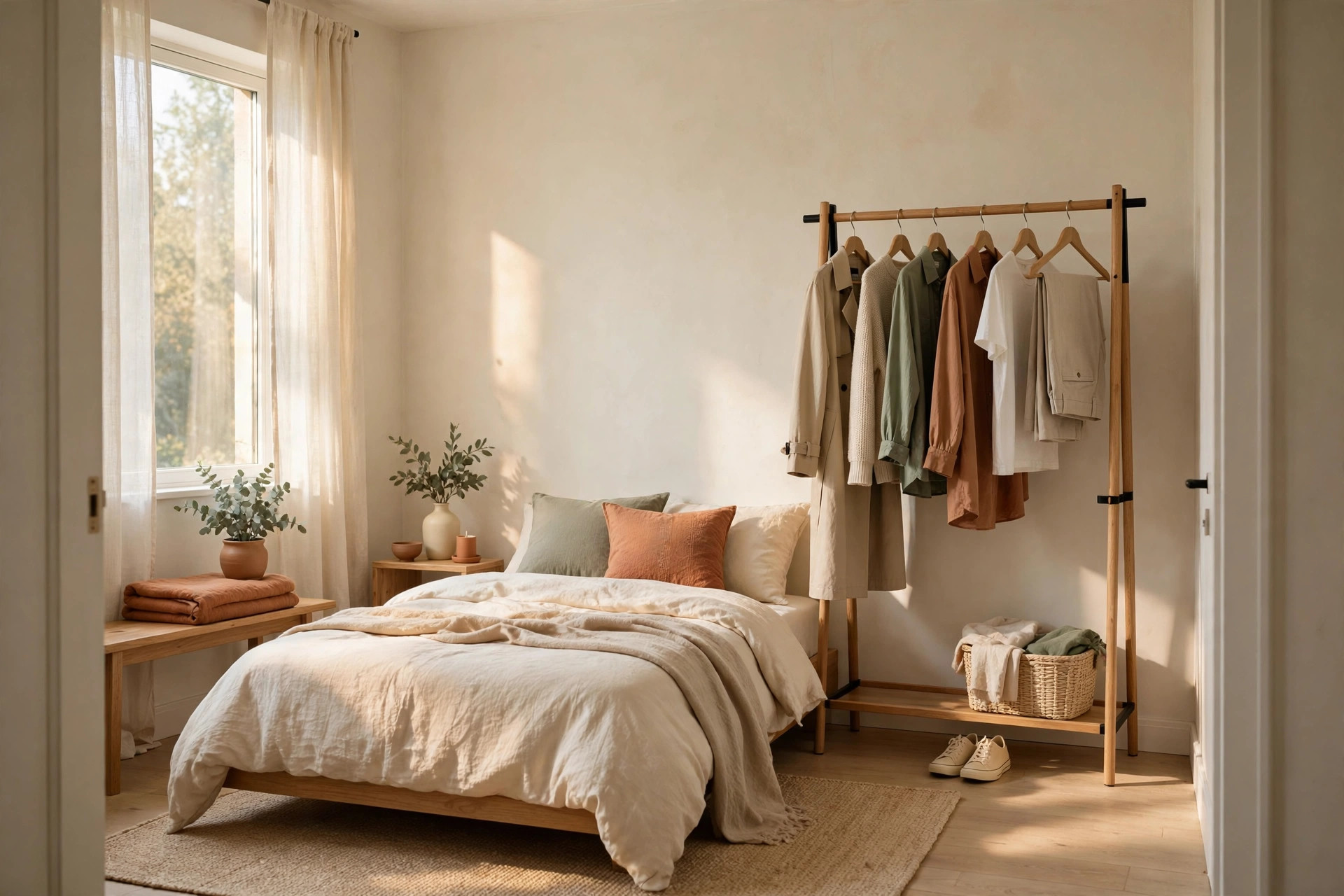
A single-rod rental closet wastes the bottom half of its height. Wedge a tension rod about 40 inches off the closet floor for a second tier of shirts and short jackets. The rod comes out in seconds when you move. Our guide to 17 Renter-Friendly Closet Organization Ideas (No Drilling Required) covers double-hang layouts and shelf add-ons.
5. Turn cabinets and under-sink gaps into storage with short tension rods
Short tension rods — the 10-to-18-inch kind — solve the messiest spots in a rental. Wedge one across a cabinet door to hang spray bottles by their triggers, freeing the shelf below, or under the kitchen sink to hang cleaning bottles in a row.
Freestanding shelves and towers that need no wall at all
When you can’t attach anything to the wall, the wall becomes furniture’s job: one tall unit adds 8 to 12 cubic feet.
6. Claim the dead space above furniture with a tall narrow tower
Every small apartment has the same dead zone: the 3 to 4 feet of air above a dresser or desk. A tall, narrow tower — roughly 12 to 16 inches wide and 5 to 6 feet tall — slots into that gap and turns it into five or six shelves without touching the wall. Use it beside the bed or fridge; keep heavy items on the bottom two shelves. Our vertical storage guide has more ways to claim that height.
7. Use a freestanding over-toilet or over-washer shelf unit
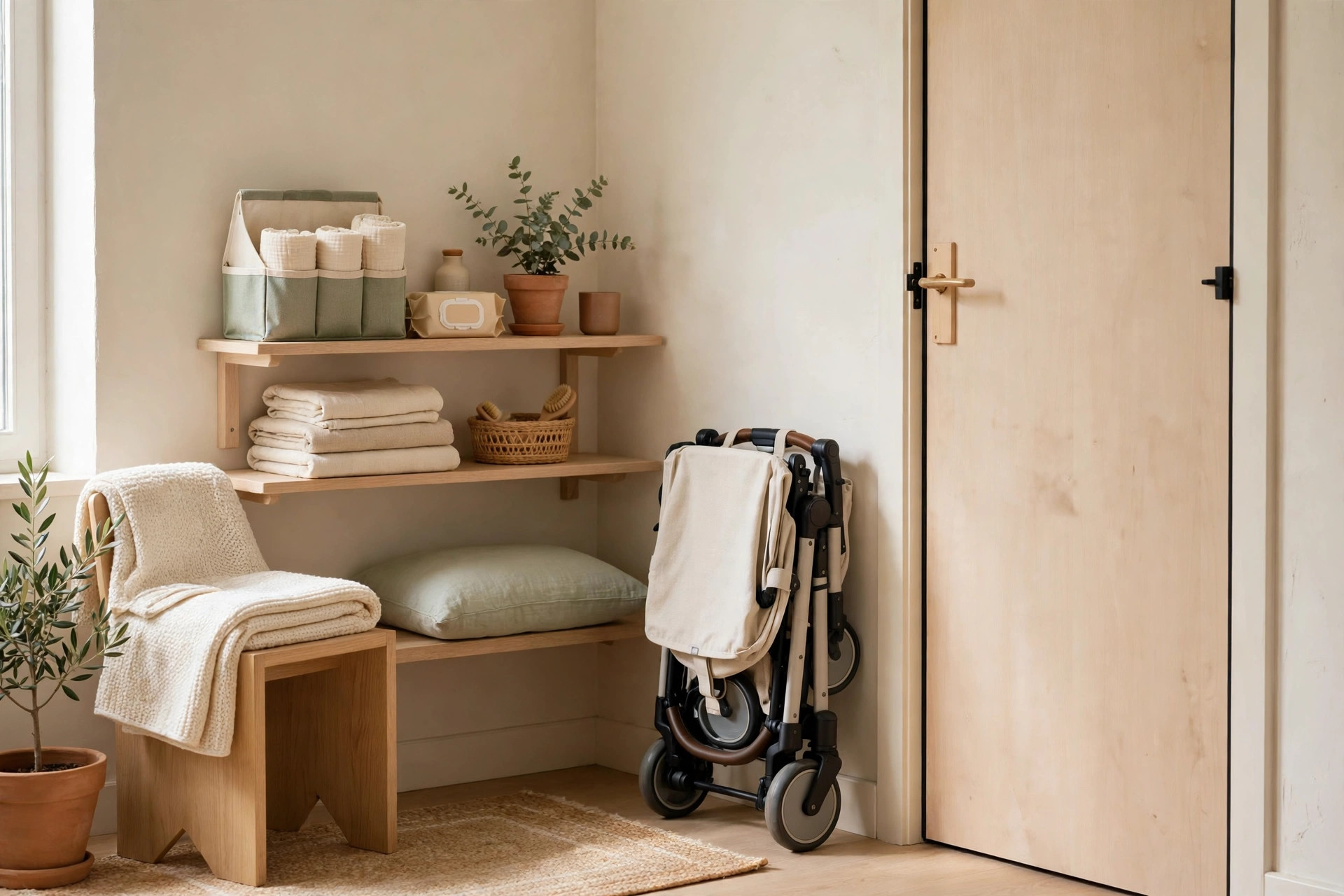
The space above the toilet or a stacked washer-dryer is storage most renters never touch. A freestanding over-toilet unit — a frame that straddles the tank — adds two or three shelves for towels and toilet paper, no fasteners needed. Buy a unit at least 2 inches wider than the tank.
Over-door organizers for every door in the apartment
A standard interior door is 80 inches tall and 30 to 36 inches wide, and its back face is almost always empty. Over-door organizers hang from two flat hooks over the top — no screws or adhesive.
8. Hang a pocket organizer on the bedroom and bathroom doors
A clear over-door pocket organizer with 20 to 24 pockets is the highest-density storage you can buy for under $15. On the bedroom door it holds shoes and chargers; on the bathroom door, toiletries; on a closet door, craft supplies. Clear pockets matter: you can see what’s inside, so it actually gets used. Check clearance first: the hooks add a quarter inch at the top.
9. Put an over-door rack in the kitchen and the entryway
The pantry door is the best door in the apartment for storage, because kitchen items are small and numerous. An over-door wire rack with two or three shallow baskets holds spices, foil, and snack bags where you cook, freeing a cabinet shelf. At the front door, a hook rail with 5 to 7 hooks holds coats and bags in the 6 inches behind the door that nothing else uses. If your entryway is just a door into the living room, pair the rack with 15 Small Entryway Organization Ideas (Even With No Foyer).
Furniture that stores: ottomans, benches, and bed risers
In a small apartment, every piece of furniture should earn its floor space twice: once as furniture, once as storage.
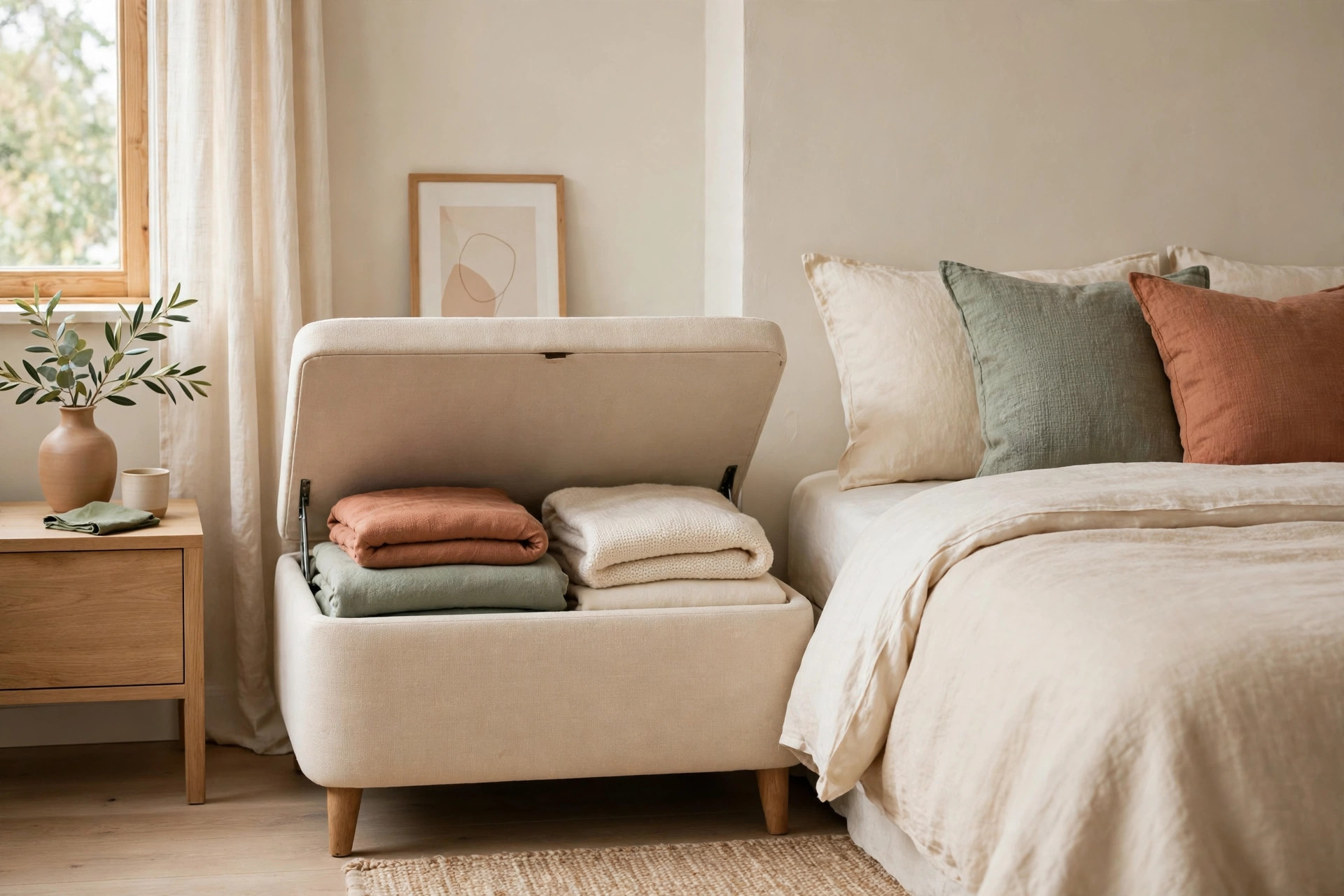
10. Swap one decorative piece for a storage ottoman or bench
A storage ottoman holds roughly 3 to 5 cubic feet — throw blankets or board games — and doubles as a footrest or extra seat. A storage bench at the foot of the bed holds 6 to 8 cubic feet of off-season clothes, with a flat top that works as a seat.
11. Raise the bed and claim the space underneath it
Bed risers — blocks that lift each bed leg 3 to 6 inches — turn the gap under your bed into a storage zone. A queen bed lifted 5 inches gains roughly 10 cubic feet, enough for two or three flat bins of off-season clothes. Use wheeled bins no taller than your clearance minus 1 inch, and label each bin on its visible end. Our under-bed storage guide covers bin sizes and dust-proofing.
Rolling carts: storage that moves where you need it
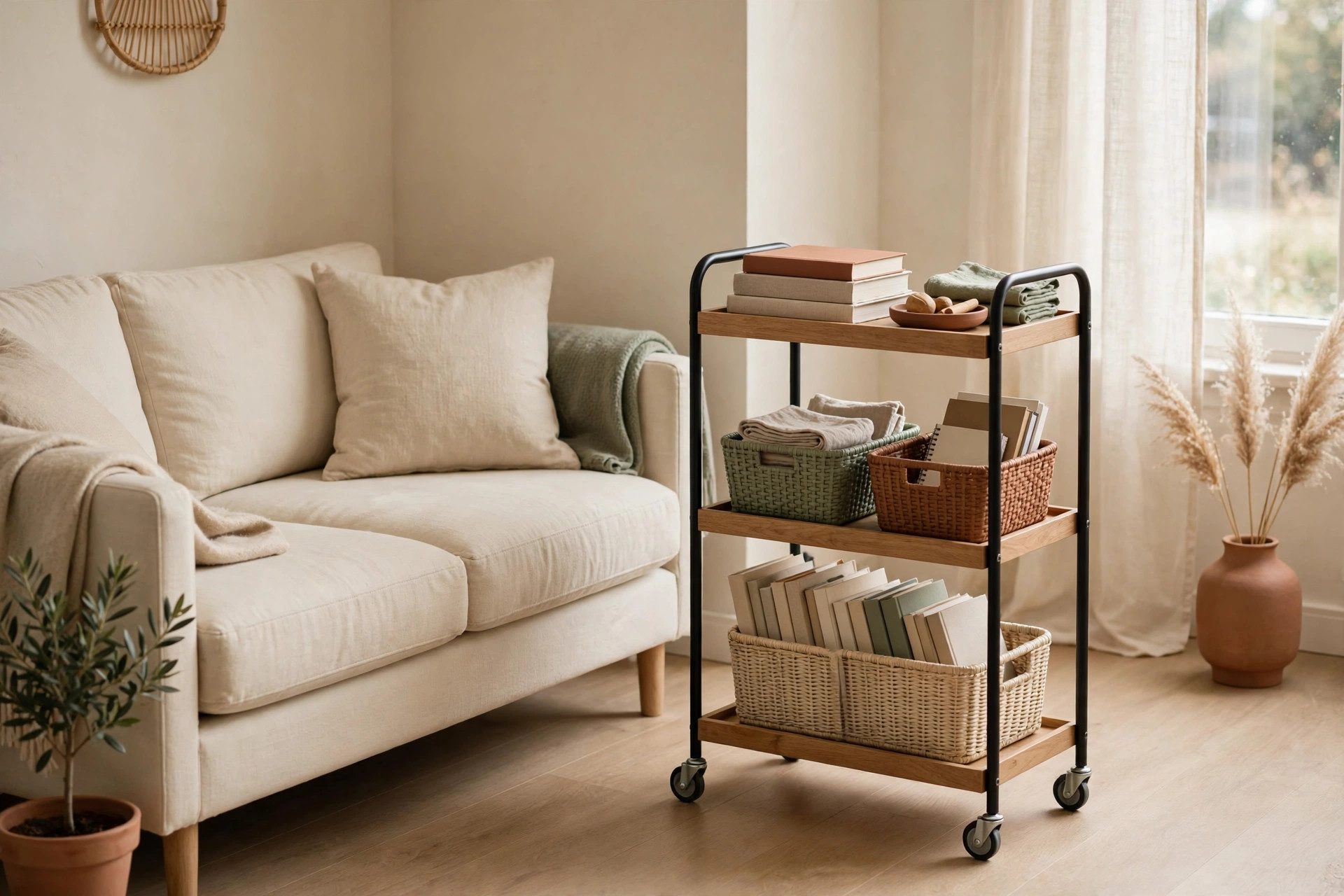
A rolling cart is a shelf unit on wheels. Storage that moves can live in a gap, roll out when you need it, and roll away when you don’t.
12. Fill the 6-inch gaps with a slim rolling cart
Every small apartment has gaps that look useless: the 6-to-8-inch space beside the fridge or washer. A slim three-tier cart — about 5 to 7 inches wide, 15 inches deep, 30 to 35 inches tall — slides into those gaps and holds cleaning supplies or pantry overflow. Measure the gap at the floor and at counter height first — baseboards narrow it by half an inch.
13. Keep one cart as a mobile station that serves three rooms
Not every cart needs a fixed home. A standard three-tier cart on casters — roughly 18 by 12 inches — works as a rolling station you move where the work is: coffee in the morning, crafts in the afternoon, charging at night. For the bathroom version, 16 Small Bathroom Storage Ideas for Renters (No Drilling) shows the same cart sized for toiletries.
The move-out test: everything lifts out in under an hour
The ideas above share one promise: nothing is screwed into the walls. Prove it by rehearsing the removal before moving day.
14. Rehearse the removal once, while you still live there
Pick a Saturday and time yourself taking down one system from each category — hook ladder, tension rod, over-door organizer, rolling cart. If any single item takes more than five minutes to remove and clean up, it is not renter-safe enough — rethink it now, not on moving day. Keep a move-out kit: rubbing alcohol, a magic eraser, and white filler.
15. Label every system with its new home before moving day
A week before you move, label every storage piece with painter’s tape: “new bedroom,” “new bathroom,” “donate.” Box contents by shelf, so unpacking means putting the same box on the same shelf. Because nothing here was ever attached to the walls, your move-out is a furniture move, not a repair job.
Mistakes to avoid: what NOT to buy for a rental
Skip anything that screws into drywall — a small hole is still a hole on the move-out checklist. Skip heavy-duty adhesive strips on painted walls; when they fail they take paint with them. Skip suction-cup shelves on textured tile; suction only works on smooth, non-porous surfaces. Skip wall-mounted anything in the bathroom unless it is rated for humidity. Don’t buy a full wall of any system before the 48-hour test in idea 1.
Frequently asked questions
Can I use Command hooks in a rental without losing my deposit?
Yes, if you use them correctly. Clean the surface with rubbing alcohol, press for 30 seconds, wait the full hour before loading, and stay under the rating. At move-out, pull the tab slowly straight down — never sideways.
How much weight can a tension rod actually hold?
A standard spring rod holds about 5 to 10 pounds — enough for shirts or spray bottles. Heavier-duty rods with rubber ends and a twist-lock hold 20 to 30 pounds. Need more? The load belongs on freestanding furniture.
What is the best renter-friendly storage for a tiny kitchen?
A slim rolling cart for the gap beside the fridge, a short tension rod under the sink for spray bottles, and an over-door rack on the pantry door for spices. Together they add the equivalent of a full cabinet without touching a wall.
Do over-door organizers damage doors?
No, as long as the hooks fit your door’s clearance — standard hooks add about a quarter inch at the top. If your door already sticks, use thinner hooks.
How do I store things in a rental with no closet at all?
Start with a freestanding wardrobe or tall tower plus a tension rod inside it, add a storage bench for folded items, and use rolling carts for the rest.
Conclusion
Renter storage is about choosing systems that work with the lease instead of against it. Hooks, tension rods, freestanding shelves, over-door organizers, storage furniture, and rolling carts can add a whole closet’s worth of storage, and every one comes down in minutes on moving day. Pick the idea that solves your biggest frustration, test it for 48 hours, and build from there. Save this pin for later, and browse more renter friendly storage ideas in our small-spaces collection.