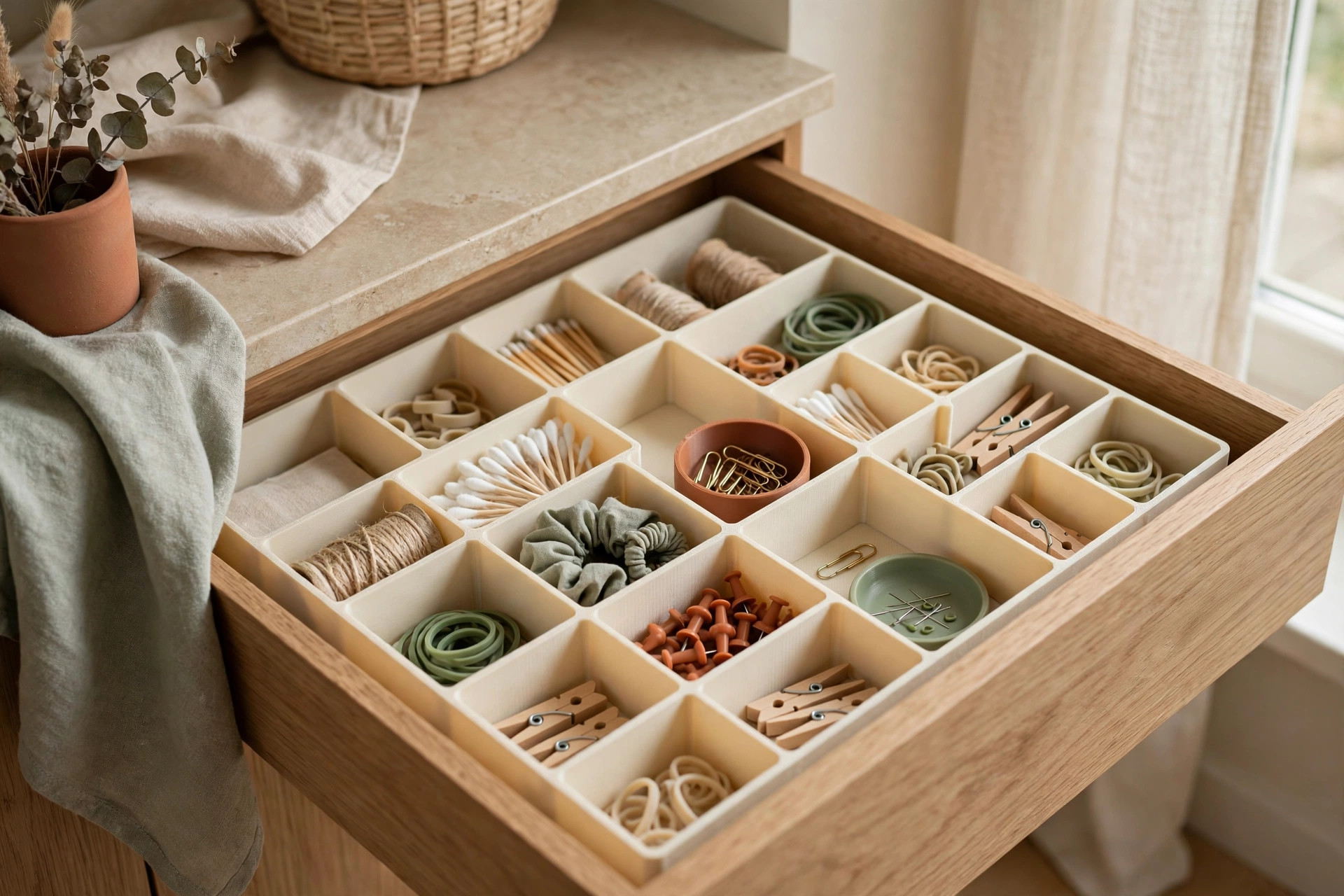
Your basement holds the overflow of your whole house — holiday boxes, tools, keepsakes, the backup pantry — and then it punishes you for it. One damp spring and cardboard turns soft, labels peel off, and the box you need is buried behind six boxes you don’t. These small basement storage ideas fix the real problem first: moisture. Every idea below keeps things dry, labeled, and reachable in a small basement, using sealed bins, wall systems, and simple zones instead of more floor piles. Walk them in order: test the moisture, upgrade the bins, get storage off the floor, zone what stays, and set the twice-a-year audit that keeps it all working.
The moisture rule: what can and can’t live in a basement
A basement is the dampest room in the house, and any system that ignores that fails in one wet season. Hard goods — tools, sealed plastic toys, canned goods — can live downstairs. Paper, photographs, fabric, mattresses, and electronics cannot, unless the basement is dry year-round. The EPA’s guidance on controlling moisture indoors explains where basement damp comes from.
1. Run the two-week moisture test before you store anything new
Tape a 2-foot square of clear plastic to the floor and another to the wall, sealing all four edges. Leave both for two weeks. Moisture underneath means water is coming through — that spot is not storage until the leak is fixed. Moisture on top means humid air, and a dehumidifier will help.
2. Keep a dehumidifier running and set a number, not a feeling
Hold relative humidity between 30 and 50 percent. Buy a unit rated for your basement’s square footage, with a drain hose to a floor drain or sink so you never empty a bucket, and a built-in humidistat. Check the reading weekly for the first month, then monthly.
Bins that survive: sealed, labeled, off the floor
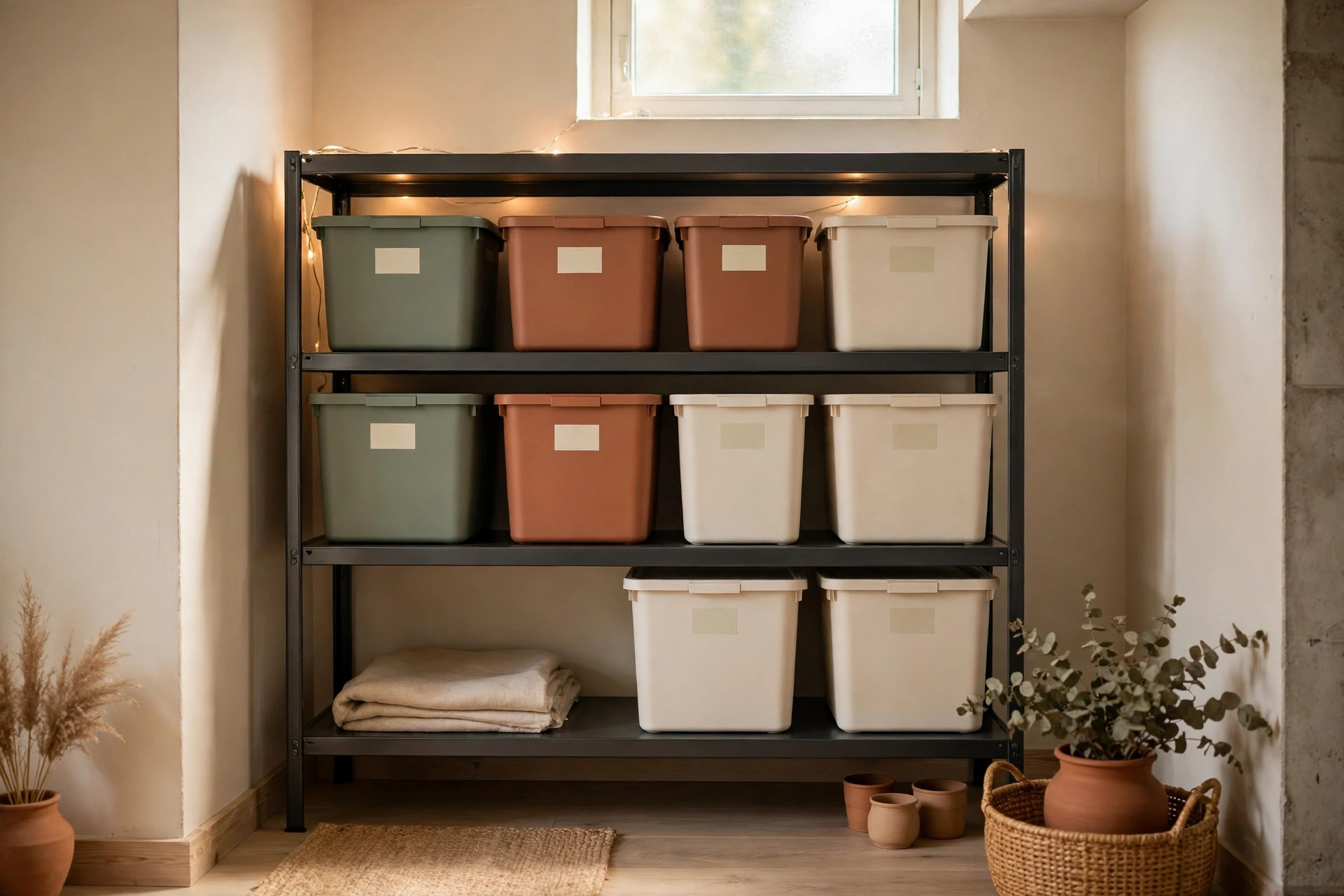
Cardboard is the enemy in a basement. It wicks moisture from concrete, sags under weight, and gives silverfish a home. Sealed plastic bins are the baseline — everything else here assumes your things are in them. Buy one size and one brand so bins stack neatly.
3. Switch to gasket-sealed bins for anything you keep long-term
A gasket-sealed bin has a rubber ring in the lid that closes tight and keeps out damp air, dust, and insects. Use 27-gallon bins for bulky seasonal items and 12-gallon bins for smaller categories like craft supplies. Press each lid corner after closing — if it flexes or pops, the seal is weak.
4. Raise every bin at least 4 inches off the floor
Basement floors flood in inches, not feet. A low platform, a 2x4 frame, a plastic pallet, or bed risers under a shelving unit keeps bins above the first few inches of water. Never stack bins directly on concrete, even in a “dry” basement — concrete sweats, and the bottom bin absorbs moisture all year.
5. Pack bins light enough to lift and label the weight
A full 27-gallon bin of books weighs over 60 pounds, which means nobody will ever move it — so it will sit at the bottom of a stack forever. Keep heavy items in 12-gallon bins, and big bins for light bulky things like decorations and winter coats. Pack each bin about three-quarters full so the lid closes without force.
Wall systems: shelves and pegboards that beat the floor
Floor space in a small basement is your walkway, your work area, and your flood zone all at once. The walls are free real estate. Wall storage keeps bins off the floor, puts daily-use items at eye level, and leaves the floor clear for the dehumidifier, the laundry, and you.
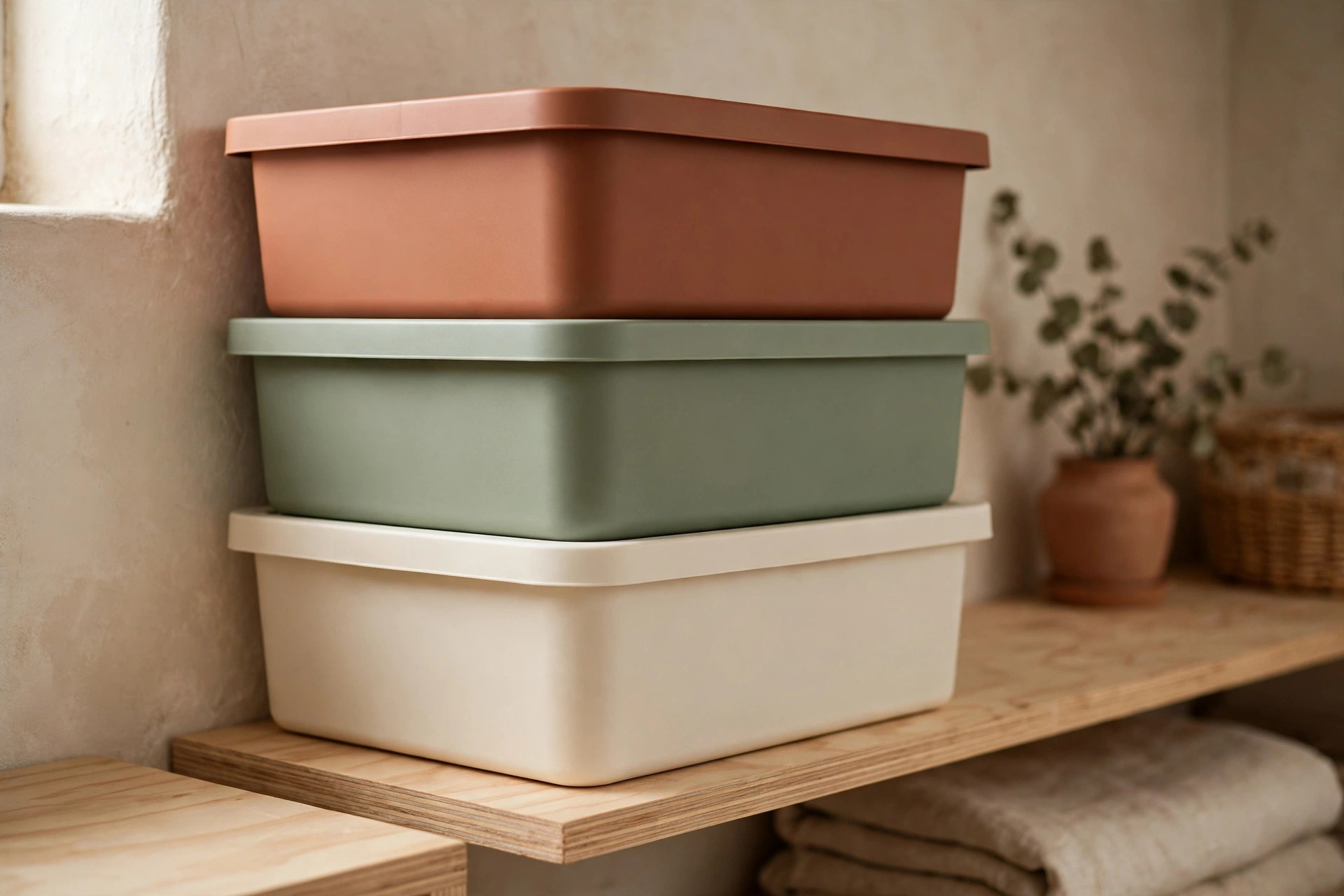
6. Install one wall of heavy-duty metal shelving, 18 inches deep
Freestanding metal shelving units, about 48 inches wide and 18 inches deep, hold far more than wire racks and do not sag under bins. Place them along the driest wall, 2 inches out so air circulates behind them, with the bottom shelf 4 to 6 inches off the floor. Daily-use items go at waist height, heavy bins at knee height, light seasonal bins up top. The same wall-first thinking works in a garage — see these 18 Small Garage Organization Ideas That Reclaim Your Parking Spot.
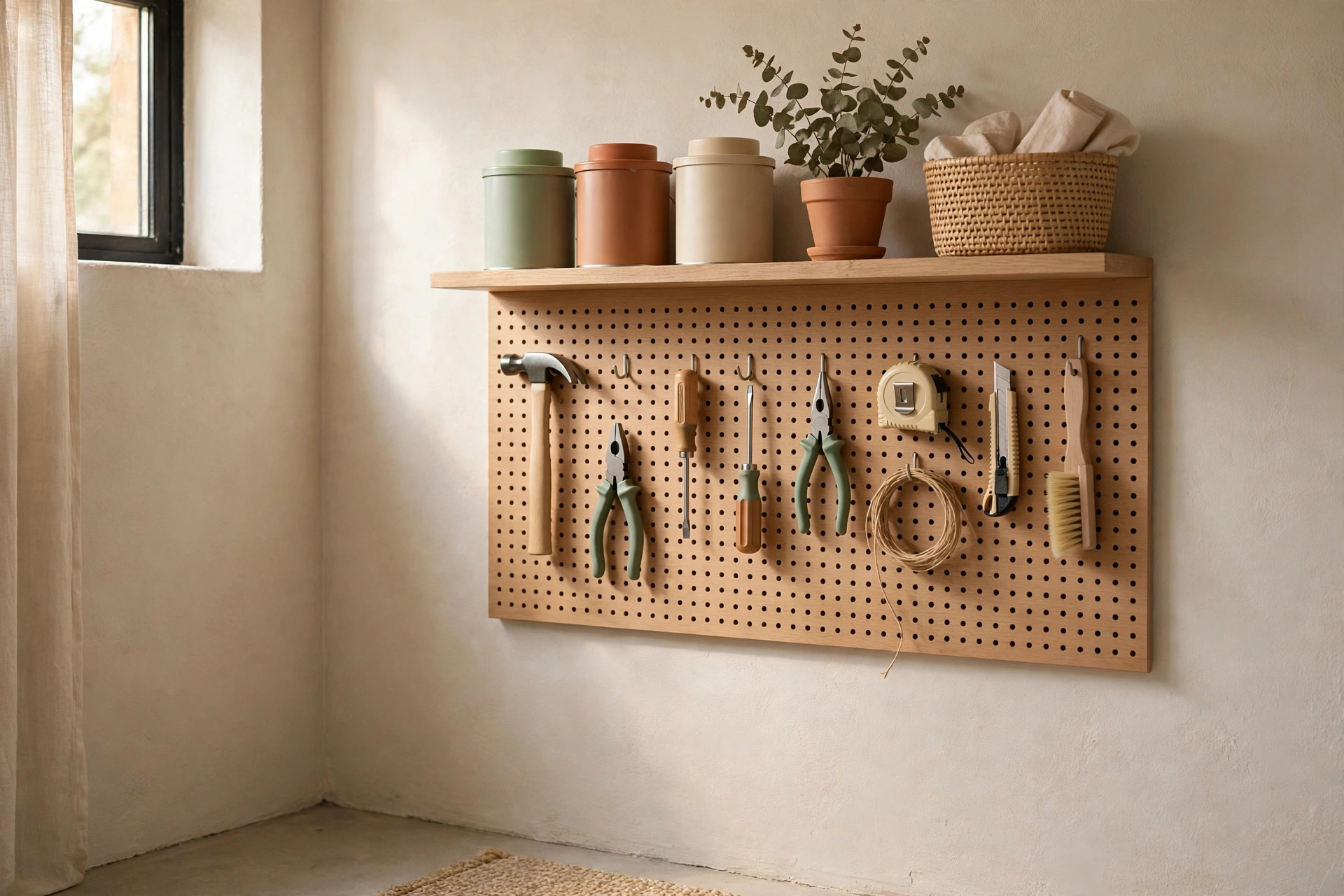
7. Hang a pegboard panel for tools and small hardware
A 4-by-4-foot pegboard above a small work surface holds hand tools, tape measures, extension cords, and garden tools where you can see them all at once. Use metal hooks, not plastic, and outline each tool’s shape with a marker so missing tools are obvious. Renters can lean a freestanding panel against the wall instead.
8. Add a slatwall strip or rail for the items you grab weekly
A short slatwall panel or a rail with S-hooks near the stairs holds the things you fetch often: the step stool, reusable shopping bags, the dog leash, the flashlight, the extension cord. Mount it at shoulder height on the wall beside the stairs, where you pass it every trip. Weekly items hang here; yearly items live in a sealed bin.
Zones: seasonal, tools, keepsakes, household backup
A basement without zones becomes one big pile, because everything has equal claim on every shelf. Zones give each category a home with a boundary: when the holiday zone is full, something leaves before anything new goes in. Keep a 3-foot walkway clear through the middle.
9. Give holiday decorations one zone and one bin limit
Holiday decorations expand every year, so cap them: one zone, one shelving bay, and four 27-gallon bins, which covers most homes. Pack ornaments in divided boxes, wrap string lights around cardboard so they do not tangle, and label each bin by holiday. When the bins are full, the rule is one in, one out. For packing ideas that keep fragile decorations safe, see these 16 Holiday Decoration Storage Ideas for Small Apartments.
10. Build a tools zone with a work surface you can actually use
Group all tools in one zone: hand tools on the pegboard, power tools in latching bins on the shelf below, and hardware — screws, nails, anchors — in small clear jars or a parts organizer on a workbench or sturdy folding table. Keep a small trash bin and a broom here so cleanup happens where the mess happens. Never store paint or solvents on the floor; keep them on a metal shelf, lids tight, away from the furnace.
11. Protect keepsakes in their own dry, high zone
Keepsakes — photo albums, children’s artwork, wedding items, family heirlooms — get the driest, highest spot: the top shelf of the driest wall, in gasket-sealed bins, never on the floor. Wrap fabric items in acid-free tissue, not plastic bags, and put silica gel packets inside each bin. Tape an inventory list inside the lid so you never open three bins to find one item.
The staircase and landing: storage in the dead space
The staircase is the most wasted space in a small basement. The area under the stairs, the wall beside them, and the landing at the bottom can hold a surprising amount — if you treat them as storage, not a dumping ground. Nothing may block the walking path or the handrail.
12. Turn the under-stair triangle into a shallow closet
The space under the stairs fits a shallow closet better than a pile. Add a rod for off-season coats, or two short shelves for shoes, cleaning supplies, and the vacuum. Keep the depth shallow — 18 to 24 inches — and add a battery-powered motion light for the dark corner.
13. Use the landing and stair wall for the weekly grab-and-go
The landing at the bottom of the stairs is the perfect spot for a narrow shoe rack, a boot tray, and a small shelf for items that travel between floors: the laundry basket, the library bag, the reusable grocery bags. Mount a few sturdy hooks on the stair wall for coats and the dog leash. Keep this area to one rack and one shelf.
Labeling that works in the dark: big, high-contrast, both ends
Basement lighting is bad. One bare bulb, dark corners, and bins stacked three high mean a small neat label is unreadable exactly when you need it. Labels need to work from six feet away in dim light, on both ends of the bin, so you can read them no matter which way the bin faces.
14. Label both ends of every bin in 2-inch high-contrast letters
Use large adhesive labels or a label maker set to its biggest font, with black text on white or yellow. Put the same label on both short ends of the bin, not on the lid, because lids get swapped and bins get turned around. Add the date the bin was packed and its zone in smaller text underneath.
15. Color-code by zone so you can find things without reading
Assign one color per zone — red for holiday, blue for tools, green for household backup, yellow for keepsakes — and use colored tape or labels on every bin in that zone. From across the room, color tells you which bay to walk to before you read a single word. Post the code on a small sign at the top of the stairs.
What never goes in a basement (and where it goes instead)
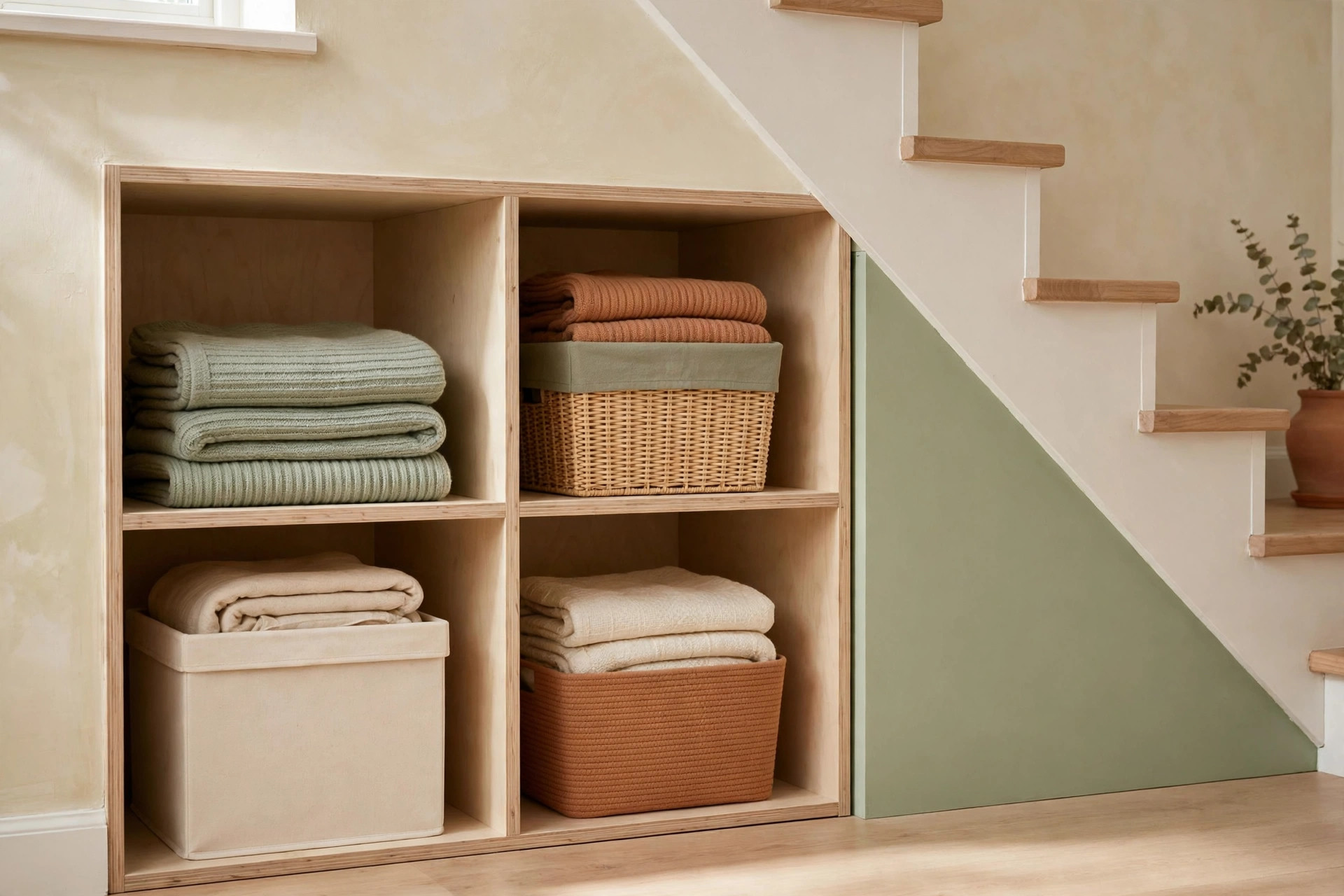
Some things should never live in a basement, no matter how good your bins are. Damp air, temperature swings, and the occasional flood will ruin them slowly or all at once. Moving them out is not losing storage — it is protecting things that cannot be replaced. The replacement spot is a dry closet upstairs, not a different corner of the same basement.
16. Move paper, photographs, and fabric heirlooms upstairs
Paper documents, photo albums, and fabric heirlooms absorb moisture, grow mold, and fade in basement air. Move important papers to a filing box in an upstairs closet, scan photographs and store the originals in archival boxes in a dry bedroom closet, and keep fabric heirlooms in breathable cotton bags upstairs, never in sealed plastic in the basement.
17. Keep mattresses, electronics, and candles out of the basement
A spare mattress stored in a basement absorbs damp and develops mold inside the padding, where you cannot see it. Old electronics corrode in humid air, and their batteries can leak. Candles melt in summer heat and crack in winter cold. Store a spare mattress flat under a bed, old electronics in a hallway closet bin until recycling day, and candles in a cool, dry kitchen cabinet.
The twice-a-year basement audit
A basement system only works if someone checks it. Without an audit, bins multiply, zones blur, and the damp creeps back unnoticed. The audit takes about an hour, twice a year. Put it on the calendar for late spring and early autumn every year.
18. Run the one-hour spring and autumn audit with a fixed checklist
Every audit follows the same checklist: check the dehumidifier reading and service it; look for water stains on walls and floors; open each zone and pull anything that does not belong; test every bin lid seal; replace any peeled labels; and remove one bag of things to donate or throw away. Rotate seasonal bins during the same visit. For a rotation routine that works across the whole house, see these Small Apartment Seasonal Storage Rotation Ideas. If an audit finds water, fix the water before reorganizing anything.
Mistakes to avoid: what not to buy for a basement
- Cardboard boxes: they wick moisture, sag, and attract pests. Replace them with sealed plastic bins first.
- Open-top totes: they let in dust and damp air. If a bin has no lid, it is not basement storage.
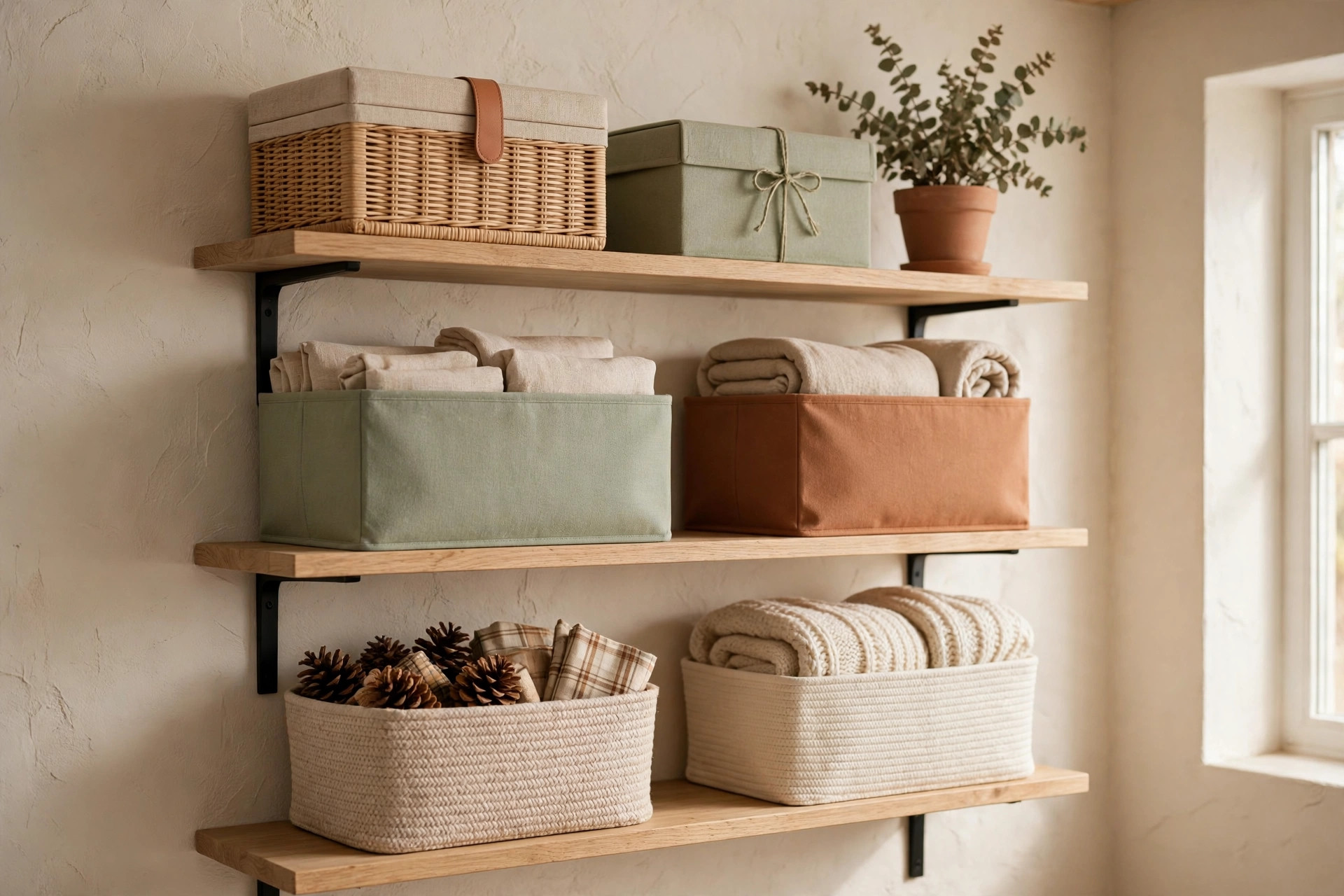
- Fabric storage cubes: they absorb moisture and grow mold. Save them for dry upstairs closets.
- Cheap wire shelving: it sags under full bins and rusts in damp air. Buy heavy-duty metal shelving.
- A second dehumidifier before fixing a leak: a dehumidifier manages humid air; it does not fix water coming through a wall. Fix the leak first.
- More bins before a purge: buying storage before decluttering just stores the clutter more neatly. Audit first, then buy only what the zones need.
Frequently asked questions
Can I store clothes in a basement?
Yes, if they are clean, completely dry, and sealed in gasket-sealed bins with silica gel packets inside. Wash and dry everything first. The basement is for off-season clothes only.
How do I keep my basement storage dry?
Run a dehumidifier set to 30 to 50 percent humidity, keep every bin sealed and at least 4 inches off the floor, and leave a gap behind shelving so air circulates. Fix leaks before you buy storage.
What is the best shelving for a small basement?
Heavy-duty freestanding metal shelving, about 48 inches wide and 18 inches deep, anchored to the wall. It holds full bins without sagging, resists rust better than wire racks, and lets you adjust shelf heights as your zones change.
Can I use my basement for food storage?
Only sealed, shelf-stable food in cans, jars, and unopened packages, kept off the floor on metal shelving in a cool, dry zone away from chemicals and the furnace. Never store food in cardboard in a basement.
Conclusion
A dry basement is a system, not a lucky room: sealed bins off the floor, wall storage instead of floor piles, four clear zones, and labels you can read in the dark. Start with the moisture test and one wall of shelving. Save this pin for later and come back to it before your spring audit.