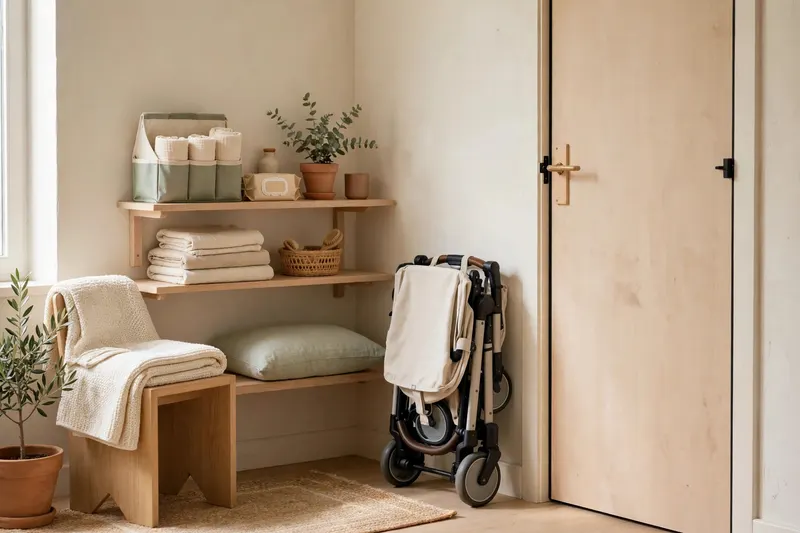
When the washer and dryer live in the bathroom, every load shares the room with steam, splashes, and damp towels. Small bathroom laundry organization is a different problem from organizing a dedicated laundry room: there is no spare wall and no drying line over a utility sink. These bathroom laundry room ideas use vertical zones instead of one crowded floor, so detergent stays dry, clothes dry without turning the room into a sauna, and clean towels never touch dirty laundry.
The bathroom-laundry combo: what changes when machines share the room
A bathroom is the wettest room in the home, and machines add heat and vibration to that moisture. Open baskets absorb steam and anything stored low gets splashed. Think in three zones: dry, work, and wet.
1. Map your three zones before you buy anything
Hold a hand mirror near the shower after a hot shower and watch where it fogs first — that is your no-store zone for paper, powder detergent, and anything that must stay dry. The wall opposite the shower and the space above the machines are usually the driest spots, so plan shelves around those two areas.
2. Put a waterproof mat under and behind the machines
A thin rubber or PVC drip mat, cut to fit the machine footprint plus about 2 inches on each side, catches the slow drips and small leaks that a bathroom floor hides until the damage is done.
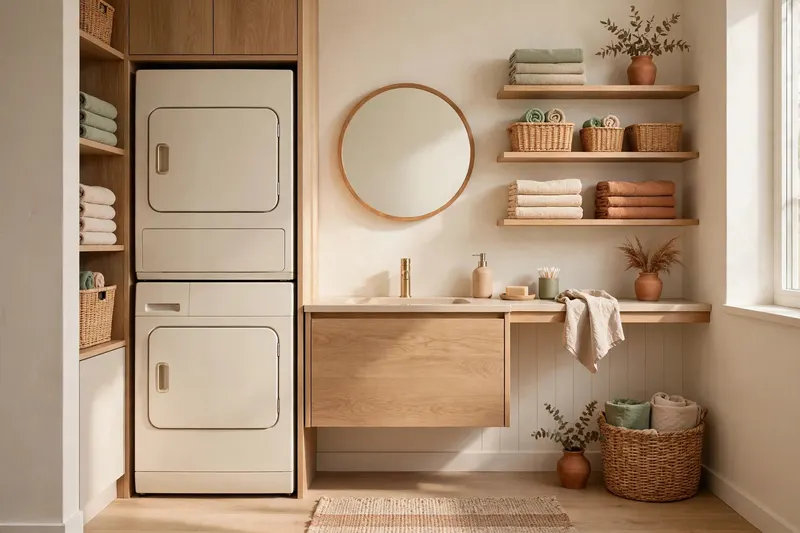
Over-toilet and above-machine shelves that stay dry
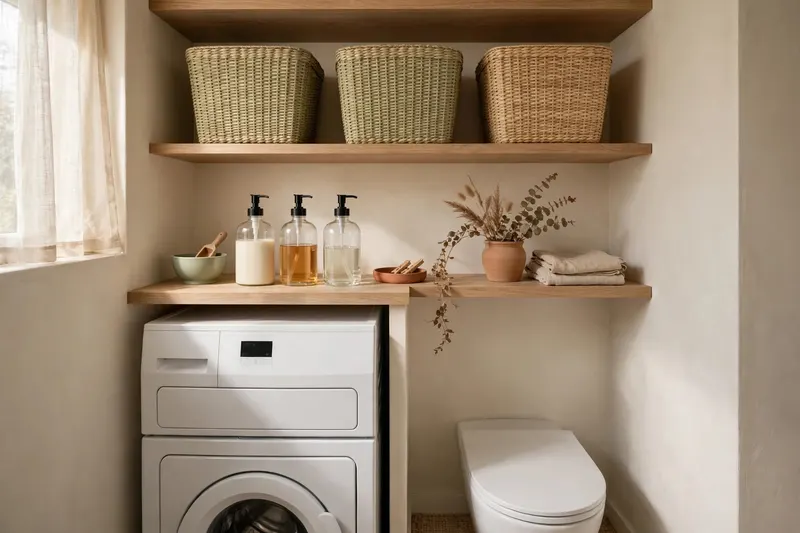
The two best storage spots are the wall above the toilet and the wall above the machines. Both are out of the splash zone and both are dead space otherwise.
3. Add an over-toilet shelf unit for folded laundry supplies
A freestanding over-toilet shelf unit — legs that straddle the tank, two or three open shelves — holds folded cloths, spare dryer balls, and stain removers without touching the wall. Choose powder-coated metal or sealed wood, not raw MDF, which swells in steam.
4. Mount a shelf above the machines at elbow height
A single 10- to 12-inch-deep shelf mounted about 18 inches above a front-loader, or just above the control panel of a top-loader, becomes your folding and sorting surface. Renters can use a freestanding stacking shelf on the machines with non-slip pads underneath.
Slim rolling carts in the gap beside the machines
Most bathroom laundry setups have a gap of 4 to 8 inches between the machine and the wall, or between the washer and the dryer.
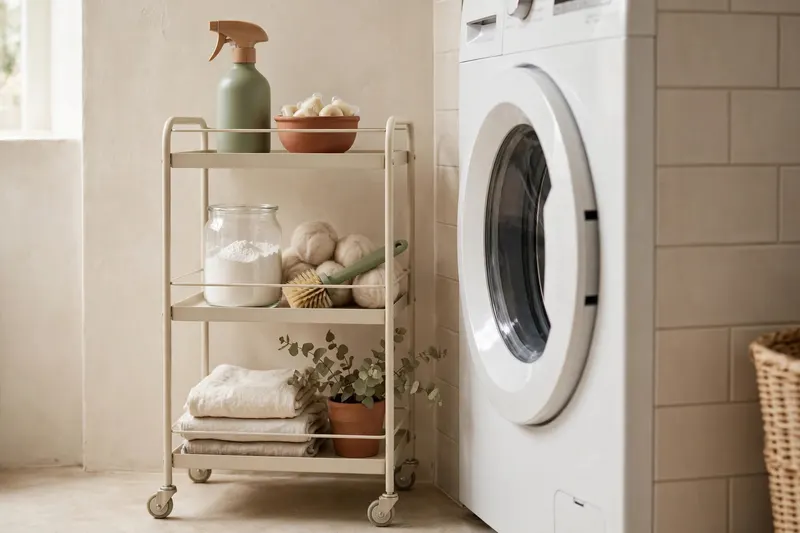
5. Slide a slim rolling cart into the gap beside the washer
A 3-tier rolling cart about 5 inches wide and 15 inches deep holds detergent, fabric softener, stain spray, and a lint roller in space that would otherwise collect dust. Pick one with a handle on top so you can pull it out one-handed, and casters that lock so it stays put during the spin cycle.
6. Give the cart a top tier for the load in progress
Reserve the cart’s top tier for whatever the current load needs: the measuring cup, the stain stick, and the mesh bag for delicates. When the load is done, that tier holds the empty scoop and the dryer balls, so nothing ends up balanced on the machine lid.
Detergent and supplies: decanting for a humid room
Detergent is the supply most likely to fail in a bathroom. Powder clumps, pods stick together, and liquid bottles grow sticky rings on every surface.
7. Decant powder detergent into an airtight, wide-mouth jar
Transfer powder detergent into a glass or hard-plastic jar with a silicone-seal lid and a wide mouth, and keep the scoop inside the jar so you never hunt for it with wet hands. Label the jar with the brand and the dose per load, and store it on the highest shelf, farthest from the shower.
8. Keep liquid detergent in a pump bottle, not the jug
A pump dispenser bottle in a 16- to 32-ounce size gives you one measured pump per load and keeps the sticky jug out of the room. If you use pods, keep them in their sealed tub with the desiccant packet inside, in a lidded bin for a second layer of protection. For more ways to arrange supplies around stacked machines, see 17 Small Laundry Room Organization Ideas for Stacked Machines.
Drying in a bathroom: racks, lines, and airflow
Drying is the hardest part of a bathroom laundry setup. A bathroom already holds moisture, and adding wet clothes without airflow invites mildew and musty-smelling laundry.
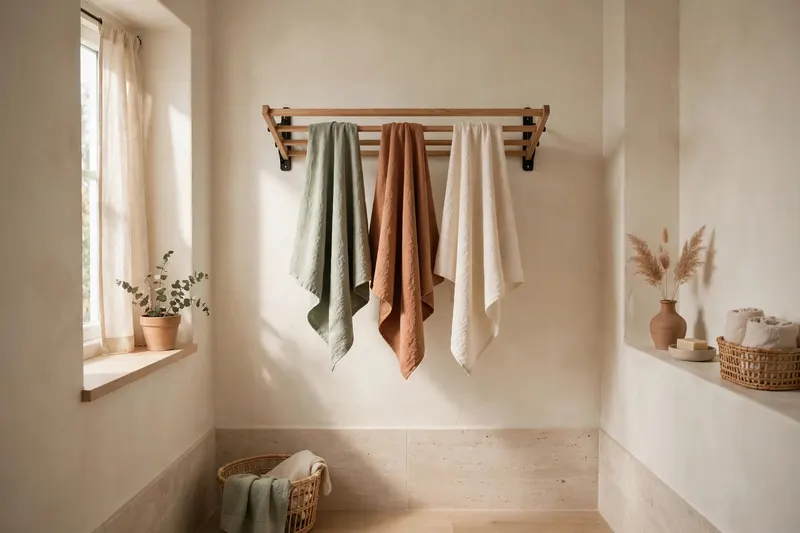
9. Use a fold-flat wall-mounted drying rack
A wall-mounted accordion drying rack that folds flat when empty gives you about 15 feet of drying line without taking floor space. Mount it opposite the shower and unfold it only while clothes are drying.
10. Hang a retractable clothesline over the bathtub
A retractable line that pulls out across the tub and retracts into a small wall-mounted housing is the best drying option for small items — socks, underwear, washcloths, and delicates. Drips fall into the tub, not onto the floor, and the line disappears when it is not needed. Open the door or window while clothes dry.
11. Run the exhaust fan for 30 minutes after every load
The exhaust fan is your drying partner. Switch it on when you start the wash and leave it running for at least 30 minutes after you hang clothes to dry. For more drying options that work without a dryer, see 17 Small Laundry Drying Solutions for Apartments (No Dryer, No Yard).
Hamper systems that fit a bathroom, not a laundry room
A full-size laundry hamper rarely fits a bathroom, and a tall one blocks the door.
12. Choose a slim, ventilated hamper that slides between the machines
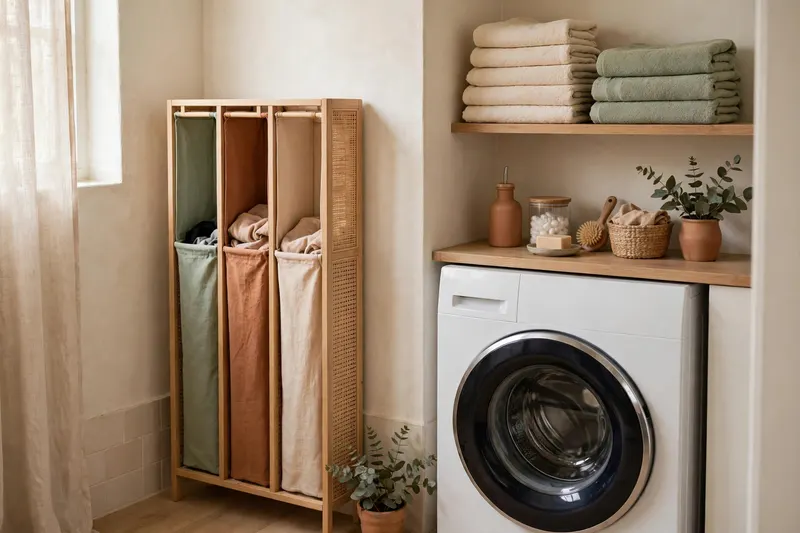
A narrow hamper — roughly 10 inches wide and 20 inches tall — with mesh or slatted sides slides into the gap beside the washer or tucks between the toilet and the vanity. Solid plastic hampers trap dampness and make clothes smell musty within a day.
13. Sort with two small bags instead of one big hamper
Hang two labeled mesh bags on hooks — one for lights, one for darks — and you skip the sorting step entirely. When a bag is full, that is your signal to run the wash, which keeps laundry from piling up in a room that has no space for piles.
Keeping towels and laundry separate (and dry)
Towels and laundry share the bathroom, but they should never share a surface.
14. Give towels their own shelf, above the laundry zone
Store folded towels on a shelf that sits higher than any laundry supply — above the machines or on the wall over the towel rail — so steam rises past them rather than settling into them. Roll towels instead of folding them flat — they take less shelf depth. For more towel-specific ideas, see 16 Small Bathroom Towel Storage Ideas That Keep Towels Dry and Handy.
15. Fold clean laundry straight off the machine, never on the towel stack
Fold each load on the shelf above the machines the moment it comes out, then carry the folded stack straight to the bedroom. The longer clean laundry sits in the bathroom, the more steam it absorbs.
The humidity rules: what never to store near the shower
Humidity is the one rule that overrides every other storage idea in this room.
16. Never store ironing supplies or paper near the shower
Keep the iron, ironing board, and any paper products — dryer sheets in cardboard boxes, stain-remover wipes, instruction cards — on the driest wall, or outside the bathroom entirely. Dryer sheets in a sealed tin survive; dryer sheets in an open box go limp and lose their scent within a week.
17. Keep a small dehumidifier or moisture absorber in the room
A compact rechargeable dehumidifier, or a tub of moisture-absorbing crystals on the floor behind the door, pulls a surprising amount of water out of bathroom air. The U.S. Environmental Protection Agency recommends keeping indoor humidity below 60 percent to limit mold growth — a bathroom with a washer and dryer crosses that line fast without ventilation. Check the EPA’s guidance on moisture control in homes for the full picture.
Mistakes to avoid
The most common mistake is storing everything at floor level, where splashes and steam do the most damage — cardboard boxes, open baskets, and paper packaging all fail within weeks. Second, do not block the exhaust fan or window with a drying rack — drying in a sealed, steamy room makes clothes smell worse and walls damp. A third is overloading the shelves above the machines, which turns them into a cluttered ledge and a safety risk if the anchors are wrong.
Frequently asked questions
How can I organize laundry in a small bathroom with no laundry room?
Start with the vertical space: shelves above the machines and over the toilet, a slim rolling cart in the gap beside the washer, and a wall-mounted drying rack that folds flat. Keep detergent sealed on the highest shelf, use a slim ventilated hamper, and run the exhaust fan for 30 minutes after every load. Good laundry in bathroom storage starts with giving every item one small, fixed home.
Can I put a washing machine in a bathroom safely?
Yes, in most homes, as long as the machine is installed with proper plumbing, a grounded outlet, and enough clearance for ventilation around it. Keep electrical connections away from direct water spray, never run an extension cord across a wet floor, and make sure the room’s exhaust fan works.
How do I keep detergent from clumping in a humid bathroom?
Decant powder detergent into an airtight jar with a silicone-seal lid and store it on the highest, driest shelf, away from the shower. Keep pods in their sealed tub inside a lidded bin, and use a pump bottle for liquid detergent so the big jug stays out of the room.
How can I dry clothes in a bathroom without a dryer?
Use a fold-flat wall-mounted drying rack or a retractable clothesline over the bathtub, and always dry with the exhaust fan running and the door or window cracked open for airflow. Split big loads across two sessions if the room starts to feel damp.
Conclusion
A bathroom laundry setup works when you respect the room’s humidity and use its vertical space. Shelves above the machines, a slim cart in the gap, sealed containers for detergent, and a drying rack with real airflow cover almost every load. Save this pin for later, and browse more ideas in the small-spaces category.