Fresh basil snipped into a pasta sauce tastes nothing like the dried flakes in your spice drawer, but in a tiny kitchen the counter space for a herb garden feels like a luxury you cannot afford. Herbs do not need a counter at all. These small kitchen herb garden ideas use the windowsill, the wall, and the strip of backsplash above your sink — surfaces you already walk past but never use — so you can grow fresh herbs without giving up a single inch of prep space.
Pick your herbs: the five that earn kitchen space
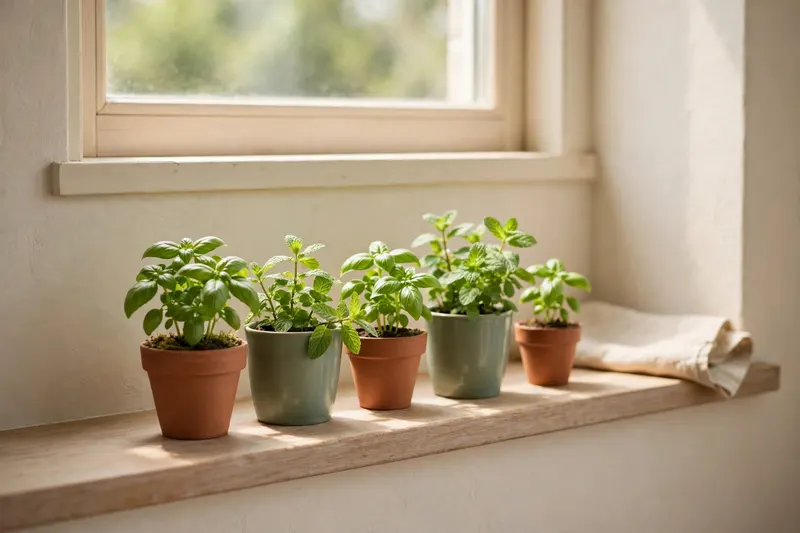
A tiny kitchen cannot host a nursery, so the first decision is which herbs deserve a spot. Five earn their place in almost every kitchen: basil, parsley, mint, chives, and cilantro. Basil and parsley are the workhorses for pasta, salads, eggs, and soups. Mint goes a long way in tea and summer drinks, chives are the lowest-maintenance herb you can grow, and cilantro is irreplaceable in tacos and curries.
1. Grow the five workhorses first — basil, parsley, mint, chives, and cilantro — and skip everything else until these are thriving. Five 4-inch pots fit a standard 36-inch windowsill with room to spare.
2. Keep mint in its own pot, always. Mint spreads through underground runners and will choke out its neighbors within a month if it shares a container. Give it a dedicated 5- to 6-inch pot with drainage holes, and never plant it in the same box as basil or parsley.
Windowsill systems: light, drainage, and the right pots
The windowsill is the classic herb spot: it is the brightest place in most kitchens, and the plants sit right where you cook. But a sunny sill still fails if the pots have nowhere to drain or sit too far from the glass.
3. Measure your light before you plant anything. Most culinary herbs need about six hours of direct sun a day. Check your windowsill at 9 a.m., noon, and 3 p.m. for one day and note when the sun actually hits it. A south- or west-facing window usually passes; a north-facing one almost never does, and you will need a small grow light (more on that in idea 5).
4. Use one long, narrow planter instead of five loose pots. A 24-inch rectangular window box, about 6 inches deep and 6 inches wide, holds three to four herbs in a single footprint and catches drips in one tray. Choose a box with drainage holes and a matching saucer, or drill two or three 1/4-inch holes in the bottom yourself.
5. Add a clip-on grow light if your window falls short. A 12- to 18-inch LED grow bar clipped to the sill or mounted under the cabinet above it costs roughly $15–25 and runs on a timer for 12–14 hours a day. Position it 6–12 inches above the leaves. This is the single upgrade that turns a dim apartment kitchen into a working herb garden.
Wall pockets and hanging planters for zero counter use
When the sill is full — or there is no sill at all — the wall takes over. Vertical planters use the blank wall beside the fridge or the side of a cabinet, and keep every plant at eye level, which makes watering and snipping easier.
6. Hang a three-pocket fabric wall planter beside the fridge. Felt pocket planters, roughly 12 inches wide and 24 inches tall, hold one herb per pocket and mount with two screws or heavy-duty adhesive hooks rated for at least 5 pounds. Line each pocket with a small plastic bag with a few drainage holes poked in the bottom so water does not soak through to the wall.
7. Use a tension rod and S-hooks for a hanging herb rail. A spring-loaded tension rod wedged between two cabinet sides or inside a window frame costs under $10 and holds three or four small pots hung from S-hooks. Hang the pots at staggered heights so the top row does not shade the bottom one.
8. Mount a single floating shelf just for herbs. A 24-inch floating shelf mounted 12–18 inches above the counter, away from the stove’s steam, holds four 4-inch pots. Keep the shelf shallow — 6 inches deep is enough. This is the same vertical thinking behind our 17 Kitchen Wall Storage Ideas for Small Kitchens, which moves everyday tools off the counter and onto the wall.
Rail and magnetic systems above the backsplash
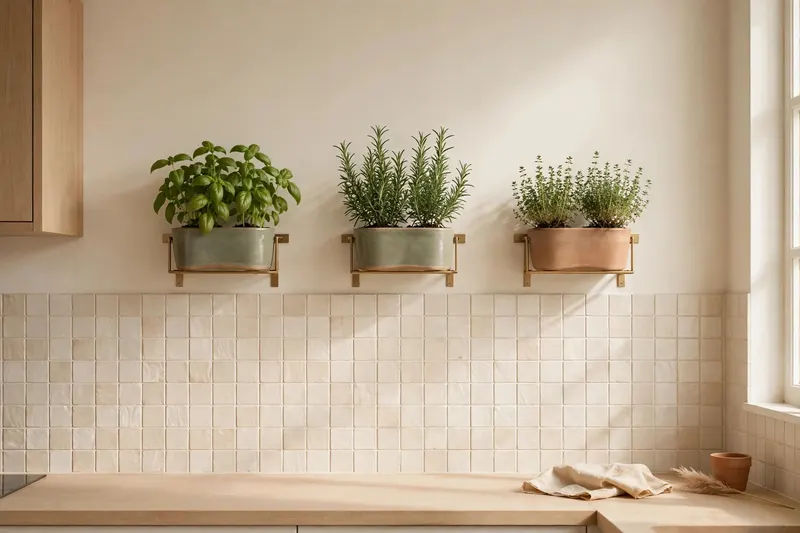
The strip of wall between your countertop and your upper cabinets — the backsplash zone — is dead space in most tiny kitchens. A rail system turns it into a herb garden that sits exactly where your hands already are while you cook.
9. Install a stainless steel rail with hanging pots above the backsplash. A 24-inch wall rail with four to six S-hooks, mounted 6–8 inches above the counter, holds small metal or ceramic pots of about 4 inches in diameter. The pots lift off for watering at the sink.
10. Try a magnetic strip for lightweight herb jars. A magnetic knife strip mounted on the backsplash holds small magnetic planters or metal tins fitted with strong magnets. This works best for compact herbs like chives and small parsley plants in 3-inch tins. Test the hold with a full, watered tin before you trust it above your toaster.
11. Keep one rail slot free for the herb you use most. Whatever you cook with daily — usually basil — should live at the end of the rail nearest the stove, at shoulder height, so you can snip without reaching across a hot pan. If you rent and cannot drill, the same rail idea works with damage-free mounts; see our 17 Renter-Friendly Kitchen Organization Ideas for adhesive hooks and tension-rod options that leave no marks.
Watering without the mess: self-watering and tray rules
Herbs die in tiny kitchens for two reasons: they dry out because nobody remembers them, or they drown because an enthusiastic waterer floods a pot with no drainage. A simple watering system fixes both.
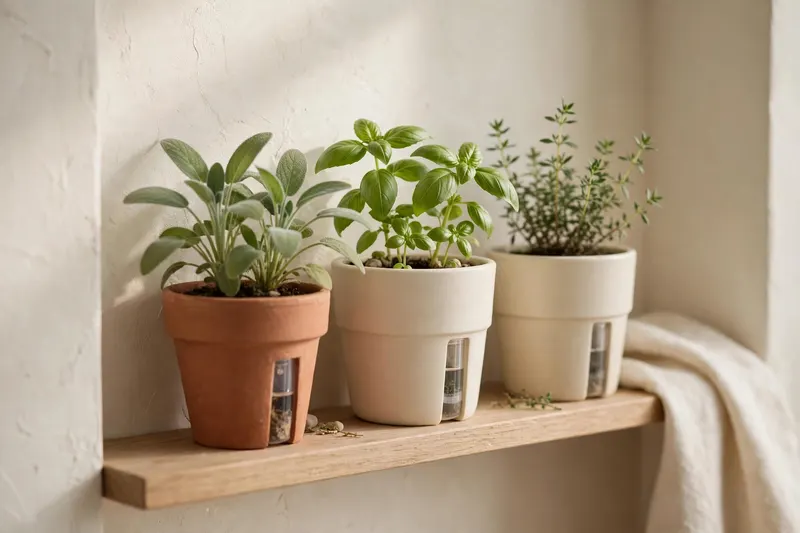
12. Switch to self-watering pots with a visible reservoir. A self-watering pot holds a water reservoir at the bottom with a wick that draws moisture up as the soil dries. Fill the reservoir once a week instead of guessing daily, and choose a model with a water-level window. A 6-inch self-watering pot costs roughly $8–12.
13. Put every pot on a tray, and empty the tray within an hour. A shallow tray — a baking sheet or a purpose-made plant saucer — catches the runoff that would otherwise stain your sill or seep into a cabinet. The rule is simple: water until a little runs out the bottom, then tip the tray out after 30–60 minutes. Herbs sitting in standing water develop root rot in days.
Harvesting and drying: keeping herbs productive
Herbs are not decoration — the more you cut them, the more they grow, as long as you cut correctly. A plant you never harvest turns woody and bitter.
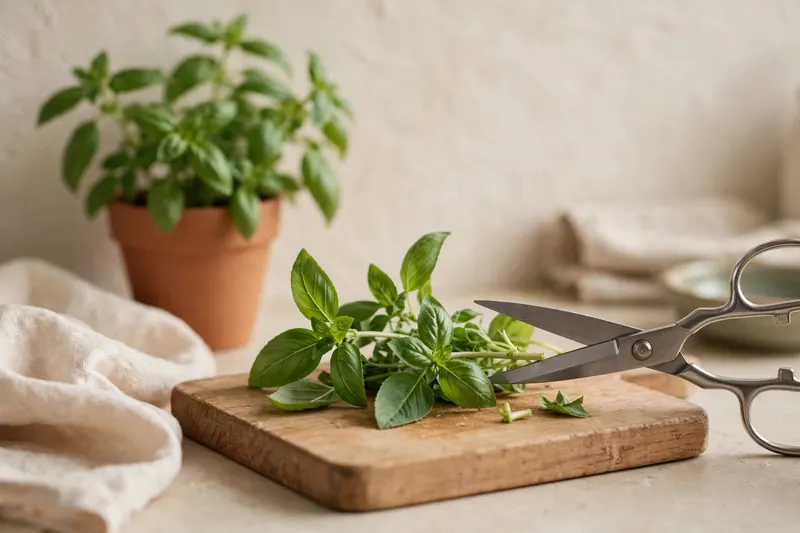
14. Harvest from the top, never strip the bottom leaves. Snip the top 2–3 inches of a stem just above a leaf joint, and the plant will branch out below the cut and grow bushier. Take no more than a third of the plant at once. For basil, pinch off the flower buds the moment they appear — once basil flowers, the leaves turn bitter.
15. Dry your surplus in small paper-bag bunches. When a plant outgrows your cooking, tie five or six stems together, slip the bunch into a small paper bag with a few air holes, and hang it upside down in a dry cupboard for one to two weeks. The bag catches falling leaves and keeps dust off. Surplus trimmings can also go to the compost bin; our 16 Small Apartment Composting Ideas shows how to compost kitchen scraps without smell in a tiny kitchen.
What NOT to buy: herbs that outgrow a tiny kitchen
Not every herb belongs in a small kitchen. This is the “what not to buy” list — skip these until you have outdoor space.
16. Skip rosemary bushes, dill, and lemongrass indoors. A rosemary plant can grow into a 3-foot woody shrub within a year; dill bolts to 4 feet tall and flops over in a pot; lemongrass needs a deep container and full sun it will never get on a north-facing sill. All three are cheap to buy fresh and expensive in space to grow. If you love rosemary, buy one small plant, keep it pruned hard, and accept that it will need replacing each year.
Beyond the big three, skip seed-starting trays that hog the whole sill for two months, oversized decorative pots with no drainage, and any “herb garden kit” that bundles ten seed packets you will never plant. A small indoor herb garden works because it is small — five plants, one watering routine, one sunny spot. For more ways to display plants without clutter, see our 15 Indoor Plant Display Ideas for Small Apartments.
Frequently asked questions
Can I grow herbs in a kitchen with no windows?
Yes, with a grow light. A 12- to 18-inch LED grow bar on a 12–14 hour timer replaces window light completely. Choose compact herbs like chives, parsley, and mint, and keep the light 6–12 inches above the leaves.
How often should I water indoor kitchen herbs?
Most herbs need water once or twice a week, but check the soil with your finger first — water only when the top inch feels dry. Self-watering pots stretch this to a weekly top-up. Overwatering kills more indoor herbs than underwatering does.
Which herbs grow best in a small kitchen?
Basil, parsley, mint, chives, and cilantro. They stay compact in 4- to 6-inch pots, tolerate indoor light with a little help, and get used often enough to justify their space. Avoid rosemary, dill, and lemongrass indoors.
Do herb gardens attract bugs in the kitchen?
Rarely, if the soil drains well. Fungus gnats appear when soil stays soggy, so empty drip trays promptly and let the top inch of soil dry between waterings.
Can I grow herbs in the kitchen year-round?
Yes. Indoor herbs grow all year as long as they get enough light and steady room temperatures (roughly 60–75°F / 15–24°C). Basil is the most cold-sensitive — keep it away from drafty windows in winter.
Fresh herbs, no counter lost
A tiny kitchen does not need a big garden — it needs five well-chosen herbs, one sunny or well-lit spot, and a watering routine you can actually keep. Start with the windowsill or a wall rail and harvest from the top so your plants keep producing. Browse more kitchen ideas in our kitchen category, and save this pin for later so your herb garden plan is ready when you are.