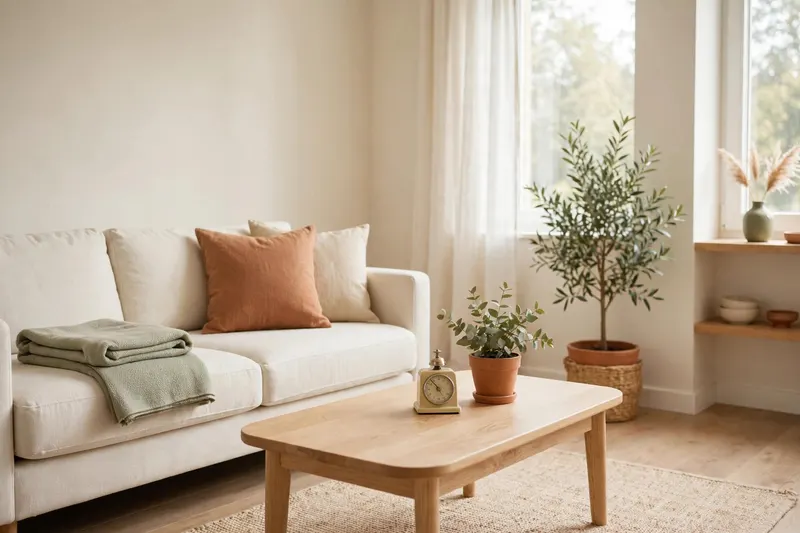
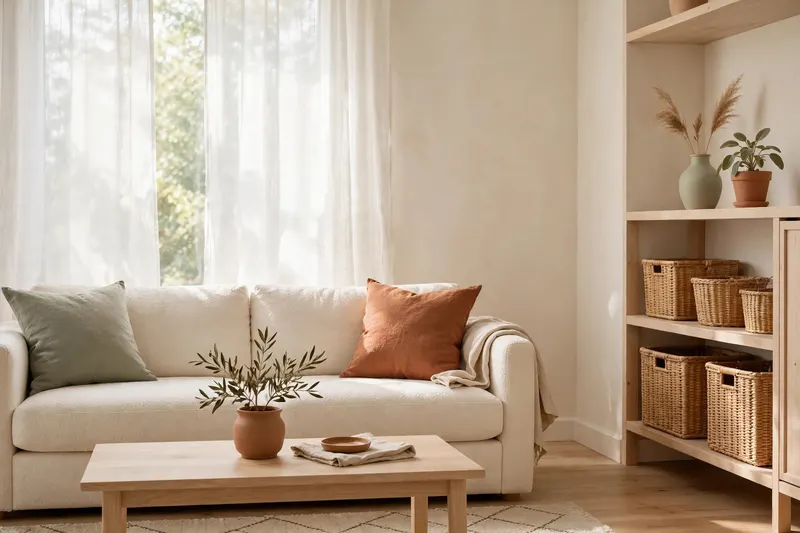
A dog crate eats floor space, and in a small apartment there is nowhere for it to hide. It sits in the living room looking like a cage, blocks the walkway, and every guest notices it first. The fix is not an expensive custom cabinet. These small apartment dog crate ideas turn the crate into furniture — a side table, a console base, or a bench — with a topper, a washable cover, and a little planning, while keeping it a safe, comfortable den for your dog.
Measure the crate first: the size that decides everything
Every disguise starts with measurements. A topper cut for the wrong crate, a cover that hangs too long, or a console two inches too short all come from skipping this step.
1. Size the crate to your dog, not to your room
Your dog should stand up without crouching, turn around easily, and lie stretched out on their side. Measure nose to base of tail and add about 4 inches — that is the minimum crate length. Common sizes are roughly 24 inches for small breeds, 30 for medium, 36 for large, and 42 for extra-large. Buy the crate first, then design the furniture around it.
2. Tape the footprint on your floor before you buy anything
Mark the crate’s exact footprint with painter’s tape, plus 2 to 3 inches of clearance on the door side so the latch swings freely. Live with the outline for two or three days and walk past it at normal speed. You will quickly learn whether it blocks a drawer, a radiator, or the path to the kitchen — before you spend a cent on furniture.
Crate-as-side-table: the easiest furniture disguise
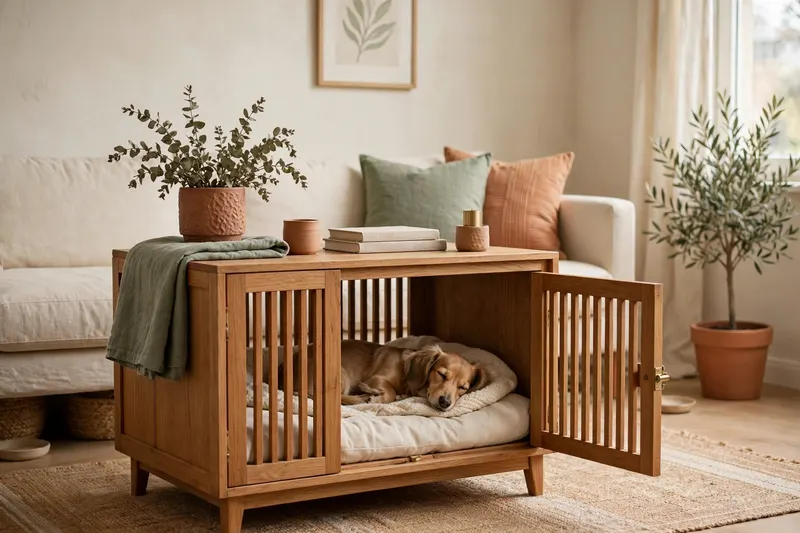
If you do only one thing on this list, do this. A flat top turns a wire crate into a piece of furniture in about ten minutes.
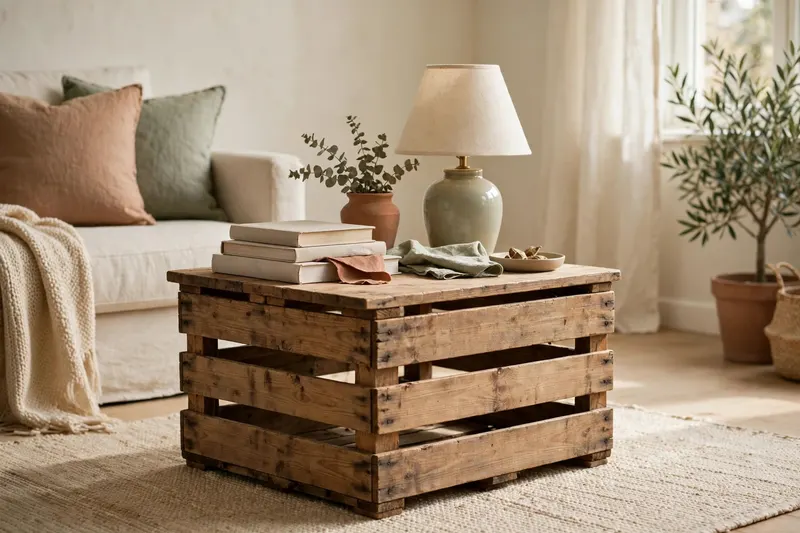
3. Add a wood topper and call it an end table
A 3/4-inch plywood board or butcher-block offcut, cut about 1 inch wider than the crate on every side, sits on top of most wire crates with no screws. Sand the edges, stain or paint it to match your furniture, and add a thin non-slip shelf liner underneath so it cannot slide. Set it beside the sofa and it becomes an end table for a lamp, a book, and your coffee mug. Keep the weight on top under about 15 pounds.
4. Match the topper finish to the furniture you already own
A pale oak topper next to a dark walnut coffee table will always look like a crate with a board on it. Take a photo of your living room furniture to the hardware store and match the stain or paint as closely as you can. Matte black works with most modern furniture; white paint blends into Scandinavian-style rooms. When the finish matches, guests read “side table” and never look twice.
Crate covers that match your decor (and wash easily)
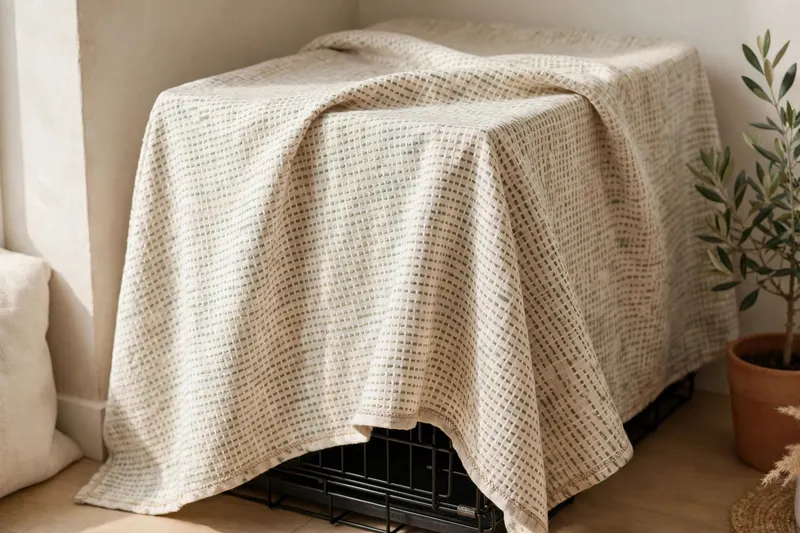
A cover is the fastest disguise, and in a small apartment it also hides the bedding, toys, and bowls inside the crate.
5. Use a fitted cover in a color that matches your sofa
A fitted cover in neutral linen, cotton canvas, or a color pulled from your cushions turns a wire box into a soft, upholstered-looking block. Choose machine-washable fabric — covers collect fur and the occasional muddy paw print — and leave the door side and at least one long side open for airflow. Solid colors disguise better than busy patterns, which draw the eye straight to the crate.
6. Make a no-sew cover from a flat sheet or curtain panel
If fitted covers are sold out in your crate’s size, a flat sheet or spare curtain panel works just as well. Drape it over the top and two sides, fold the front edge back from the door, and secure the corners with fabric ties or small binder clips hidden underneath. Lightweight cotton breathes better than a heavy blanket. Keep a second cover in the laundry rotation so the crate is never left bare on wash day.
Built-in crate under a console or bench
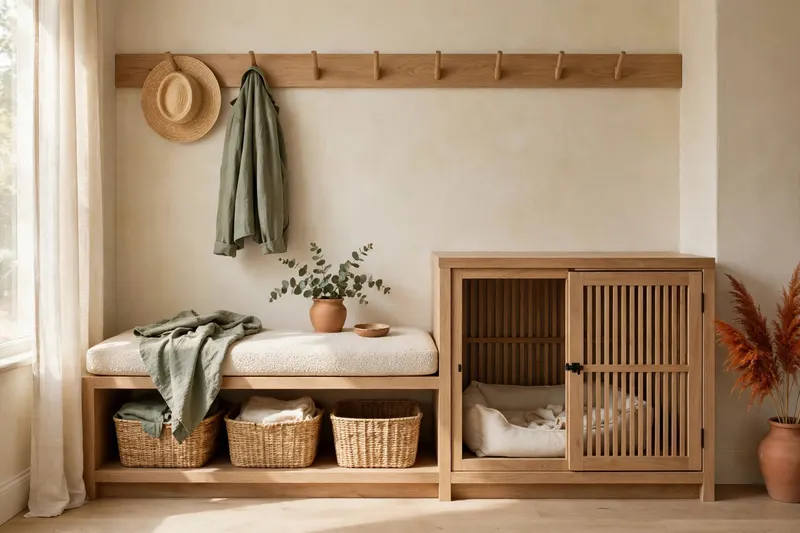
When the crate slides under a real piece of furniture, the disguise is complete — the crate becomes the base and the furniture does the decorating.
7. Slide the crate under a console table in the entryway
A console table 14 to 16 inches deep and at least 30 inches wide can hide a small or medium crate underneath while giving you a proper entry table on top for keys, mail, and a small lamp. Measure the height underneath first: most wire crates need 24 to 30 inches of clearance. This is the same hide-in-plain-sight trick used for a hidden cat litter box, where the furniture does the talking and the pet gear stays out of sight.
8. Tuck the crate under an open-base bench
A hallway or living-room bench with an open base — no solid panel between the legs — frames a crate neatly underneath while giving you a seat for putting on shoes. Look for a bench at least 36 inches long so the crate fits with a couple of inches to spare, and choose a solid wood or metal frame that will not wobble when your dog shifts inside. A cushion on the bench makes the whole setup read as intentional furniture.
Storage on top: what the crate table can hold
Once the crate has a top, it earns its floor space by holding things — but only the right things, in the right way.
9. Keep a small tray and a basket on top, nothing heavy
A shallow tray corrals a remote, a phone charger, and a book so they do not slide off when the dog moves. A small woven basket on one end holds the current toy rotation — two or three toys, not the whole collection. Skip anything glass, ceramic, or heavier than a paperback: a startled dog can shake the crate and knock things off. If you want a lamp, use a lightweight LED lamp with a wide, stable base.
10. Hang a shelf above the crate instead of piling things on it
If the crate sits against a wall, a single floating shelf 12 inches above the topper gives you storage without loading weight onto the crate itself. Use it for dog books, a small plant in a heavy pot, or a framed photo — and keep the crate top clear for a lamp or tray. The shelf also draws the eye upward, which makes the crate below look like part of a styled wall rather than a cage parked against it.
Keeping the crate ventilated and chew-safe
A disguised crate must still be a safe crate. Decoration that blocks airflow or gives your dog something to chew has to go.
11. Leave at least two sides open for airflow
Wire crates ventilate far better than solid-sided ones, which is one reason they disguise so well with a simple topper. Never cover all four sides plus the top — your dog needs moving air, especially in a warm apartment. Leave the door side and one long side uncovered, keep the crate away from radiators and direct afternoon sun, and check the temperature inside with your hand on a hot day. The American Kennel Club’s crate training guidance covers sizing and safe setup in more detail.
12. Chew-proof every part of the disguise
Puppies and anxious dogs will test your furniture. Tuck all cover fabric at least 2 inches above the crate floor so nothing dangles within reach, choose a topper with no overhang your dog can grip with their teeth, and check metal edges for sharp corners before daily use. A quick spray of a pet-safe bitter deterrent on the topper’s edge stops most chewing in a day or two. If your dog is a determined chewer, skip fabric covers and stick to the wood-topper disguise.
The dog’s stuff: leash, treats, and toys in one spot
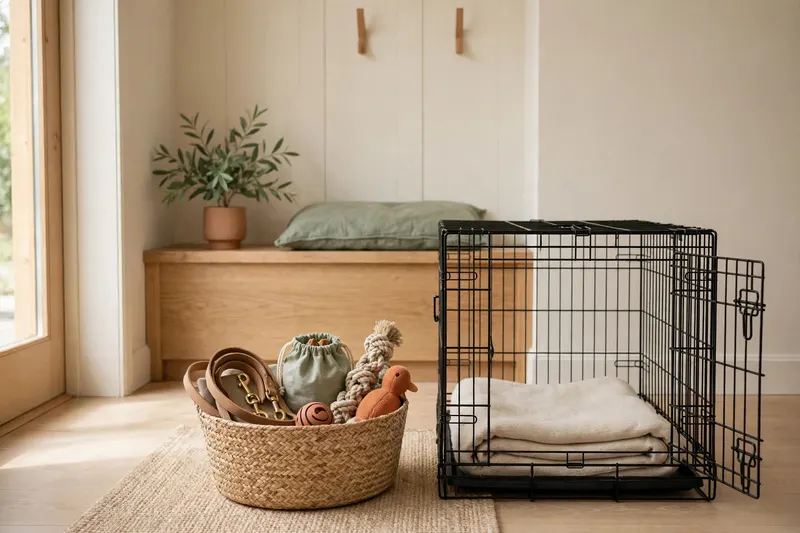
A disguised crate works best when the dog’s gear lives right next to it, so the crate corner becomes one tidy station instead of gear scattered across the apartment.
13. Put a leash hook and treat jar on the wall beside the crate
Two adhesive or screw-in hooks at hip height hold the leash and harness, and a small lidded jar on the crate topper — or on the shelf above — holds treats. Everything you need for a walk is in one place, and nothing ends up on the floor. For the rest of your pet gear, these pet supply storage ideas for small apartments show how to fit feeding stations, food bins, and toy storage into the same small footprint.
14. Park a slim rolling cart in the gap beside the crate
Most crate corners leave a 6- to 8-inch gap between the crate and the wall. A slim three-tier rolling cart, about 6 inches wide, slides into that gap and holds food, wipes, poop bags, and grooming supplies. Pull it out when you need it, push it back when you do not. A narrow basket on the cart’s top tier keeps daily-use items — treats, a brush, the spare leash — at hand without adding clutter to the crate top.
When the crate isn’t in use: folding and stowing it
Not every dog needs the crate every day, and a crate you can make vanish is the ultimate small-apartment win.
15. Fold a collapsible wire crate flat and slide it under the bed
Most wire crates fold down to about 3 inches thick in under a minute — pull the side panels in, drop the top, and fold the ends flat. A folded 30-inch crate slides under most beds or sofas, or stands upright behind a door. Keep it in its cover so it does not collect dust. The same fold-away logic behind these folding furniture storage ideas for small apartments applies here: furniture that appears only when you need it is the whole trick.
16. Use the folded crate as a spare table when guests come over
Lean the folded crate against a wall, lay a board across two of them, or set a tray on a single folded crate and you have an instant side table for a party. It is the same topper idea from the side-table section, just without the dog inside. When the evening is over, the “table” folds away in a minute and the living room is back to normal — no spare furniture taking up closet space all year.
Mistakes to avoid
Buying the crate after the furniture. The crate size decides everything else. Buy the crate first, then the topper, cover, or console — never the other way around.
Covering all four sides. A fully covered crate overheats fast, especially in summer. Always leave the door and at least one side open.
Putting heavy or breakable things on top. Anything glass or heavier than a book will fall when your dog moves. Keep the top light and stable.
Hiding the crate in a dead corner. A crate shoved behind furniture where your dog cannot see the family will not get used. Keep it in the room where you actually spend time.
Using the crate as punishment. A crate your dog fears will never feel like a den, no matter how pretty the cover is. Keep crate time positive, with treats and a comfortable bed inside.
Frequently asked questions
Can I hide a dog crate in a small apartment without it looking bad?
Yes. The most reliable disguise is a wood topper that turns the crate into a side table, plus a fitted cover in a color that matches your sofa. Together they cost far less than a custom crate cabinet, and most guests will not realize there is a crate in the room.
How do I choose the right crate size for my dog?
Measure your dog from nose to base of tail and add about 4 inches for length, then check that your dog can stand, turn, and lie stretched out inside. Common sizes are roughly 24 inches for small breeds, 30 for medium, 36 for large, and 42 for extra-large.
Is it safe to put a table top on a dog crate?
Yes, if the topper is a solid board cut about 1 inch wider than the crate, secured with a non-slip liner so it cannot slide, and kept under about 15 pounds of total weight. Never put glass, ceramics, or anything heavy on top, and make sure the topper does not block ventilation.
Can I use a dog crate as a side table in a rental?
Yes — this is one of the most renter-friendly disguises there is. A topper and a cover need no drilling, no screws, and no changes to the apartment, and both come off in seconds when you move out.
Final thoughts
A dog crate does not have to look like a cage, even in the smallest apartment. Measure first, add a matching topper or cover, give your dog’s gear one tidy spot beside it, and the crate becomes a side table, a bench base, or a console — furniture that happens to be your dog’s favorite den. Save this pin for later, and browse more ideas in our storage ideas category to find the next corner of your apartment to tame.