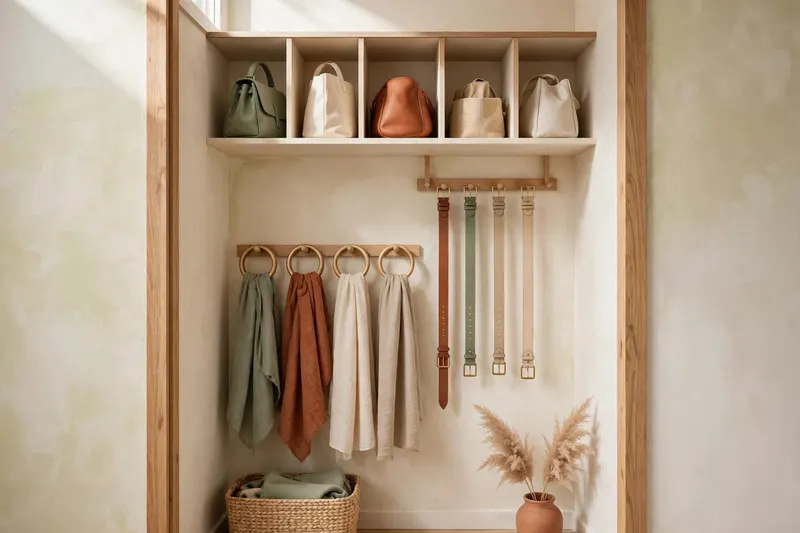
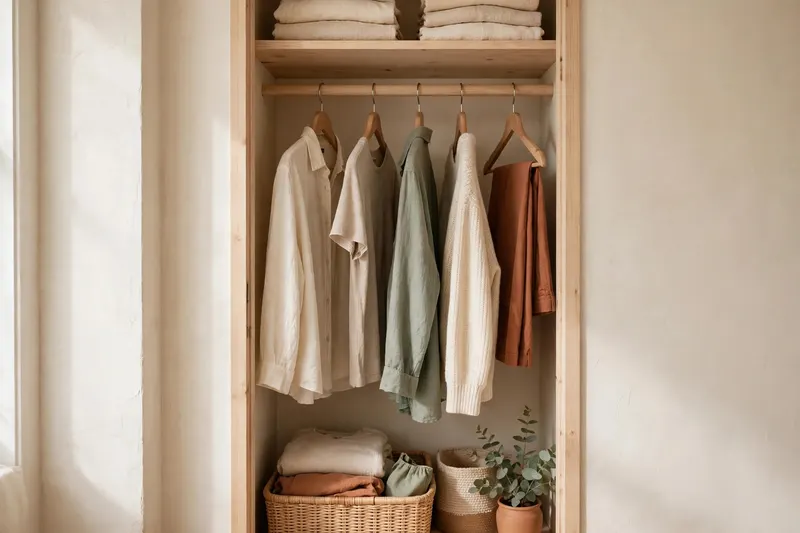
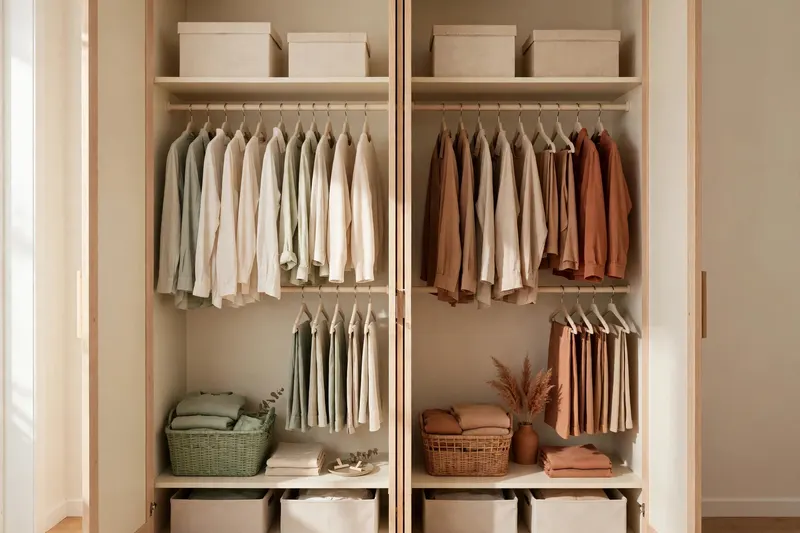
Purses and handbags are the first thing to slide off a closet shelf and the last thing you want to find crushed on the floor. In a small apartment, a handful of bags can eat a whole shelf, block the shoes below, and still hide the one you actually want. These small apartment purse storage ideas fix that without a bigger closet: upright filing, hooks at arm height, and a door organizer keep every bag visible, protected, and grabbable in seconds. The 16 ideas below work in a reach-in closet, a wardrobe, or even a single shelf, and most need no drilling.
The bag audit: daily, weekly, and occasion bags
Before you buy a divider or hook, find out what you actually own. Bags hide in the closet, the entryway, and the back of a chair — gather them all first.
1. Sort every bag into daily, weekly, and occasion groups
Sort your bags into three piles: daily (the bag you grab almost every time you leave), weekly (a work tote or gym bag), and occasion (a clutch you carry fewer than six times a year). Daily bags earn the hooks and front shelf, occasion bags go up high, and a bag that fits no pile should go. The same logic works for other accessories, as these accessory organization ideas for small closets show.
2. Count and measure before you buy anything
Count the bags in each pile, then measure your shelf: depth, height, and the clear space above it. A standard closet shelf is about 12 inches deep and 12 to 14 inches tall — enough for most medium handbags filed upright, but not tall totes. Count first, measure second, buy last.
Shelf dividers: file bags upright like books
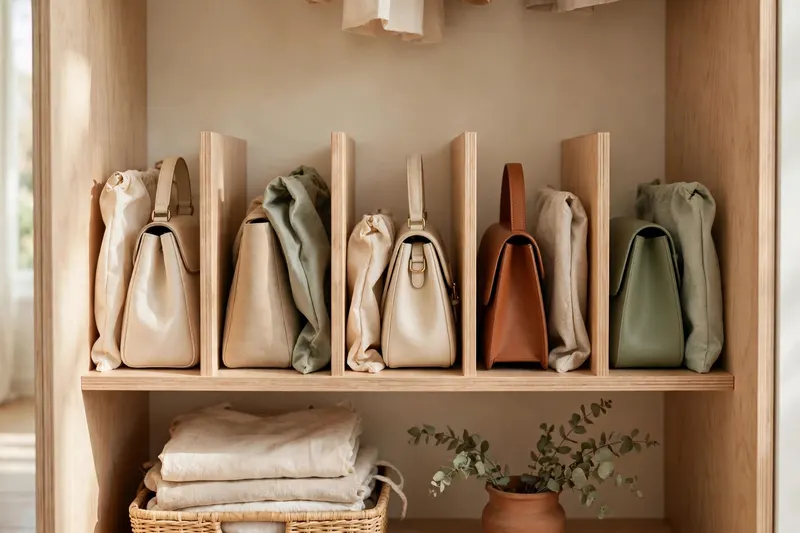
Stacked bags crush the one at the bottom and hide the one in the middle. Filed upright like books, every bag is visible and holds its shape. It is the simplest handbag storage in a small space fix: visibility without a bigger closet.
3. File bags upright with acrylic shelf dividers
Clip-on acrylic or metal dividers turn one long shelf into individual slots, one bag per slot. Space them 4 to 6 inches apart for medium handbags and 6 to 8 inches for wider totes.
4. Use magazine holders or file sorters as bag slots
Stand sturdy magazine holders or desktop file sorters on the shelf instead of dividers. Each holder becomes a rigid slot that supports soft leather from both sides. Choose holders at least 10 inches tall so bags do not tip forward.
5. Reserve the top shelf for occasion bags in dust bags
Occasion bags belong on the highest shelf, each in its dust bag, filed upright or laid flat. Keep them out of the daily zone — every clutch there costs you a slot you use daily. These closet shelf organization ideas cover the same zoning for the rest of your closet.
Hooks and peg rails for everyday bags
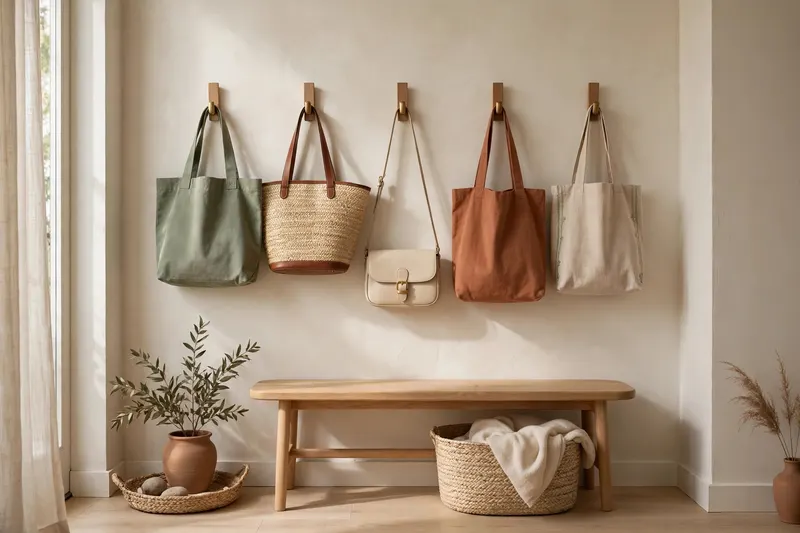
Hooks are the fastest storage you can add: no shelf space used, no drilling for most options, and the bag you want in your hand in two seconds. Use them for bags you carry now, not for long-term storage.
6. Hang daily bags on adhesive or S-hooks inside the closet door
Stick two or three heavy-duty adhesive hooks, rated for at least 5 pounds each, inside the closet door at shoulder height and hang your daily bag there. When you come home, the bag goes straight onto the hook instead of onto the floor or a chair.
7. Mount a peg rail at shoulder height for the daily rotation
A short peg rail, about 18 to 24 inches long with three or four pegs, on the closet side wall or just inside the door gives each daily bag its own peg. Mount it at shoulder height, clear of the clothes below. Renters can use a rail with strong adhesive backing — these renter-friendly closet organization ideas have more no-drilling options.
8. Hang bags by the strap, not the handle, when the bag is heavy
A heavy tote hung by its thin handles will stretch them and deform the bag within weeks. For anything over about 3 pounds, loop the longer shoulder strap over the hook instead — the strap is built to carry the weight.
Over-the-door organizers for clutches and small bags
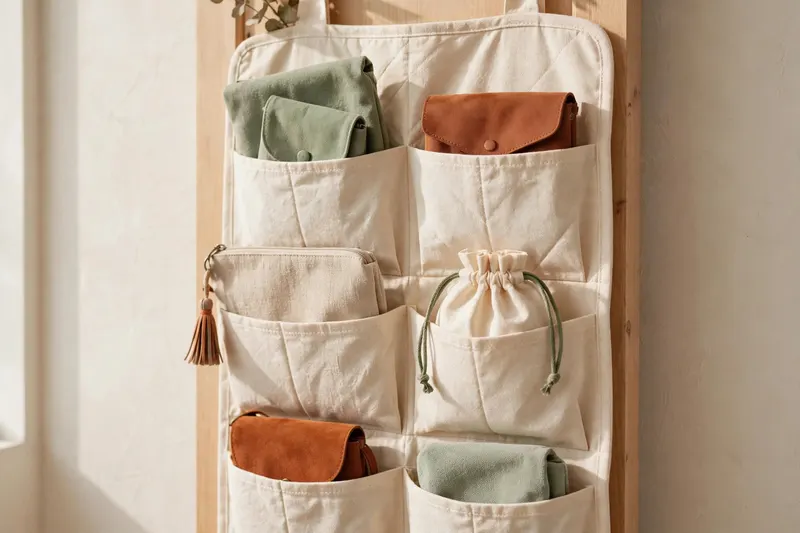
The back of the closet door is the most wasted surface in a small apartment: it holds no clothes and sits at the height where small bags are easiest to see and grab.
9. Hang a clear-pocket organizer for clutches and small bags
A clear-pocket over-the-door organizer — the kind sold for shoes — gives every clutch, wristlet, and small crossbody its own see-through pocket. Choose pockets at least 5 inches wide and 7 inches tall, and hang it inside the closet door so it still closes flat. Small bags that live in pockets stop disappearing into drawers, which is why this is one of the most reliable bag storage ideas for apartments with no spare shelf space.
10. Use a slim over-the-door hook rack for crossbody bags
If pockets feel too fussy, a slim over-the-door rack with four to six hooks takes crossbody bags, belt bags, and small shoulder bags. It hangs over the top of the door with no screws and no adhesive, so it comes down cleanly when you move out. Hang the lightest bags at the top. For more ways to use door space, these over-the-door organization ideas cover every room.
Protecting the investment: dust bags and stuffing
Storage that damages the bag is not storage. Leather creases and structured bags collapse when stored empty or stacked.
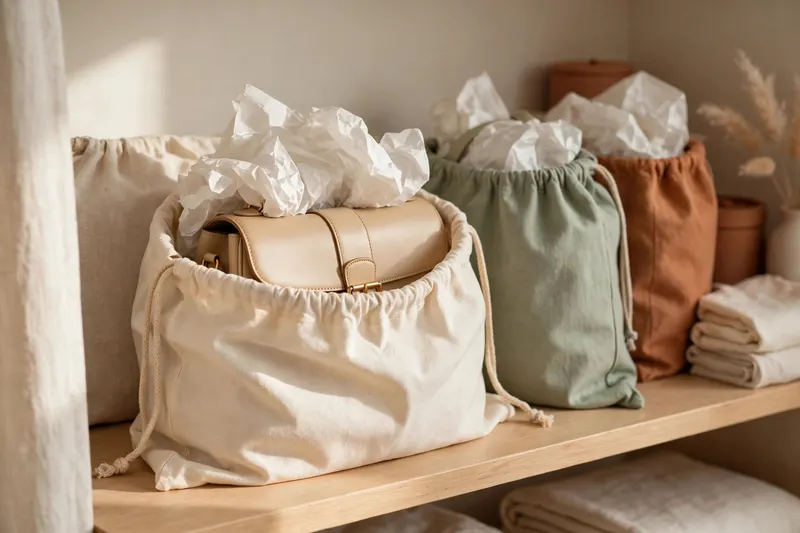
11. Store every structured bag in its dust bag, stuffed to hold its shape
A structured bag stored empty will slump, and the creases become permanent within months. Stuff each bag firmly — not tightly — with acid-free tissue paper, then slip it into its cotton dust bag, handles tucked inside, clasp fastened. If a bag came without a dust bag, a clean cotton pillowcase works the same way. Store stuffed bags upright, never stacked, with a finger-width gap between them.
12. Stuff with tissue or old t-shirts — never newspaper
Newspaper ink transfers onto light lining and leather, and the acidic paper stains over time. Use acid-free tissue paper, clean old t-shirts, or small rolled towels instead, and refill the stuffing as it compresses.
Totes and backpacks: the grab-and-go zone
Totes and backpacks are grab-on-the-way-out bags — they should not live deep in the closet. Give them a zone by the door, close enough to grab with your keys in hand.
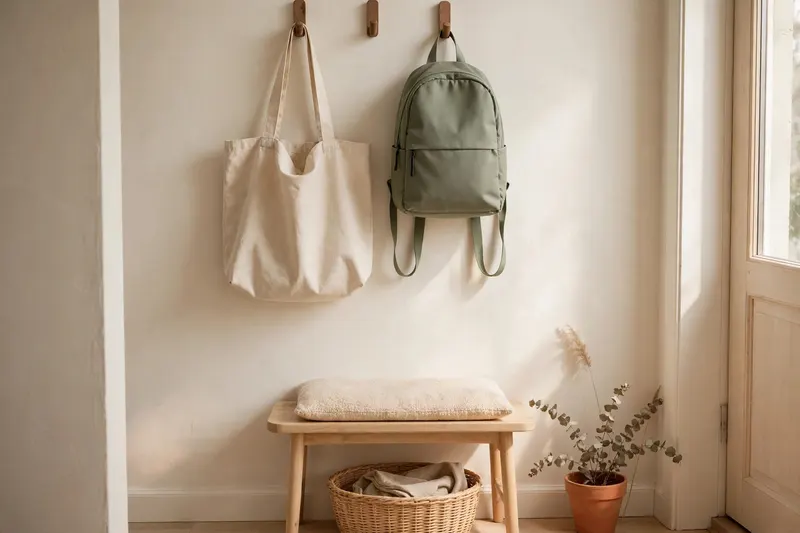
13. Create a grab-and-go zone by the door for totes and backpacks
Pick one spot within arm’s reach of the door — wall hooks, a narrow shelf, or the side of a bookcase — and make it the only home for your everyday tote and backpack. One tote and one backpack in use at a time; spares go to the closet shelf. Hang the backpack by its top loop and the tote by both handles.
14. Fold spare totes flat and store them like files
Fold spare totes flat, stack four or five together, and file the stack upright in a magazine holder or small bin, like folders. A dozen totes fit in about 6 inches of shelf space.
The one-in-one-out rule for bag collections
No storage system survives a collection that keeps growing. Bags are small enough to justify one more, and before long the new bag has no slot or hook — so it lands on the floor.
15. Set a hard number cap for your collection
Set your cap from your audit count and your space: a small apartment closet comfortably holds about 8 to 12 bags — two or three daily, three or four weekly, and three or four occasion bags. Write the number down and stick it inside the closet door.
16. Run a seasonal bag swap instead of adding storage
Twice a year, when you swap seasonal clothes, swap your bags too. Move last season’s unused bags to the top shelf and bring the current season’s bags down to the hooks and front shelf. While you swap, apply the rule: a new bag in means one bag out the same week.
Mistakes to avoid
Hanging heavy bags by thin handles. Straps stretch and handles deform. Heavy bags go on shelves or hang by the shoulder strap.
Stacking bags on top of each other. The bottom bag crushes and pulling one out topples the pile. File upright or store flat in a single layer.
Storing leather in sealed plastic bins. Leather needs air — sealed plastic traps moisture, which leads to mold and a musty smell. Use breathable cotton dust bags instead.
Buying organizers before counting your bags. A divider set sized for six bags fails when you own ten. Audit first, measure second, buy last.
Keeping broken bags “just in case.” A bag with a broken clasp, a torn lining, or a strap that will never be repaired is clutter taking a slot from a bag you use.
Frequently asked questions
How do I store purses in a small closet without shelves?
Hang daily bags on adhesive hooks or an over-the-door rack, and use the door for a clear-pocket organizer for small bags. With even one shelf, add clip-on dividers and file bags upright.
Can I hang handbags by their handles?
Light bags can hang by their handles for short periods, but heavy bags should hang by their shoulder strap or sit on a shelf — thin handles stretch and the bag loses its shape within weeks.
How do I keep leather bags from losing their shape?
Stuff each bag with acid-free tissue paper or clean old t-shirts, fasten the clasp, tuck the handles inside, and store it upright in its cotton dust bag. Refill the stuffing every few months.
How many purses should I keep in a small apartment?
A small apartment closet comfortably holds about 8 to 12 bags with upright filing and hooks — two or three daily, three or four weekly, and three or four occasion bags. Set your cap from your shelf space and hold it with one-in-one-out.
Bags do not need a bigger closet — they need a system: an audit, dividers that file bags upright, hooks for the daily rotation, a door organizer for the small ones, and a cap that stops the collection growing past its space. Start with the audit tonight. Save this pin for later, and browse more ideas in the closet organization category.