Your collection started with one shelf. Now it owns the coffee table, the top of the bookshelf, and a stack of boxes you are afraid to open. The problem is not that you collect too much — it is that a small apartment leaves no room to both show off favorites and protect the rest. The small apartment storage ideas collectors actually stick with solve both at once: a small, curated display that changes on a schedule, and protected, cataloged storage for the rest. These 16 ideas work in a rental and need no renovation, and keep your collection visible, safe, and under control.
The collection audit: display, store, sell, or let go
Before you buy a single case or shelf, find out what you actually own. Clear a table, lay out everything you can reach, and sort each piece into four groups: display, store, sell, or let go.
1. Sort every piece into display, store, sell, or let go
Use four labeled bags or boxes and touch each piece once. Ask three questions: Do I love looking at it? Is it valuable or fragile enough to need protection? Would someone else enjoy it more? A piece that fails all three goes in the let-go pile.
2. Cap your display at one shelf, then defend it
Pick a single shelf, ledge, or cabinet section — about 24 to 36 inches wide — and declare it your only display zone. When it fills up, something must rotate out before anything new goes in. This hard limit keeps a collection looking curated instead of cluttered.
The rotation shelf: favorites out, the rest protected
A rotation shelf is the heart of collectibles storage in a small space. Instead of cramming everything into view at once, you show a small set of favorites for a season, then swap them for pieces from storage.
3. Build a rotation calendar with four seasonal swaps
Pick four swap dates — the first weekend of January, April, July, and October works well — and put them in your phone calendar with a reminder. Each swap takes 30 to 45 minutes: take the current display down, dust each piece, and choose the next set from storage.
4. Keep one “next up” box beside your storage
After each swap, set aside the next set of pieces in a labeled “next up” box, stored on top of your main storage so it is easy to grab. The same swap-and-store rhythm works for seasonal items of all kinds — see our guide to small apartment seasonal storage rotation ideas for the same principle applied to clothes and decor.
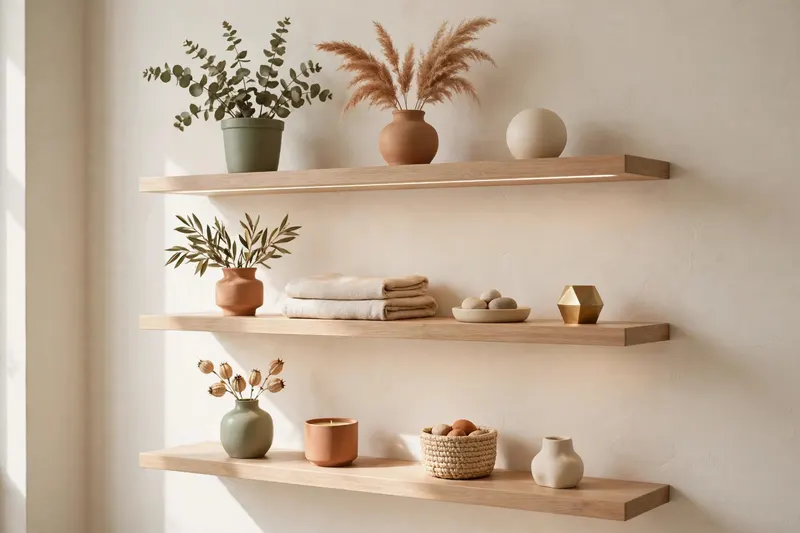
Wall display that looks curated, not cluttered
Walls are free real estate in a small apartment, and the best place to display a collection without losing floor or surface space. The difference between a gallery wall and a junk wall is spacing: pieces need air around them.
5. Use picture ledges for flexible, renter-friendly display
A 24-inch picture ledge holds 5 to 8 small figures or framed pieces, and you can rearrange them in seconds without tools. Mount two ledges 12 to 14 inches apart vertically for a layered display.
6. Group pieces by color, theme, or series — never randomly
A display reads as a collection when the eye sees a pattern. Group by series, by color family, or by theme — all the blue-glazed pieces together, one shelf per series, tallest at the back and shortest at the front. Leave at least 1 inch between pieces so each one has its own silhouette.
Protective storage: acid-free boxes, cases, and climate sense
The pieces in storage are the ones most at risk, because out of sight means out of mind. Acid in cheap cardboard and newsprint yellows paper and corrodes metal over time, and a box on a damp floor absorbs moisture you will not notice until the damage is done.
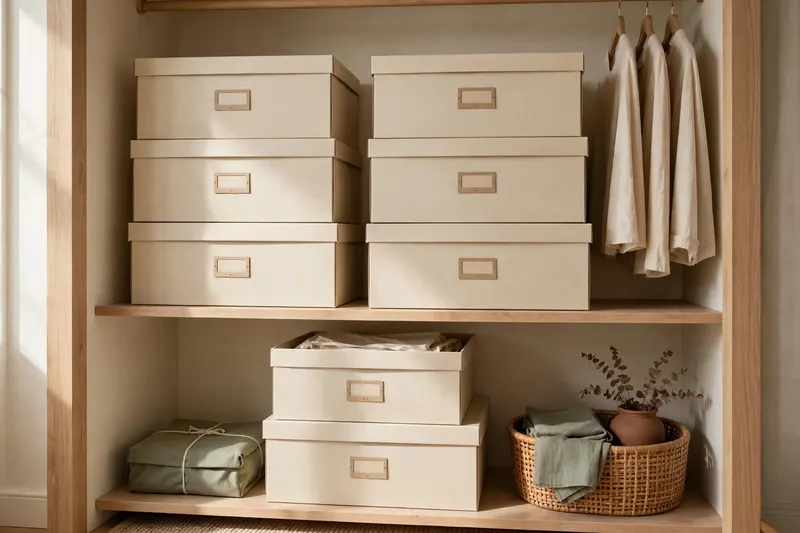
7. Switch to acid-free boxes and tissue for anything paper, fabric, or metal
Acid-free archival boxes cost roughly $8 to $15 each, and acid-free tissue runs about $10 for a pack of 100 sheets. Wrap each piece in tissue, nest it so pieces do not touch, and label the outside with contents and date. The Library of Congress publishes preservation guidance for personal collections.
8. Store boxes off the floor, away from heat and damp
Stack storage boxes on a closet shelf, on top of a wardrobe, or on a low rolling cart — never directly on the floor, and never against an exterior wall where condensation forms. Keep them away from radiators, water heaters, and the bathroom wall.
Cataloging: a simple list that stops duplicate buys
Every collector has bought the same thing twice. A catalog stops that, and it does more: it tells you what you own when you are standing in a shop, it speeds up insurance claims, and it makes selling or passing pieces on far easier. A phone spreadsheet with a photo per row is enough — the system you will actually update beats the perfect system you abandon in a week.
9. Start a phone spreadsheet: name, series, condition, location
Create one spreadsheet with five columns: item name, series or set, condition (mint, good, fair), where it is stored (box number or shelf), and what you paid or what it is worth. Log new pieces the day they arrive.
10. Number your storage boxes and keep a one-page map
Give every storage box a number and write it on two sides in large marker. Keep a note on your phone that says what is in each box: “Box 2: Series B figures 6–12, wrapped.” The same labeled-box discipline makes our jewelry organization ideas for small spaces work, and it works just as well for pins, coins, and miniatures.
Small-item storage: compartment boxes and drawer inserts
Small collectibles — pins, coins, dice, miniatures, trading cards — disappear into junk drawers and get scratched, bent, or lost. They need compartments, not piles.
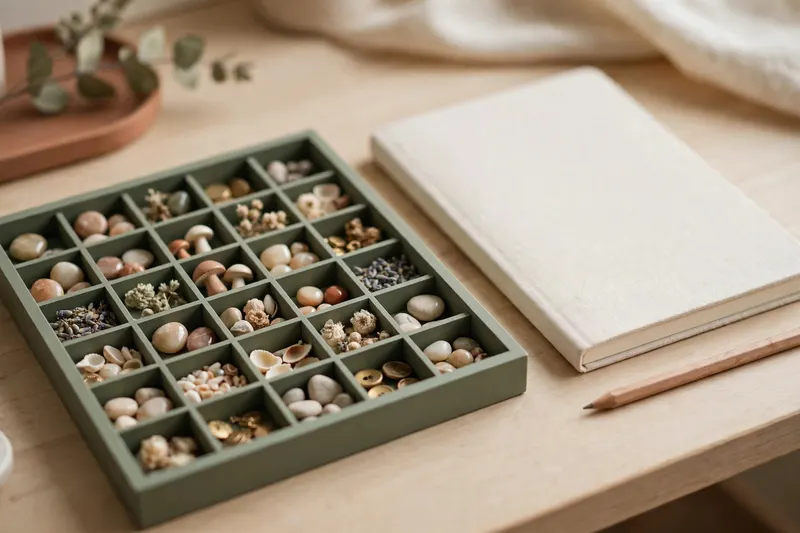
11. Use adjustable compartment boxes for pins, coins, and miniatures
A craft or tackle-style box with movable dividers, roughly 11 by 7 inches, holds 12 to 18 small pieces in separate compartments. Line each compartment with a small square of felt or acid-free tissue if the pieces are painted or plated, and label the lid with masking tape listing the contents.
12. Add drawer inserts so one drawer holds a whole category
Measure your drawer first — most apartment drawers are 14 to 18 inches wide and 16 to 20 inches deep — then buy or cut inserts to fit exactly. If you collect books too, see our small apartment book storage ideas for keeping a small library tidy without a full bookcase.
Keeping dust and sunlight off what you love
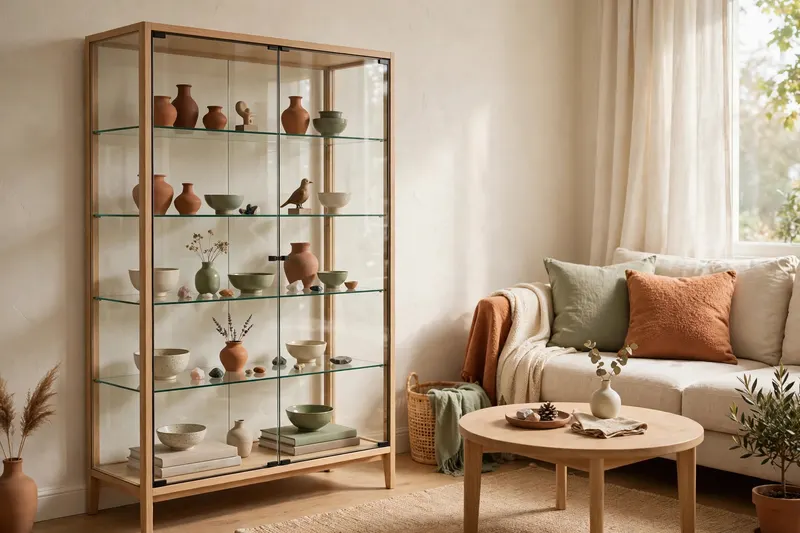
Dust and sunlight are slow damage. A figure left on an open shelf near a sunny window fades in a year, and dust ground into a painted surface during cleaning scratches it permanently. The fix is mostly placement, plus one piece of furniture: a glass-fronted cabinet or lidded display cases.
13. Move the display away from direct sun and choose glass over open shelves
If your display shelf gets more than 2 hours of direct sun a day, move it to the opposite wall or hang a sheer curtain. For your most valuable or light-sensitive pieces, use a glass-fronted cabinet or individual acrylic display cases — a 6-inch acrylic cube costs about $8 to $12 and keeps dust off.
14. Dust on a schedule with the right tools, not a wet cloth
Dust the display every two weeks with a soft, dry makeup brush or a microfiber duster. Never wipe a painted or paper piece with a damp cloth — water lifts paint and warps paper.
The one-in, one-out rule for growing collections
A collection in a small apartment cannot grow forever. The one-in, one-out rule is the only thing standing between a curated display and a crowded room: every time a new piece comes home, one piece leaves the display — into storage, into the sell pile, or out the door.
15. Apply one-in, one-out the day a new piece arrives
When a new piece comes home, choose its outgoing partner before the new one goes on the shelf — not “someday,” that day. Put the outgoing piece in its storage box or the sell bag immediately.
16. Set a hard ceiling: one box of storage per category
Decide your ceiling now: one storage box per category, or two boxes for your main collection and one for everything else. When the box is full, the collection is full — the next piece in means a piece out, even from storage.
Mistakes to Avoid
Displaying everything at once is the most common mistake — a shelf packed edge to edge hides every piece behind its neighbors and makes the room feel smaller, so curate hard and rotate instead. Storing pieces in retail packaging in a damp spot is the second: retail boxes are not archival, and a closet sharing a wall with a bathroom is not dry. Third, buy display furniture only after the audit — measure your collection and your wall first. Fourth, do not skip the catalog because the collection “isn’t big enough yet”; it is big enough the first time you buy a duplicate. And fifth, never display light-sensitive pieces in direct sun, because fading is permanent.
Frequently Asked Questions
How do I display a collection in a very small apartment?
Use one wall, not one room. A single 24- to 36-inch picture ledge or a small glass-fronted cabinet holds 5 to 15 pieces and takes zero floor space.
What is the best way to store collectibles in a small space?
Acid-free boxes with tissue wrapping, stored off the floor in a dry closet, with a numbered box map and a phone spreadsheet catalog.
Can I store collectibles under the bed?
Yes, if you use sealed plastic bins with latching lids instead of cardboard, and you check them every season for damp or pests.
How do I stop buying duplicates of items I already own?
Keep a catalog on your phone with a photo of every piece and check it before you buy.
Final Thoughts
A collection in a small apartment works when it has two systems: a small display that rotates and a protected, cataloged home for everything else. Audit honestly, cap the display at one shelf, rotate four times a year, and let one-in, one-out keep the growth in check. Save this pin for later, and browse more ideas in our small spaces category.