Books pile up fast in a small apartment. A stack grows on the nightstand, another leans against the sofa, and soon every flat surface holds a paperback you meant to put away. The problem is not that you own too many books — it is that none of them has a real home. These small apartment book storage ideas give your books visible, reachable homes without a big bookshelf taking over a wall — floating shelves, intentional stacks, under-bed space, door ledges, and one rotation shelf.
The book audit: keep, donate, rotate
Before you buy a single shelf, count what you actually own. Pull every book out of its hiding place and stack them in one spot. Most people in a studio or one-bedroom find 40 to 80 books, and about a third are books they will never open again.
1. Sort every book into three piles: keep, donate, rotate. Keep means books you reread, reference, or love looking at. Donate means finished novels, outdated guides, and duplicates — bag them the same day so they leave the apartment. Rotate means books you want to keep but do not need within reach — they go into a labeled bin in the closet or under the bed.
2. Set a one-in, one-out rule for new books. For every new book that enters the apartment, one leaves — donated, lent out, or passed along. Keep a donation bag in the closet so the rule takes five seconds, not a weekend project. This one habit keeps a small collection from creeping back into piles on the floor.
Floating shelves: the wall is your bookshelf
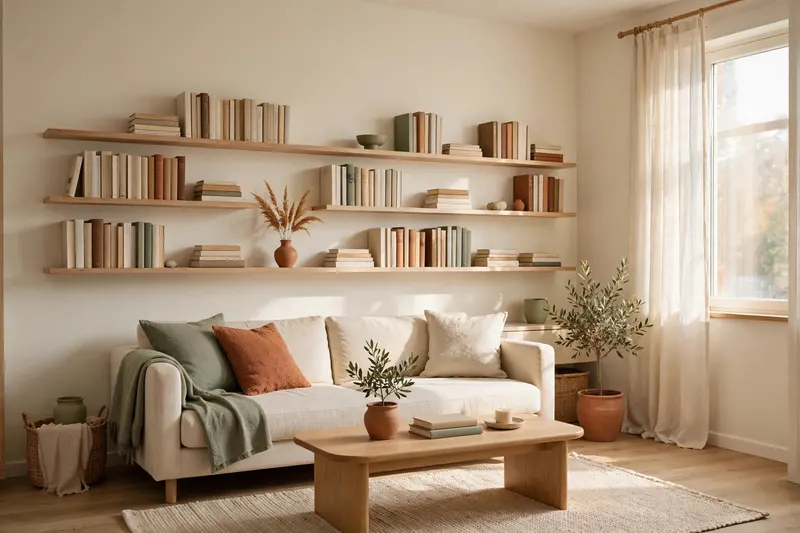
Walls are the most underused storage in a small apartment, and floating shelves turn them into a bookshelf that takes zero floor space. A single 24-inch floating shelf holds roughly 12 to 15 paperbacks.
3. Mount two or three short floating shelves in a vertical column. Short shelves (18 to 24 inches wide) fit narrow wall strips beside a door, above a desk, or next to the bed where a full bookcase never would. Space them 12 to 14 inches apart so tall hardcovers clear the shelf above. Use screws and wall anchors rated for at least 20 pounds per shelf — books are heavy, and adhesive strips will not hold them.
4. Use picture ledges for a forward-facing display. A narrow picture ledge, about 3 to 4 inches deep, holds books with their covers facing out — perfect for cookbooks and the five or six books you are proudest of. Group them by color or size so the ledge reads as decor, not clutter. If you rent, look for damage-free hanging options first — our guide to 15 small apartment storage ideas for renters (no drilling, no damage) covers the renter-safe hardware that actually holds weight.
5. Fill the wall above the desk or sofa, not behind the door. The strip of wall above a desk, above the sofa back, or over a low dresser is dead space in most apartments. One row of floating shelves there stores 20 to 30 books within arm’s reach. Skip the wall directly behind a door — books there get knocked off every time it swings.
Stacking as decor: piles that look intentional
A stack of books on a surface is not automatically clutter. The difference between a messy pile and a styled one is size, order, and a clear limit — and when a stack is deliberate, it stores books and decorates at the same time. Good book storage small space ideas share one trait: they use walls, gaps, and furniture you already own.
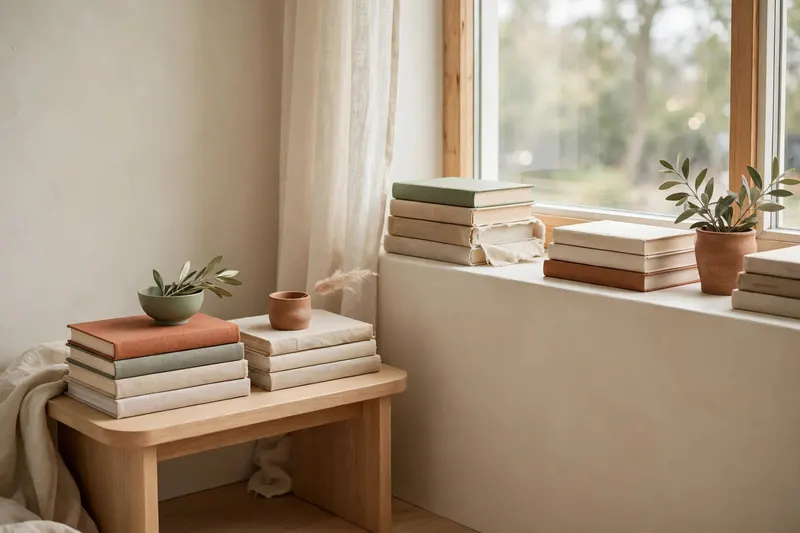
6. Stack horizontally in groups of three to five, largest on the bottom. Place the biggest, heaviest book at the bottom and work upward to the smallest. Three to five books make a stable pile that doubles as a side-table surface for a mug or a small plant. Any taller and the stack starts to lean and slide. Keep stacks on surfaces you do not need for daily work — a console table, a window sill, or the top of a low dresser.
7. Use a stack as a riser or a bedside table. A neat stack of six to eight hardcovers, topped with a small tray, works as a bedside table in a bedroom too tight for furniture. The tray keeps a phone and a glass of water from sliding between the pages. If you do own one small bookcase, the same stacking logic makes it hold more: our 16 bookshelf organization ideas for small apartments show how to mix vertical rows with horizontal stacks so one case works twice as hard.
Under-bed and under-furniture book storage
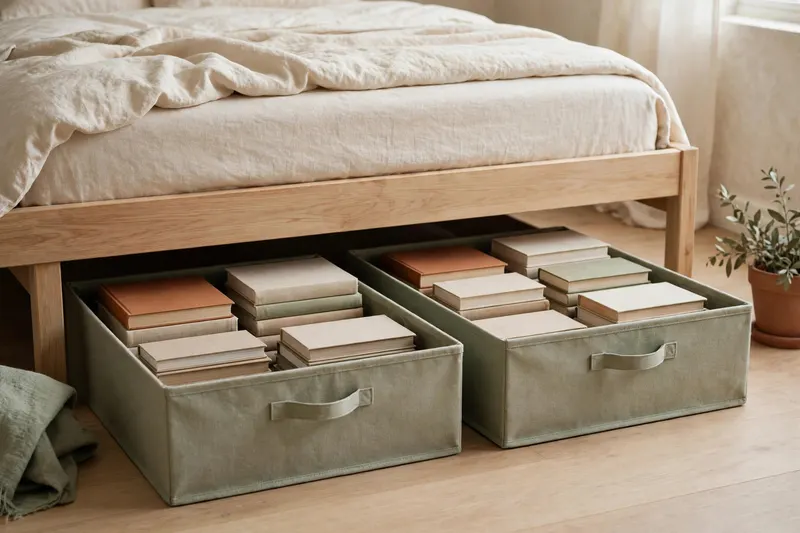
The space under your bed is roughly 25 to 35 cubic feet of storage in a typical apartment — and books are one of the best things to put there because they are flat, heavy, and do not need daily access.
8. Slide low, lidded bins under the bed for the rotate collection. Use shallow bins no taller than 6 inches so they slide easily under a standard bed frame, with lids to keep out dust. Stand paperbacks on their spines inside the bin, like a drawer, so you can read the titles without lifting the whole stack. Label the short end of each bin — “Fiction,” “Cookbooks,” “To Read” — so you pull the right one first time.
9. Tuck a row of books under a low bench, console, or media unit. The gap under a sofa-side bench, an entryway console, or a low TV stand often fits one row of paperbacks lying flat. Line them up spine-out, flush with the furniture edge, so they look like part of the piece. Avoid the space under radiators or near heating vents — dry heat warps covers and yellows pages over a single winter.
Door ledges and narrow nooks for paperbacks
Paperbacks are thin, light, and forgiving — they fit in gaps where a hardcover never will. The trick is finding the narrow, wasted strips of space your apartment already has and giving them a job.
10. Hang a slim over-door rack on the inside of a closet or bedroom door. A wire or fabric over-door rack with pockets 3 to 4 inches deep holds paperbacks, notebooks, and magazines without a single screw. Hang it on the inside of a closet door so the books stay hidden when the door is closed. For more over-door ideas that work in every room, see our guide to over-the-door organization ideas.
11. Claim the 6-inch gap: beside the fridge, behind the sofa, next to the bed. Measure the narrow gaps in your apartment: beside the fridge, behind the sofa, between the bed and the nightstand. A slim magazine holder, a tall narrow basket, or a simple wooden crate slid into a 6-inch gap holds 10 to 15 paperbacks upright. This is also the best home for the book you are currently reading: one slot, one book, always within reach of your reading chair.
The rotation shelf: current reads within reach
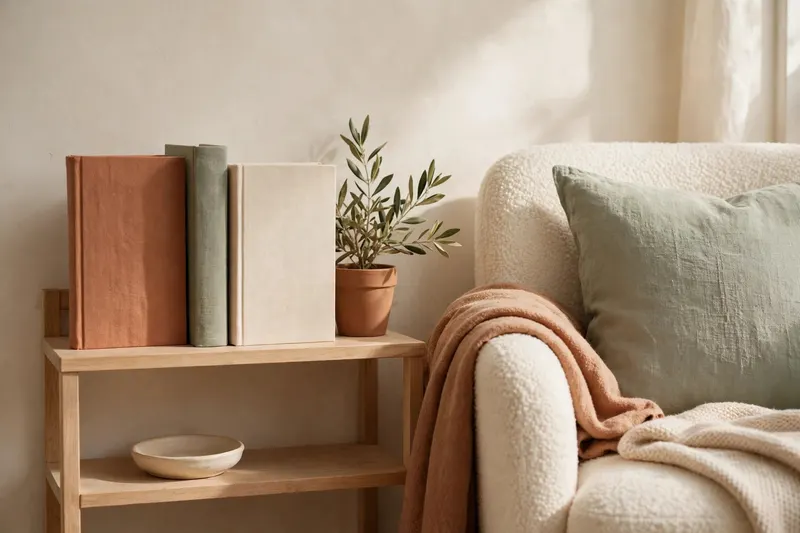
A rotation shelf is one shelf — just one — that holds only the books you are reading right now or plan to read this month. Everything else lives in deeper storage. This idea makes the whole system work, because it caps how many books compete for your attention.
12. Dedicate one shelf, ledge, or basket to the current 5 to 7 books. Choose the spot closest to where you actually read: the nightstand, the arm of the sofa, or the top shelf of a small bookcase. The rule is strict — when a new book joins the rotation shelf, a finished one leaves it the same day, either back to the keep shelf or into the donate bag. Five to seven is the sweet spot: enough choice to feel abundant, few enough to see every spine at a glance.
13. Swap the rotation shelf on the first of every month. Once a month, take five minutes to pull the finished books off the rotation shelf and replace them with the next reads from your under-bed bin or closet stash. This monthly swap is the same habit that keeps seasonal storage working — our 18 small apartment seasonal storage rotation ideas use the same “swap, don’t stack” logic for clothes and gear, and it works just as well for books.
Kids’ books in small spaces: forward-facing bins
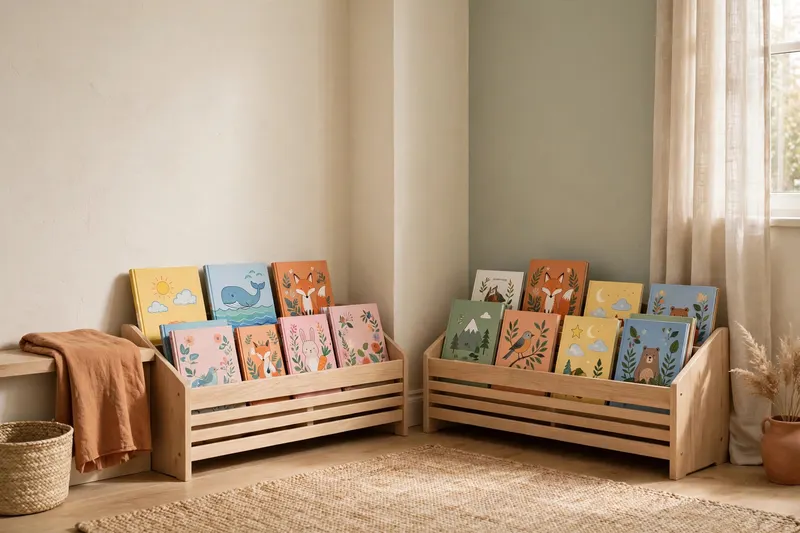
Children’s books are the hardest to store in a small apartment because kids choose by cover, not by spine — and a traditional shelf hides every cover. Forward-facing storage solves the real problem: a child who can see the book will read the book.
14. Use a forward-facing book sling or low bin at your child’s eye level. A fabric book sling, a low wooden crate tipped on its side, or a shallow bin on the floor holds 10 to 15 picture books with their covers showing. Place it where your child actually plays — the living room corner, not a bedroom they only sleep in. Rotate the books every two weeks.
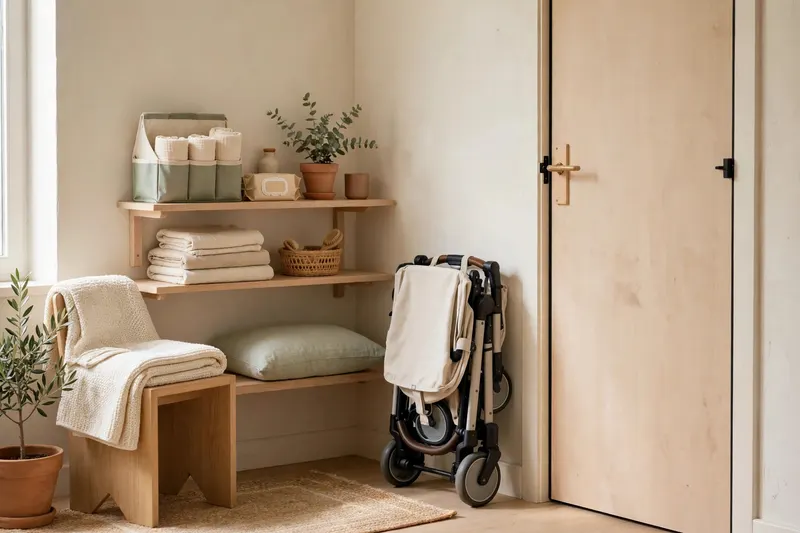
15. Keep a small “car and bag” set of books separate from the main collection. Pick five sturdy board books or small paperbacks that live permanently in the diaper bag, the car, or the stroller basket. These are the sacrificial copies — the ones that get chewed, bent, and loved. Keeping them separate means the nicer books at home stay intact, and you are never without a book when you are out.
16. Give each child one basket, not one shelf. In a shared room, one labeled basket per child — about 12 by 10 by 8 inches — holds their personal favorites and teaches them to choose what stays. When the basket is full, something must go before something new comes in. It is the one-in, one-out rule, sized for a five-year-old.
Keeping books dust-free and damage-free
Books stored in the open collect dust, and books stored in the wrong place warp, fade, and smell. A little care keeps a small collection in good shape for years.
17. Dust the tops of your books once a month with a dry microfiber cloth. Dust settles on the top edge of the pages, and if it sits there it works its way down between them. Wipe across the top edges with the book closed; the whole job takes under ten minutes. Never shelve a book with the pages facing out: the exposed page edges collect dust and fade in sunlight far faster than the spine.
18. Store books upright, out of direct sun, and away from damp walls. Books last longest standing upright, packed snugly enough to stay straight but loose enough to pull one out without tearing the neighbor’s cover. Keep them off exterior walls that feel cold or damp in winter, and out of direct sunlight — a sunny windowsill can fade a spine in a single summer. For deeper guidance on protecting paper and bindings, the Library of Congress guide to caring for your books covers handling and storage in plain language.
Mistakes to avoid
Buying storage before the audit. Shelves, bins, and baskets bought before you know how many books you are keeping always end up the wrong size or the wrong number. Audit first, measure second, buy last.
Stacking books on the floor. A floor stack is a tripping hazard, a dust magnet, and the first thing to get knocked over. Every book deserves at least a bin, a basket, or a shelf — even a 6-inch gap counts.
Packing shelves so tight you cannot remove a book. If pulling one book out drags three others with it, the shelf is overfilled. Leave a finger-width of space at the end of each row, and keep one shelf partly empty — that is where new books go.
Storing books in the bathroom or near the kitchen sink. Steam and splashes warp pages and grow mildew inside bindings. Books belong in dry rooms, full stop.
Frequently asked questions
Can I store books without a bookshelf in a small apartment?
Yes. Floating shelves, horizontal stacks, under-bed bins, door racks, and narrow-gap baskets together hold a full small collection without any bookcase. Start with the book audit, then pick the two or three methods that fit your space.
Where should I store books in a small apartment?
The question of where to store books small apartment renters ask most has a simple answer: near where you read — a floating shelf above the sofa, a rotation shelf on the nightstand, or a basket beside your reading chair. Books stored far from where you sit do not get read, no matter how tidy the shelf looks.
How many books should I keep in a small apartment?
A good target is the number your chosen storage holds comfortably — usually 40 to 80 books for a studio or one-bedroom using shelves, stacks, and under-bed bins. If your collection is bigger than your storage, the audit in the first section is the fix, not another shelf.
How do I keep books from getting dusty in open storage?
Dust the top page edges once a month with a dry microfiber cloth, keep books upright with spines facing out, and avoid open shelves directly above radiators or in direct sun. Lidded bins under the bed handle the books you do not need to see every day.
What is a rotation shelf?
A rotation shelf holds only the 5 to 7 books you are reading now or plan to read this month. When you finish one, it leaves the shelf the same day and the next read takes its place. It keeps your current reads visible and stops books from piling up on every surface.
Small apartment book storage is not about owning fewer books — it is about giving every book a visible, reachable home. Audit the collection, mount a few floating shelves, stack what remains with intention, and keep one rotation shelf for current reads. Your books stay close, your surfaces stay clear, and the next book you reach for is the one you actually want. Save this pin for later, or browse more ideas in the small spaces category.