Small apartment yarn storage ideas matter because a yarn stash does not grow slowly — it multiplies. One skein for a hat becomes three for a sweater, then a sale bin adds six more, and suddenly you cannot find a single skein when you want to knit. In a small apartment there is no spare room, so the stash either has a system or it takes over. These 16 ideas fix that.
The stash audit: how much yarn you actually have
1. Count every skein, including the half-used ones
Pull every skein out and pile it on the bed. Count each one, including partial balls left over from finished projects, and write the total down — a stash of 40 needs a different system than a stash of 12. Set aside felted or never-to-be-knitted yarn for a friend or a donation bag.
2. Sort by weight first, then by color
Sort your yarn into piles by weight: fingering, DK, worsted, bulky, and chunky. Weight decides what a skein can become, so sort by weight first, then arrange each pile by color family, light to dark. Unsure of a weight? Check the label’s symbol, or the Craft Yarn Council’s standard yarn weight chart.
Clear bins and the see-everything rule
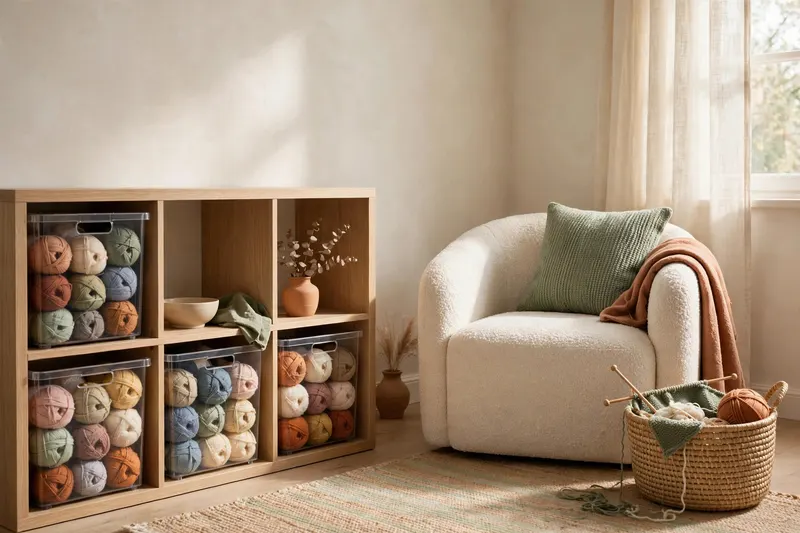
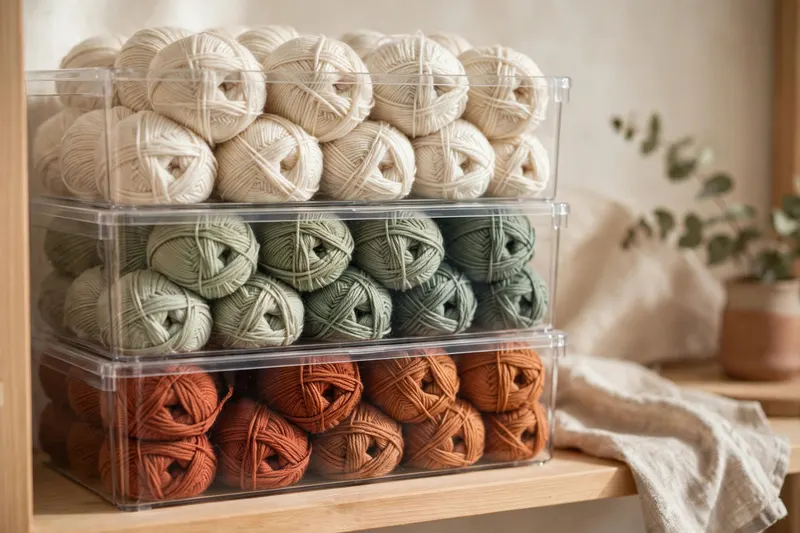
3. Use clear, stackable bins sized to the yarn
Clear bins around 10 by 6 by 6 inches hold roughly four to six worsted skeins without crushing them. Smaller 8 by 5 by 4-inch bins suit fingering and DK yarn, while bulky skeins need a deeper 12 by 8 by 8-inch bin. Stackable lids matter, since bins will live in a tower on a closet shelf — and skip opaque fabric boxes, since you will open every one hunting for a single color.
4. Label every bin with weight, color, and count
A label turns a clear bin into a searchable one. Write the weight, color family, and skein count on masking tape on the front — for example, “Worsted — blues — 6 skeins” — and update it when you take one out. The same labeling habit anchors the system in 18 Craft Supply Organization Ideas for Small Spaces, which starts with sorting by craft and labeling by container.
Cubby shelves: one yarn weight per cube
5. Assign one yarn weight to each cube
Give fingering yarn one cube, DK another, worsted the biggest cube, and so on. When a cube starts to overflow, that is your signal to stop buying that weight — not to buy a bigger shelf. Stack skeins on their sides like books, and keep the most-used weight at arm height.
6. Display the prettiest skeins like decor
Put your hand-dyed, variegated, or favorite-color skeins in the top cubes where they act as decoration, and keep the plain workhorse yarn in the lower cubes or in bins. A tidy yarn display looks intentional, like a bookshelf. Keep displayed skeins out of direct sun and rotate them every few months.
Wall pegboards and yarn bowls for works in progress
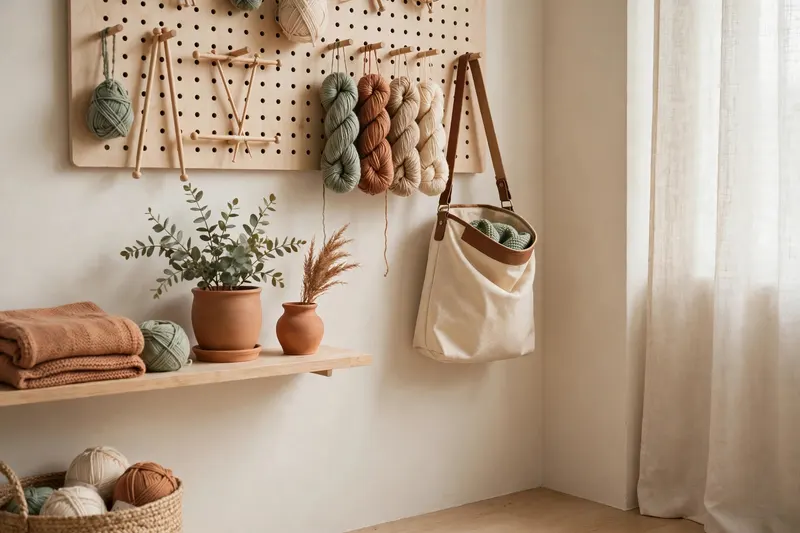
7. Hang a pegboard for tools, notions, and small skeins
A pegboard about 24 by 18 inches beside your chair holds scissors, stitch markers, needles, and a tape measure on small hooks — everything you reach for mid-row. Add two small wire baskets for your current yarn. Renters can use removable adhesive strips rated for at least 5 pounds — test the board empty for a day first. The same wall storage works for art supplies, as in 18 Small Apartment Art Supply Storage Ideas for Artists.
8. Keep every active project in a yarn bowl
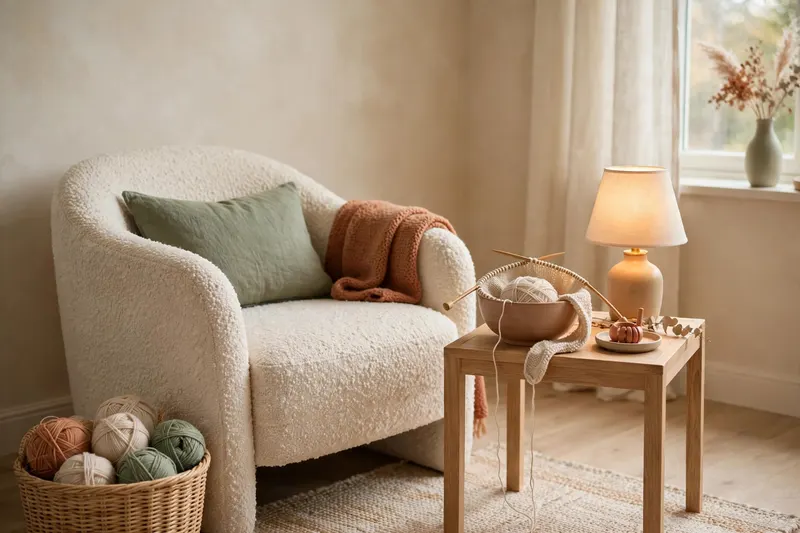
A yarn bowl — a ceramic or wooden bowl with a curved slot in the side — lets the working yarn feed out smoothly while the ball stays put. One bowl per active project is the rule: a sock in one bowl, a hat in another. Place it on a side table or the floor beside your chair, never on a soft surface. A heavy mixing bowl with a binder clip on the rim does the same job.
Under-bed and closet stash zones
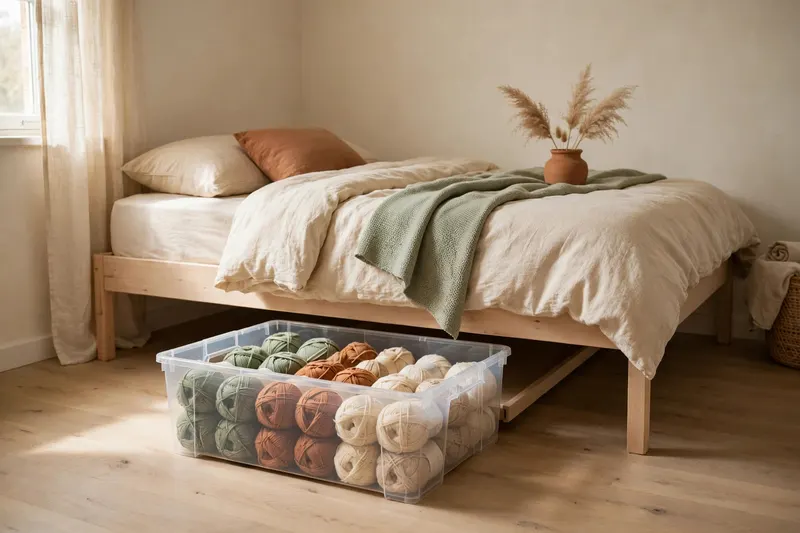
9. Roll flat bins under the bed for the deep stash
Low, wheeled bins about 30 by 16 by 6 inches slide under most beds. Keep one weight per bin and label the end that faces out, so you can read it without pulling the bin all the way out. Add a cedar block to each bin and check them every season for damp or dust. Bed risers adding 3 to 5 inches of clearance create a whole new storage zone.
10. Claim one closet shelf as the yarn zone — and defend it
Give yarn one full closet shelf, ideally the one at eye level, and keep everything else off it. Line the shelf with clear bins, one weight per bin, with labels facing forward. If you share the closet, a shelf divider or bookend marks the boundary so coats do not creep in. The closet is dark and one defined space: when the shelf is full, the stash is full.
Keeping yarn safe: moths, dust, and sunlight
11. Protect wool with cedar, lavender, and sealed bags
Clothes moths lay eggs on natural fibers, especially wool, and the larvae eat the yarn. Store wool sealed, with a cedar block or lavender sachet in each container. Check wool twice a year for webbing or tiny holes, and freeze affected yarn sealed in a bag for at least 72 hours. The University of Minnesota Extension guide to clothes moths has more detail.
12. Keep yarn out of direct sunlight and open dust
Sunlight fades dyed yarn fast — a skein on a sunny windowsill can lose color in weeks. Store yarn away from windows, or behind a sheer curtain. Dust dulls colors too, so keep stash yarn in lidded bins rather than open baskets, and shake open display skeins outdoors monthly.
The one-project-out rule that stops the sprawl
13. One project out, the rest in their homes
After each session, the project goes back into its bag, and the bag goes back to its shelf, cube, or closet zone. The next project comes out only when the first is finished or deliberately paused. It takes less than a minute per session. If you rotate between two projects, allow yourself two — but write that number down as a hard limit.
14. Give every project its own bag with its pattern inside
A zip-top bag, drawstring pouch, or small tote holds the working yarn, needles, pattern, and notions for that one project. When the bag is complete, you can pick it up and knit anywhere without hunting for a missing needle. Label the bag with the project name and start date. If a project sits untouched for six months, finish it or frog it — unravel it and return the yarn to the stash. The same grab-and-go kit idea works for sewing notions, as shown in 17 Sewing Supply Organization Ideas for Small Spaces.
Small-space knitting station: chair, light, basket
15. Build the station around a chair you already own
Pick the most comfortable chair in the apartment and claim the corner next to it. Place a small side table beside the chair for your yarn bowl and a mug. Slide a basket under or beside the table for the current project’s bag. The station needs no new furniture — just a fixed spot, so the yarn bowl, scissors, and project bag all have a home.
16. Add task lighting and a catch-all basket
Good light prevents eye strain and shows stitch definition, especially with dark yarn. A clip-on lamp or a small adjustable desk lamp aimed at your lap is enough. Position it opposite your dominant hand so it casts no shadow over the work. The catch-all basket beside the chair holds the yarn bowl and pattern — at the end of each session, everything goes in and stays put.
Mistakes to avoid
- Buying storage before the audit. Bins bought for an unknown stash end up the wrong size and number. Count first, buy second.
- Storing yarn in plastic grocery bags. Bags tear, tangle skeins, and trap moisture. Use lidded bins or zip bags.
- Mixing yarn weights in one container. A mixed-weight bin is a bin you dig through every time. One weight per container.
- Keeping yarn on a sunny windowsill. It looks lovely for a week and faded for the rest of the year. Display yarn away from direct sun.
- Letting “someday” projects pile up. A project untouched for a year is not a project, it is storage. Finish it or frog it.
- Hiding the stash in five different rooms. One main zone plus one overflow zone is a system. Five hiding places is just clutter with extra steps.
Frequently asked questions
How do I store yarn in a very small apartment?
Start with the audit, then use clear labeled bins on one closet shelf and one cubby unit for daily-use yarn, plus under-bed bins for the deep stash. One shelf, one cubby, and one under-bed zone hold a surprisingly large stash.
Can I store yarn in vacuum-sealed bags?
You can short-term, but avoid it for wool. Long-term compression can crush the fibers and flatten the loft that makes wool warm and springy. Use vacuum bags only for acrylic or cotton; let wool breathe in lidded bins.
How do I keep moths out of my yarn stash?
Store wool sealed with cedar blocks or lavender sachets, and inspect it twice a year. Keep the area clean and vacuumed, and freeze affected yarn for at least 72 hours to kill eggs and larvae.
How much yarn is too much for a small apartment?
More than your storage zones can hold. If your shelf, cubby, and under-bed zone are full, the stash is full — that limit forces you to finish projects and use the yarn you already love.
What is the best way to store leftover yarn?
Wind leftovers into small balls and keep them in labeled zip bags in one bin. Small amounts are perfect for stripes and colorwork — but only if you can find them.
Your stash, sorted
A small apartment yarn stash does not need a craft room — it needs a count, a few clear bins, one shelf that belongs to yarn alone, and the habit of keeping just one project out at a time. Start tonight with the audit, and by the weekend every skein will have a home. For more small-space storage systems, browse storage ideas — and save this pin for later.