You do not need a built-in bar or a spare room to enjoy a drink at home — just one well-chosen corner, a place for six to eight bottles, a home for your glasses, and a system that puts everything away in minutes. These small home bar storage ideas are built for apartments: every one works in a rented flat, most cost under $50, and none require a dedicated bar. It also saves you money and effort every week: no more digging through a crowded cabinet for the right bottle, and no more glasses balanced on top of each other.
The bar cart comeback: picking one that fits a small apartment
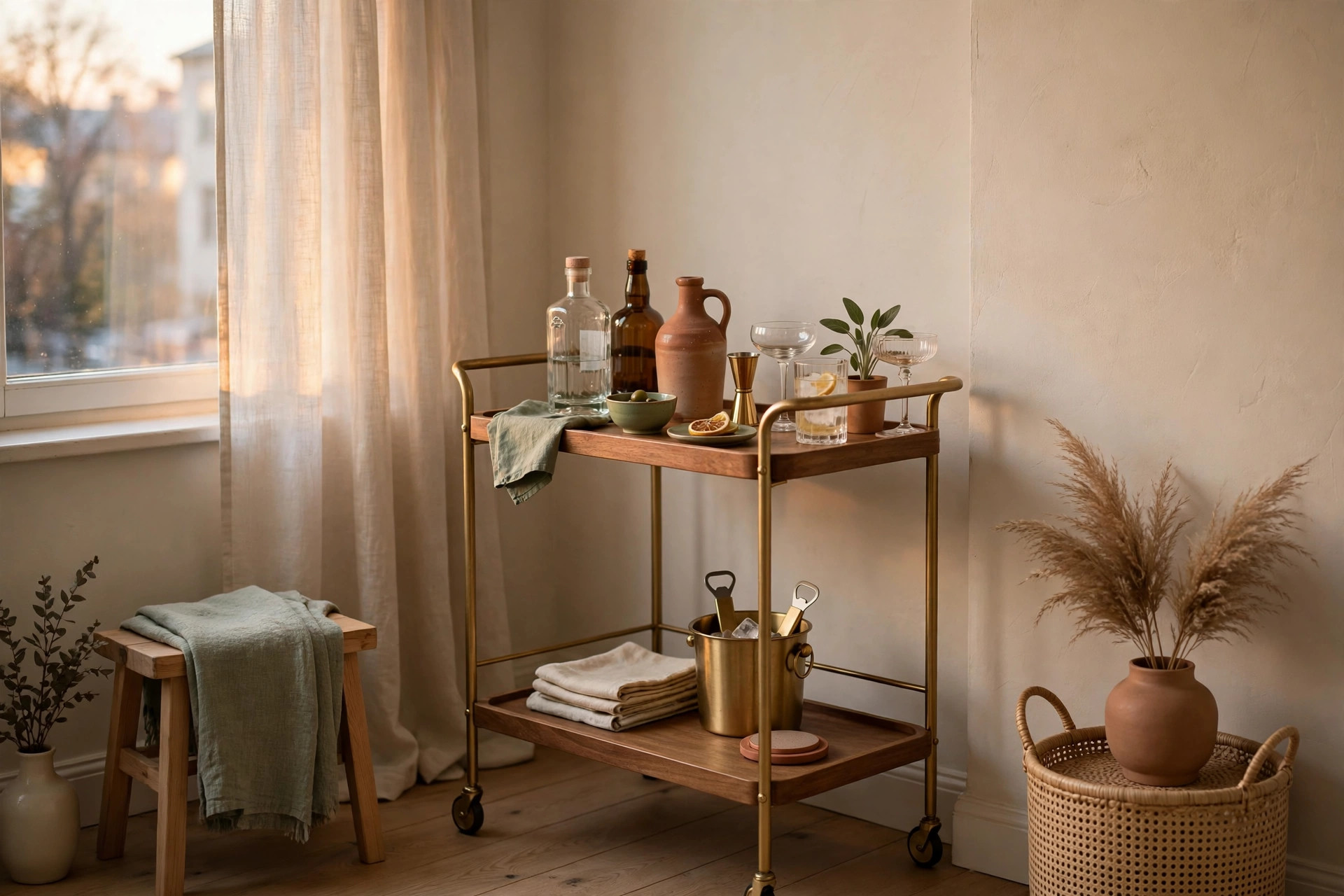
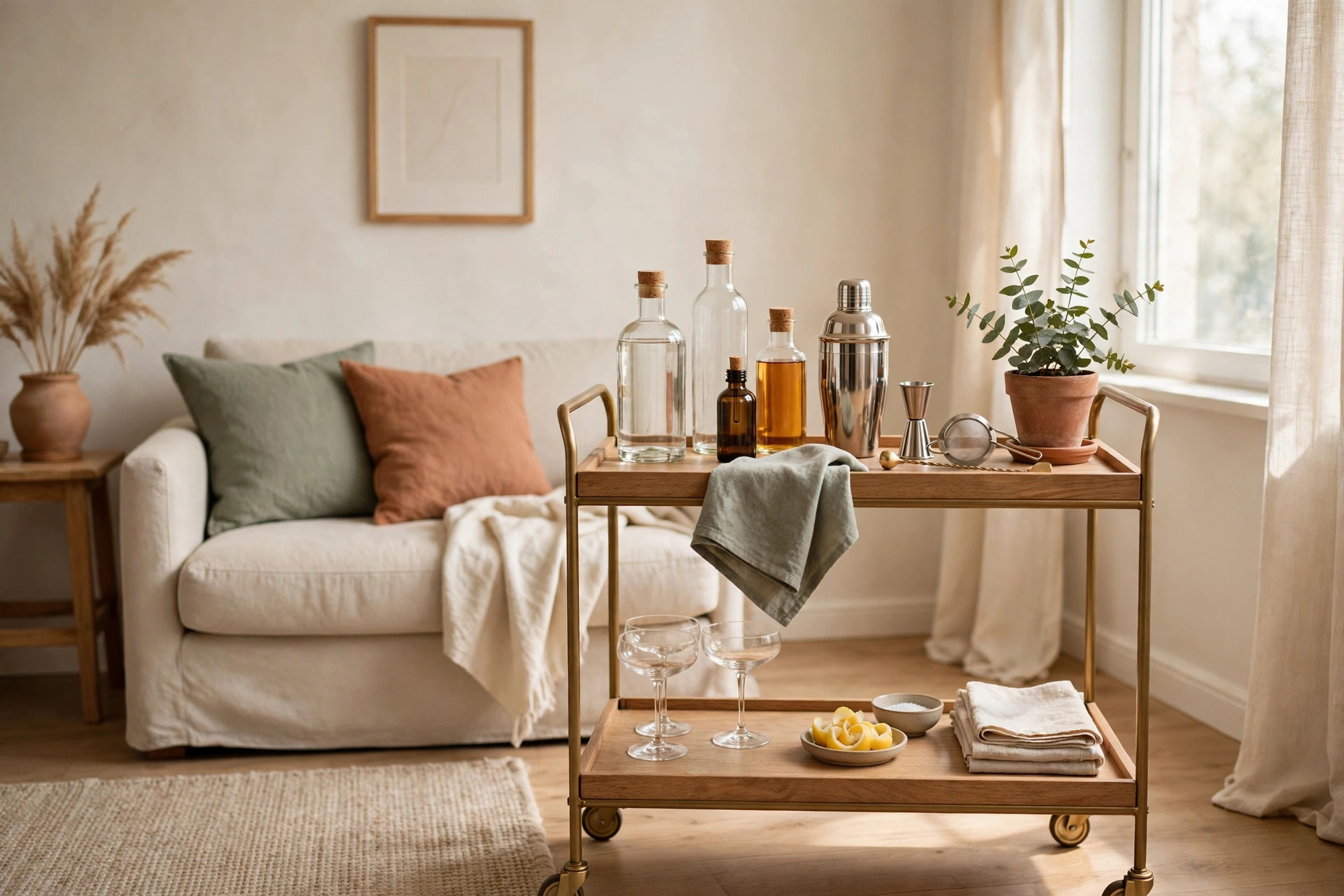
A bar cart is furniture and storage in one piece, and it rolls away when you need the floor back.
1. Choose a two-tier cart no wider than 24 inches. A cart around 24 by 16 inches and 30 inches tall fits beside a sofa or at the end of a counter. Three-tier carts look generous in photos but usually end up holding clutter on the middle shelf. Look for a raised lip on each shelf and lockable caster wheels so the cart stays put during a party.
2. Give the cart a fixed home, not a roaming one. A cart that drifts around the apartment becomes a dumping ground. Park it against the wall between the kitchen and living room with the wheels locked. Top tier: the three or four bottles you reach for most. Bottom tier: backup bottles and tools. When guests come, roll it to the seating area, then roll it back.
Wall-mounted bottle and glass racks that free up surfaces
When counter and floor space are spoken for, the wall is the only surface left.
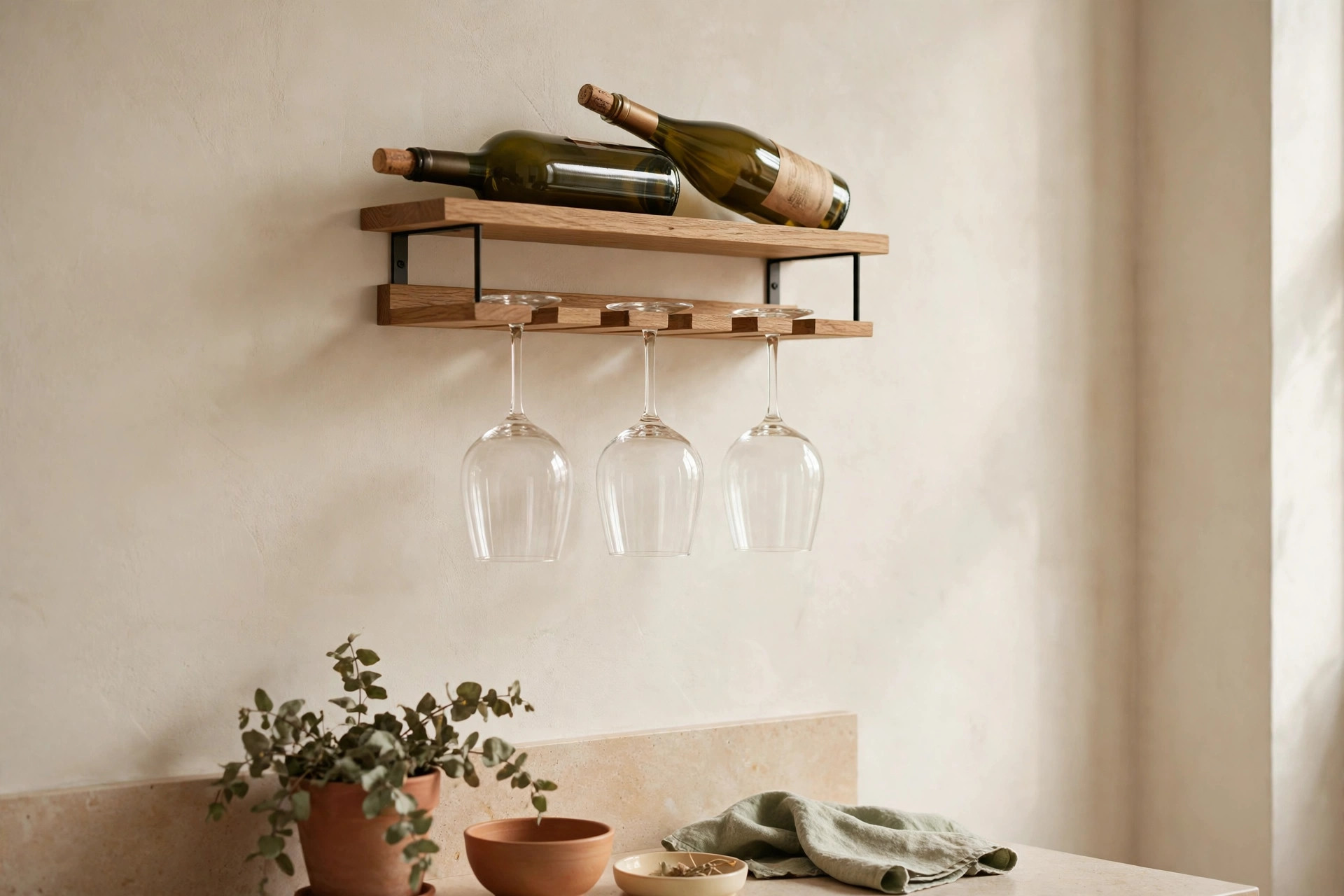
3. Mount a floating bottle shelf with a hanging glass rail underneath. A wood or metal shelf about 24 by 8 inches holds four to six bottles upright, with a stemware rail underneath for four to six wine glasses. Install it about 60 inches from the floor so bottles are easy to reach. If you rent, use heavy-duty adhesive mounting strips rated for at least 15 pounds per strip — the same renter-safe approach used in our 17 Renter-Friendly Kitchen Organization Ideas (No Drilling, No Damage) guide.
4. Use a wall-mounted wine rack for bottles you want to see. A horizontal wall rack that holds bottles on their sides keeps corks moist and turns your collection into decor. Limit it to six to eight bottles and hang it out of direct sunlight — heat and light spoil wine fastest.
Inside a cabinet: turning one shelf into a hidden bar
If you would rather close a door on the whole setup, one kitchen cabinet shelf is all it takes.
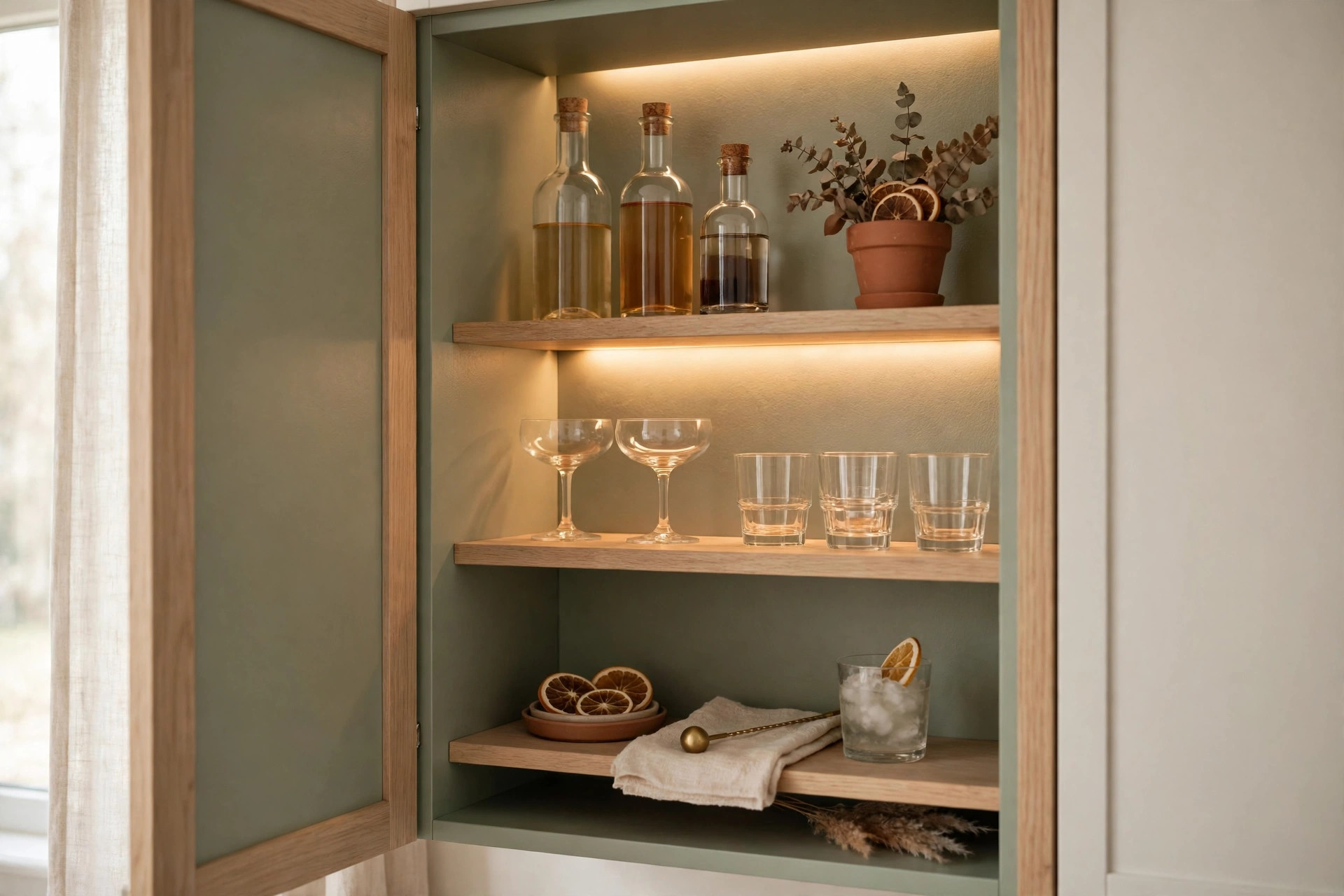
5. Convert one upper cabinet shelf into a closed-door bar. Pick the cabinet closest to your seating area, not the one above the stove — heat rises, and heat ruins spirits and wine. Clear one shelf, add a small riser if the gap is taller than 12 inches, and line up four to six bottles along the back with glasses in front. A 10-to-12-inch lazy Susan lets you spin to the bottle at the back instead of pulling everything out. Our 18 Small Kitchen Cabinet Organization Ideas That Maximize Every Shelf guide covers risers and turntables.
6. Store glasses upside down on a shelf liner, tools in a door rack. Glasses stored upright collect dust; upside down on a non-slip shelf liner, they stay clean and do not slide. A narrow wire rack on the inside of the cabinet door holds a jigger, a bottle opener, and a small strainer, so your tools live with your bottles.
Glass storage: hanging racks vs stacking (and what breaks)
Glasses are the fragile half of any home bar. The wrong storage chips rims and wastes space.
7. Hang stemware; never stack it. Wine glasses, coupes, and martini glasses should hang upside down from a stemware rail. Stacking stemware is how stems snap — one glass inside another puts pressure on exactly the weakest point. A four-to-six-glass rail costs about $15 to $25 and mounts under a shelf or cabinet.
8. Stack only short, thick-walled tumblers — and cap the stack at three. Rocks glasses and highball glasses with thick bases can be stacked, but only two or three high, and only if they are the same size and shape. Mixed sizes wedge together and jam, and pulling them apart is how rims chip. If a glass feels stuck, run warm water over the outer glass for a few seconds instead of twisting — twisting is what cracks them.
The tray rule: corralling bottles, tools, and garnishes
A tray is the cheapest organizing tool on this list. It turns a scattered collection into a bar.
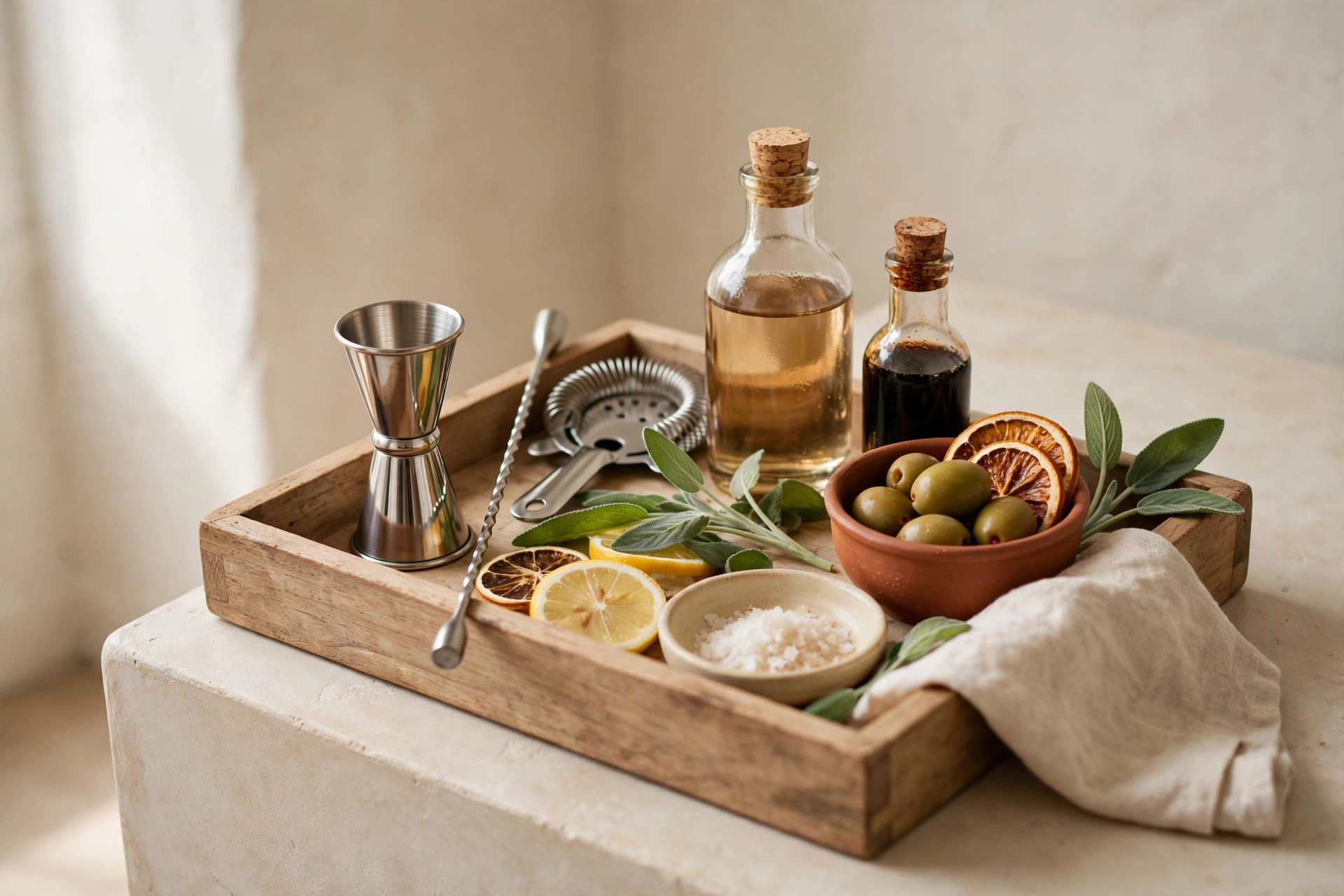
9. Put the whole bar on one tray when space is tight. If you have no cart and no free shelf, a rectangular tray — about 16 by 12 inches, with handles and a raised edge — becomes your bar. Bottles, a jigger, and a small jar of garnishes sit on the tray on a dresser, side table, or counter. Need the surface? Lift the tray and the bar moves as one piece. Pick a wipeable surface — lacquered wood, metal, or acrylic — because spills happen.
10. Use a second, smaller tray for garnishes and tools only. Lemons, olives, cocktail picks, a muddler, and a bar spoon do not belong loose on a shelf — they roll, they leak, and they disappear. A small tray, about 10 by 7 inches, keeps them together and keeps citrus juice off your surfaces. Keep it next to the bottle tray, not on top of it, so you can reach the garnishes without moving bottles.
Small-space bar tools: the 6-piece kit that covers everything
Bar tool sets sell in boxes of twelve or fifteen pieces. Six tools cover every drink you will realistically make.
11. Build the six-piece kit: shaker, jigger, strainer, bar spoon, muddler, opener. A 24-ounce Boston shaker (two tins, no built-in strainer), a Japanese-style jigger with 1-ounce and 2-ounce sides, a Hawthorne strainer, a 12-inch bar spoon, a wooden muddler, and a winged corkscrew or waiter’s corkscrew. Store all six in a tall jar on your cart or tray — if a tool does not fit in the jar, it does not live in your bar.
12. Keep one multipurpose glass per drink type, not one per cocktail. You need four glass types at most: a rocks glass, a highball, a wine glass, and a coupe. Buy four of each, not twelve — a small bar serves four people at a time. This is the same “what earns the space” thinking behind our 15 Small Kitchen Coffee Station Ideas for Tiny Counters guide, which works with a tight set of mugs instead of a whole cabinet of them.
Renter-safe bar zones: no drilling, no damage
Every idea here works without drilling, but the zone itself needs to be renter-safe too.
13. Define the bar zone with a rug or a tray, not with holes in the wall. A small rug (about 3 by 2 feet) under a bar cart marks its territory and protects the floor from drips. Either way, nothing is screwed or nailed to the landlord’s walls, and the whole setup moves out in one trip when your lease ends.
14. Use command strips, tension rods, and over-door racks for anything vertical. A stemware rail can mount with adhesive strips rated for its weight plus the glasses. A tension rod inside a cabinet creates a hanging rail for tools, and an over-the-door rack holds bottles without touching the wall at all. Clean the surface with rubbing alcohol first, and wait the full hour the instructions ask for before loading it.
Keeping it tidy: the 5-minute after-guests reset
A small bar only stays usable if it resets fast — five minutes after your guests leave.
15. Run the same five-minute reset every time: rinse, return, wipe, restock, close. Rinse the glasses and put them back on the rail or shelf. Return every bottle to its spot. Wipe the tray and the surface underneath it. Restock anything that ran out and add it to your shopping list now. Close the cabinet door or lock the cart wheels. Five minutes, same order, every time.
Mistakes to avoid
Buying the cart before measuring the corner. A cart two inches too wide blocks a doorway. Measure first, then buy.
Stocking like a liquor store. Twelve bottles is a collection; six bottles you actually drink is a bar.
Storing bottles on top of the fridge. It is the warmest spot in the kitchen and vibrates every time the compressor runs.
Mixing cleaning supplies with bar supplies. Keep the bar in a different cabinet from the cleaning products.
Forgetting the ice. A home bar without ice is a shelf of warm bottles. Keep one small ice cube tray in the freezer.
Frequently asked questions
Can I have a home bar in a studio apartment?
Yes. A single tray on a dresser or a two-tier cart in a 24-inch-wide corner is a complete home bar in a studio. Keep it to four to six bottles, four glasses of each type, and the six-piece tool kit.
How many bottles should a small home bar hold?
Six to eight bottles is the sweet spot: a vodka, a gin, a whiskey or bourbon, a rum, a vermouth, and a liqueur you love, plus one or two bottles of wine. That covers nearly every classic cocktail.
Where should I store wine in a small apartment?
Store wine on its side in the coolest, darkest spot you have — a lower cabinet away from the stove and the sunny window. Do not store wine long-term on top of the fridge or next to a radiator.
What is the best bar cart size for a small apartment?
About 24 inches wide, 16 inches deep, and 30 inches tall. Two tiers are enough — three invite clutter. Make sure it has a raised lip and lockable wheels, and measure your corner before you buy, not after.
How do I keep a home bar tidy with no storage space?
Give the bar one fixed home and run the five-minute reset after every use: rinse glasses, return bottles, wipe the tray, restock, close the door. A bar stays tidy because of the reset habit, not because of the furniture.
The bottom line
You do not need a dedicated bar — just a corner, a tray or a cart, six bottles you actually drink, and a five-minute reset habit. Start with the tray and the six-piece kit, add the cart or rack only when you know which problem it solves, and keep everything renter-safe. Browse more ideas in our storage ideas collection and save this pin for later.