You do not need a spare room to work out at home. You need a system that stores your gear in the space you already have and puts it back just as fast. That is where most apartment workouts fall apart: dumbbells on the floor, resistance bands tangled in a drawer, and a yoga mat sliding behind the sofa. These small home gym storage ideas fix that without a renovation, a garage, or a dedicated room. Every idea below works in a rental, fits in a corner, closet, or wall, and keeps your living space looking like a home first and a gym second.
The gear audit: what you actually use vs what gathers dust
Before you buy a single hook or bin, take stock of what you own. Pull everything out and sort it into three piles: used weekly, used monthly, and untouched for three months or more. The weekly pile earns prime real estate; the rest goes into a closet, under the bed, or out the door.
1. Sort gear by frequency, not by type
Grouping all weights together sounds tidy, but it puts rarely used gear in the way of daily gear. Build one “daily kit” — the mat, bands, and dumbbells you use most — and store the rest separately, so your daily kit takes under 30 seconds to grab.
2. Set a one-in, one-out rule for workout gear
Small apartments punish accumulation. Every time a new piece of gear comes in, one piece goes out: a new kettlebell replaces the lightest dumbbell pair you never touch, and a new set of bands replaces the stretched-out set.
Wall storage: racks, hooks, and pegboards for weights and bands
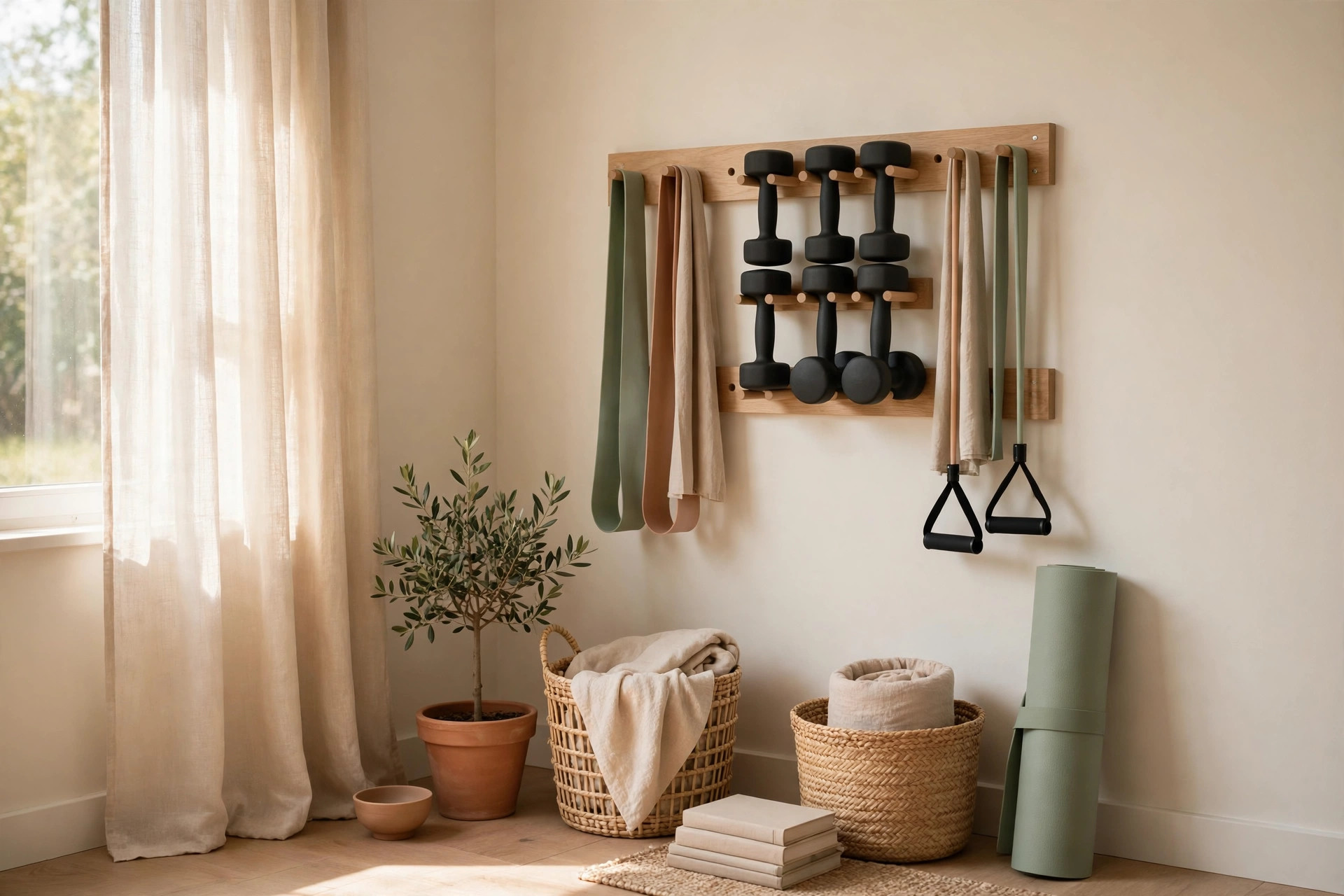
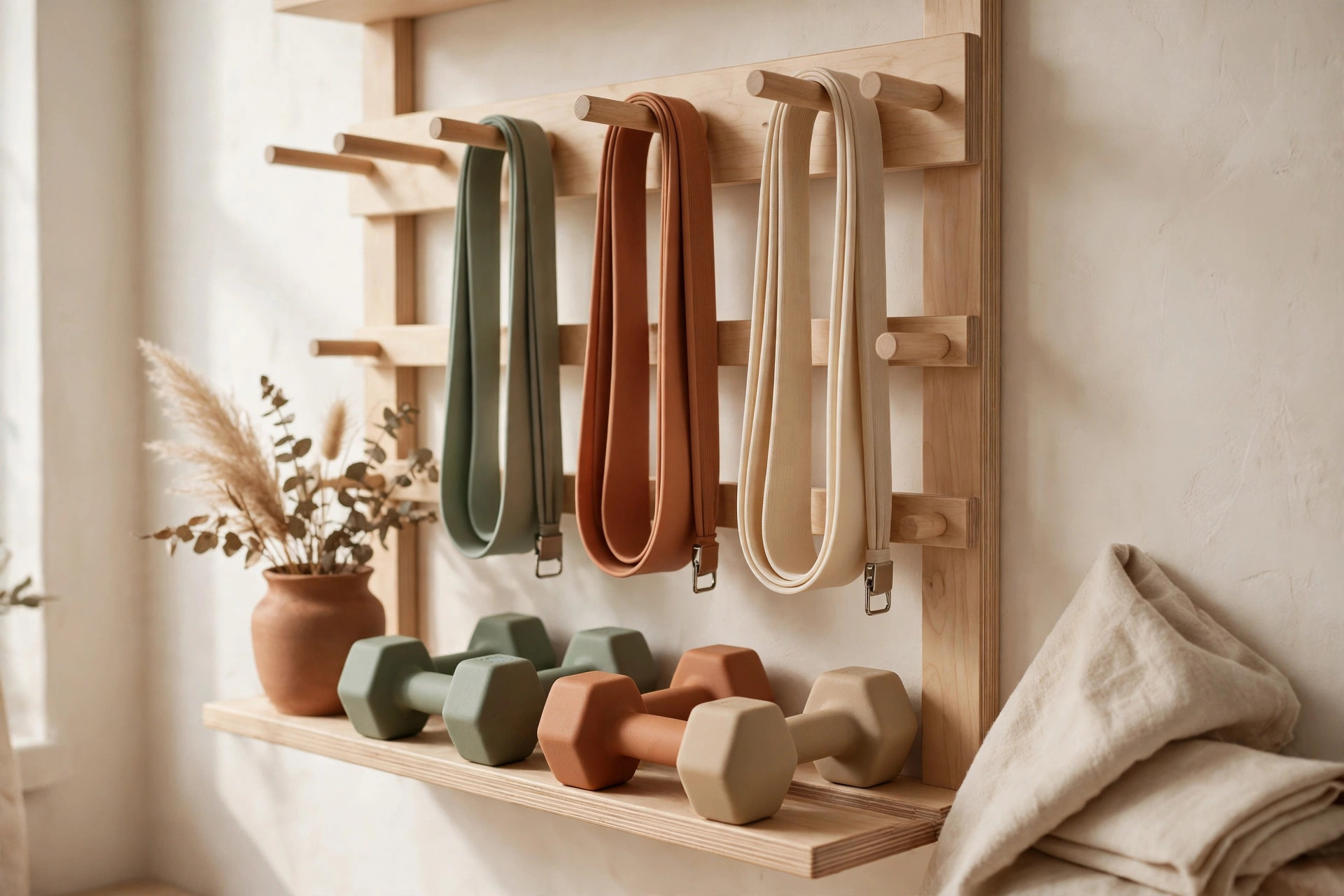
Walls are the most underused storage in an apartment gym. A single 4-foot stretch of wall can hold dumbbells, bands, a jump rope, and a foam roller without touching floor space. Match the mount to the weight: adhesive hooks suit bands, while dumbbells need screws into studs or a rated wall anchor.
3. Mount a low dumbbell rack at hip height
A two-tier wall rack at roughly hip height keeps dumbbells off the floor and at grab-and-go level. Mount it into studs where possible, keep the heaviest pair on the bottom tier, and leave about 6 inches of clearance above the top tier so you can lift weights in and out without scraping the wall.
4. Hang resistance bands on labeled S-hooks
Hang each band on its own S-hook on a wall rail or pegboard, lightest to heaviest, left to right. Label the hooks with the band’s resistance level using small adhesive labels, so you grab the right band without unrolling four others.
5. Use a pegboard panel for small gear
A 2-by-3-foot pegboard holds jump ropes, ankle straps, wrist wraps, and a small basket for earbuds and a timer. Hooks move in seconds when your routine changes, and the panel comes down with only a few screw holes to fill at move-out. For more wall-based thinking, see these vertical storage ideas for small apartments.
Rolling carts: a gym that parks in a closet
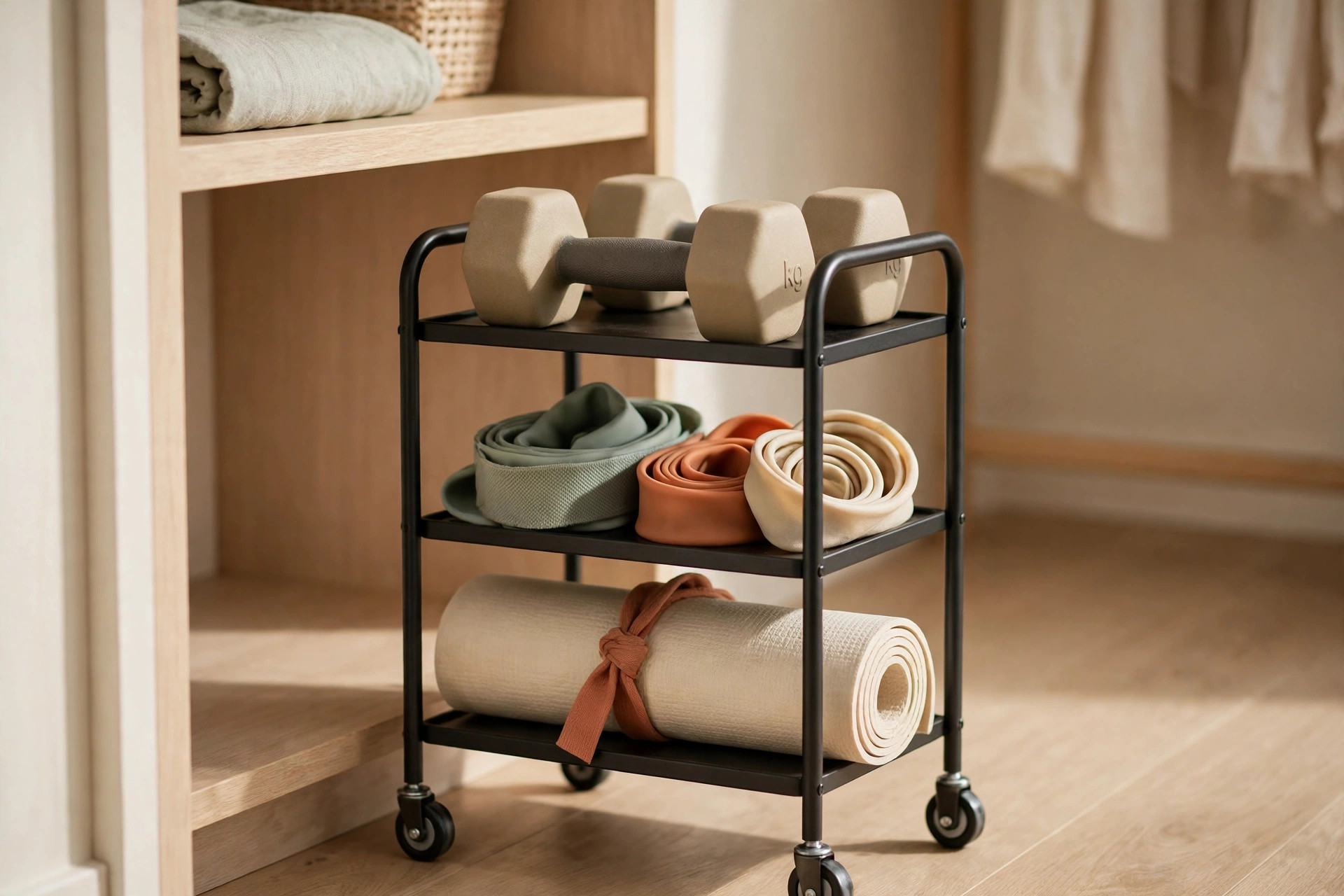
A rolling cart is the closest thing to a portable gym room. Load it with your daily kit, roll it out for a workout, and roll it back into a closet when you are done. The best carts are 3-tier metal utility carts, roughly 17 inches wide and 13 inches deep, with locking casters.
6. Build a three-tier cart by workout type
Dedicate the top tier to the gear you grab first: bands, a timer, and a water bottle. The middle tier holds dumbbells or kettlebells, kept low and centered so the cart does not tip. The bottom tier takes the bulky items — a foam roller, a yoga block, and a towel.
7. Park the cart in a closet with a “home base” outline
A cart only works if it has a parking spot. Measure your closet opening first — a cart half an inch too wide lives in the hallway forever. Mark its home base with a small strip of tape on the closet floor, and store nothing on the floor in front of it.
Under-bed and behind-door gear storage
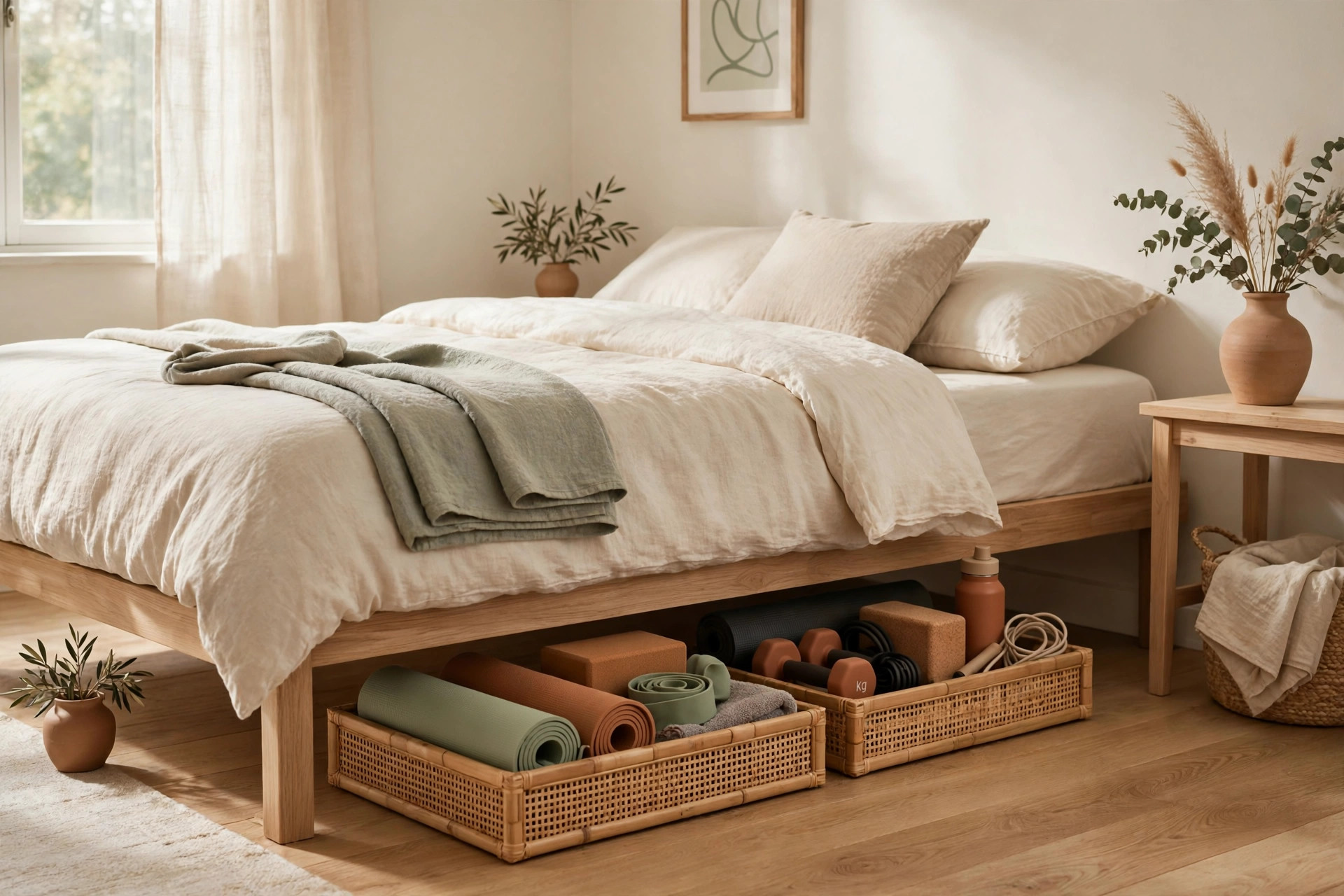
The two most overlooked gym storage spots are already in your home: the space under your bed and the back of a door. Both hide bulky gear — mats, rollers, and sliders — without adding furniture. The catch is access: gear stored here must be easy to slide out and clean, or it stays hidden and unused.
8. Store mats and rollers in flat under-bed bins
A flat bin, roughly 30 inches long and 6 inches high, fits under most bed frames and holds a rolled mat, a foam roller, and sliders in one slide-out unit. Choose a bin with wheels or a pull handle. These under-bed storage ideas for small bedrooms cover bin types and clearance measurements if your bed frame is low.
9. Hang an over-the-door organizer for light gear
An over-the-door shoe organizer with clear pockets is one of the cheapest apartment gym storage tools available. Bands, sliders, grip pads, and a small towel each get a pocket, all visible at a glance. Hang it inside a closet or bedroom door, with the heaviest items in the lowest pockets.
10. Use the gap behind a door for a vertical mat holder
The 4-to-6-inch gap behind an open door fits a tall, narrow mat holder or a simple wall-mounted mat hook. Roll mats tightly, stand them upright, and secure them with a single strap so they do not unroll onto the floor.
Small-space workout zones: mat, mirror, and ventilation
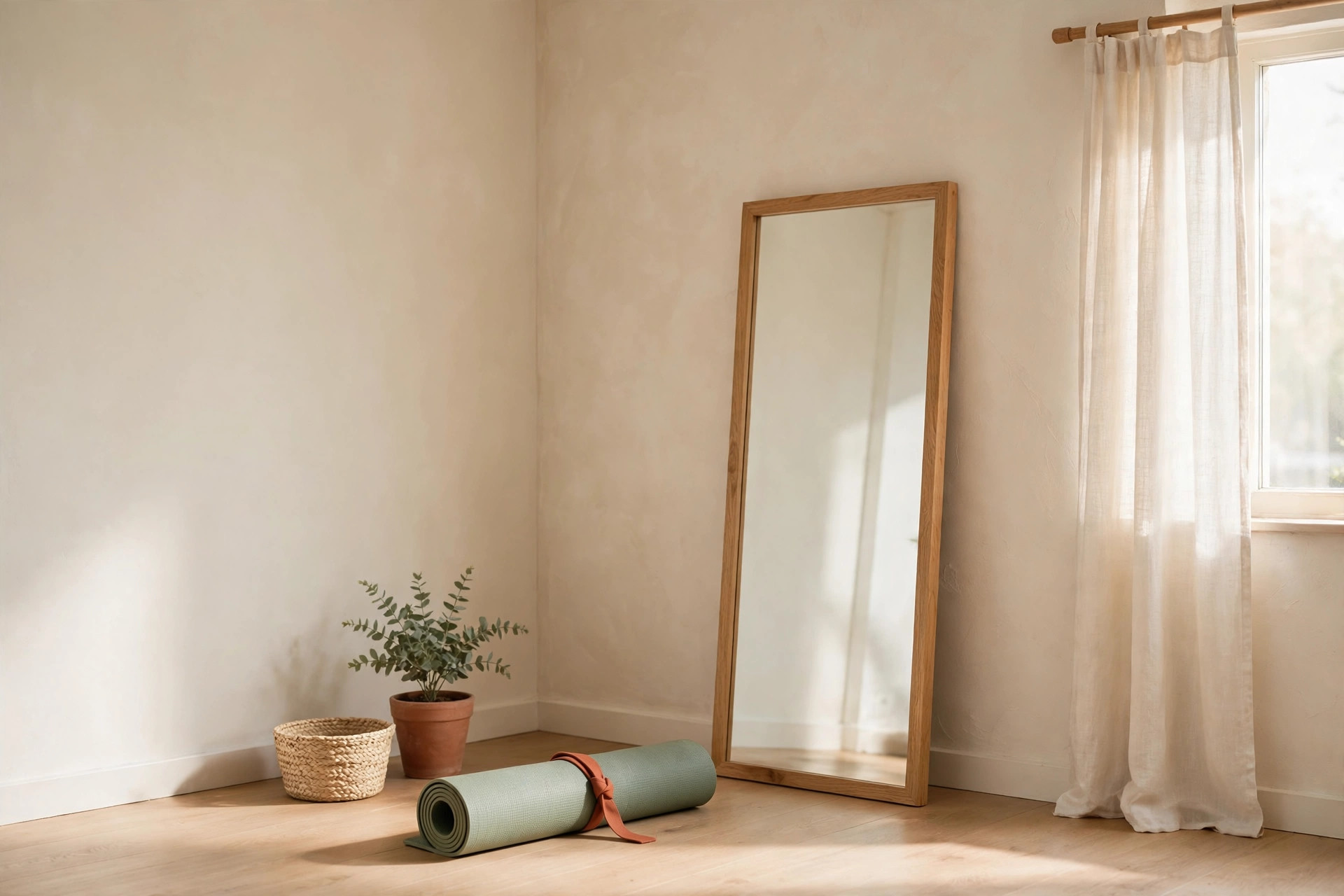
Storage is only half the system. You also need a workout spot that appears in seconds and disappears just as fast. A good apartment workout zone is about 6 by 4 feet — roughly a yoga mat plus arm’s reach — with a mirror or phone stand for form checks and airflow from a window or fan.
11. Define your zone with a foldable mat, not furniture
A foldable exercise mat, roughly 6 feet long when open, marks your workout zone without rearranging furniture. Fold it in thirds and it stores upright in a closet or behind a door. Pair it with a small phone stand for follow-along workouts, and keep both in the same spot so setup takes under a minute. If your living room doubles as your gym, these small living room storage ideas for apartments show how to keep shared spaces looking like living spaces.
12. Add a leaning mirror and a small fan to the zone
A leaning full-length mirror, about 5 feet tall, lets you check form without mounting anything, and it can be stored flat afterward. A compact clip-on or table fan aimed at your zone keeps a 20-minute session comfortable, since small rooms heat up fast. Store both within arm’s reach of your mat.
Keeping gear clean and odor-free in a small home
In a small apartment, sweaty gear shares air with your bedroom and living room, so odor control is part of storage, not an afterthought. The rule is simple: gear gets wiped and aired before it gets put away, and nothing damp goes into a closed bin or closet.
13. Wipe gear down before it goes back on the shelf
Keep a small spray bottle of diluted all-purpose cleaner and a microfiber cloth on your cart or in your gear bin. A 30-second wipe of dumbbell handles, mat surfaces, and band grips after each session stops sweat buildup that turns into odor within days.
14. Air gear out for 15 minutes before closed storage
After a workout, hang bands and towels on a hook and leave mats unrolled for about 15 minutes before packing them away. This short airing step prevents the musty smell that closed bins trap, and it takes no extra effort if it becomes part of your cool-down.
The 5-minute pack-away routine
The best storage system is the one you actually use after every workout, and that means the pack-away must be faster than the workout’s cool-down. This routine takes about five minutes and leaves your apartment gym-ready for tomorrow without a single item left on the floor.
15. Follow the same five steps in the same order every time
One, wipe down handles, grips, and the mat. Two, roll the mat and stand it in its holder. Three, return dumbbells to the rack, heaviest on the bottom. Four, hang bands on their labeled hooks. Five, roll the cart back to its closet home base and lock the casters. Same order every time turns pack-away into habit.
Mistakes to avoid
The most common apartment gym mistake is buying storage before auditing gear — a rack sized for twelve dumbbells when you own four, or a cart that does not fit your closet door. Measure first, then buy. The second mistake is storing gear where it is invisible: a mat buried under winter coats will not get used, so daily gear must stay visible and reachable. The third mistake is overloading adhesive hooks and door organizers with heavy weights; check the weight rating, and move anything heavy to a stud-mounted rack. Finally, do not buy a full home gym set at once — start with the three or four items you use weekly.
Frequently asked questions
How do I store gym equipment in a really small apartment?
Start with your walls, doors, and under-bed space before buying furniture. A wall rack for weights, an over-the-door organizer for bands and small gear, and a flat under-bed bin for mats cover most home workouts without using any floor space.
Can I mount a dumbbell rack in a rental without losing my deposit?
Yes, if you mount into studs and fill the holes at move-out with filler and a dab of matching paint. Most landlords accept a few small, well-repaired holes. If your lease bans drilling entirely, use a freestanding dumbbell stand or a tension-mounted setup rated for the weight you own.
What is the best way to store a yoga mat in a small space?
Roll it tightly, secure it with a strap, and store it upright in a tall holder behind a door or in a flat under-bed bin. Avoid leaving it unrolled on the floor, where it collects dust, and avoid damp closed bins, which trap odor.
How do I keep workout gear from smelling in a small apartment?
Wipe gear down after every session, air bands and mats for about 15 minutes before closed storage, and never store damp fabric items in a sealed bin. A small mesh bag for damp items and a spray bottle kept with your gear make the habit easy to keep daily.
Conclusion
A small apartment gym works when storage matches what you actually use: a wall rack for weights, a cart that parks in a closet, and hidden spots for mats and bands. Start with the gear audit and keep the five-minute pack-away routine sacred. Browse the storage ideas category, and save this pin for later so your next workout starts with gear in hand, not gear on the floor.