Your cookbooks are heavy, greasy, and loved — and in a small kitchen, they are also in the way. They lean in a wobbly stack on the counter, slide off the top of the fridge, and the one you need is always at the bottom of the pile. These small kitchen cookbook storage ideas fix that with one simple system: a single shelf zone for the books you use, a working stand for the book you are cooking from, and a safe home for everything else.
The cookbook audit: keep, digitise, or donate
Before buying a shelf or stand, pull every cookbook out. Most small kitchens hold 15 to 30 cookbooks, half unopened for a year. An audit takes twenty minutes.
1. Sort every book into keep, digitise, or donate
Make three piles and be honest. Keep the books you cooked from in the last six months. Digitise the ones you open for only one or two recipes: photograph those pages and save them in a recipe app. Donate the rest.
2. Rank your keepers by how often you cook from them
Sort your keep pile again: weekly favourites, monthly regulars, occasional books. Weekly favourites — usually 3 to 5 books — earn the easiest spot, at eye level near the stove. Monthly regulars go one shelf up or down; occasional books go highest. Storage follows frequency, not size or colour.
One shelf, one zone: where cookbooks live
Cookbooks scattered across three cabinets and a countertop are cookbooks you cannot find. Give them one home: a single shelf zone between waist and eye height.
3. Claim one shelf and defend it
Pick the shelf easiest to reach from your chopping board, usually above or beside your main counter. Clear it completely, then put back only cookbooks, spine-out, in a single row. Most cookbooks are 8 to 10 inches tall, so a standard 12-inch-deep shelf fits them easily. Leave about 1 inch of clearance above the tallest book.
4. File books by cooking type, not by colour
Colour-coded shelves photograph beautifully and cook terribly. When your hands are covered in dough, you think “bread book,” not “red spine.” Group books by what you cook: weeknights, baking, grilling, and cuisines in their own cluster. Order each group by frequency, most-used first, and add a heavy jar or bookends at the end so the row stays upright.
5. Use the shelf above the stove — carefully
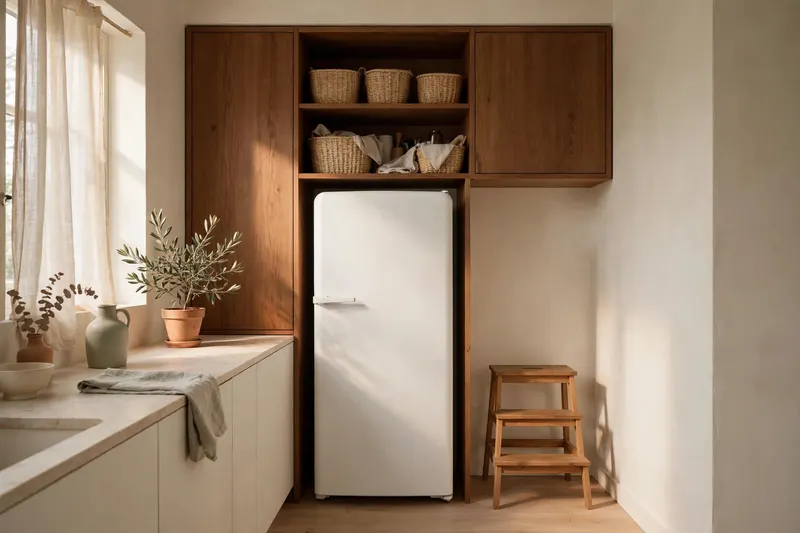
The shelf above the stove is the most tempting spot in a small kitchen, and the worst if you get it wrong. Heat and steam rise straight into it, warping covers and loosening glue. It works only if the shelf sits at least 30 inches above the cooktop and your range hood vents well — then store only sturdy paperbacks there. The top of the fridge has the same problem. For more ways to use that awkward space safely, see these 16 Above-Fridge Storage Ideas for Small Kitchens.
Cookbook stands: the working copy stays open
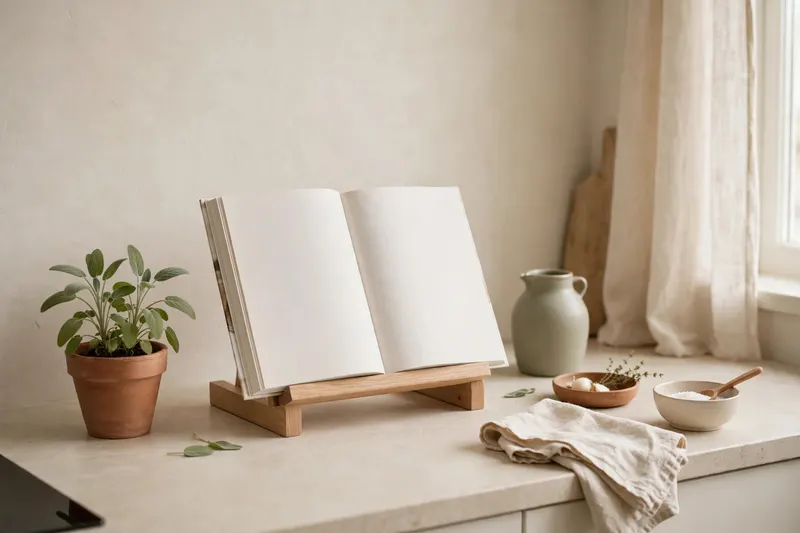
A cookbook lying flat on the counter collects splatters, closes itself at the wrong moment, and eats a full square foot of prep space. A stand fixes all three: the book stays open at eye level and the pages stay out of the splash zone.
6. Keep one adjustable stand on the counter, always
Buy one sturdy stand and leave it out — a stand buried in a cabinet is one you never use. Look for a metal or bamboo stand with an adjustable ledge and a page holder, sized for books up to about 2 inches thick. Place it at the back corner of your prep counter, angled toward where you stand.
7. Use a folding stand for tiny counters
If your counter is under 24 inches deep, a fixed stand is too much. A folding metal stand collapses to under an inch thick and hangs on a hook inside a cabinet door or slides beside the fridge when dinner is done. Set it up only while you cook, then fold it away. Folding stands wobble under heavy hardcovers, so use them for paperbacks and mid-size books. For more ideas, see these 17 Renter-Friendly Kitchen Organization Ideas.
Slim displays on walls and cabinet ends
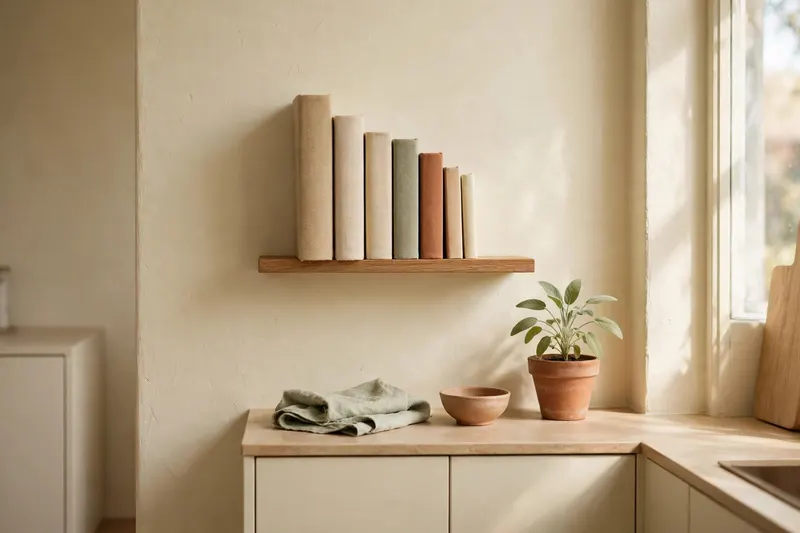
When shelf space is gone, the walls are your next shelf. Slim wall displays hold a few books where you can see them — and a cookbook you can see is one you will cook from.
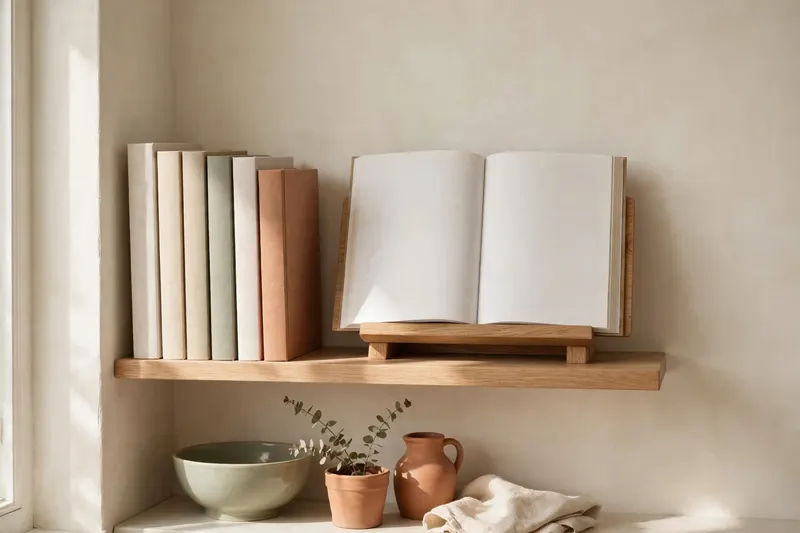
8. Mount a picture ledge for your top five books
A narrow picture ledge — 3 to 4 inches deep — mounted at eye level holds 4 to 6 books spine-out, like a mini bookshop shelf. Mount it with screws into a stud, or with heavy-duty adhesive strips rated for at least 10 pounds if you rent and cannot drill. Rotate the books seasonally — grilling in summer, baking in winter.
9. Use the end of a cabinet as a cookbook nook
The flat end panel of a wall cabinet or tall pantry unit is dead space, and it is exactly cookbook-sized. Screw or stick a slim rack or two small ledges onto it, and you have a home for 3 to 5 books right beside your prep zone. For more ideas, see these 17 Kitchen Wall Storage Ideas for Small Kitchens.
Inside cabinets: spine-out filing that works
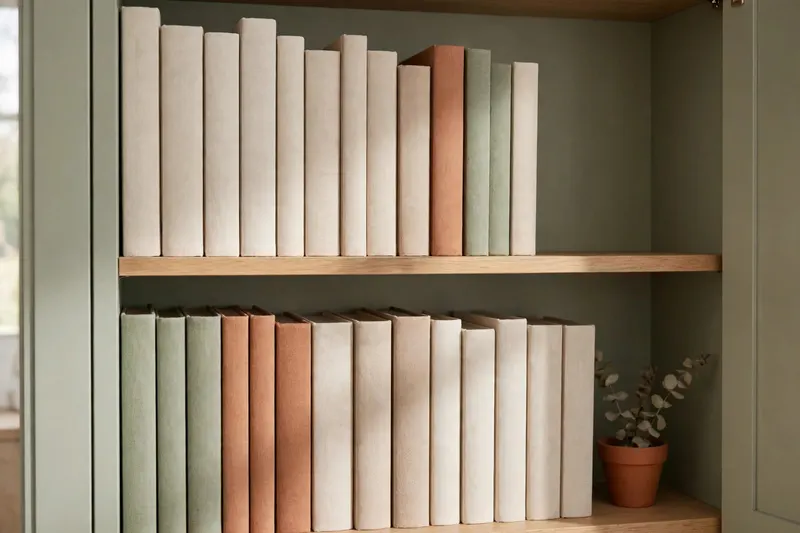
Not every cookbook deserves display. Books you open monthly — or ones with fragile covers — are better off inside a cabinet, protected from grease and light. File them upright and they stay usable.
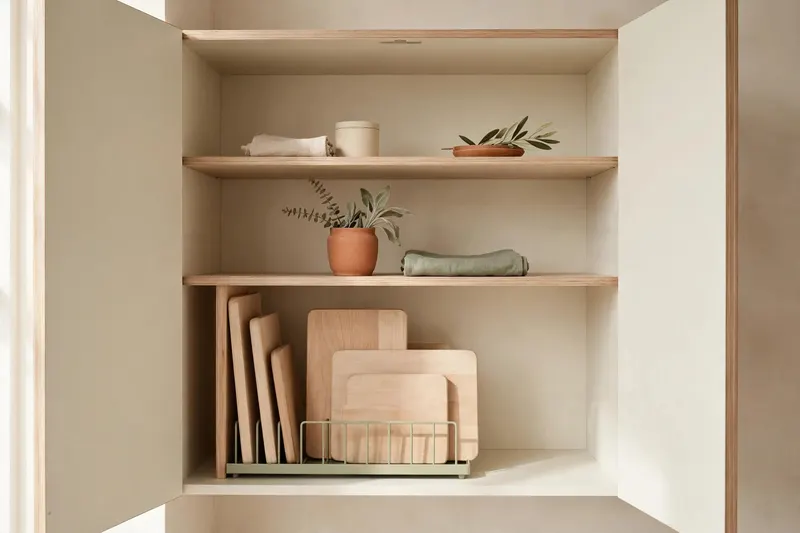
10. File books upright with dividers in a deep cabinet
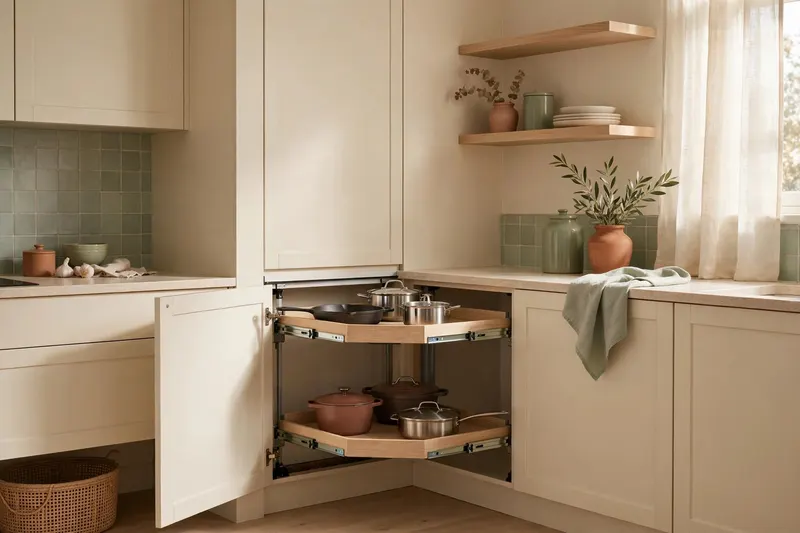
Take one deep cabinet — the one above the counter, not the blind corner — and fit it with vertical dividers or tension rods every 4 to 6 inches to create slots. Slide books in spine-out, one or two per slot, so you can pull any single book without disturbing the rest. If your cabinets have dead corners, see these 16 Blind Corner Kitchen Cabinet Storage Ideas for pull-outs that make those spots reachable.
11. Give the big and heavy books the lowest shelf
Oversized books — the 12-inch-tall baking volumes that weigh 4 pounds or more — do not belong on a high shelf. One slip while reaching overhead and a heavy book lands on a foot or a plate. Store them on the lowest shelf of your cookbook zone, lying flat in a stack of no more than three.
The digital backup plan for rarely opened books
Some cookbooks earn their shelf space every week. Others you keep for five recipes. Digitising those recipes lets the book leave the kitchen without losing the food.
12. Photograph your most-used recipes from each occasional book
Open each occasional book, mark the recipes you actually cook — usually 3 to 5 per book — and photograph each page in good daylight, with the whole page in frame. Save the photos in a folder named after the book. Once a book’s key recipes are saved and tested, move the book to a living-room shelf or donate it.
13. Keep a single “tonight’s recipes” binder
For recipes you cook constantly that live in different books, make one slim binder: a 1-inch ring binder with clear plastic sleeves, holding copies of your 20 to 30 most-cooked recipes. The sleeves wipe clean, and the binder stands on your shelf like a book. Update it twice a year.
Keeping cookbooks clean and splatter-free
Cookbooks live in the messiest room in the house, and grease, steam, and flour dust age them fast. A little protection now saves a stained book later.
14. Cover the working book while you cook
Before you start cooking, slip the open book into a large clear plastic sleeve or a zip-top bag, or drape a clean tea towel over the pages you are not reading. The sleeve keeps splatters off the paper while the recipe stays readable. For books you use weekly, clear adhesive book covering protects the cover permanently. The Library of Congress book care guidance gives the same basics for all books: keep them dry, out of direct sunlight, and away from heat. Never store books with damp covers — wipe them dry first, or moisture breeds mould.
15. Clean the shelf zone once a month
Once a month, pull the books off the shelf, wipe the shelf with a damp cloth and a drop of dish soap, and dust each book’s top edge. Check for warped covers or loose pages, then re-shelve in frequency order: weekly favourites first, the rest behind them.
Mistakes to avoid
Storing cookbooks above the stove without checking the heat. Steam warps covers and loosens bindings — if the shelf is under 30 inches above the cooktop, move the books.
Stacking books flat in tall piles. A pile of eight books means the bottom book is never used — file upright, or stack flat in groups of three at most.
Buying a display shelf before the audit. A beautiful ledge full of books you never cook from is still clutter. Audit first.
Keeping every cookbook in the kitchen. The kitchen shelf is for cooking books — coffee-table food books, signed editions, and holiday volumes belong on a living-room shelf, safe from grease.
Choosing open shelving right next to the sink. Splashes reach further than you think — keep at least 18 inches between a cookbook shelf and the sink edge.
Frequently asked questions
How many cookbooks should you keep in a small kitchen?
Most small kitchens work best with 8 to 12 cookbooks — weekly favourites plus monthly regulars. If you own more, keep the extras on a living-room shelf, or digitise the recipes you use and donate the book.
Can you store cookbooks above the fridge?
You can, but only as a last resort. The top of the fridge is warm, greasy, and easy to knock books off — if you must use it, put only sturdy paperbacks there in a tray with a lip.
What is the best way to keep a cookbook open while cooking?
A sturdy adjustable stand with a page holder and a lip at least 1 inch deep is the most reliable option — it holds the book open at eye level.
How do you protect cookbooks from kitchen grease?
Keep them at least 18 inches from the sink and 30 inches above the cooktop, store them spine-out, and cover frequently used books with clear adhesive covering.
Should you digitise your cookbooks?
Digitise the occasional books, not the favourites. Photograph the 3 to 5 recipes you actually cook from each rarely used book, save them in a recipe app, and let the book go.
Conclusion
A small kitchen does not need fewer cookbooks — it needs a smaller, harder-working collection with one home. Audit the shelf, keep the books you cook from, give them a single zone plus a stand, and protect them from heat and splatter. Save this pin for later, and explore more ideas in our kitchen organization collection.