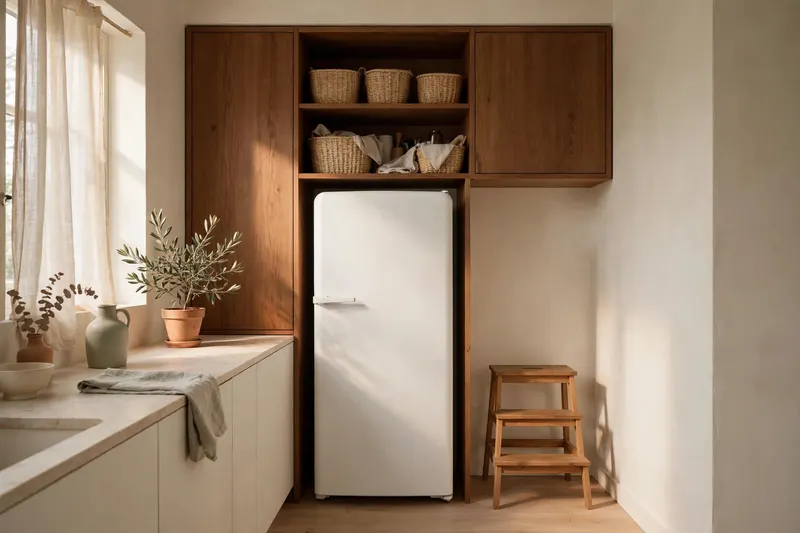
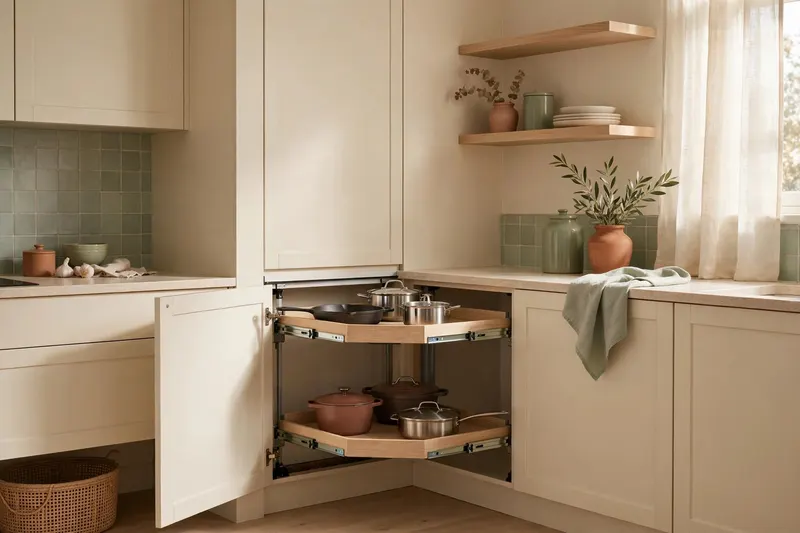
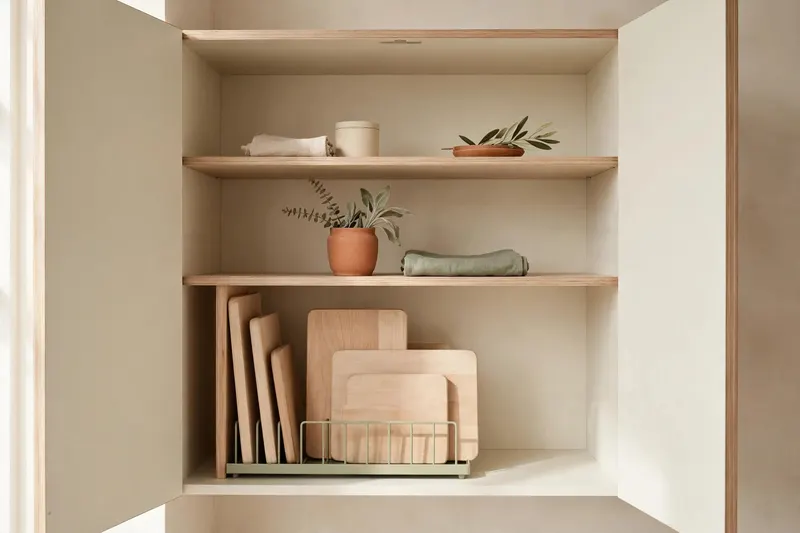
Pots and pans are the hardest thing to store in a tiny kitchen. They are bulky, heavy, and awkwardly shaped, and one stack can swallow a whole cabinet — while the lids live somewhere else entirely. These small kitchen pot rack ideas move your cookware onto walls, ceilings, doors, and freestanding racks, so your cabinets stay free and the pot you need is always within reach.
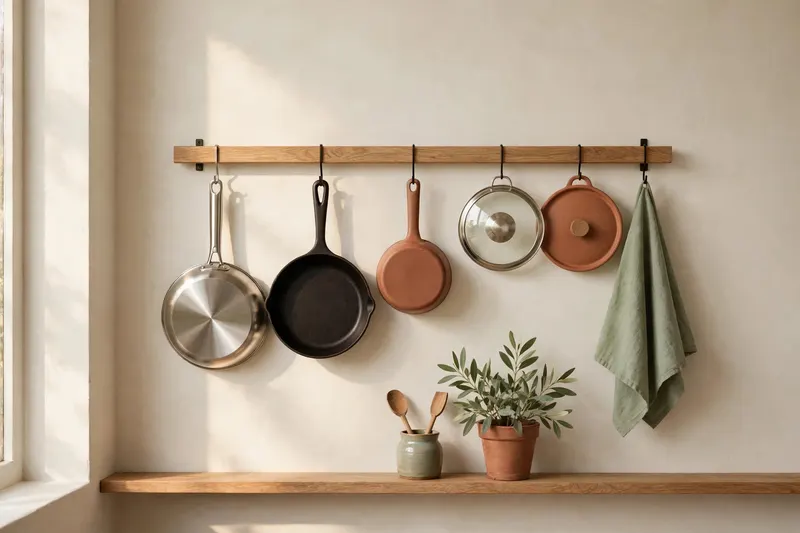
Why pots deserve wall or ceiling space in a tiny kitchen
A single stockpot can take up the same cabinet space as a dozen plates and your mixing bowls combined. Pots do not nest neatly, and their handles stick out at odd angles — space you cannot afford to lose with only two or three base cabinets.
Moving pots to a wall or ceiling rack frees a full cabinet — often the one closest to the stove — for dry goods or small appliances. It puts your most-used pans at eye level, so cooking starts with a grab instead of a dig.
The trick is choosing a rack that fits your real constraints: how much wall you have, whether your ceiling is high enough, and whether you rent. The 16 ideas below are organized by where the rack lives, so skip to the ones that work in your space.
Wall-mounted rails and pegboards for pots and lids
Wall space is the easiest win in most tiny kitchens — a bare stretch beside the stove or above the counter becomes storage with a few screws.
1. A stainless steel wall rail with S-hooks
Mount a 24- to 36-inch stainless steel rail beside or above your stove and hang pots from S-hooks — a 36-inch rail typically holds four to six pans. Leave at least 2 inches between hooks so pans do not knock together; stainless steel handles heat and steam and wipes clean.
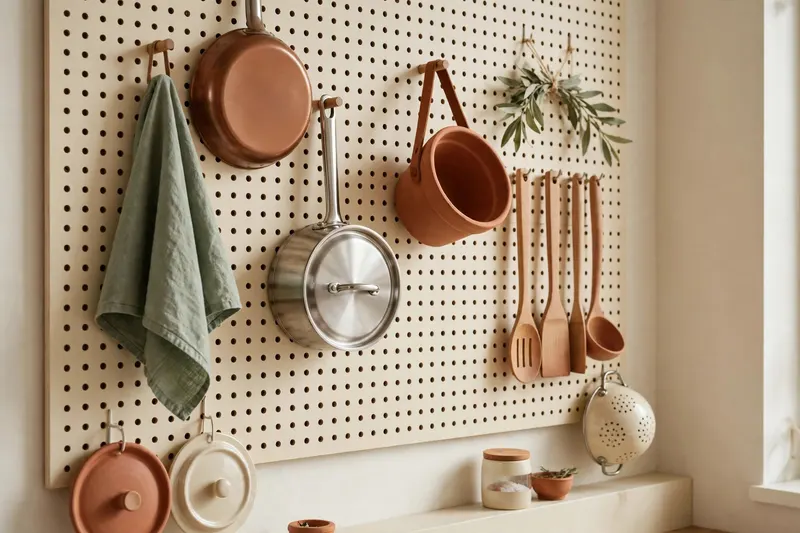
2. A pegboard panel for pots, lids, and utensils
A pegboard gives you a full wall of adjustable storage. Hang pots from hooks rated for at least 5 pounds each, and use smaller hooks for lids and utensils. A 24-by-36-inch panel holds three or four pans, two lids, and a row of utensils. Paint it the same color as your wall and it reads as intentional. For more ideas, see these 17 kitchen wall storage ideas for small kitchens.
3. A wall-mounted pot rack with a shelf on top
Some wall racks combine a hanging bar underneath with a narrow shelf on top: the bar holds your daily pans, the shelf holds lids or oil bottles. Look for one at least 12 inches deep, and use wall anchors in drywall.
4. A vertical rail for lids beside the pots
Lids are the part most people forget. Mount a short 12-inch rail or a row of small hooks beside your pot rail and hang lids by their knobs — each lid stays near its pot.
Ceiling pot racks: when they work in small kitchens
A ceiling rack is the classic pot-storage move, but it only works when the ceiling height and layout cooperate. Hung too low in a tiny kitchen, it becomes a head-bumping hazard.
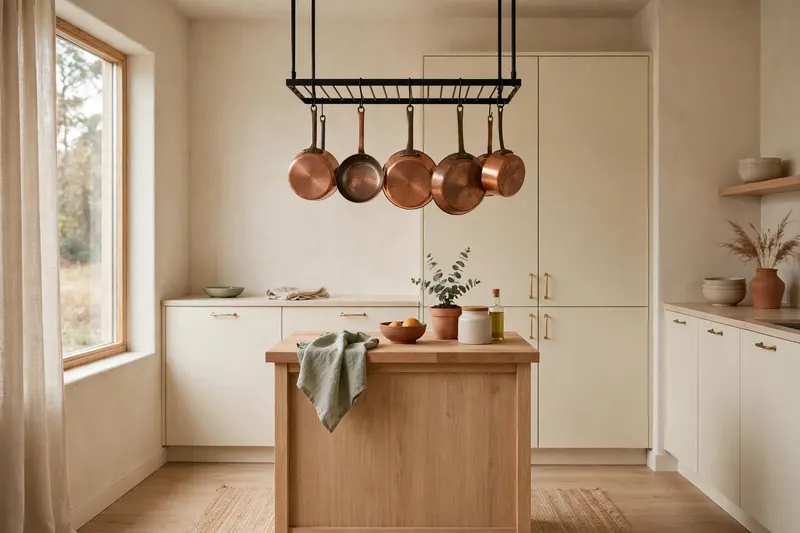
5. A ceiling grid rack over a peninsula or island
If your kitchen has even a small peninsula or island, a ceiling grid rack above it is the best use of that airspace. Hang it so the bottom sits 6 feet 6 inches above the floor — high enough to walk under, low enough to reach without a step stool. A 24-by-36-inch rack holds six to eight pans.
6. A single ceiling rail above the stove
No island? A single ceiling rail, 24 to 36 inches long, hung above the stove puts pans exactly where you cook. It needs ceilings at least 8 feet high; below that, it blocks the range hood. Always screw ceiling racks into joists, never drywall alone — a loaded rack can weigh 30 pounds or more.
7. A hanging chain with adjustable hooks
A length of sturdy chain with S-hooks is a flexible, low-cost ceiling rack. Raise or lower individual hooks to stagger pan heights so large pans do not bump into each other.
Over-door and cabinet-side pot storage
When wall and ceiling space are both spoken for, doors and cabinet sides offer a last patch of vertical space — perfect for the two or three pans you use every day.
8. An over-the-door pot rack
An over-the-door rack hooks over the top of a pantry or kitchen entry door — no screws, no holes. Most hold three to four pans on two or three tiers. Check clearance first: the rack adds about 2 inches of depth, so the door must still close without scraping. It pairs well with other no-drill solutions in these 17 renter-friendly kitchen organization ideas.
9. Hooks on the side of a cabinet or fridge
The exposed side of a tall cabinet or the refrigerator is dead space in most kitchens. Stick-on or screw-in hooks rated for 5 to 10 pounds each can hold one or two lightweight pans or a row of lids — best for a small frying pan and a saucepan, not cast iron.
Freestanding pot racks for renters
If you cannot drill at all, freestanding racks are your answer. They need floor or counter space, but they give you real pot storage without touching a wall.
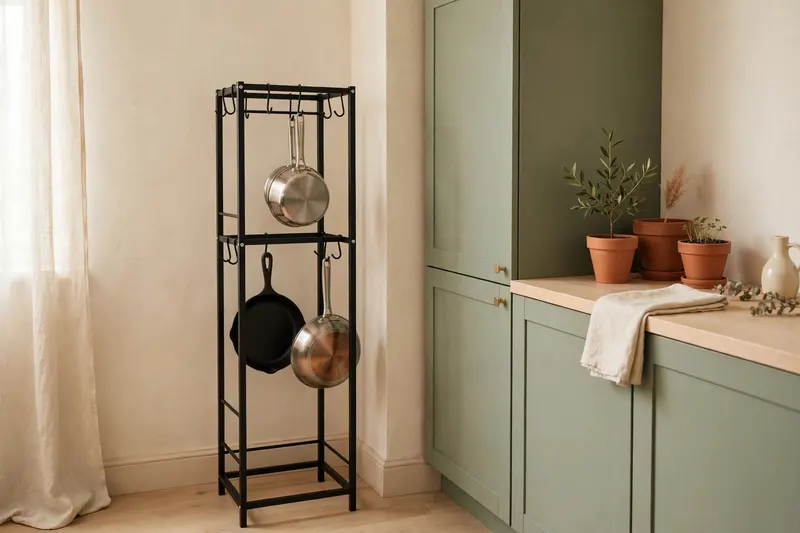
10. A freestanding floor pot rack
A tall floor-standing rack with hooks on two or three sides holds six to eight pans in about 2 square feet of floor space. Place it beside the fridge or at the end of a counter run, out of the walkway. Look for a weighted base and a wide footprint — top-heavy racks tip when you pull a pan off one side.
11. A countertop pot stand
A small two-tier countertop stand holds your two most-used pans and their lids on a 12-by-18-inch footprint — on a wide windowsill, the end of a counter, or a rolling cart. It ends the daily cabinet dig for your morning pan.
Lid storage: the other half of the pot problem
A pot rack solves half the problem. Lids slide, rattle, and vanish — treat them as their own storage job.
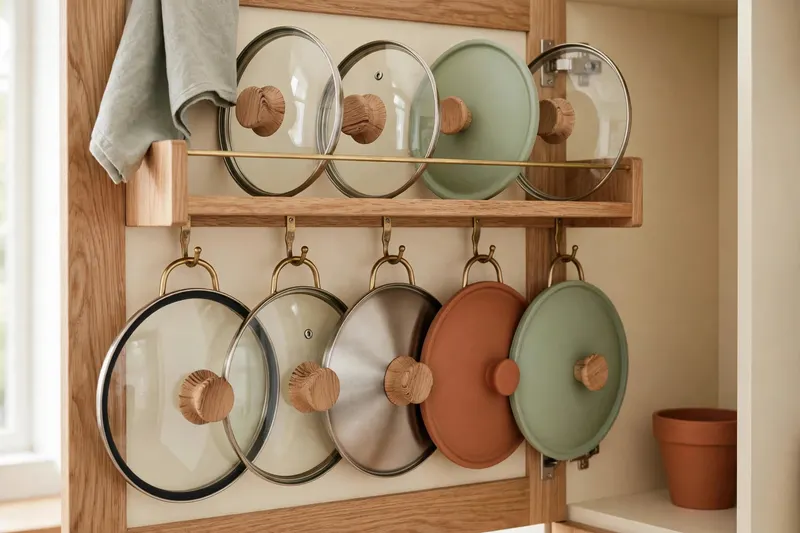
12. A lid organizer inside a cabinet door
Mount a slim lid rack or adhesive hooks inside a cabinet door, so each lid hangs by its knob and is visible when you open it. Keeping lids out of the pot stack stops pots getting scratched and lids getting lost.
13. A vertical lid file in a narrow cabinet gap
A vertical divider rack — the same style used for cutting boards — holds lids upright like files. A 6-inch-wide slot fits most lids up to 12 inches across. Slide it into the gap beside the stove or a deep drawer, and each lid gets its own slot. The same trick works for flat items too, as these 15 small kitchen cutting board storage ideas show.
14. A tension rod lid corral inside a cabinet
Wedge a spring tension rod across a cabinet shelf, a few inches from the front edge, and stand lids upright behind it. It costs a few dollars, installs in seconds, and keeps lids from sliding forward. Measure the interior width and buy a rod that extends at least 2 inches beyond it.
Keeping hanging pots from looking like clutter
Hanging pots can look beautiful or chaotic, and the difference is discipline, not money.
15. Hang only the pans you actually use weekly
A rack holding four well-used pans looks intentional; a rack crammed with every pan you own looks like a garage sale. Keep daily pans on the rack, and store the specialty pieces — roasting pan, pressure cooker, extra stockpot — in a cabinet or on a high shelf.
16. Match hook spacing and keep the bottoms clean
Space hooks evenly, hang pans with handles facing the same direction, and wipe the bottoms before hanging. Grease and soot transfer to everything a pan touches, so a quick wipe after cooking keeps the rack tidy.
Mistakes to avoid
Hanging a rack from drywall without anchors. A loaded pot rack is heavy, and screws in bare drywall will pull out. Always hit a stud or use toggle bolts rated for the full loaded weight.
Hanging heavy cast iron from adhesive hooks. Command-style hooks are rated for a few pounds; a cast-iron skillet weighs 6 to 8 pounds. Use them only for lightweight lids and utensils.
Blocking the range hood or a light fixture. A ceiling rack in front of a hood traps steam and grease, and one under a pendant light throws shadows across your stove. Check both before you drill.
Overloading one side of a freestanding rack. Pulling all the heavy pans off one side makes a tall rack top-heavy. Distribute weight evenly, heaviest pans lowest.
Buying a rack before measuring your tallest pan. A rack that fits your saucepans but not your stockpot is a rack you will stop using. Measure the tallest pan first, then buy.
Frequently asked questions about pot racks
Can I hang pots in a small kitchen without drilling?
Yes. Over-the-door racks, freestanding floor racks, countertop stands, and tension-rod lid corrals all need zero holes. Adhesive hooks work for light lids and utensils only, never heavy pans.
How high should a ceiling pot rack hang?
The bottom of the rack should sit about 6 feet 6 inches above the floor, so you can walk underneath without ducking. With ceilings below 8 feet, a wall rail is the safer choice.
What is the best pot rack for a renter?
A freestanding floor rack or an over-the-door rack. Both move out cleanly, hold a full set of daily pans, and need no landlord permission.
How do I stop hanging pots from banging together?
Space hooks at least 2 inches apart, stagger pan heights, and hang lighter pans on the outer hooks. Felt or silicone hook covers cut noise and protect pan finishes.
Do pot racks make a small kitchen look smaller?
They can if they are overstuffed. A rack with four or five evenly spaced pans makes a kitchen feel more organized, because it empties a cabinet and clears the counters. The clutter comes from overloading, not the rack.
Conclusion
Moving pots out of the cabinets is one of the fastest wins in a tiny kitchen: a wall rail, a ceiling rack, or a freestanding stand frees a whole cabinet and puts your daily pans within reach. Start with the spot you have — a wall, a ceiling, a door, or a corner — and hang only the pans you use every week. For more ideas, browse the kitchen category and save this pin for later.