The pile on the bedroom floor did not start as a pile — just one shirt over a chair, one pair of jeans over the bed frame, one towel on the bathroom door. A few days later the chair is buried and wash day feels like a rescue mission. These small laundry sorting system ideas fix the real problem: sorting usually happens at the machine, long after clothes have scattered. Sort at the hamper instead — the moment a garment comes off — and the pile never forms. Below are 16 ideas — slim hampers, color-coded zones, a wash-day flow — that keep a small apartment pile-free.
Sort at the source: why laundry piles form in the first place
Laundry piles are rarely a laziness problem. They are a distance problem: if the only hamper lives in the bathroom and you change in the bedroom, clothes land wherever you are standing. With no divisions, everything lands in one heap, and wash day starts with twenty minutes of sorting — the step most people skip, so the heap grows. Sorting at the source means deciding once, when you take something off, and never again.
1. Put a hamper where clothes actually come off
Find the two spots where clothes pile up most — usually bedroom and bathroom — and place a hamper at each, even if the second is just a hanging bag on a door hook. A hamper in the wrong room is decoration; one in the right room gets used daily.
2. Make sorting a two-second decision, not a chore
Label each section — a tag, a colored bag, a stitched label — so nobody has to think. Lights left, darks right, delicates in the mesh bag on top. When the choice takes two seconds, even roommates follow it without being asked twice.
Slim and stacked hampers that fit narrow spaces
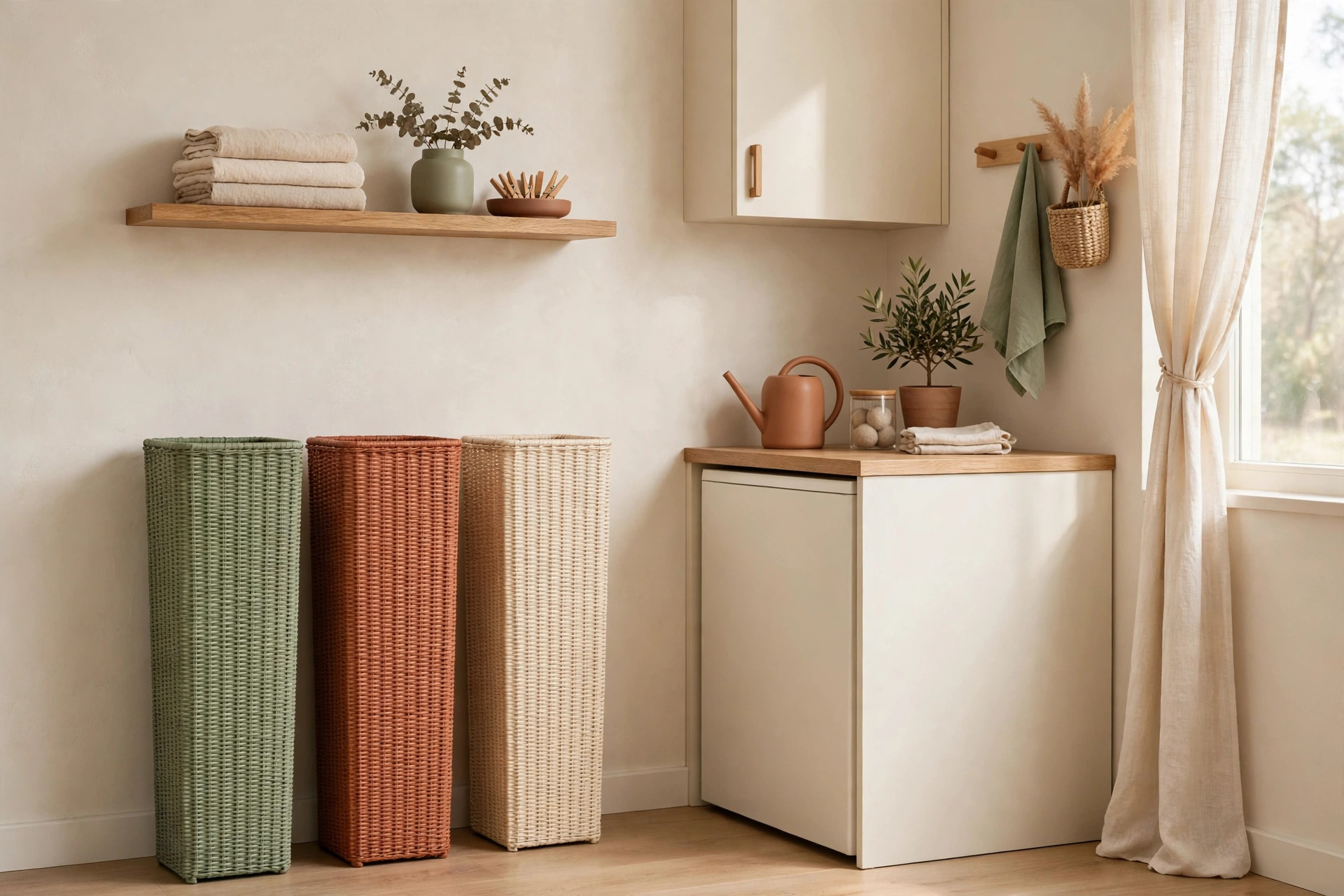
Apartment hampers fail when too wide for the gap beside the bed, too tall for the closet shelf, or too ugly to keep in the open. The fix is a slimmer hamper, or several small ones stacked vertically. Measure first: useful narrow hampers are 8 to 12 inches wide, and a standard closet shelf holds a bin up to about 14 inches tall.
3. Use a slim rolling hamper for the gap beside the bed or washer
A rolling hamper roughly 10 inches wide and 22 inches tall slides into the dead space between bed and wall, or washer and cabinet. On wash day you roll the whole hamper to the machine instead of carrying armfuls through the apartment.
4. Stack two or three slim bins vertically in a closet
Stackable open-top bins, each about 12 by 16 inches, turn one closet shelf into a sorting station: darks at the bottom, lights in the middle, delicates or towels on top. Open bins mean tossing clothes in takes one motion — no lids, no zippers.
5. Hang a three-pocket sorter on the back of a door
An over-the-door sorter with three fabric pockets needs zero floor space and costs less than most freestanding hampers. Hang it on the bedroom or bathroom door, one pocket per zone, and empty the pockets on wash day — ideal for studios. For more closet-based ideas, see these small laundry closet organization ideas that fit tight spaces.
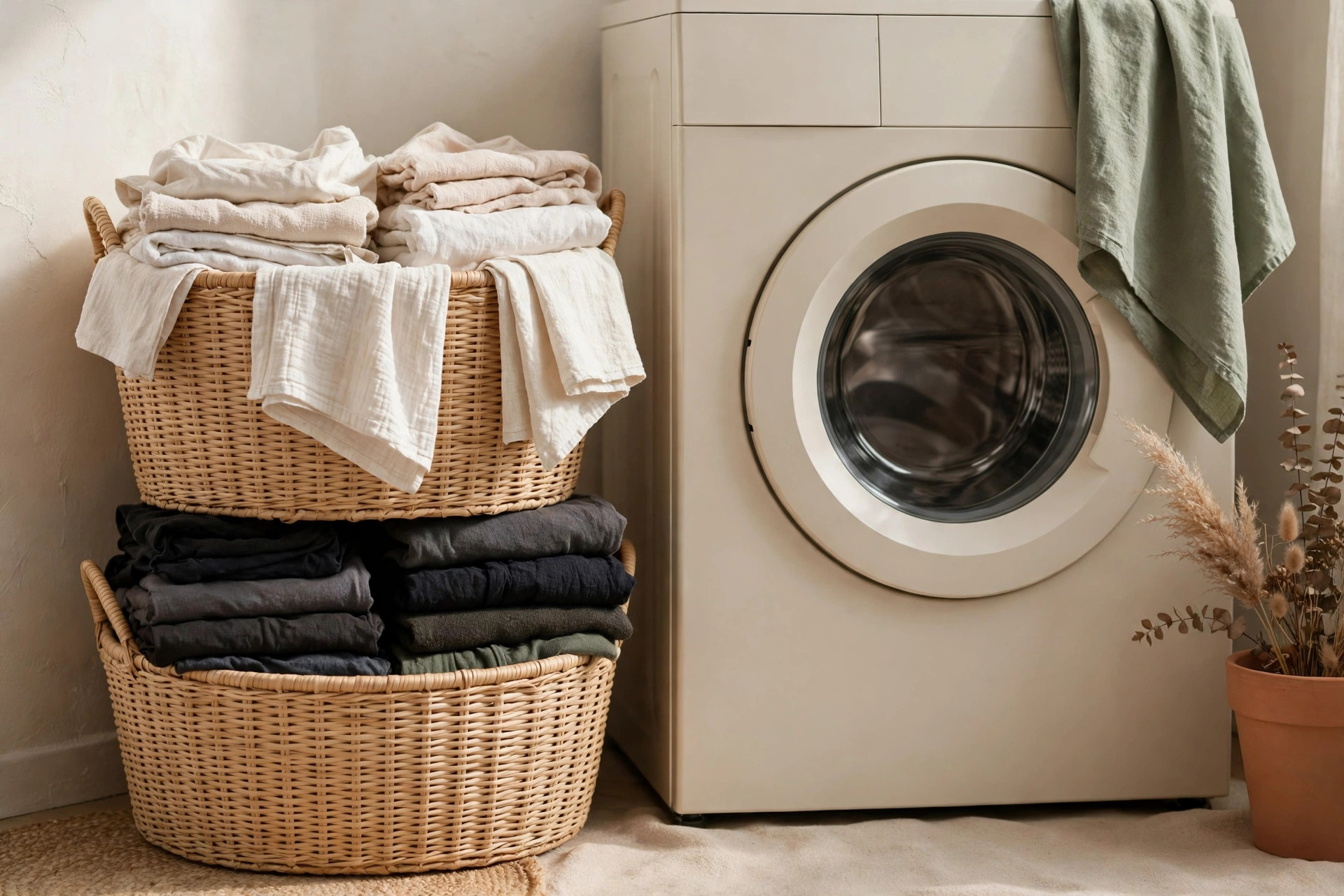
Color and fabric zones: lights, darks, delicates, towels
Zones turn a hamper into a system. Four cover nearly every apartment wardrobe: lights, darks, delicates, and towels. Towels get their own zone because they shed lint, dry slowly, and wash best on a hot cycle that would damage delicates. Bedding can join the towel zone or wait for its own weekly load.
6. Color-code each zone so sorting is visual
Assign one color per zone and stick to it: white for lights, dark gray or navy for darks, sage green for delicates, terracotta for towels. Matching bags and labels let anyone sort correctly at a glance.
7. Keep a mesh bag for delicates inside the hamper
Delicates get ruined when tossed loose into a mixed load or fished out of a full hamper. Hang a zippered mesh bag on the hamper’s edge for bras, silk blouses, and activewear. On wash day, zip it and drop it in the machine as-is — nothing to re-sort, nothing snagged.
8. Give towels and bedding a separate tall bin
A tall, narrow bin — about 14 inches wide and 24 inches tall — holds a week’s towels and one set of sheets without overflowing. It also stops a common complaint: a ‘full’ hamper that is just three bulky towels on top of everything else.
The one-bag-per-person system for shared apartments
Shared apartments add a second problem: whose clothes are whose. One shared hamper means one person’s darks end up in another person’s load, and nobody wants to sort a roommate’s laundry. The fix: one bag per person, not one zone per household.
9. Give each person a labeled bag in a shared hamper station
Set up one station — hooks, labeled bins, or a divided hamper — with one bag per person. Each person tosses only into their own bag and washes only their own bag. No communal sorting, no blame, no mystery socks.
10. Use drawstring bags so a full bag goes straight to the machine
A drawstring bag, roughly 20 by 28 inches, works as both hamper and transport. When full, pull the drawstring, carry it to the machine, empty it in one pour — no hallway trail of dropped socks.
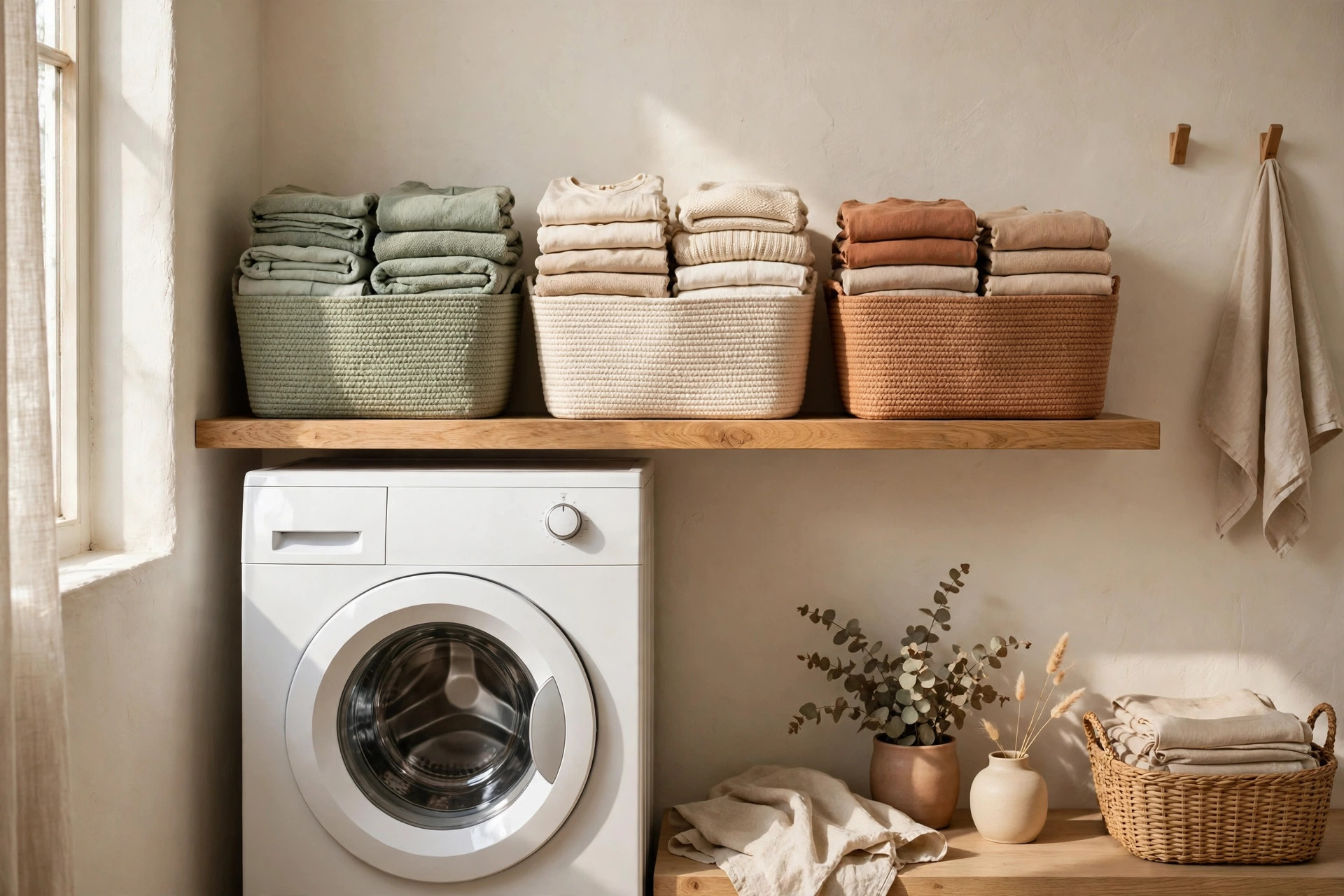
Dirty-to-clean flow: hamper, machine, fold, put away
A sorting system only works if clean clothes complete the journey. The most common breakdown is not dirty clothes — it is clean clothes sitting in a basket for three days, migrating back onto the chair. Treat laundry as a loop: hamper, machine, fold, put away. Nothing is finished until it is back in the closet or drawer.
11. Fold straight out of the machine, never into a holding basket
Fold at the machine or on the bed while the load is still warm — ten minutes at most. Clothes folded immediately wrinkle less, and you skip the holding basket that becomes a second pile. If folding feels hardest, fold only the top layer.
12. Keep a small “put away” basket by the bedroom door
Even with same-day folding, folded clothes sometimes wait. A small basket by the bedroom door holds that day’s folded stack and nothing else — empty it before bed every night so it never becomes permanent storage. Under-bed space can also absorb overflow — these under-bed storage ideas for small bedrooms work well for out-of-season clothes crowding the closet.
Small-space drying that does not block the room
Sorting and washing mean nothing if drying takes over the living room for two days. Without a dryer, drying needs its own zone, sized for one load and placed where air moves — near a window, vent, or hallway draft. Wet clothes release surprising moisture indoors, so airflow matters as much as rack space.
13. Dry one load at a time on a slim folding rack
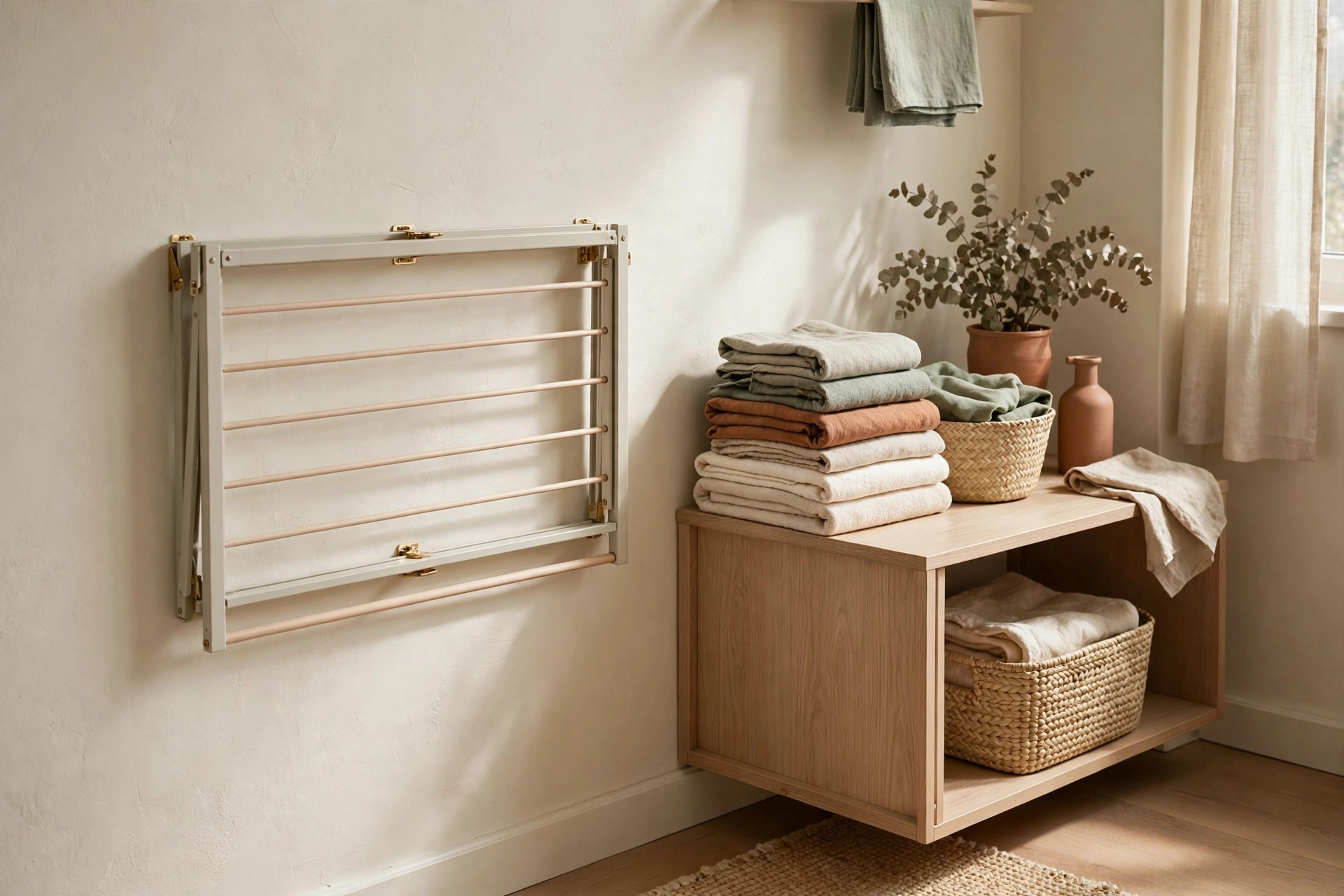
A folding winged rack gives roughly 50 feet of line space in about 2 square feet of floor and folds flat behind a door. One load at a time, spaced for airflow, beats cramming two loads onto every surface and waiting twice as long. For the full setup, see these small laundry drying solutions for apartments.
14. Hang a retractable line in the bathroom for delicates and overflow
A retractable clothesline, mounted with adhesive or a tension bracket, stretches across the bathroom only when needed and vanishes when it retracts. It suits delicates and rack overflow. Run the bathroom fan while clothes dry there to keep moisture off walls and mirrors.
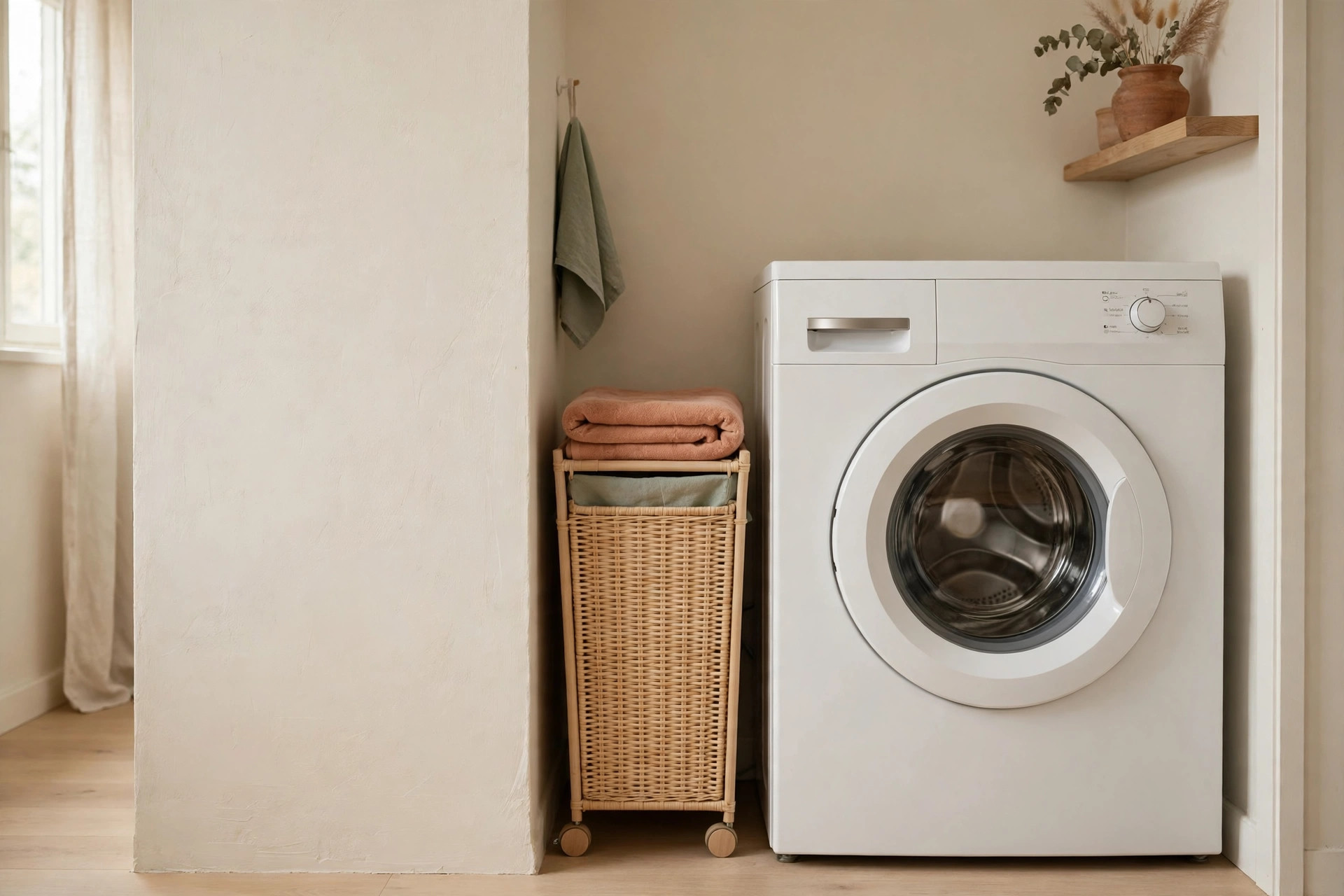
The weekly wash-day routine that keeps it sorted
Systems survive on routine, not willpower. A weekly routine turns the zones into a schedule: each zone washed on its own day, the cycle repeating without decisions. Below assumes two to three loads a week for one or two people; scale the days, not the steps, for larger households.
15. Assign each zone a wash day and stick to it
A simple rhythm works: darks Wednesday, lights and delicates Saturday, towels and bedding Sunday. With its own day, no zone waits more than a week, so hampers never overflow. Post the schedule on the station until it is automatic.
16. Do a two-minute Sunday reset of the whole station
Weekly, empty every zone, wipe the bins, check the mesh bag, and return strays. Two minutes prevents the slow drift that kills most systems: a bag in the wrong bin, a fallen label, a bin quietly becoming a junk drawer. It also reveals what is not working — an always-empty delicates bin is in the wrong room.
Mistakes to avoid
The fastest way to break a sorting system is buying the wrong container first. A giant single-compartment hamper looks tidy but recreates the sorting pile inside a prettier box. Avoid lidded hampers with small openings, which discourage tossing and invite floor piles beside them. Do not sort by “clean enough to wear again” — that chair pile is a second hamper with no wash day. Never store damp towels in a closed bin; mildew starts within a day or two in a sealed, warm space. Measure your gap, closet shelf, and door clearance before buying — the top return reason for laundry furniture is a bad fit.
Frequently asked questions
Can a small laundry sorting system work without a laundry room?
Yes. Sorting needs zones, not a room. A slim rolling hamper, a door-hung sorter, or stacked closet bins create the same zones in a bedroom corner or bathroom — as long as each zone sits where clothes actually come off.
How many laundry zones does an apartment really need?
Four zones cover most wardrobes: lights, darks, delicates, towels. Add a fifth for bedding only if you wash sheets separately. Fewer than four means re-sorting on wash day; more than five means bins that rarely fill and waste space.
What size hamper fits a small apartment?
A hamper 8 to 12 inches wide fits the gap beside a bed or washer, and a bin up to 14 inches tall fits a standard closet shelf. Measure your exact gap first, and choose rolling or stackable designs that move with the laundry.
How do I stop my roommate’s laundry from mixing with mine?
Give each person a labeled drawstring bag at a shared station. Each person washes only their own bag — no communal sorting, no clothes in someone else’s load.
How often should I wash towels and bedding in a small apartment?
Towels generally need washing every three to four uses, bedding every one to two weeks. A separate towel zone makes it easy: when the towel bin is full, it is towel day — no guessing, no waiting for a mixed load.
Conclusion
A pile-free apartment does not need a bigger laundry room — it needs sorting at the hamper, slim containers that fit real gaps, and a weekly rhythm ending with clothes put away. Start with one change: a hamper where clothes come off, or a mesh bag for delicates. Browse more ideas in the small-spaces category and save this pin for later.