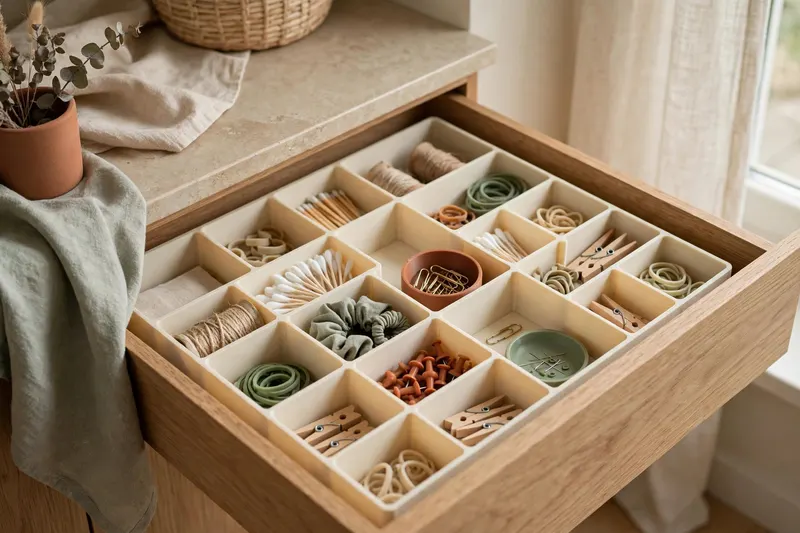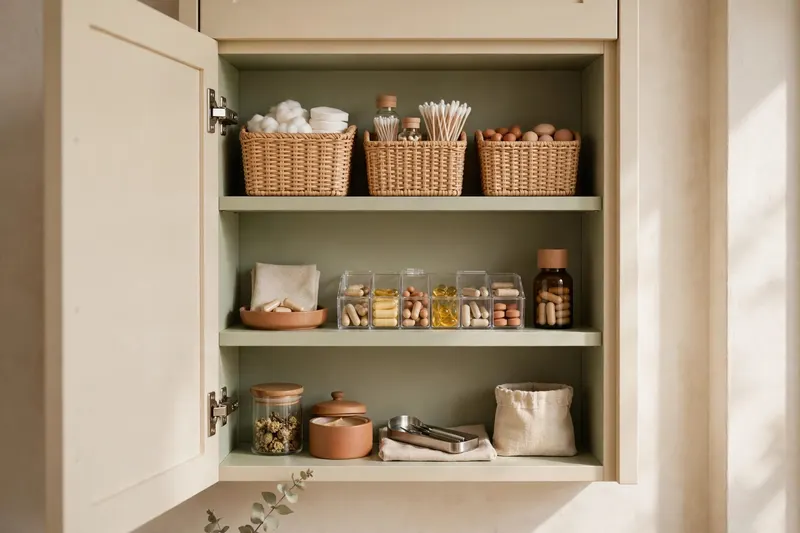
Small medicine cabinet organization is the difference between a calm five-minute morning and a frantic hunt for one pill bottle behind three half-empty tubes. Most cabinets are only 4 to 5 inches deep, yet they collect prescriptions, bandages, vitamins, and creams. These 16 small medicine cabinet organization ideas put daily items at eye level, give everything else a labeled home, and keep the system safe.
The medicine cabinet audit: toss expired, keep daily
Empty the cabinet completely, wipe the shelves, and sort everything into keep, toss, and relocate. Toss anything expired, anything with a faded or missing label, and any unfinished prescription you no longer need. Relocate tools and batteries — they do not belong here.
1. Empty the cabinet and audit by date, not by guesswork
Pull everything out and check the expiry date on every item, including the ones you are sure about. Expired medicines lose strength and some can become unsafe, so the label date is the only test that matters. Bag expired items for proper disposal — the FDA’s guidance on safe disposal of medicines explains take-back programs and home disposal.
2. Put daily items at eye level and everything else above or below
Place what you reach for every morning — daily prescriptions, toothpaste, deodorant — on the middle shelf at eye level. Weekly items go one shelf up or down; rarely used items go to the top or bottom shelf.
Zone by use: daily meds, first aid, vitamins, skincare
A cabinet without zones is a junk drawer with a mirror. Four zones — daily meds, first aid, vitamins, and skincare — turn a shallow box into a system you can use half-awake. Each zone gets its own small bin in the same spot, so muscle memory does the finding.
3. Build a daily-meds zone that works before coffee
Keep the day’s medicines in one small open bin on the eye-level shelf, bottles upright with labels facing out. A pill organizer for the week sits at the front; the bottles behind it refill it on Sunday evening. Keep pills in their original labeled bottles.
4. Give first aid its own labeled bin so nobody hunts in a crisis
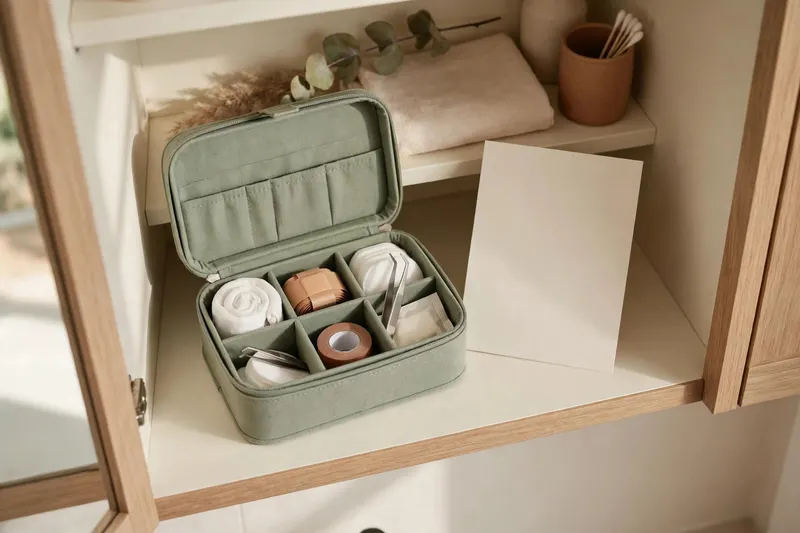
Gather plasters, antiseptic, gauze, tweezers, and a thermometer into one clearly labeled bin kept in the same place every time. Restock the moment you use the last plaster, not the next time you remember.
5. Keep vitamins and supplements in one spot with a weekly routine
One bin holds all the vitamins, and a seven-day pill organizer inside it turns a daily decision into a weekly habit. Fill the organizer every Sunday and you will spot an empty bottle days before you run out. Keep gummy vitamins out of children’s reach.
6. Separate skincare by morning and night
Split skincare into two small groups: the two or three products you use every morning, and the night creams you use before bed. The morning group lives on the eye-level shelf next to your daily meds; the night group lives one shelf down.
Small bins and risers inside a shallow cabinet
A shallow cabinet wastes space vertically: tall bottles leave a gap above the short ones, and small tubes vanish behind tall boxes. Bins and risers fix the vertical space without a single screw, which matters in a rental where you cannot drill.
7. Use narrow stackable bins that fit the shelf depth
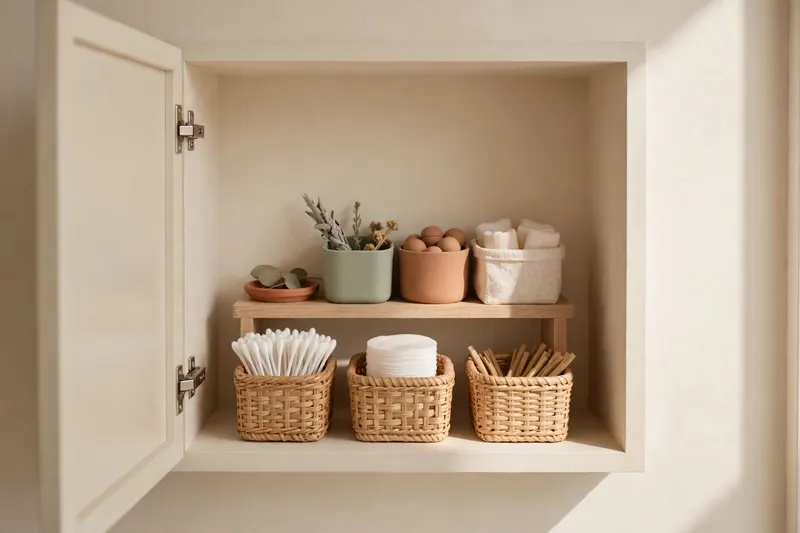
Measure shelf depth before buying — most medicine cabinets are 4 to 5 inches deep, so a deeper bin will stop the door closing. Look for stackable bins around 10 inches wide, 4 inches deep, and 3 to 4 inches tall, and buy two or three in the same size so they line up.
8. Add a small riser so the back row stops hiding
A two-tier riser, roughly 8 to 10 inches wide and 2 to 3 inches tall, lifts the back row above the front row so nothing hides. For more ideas on squeezing storage from tight bathroom spaces, see 17 Under-Sink Bathroom Storage Ideas for Tiny Vanities.
9. Corral tiny items in a small turntable or on a magnetic strip
Cottons, bobby pins, nail clippers, and single-dose packets slide to the back and disappear. A small turntable, about 6 to 8 inches across, keeps them reachable with one spin — but only if your cabinet is deep enough for it to turn, so measure first. In a very shallow cabinet, a magnetic strip on the inside wall holds metal tools like tweezers.
Door storage: the most underused inches
The inside of the cabinet door is free storage most people ignore. It holds flat, light items perfectly and keeps them visible the moment you open the door. The rule is simple: nothing heavy, nothing that swings, and nothing that stops the door closing flat.
10. Stick clear adhesive pockets on the door for flat essentials
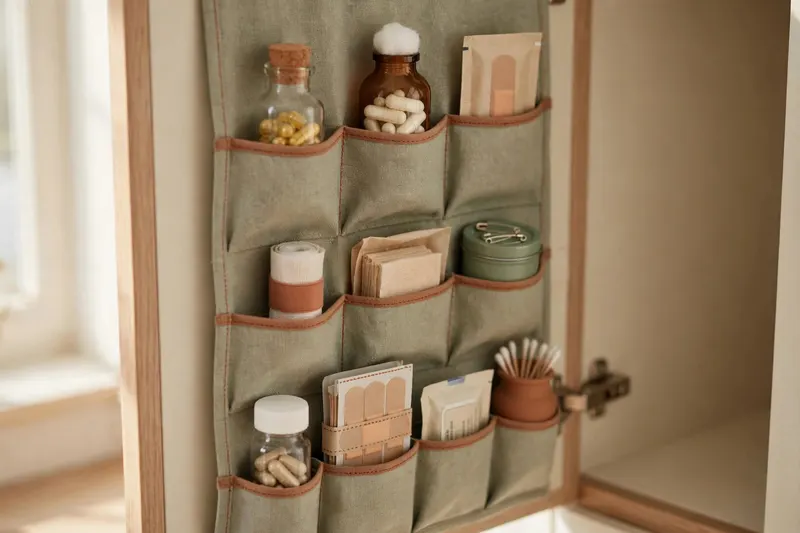
Self-adhesive clear pockets hold flat items like blister packs, single-use wipes, a thermometer, and a small first-aid card. Stick two or three on the inside of the door and keep only flat, light things in them — a pocket full of heavy bottles will peel off within a week.
11. Mount a slim wire rack on the door for daily tubes and small bottles
A slim wire rack made for cabinet doors, usually about 3 inches deep, holds toothpaste, lip balm, eye drops, and small creams upright and visible. Choose one that mounts with adhesive strips, and check the door’s swing before loading it. A similar door-first approach works across the bathroom — see 16 Vanity Organization Ideas for Small Bathrooms for more renter-safe door and vanity storage.
Child-safe and pet-safe rules for small homes
A medicine cabinet in a small home sits within reach of curious hands and paws, so safety is part of the system, not an afterthought. Medicines that can harm a child or pet are never stored where either can reach them, and nothing in the cabinet looks like a treat.
12. Move anything risky to the highest shelf and lock what must stay low
Put prescription medicines, painkillers, and iron supplements on the highest shelf, out of a child’s reach, with child-resistant caps on at all times. If the cabinet is low or your children can reach it, add a small cabinet lock or move the riskiest medicines to a locked box on a high shelf elsewhere.
13. Keep look-alike bottles and gummies out of a child’s sightline
Children reach for what looks familiar, so never store gummy vitamins, brightly colored syrups, or chewable tablets at a child’s eye level or in a container that looks like a snack jar. Keep them in original labeled bottles on the high shelf, and store pet medicines separately from human medicines.
Expiry system: the twice-a-year 10-minute check
Organization decays without maintenance. The fix is a short, scheduled check twice a year — ten minutes, same two dates, every year — so nothing in the cabinet is ever more than six months past its expiry review.
14. Run a 10-minute expiry check every January and July
Pick two fixed dates, such as the first Saturday of January and the first Saturday of July, and put them in your calendar now. On each date, pull out one shelf at a time, check the expiry date on every item, toss what is expired, and note anything running low. The same habit works for the counter — see 16 Small Bathroom Counter Organization Ideas.
15. Mark opening dates on bottles you use slowly
Some products — eye drops, creams, and liquid medicines — expire a fixed time after opening, not just on the printed date. Write the opening date on the bottle with a permanent marker the day you open it, and add the discard-by date if the leaflet gives one.
When the cabinet overflows: the overflow bin rule
Even a well-zoned cabinet has a limit, and the limit is the cabinet itself. When the shelves are full, the answer is not a bigger pile — it is one overflow bin elsewhere, with a strict rule about what earns a place back inside.
16. Keep one labeled overflow bin outside the bathroom and rotate from it
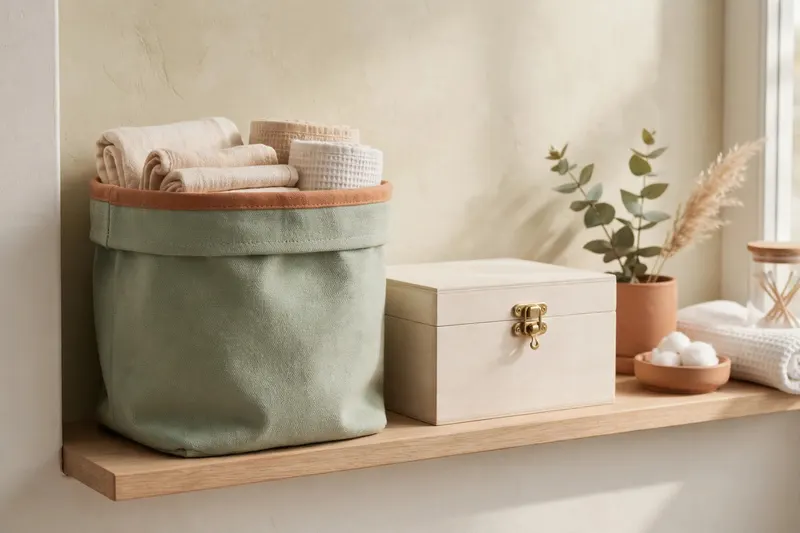
Choose one small bin — a shoebox-sized container is about right — and store it in a linen closet or bedroom shelf, labeled “medicine overflow.” Backups, bulk buys, and seasonal items live there, never in the cabinet. The rule is one in, one out.
Mistakes to avoid
Storing medicines in a hot, steamy bathroom. Heat and humidity shorten the life of many medicines. If your bathroom fills with steam every morning, keep heat-sensitive items in a bedroom drawer.
Keeping expired medicine “just in case.” An expired medicine is not a backup. It may not work when you need it.
Buying organizers before auditing. Bins sized for a cabinet you have not emptied yet are usually the wrong size. Audit first, measure second, buy third.
Mixing two people’s medicines in one bin. Shared bins cause mix-ups with look-alike bottles. One bin per person for daily medicines.
Hiding the first-aid kit behind daily items. First aid behind three rows of skincare is first aid you cannot find when it matters.
Frequently Asked Questions
How do I organize a very small medicine cabinet with only two shelves?
Use the eye-level shelf for daily items only and give the second shelf to one zone, such as first aid. Move everything else into a labeled overflow bin outside the bathroom.
Can I store medicines in the bathroom if it gets steamy?
Most medicines are fine in a bathroom cabinet, but heat and humidity can shorten their shelf life. If the label says store in a cool, dry place, move those items to a bedroom drawer.
What is the best way to keep track of expiry dates?
Check every item twice a year — January and July work well — and write the opening date on bottles that expire a set time after opening, such as eye drops. Toss anything expired at the check.
Where should I keep medicines if I have small children at home?
On the highest shelf, in original labeled bottles with child-resistant caps on, and behind a cabinet lock if the cabinet is within reach. Never store gummy vitamins or colorful syrups where a child can see them.
How often should I replace the contents of a first-aid kit?
Check it during the twice-a-year expiry review, replace used items at once, and replace consumables — plasters, antiseptic, gauze — at least once a year.
Conclusion
A tiny medicine cabinet works when daily items sit at eye level, every category has its own zone, and a twice-a-year check keeps expired items out. Start with the audit, add one bin and one riser, and move the backups to a single overflow bin. If you found these ideas useful, save this pin for later and browse more ideas in our storage ideas collection.