LEGO is wonderful until it takes over your home. One small set becomes a shelf of half-finished builds, a bin of unsorted bricks, and a minefield on the living room floor — usually discovered barefoot, at midnight. In a small space there is no spare room to close the door on, so every brick has to earn its place. These lego storage ideas small spaces can actually hold cover sorting systems that get used, display shelves that turn finished builds into decor, and a build station that contains the mess to one tray.
Sort by color or by piece? The system that actually gets used
How you sort shapes everything else. Get it wrong and the system collapses within a week.
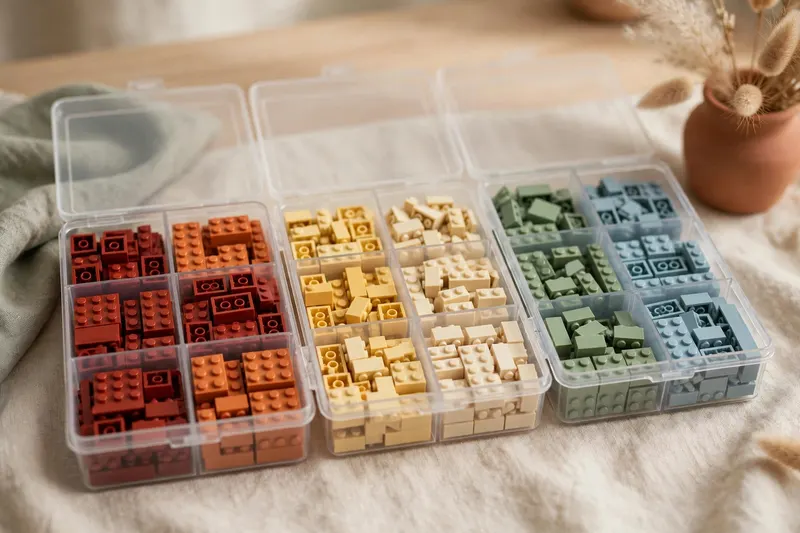
1. Sort by color first — then by piece type within each color
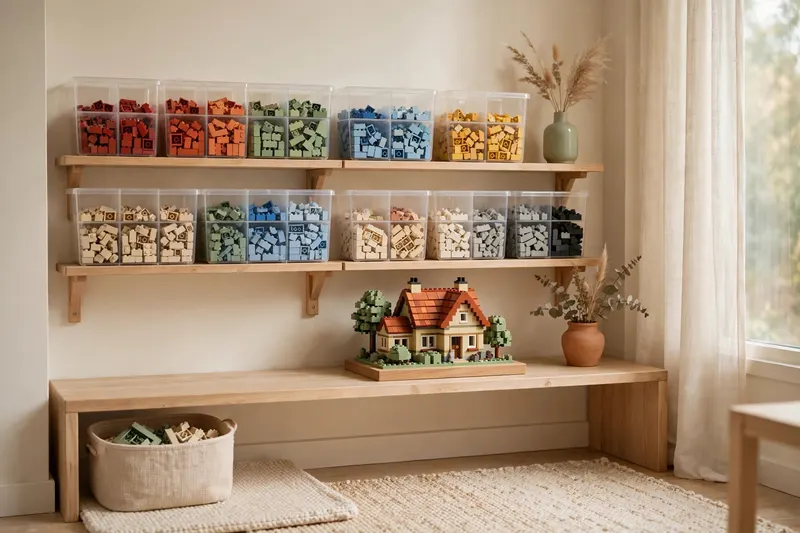
For collections under about 5,000 pieces, color-first sorting is the fastest system to use and the easiest to maintain. A child can spot “red” in a pile in seconds; spotting a 1×2 plate among a hundred gray pieces takes much longer. Start with six to eight color bins — red, blue, yellow, green, black, white, plus one “everything else” bin. Once a color bin overflows, split it by piece type — but never sort finer than the collection needs.
2. Keep one “build in progress” box per active set
Every unfinished set gets exactly one box — a shoebox-sized container, roughly 13×8×5 inches, with a lid. The instruction booklet, the loose pieces, and the half-built model all live in it together. When build time ends, the lid goes on and the box goes on the shelf. No more half-finished builds on the dining table for three days, and no more hunting for the piece that rolled under the sofa.
Drawer units and divided bins for small collections
Drawers beat open bins in small spaces: they stack vertically and hide visual clutter.
3. Use a stackable drawer unit with one drawer per color
A standard 3-drawer plastic unit (roughly 12×15×10 inches per drawer) fits on a closet shelf or under a desk and holds a starter collection of 1,000–2,000 pieces. Assign one drawer per color family, and keep the top drawer for the pieces builders reach for constantly: 2×4 bricks, plates, and minifigures. Because drawers slide out, small hands can reach the bottom without tipping the unit over — the most common way a sorted collection becomes an unsorted pile.
4. Divide drawers with small hardware organizers
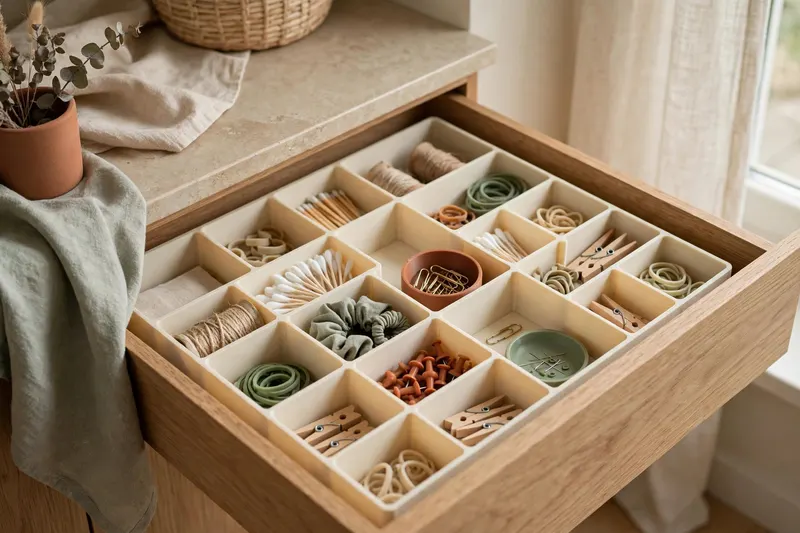
Loose pieces migrate and mix inside a big drawer. Drop a small parts organizer — the kind sold for screws and fishing tackle, with adjustable dividers — inside each drawer, and the sorting survives actual use. A 12-compartment organizer costs a few dollars and turns one drawer into twelve labeled homes for wheels, windows, doors, hinges, and minifigure accessories. Measure first; most are about 11×7 inches and fit standard drawer units.
5. Give minifigures their own display case, not a drawer
Minifigures disappear fastest in a mixed bin, and they are the pieces builders ask for by name. A wall-mounted display case with individual slots — about 16×12 inches for 16 figures — keeps them visible, dust-free, and easy to grab. Hang it at the builder’s eye level. If wall space is tight, a small acrylic case on top of the drawer unit does the same job and doubles as a shelf for the current favorite build.
Display shelves: finished builds as decor, not clutter
Finished builds are the reason the bricks exist — but a windowsill full of dusty models reads as clutter, not decor.
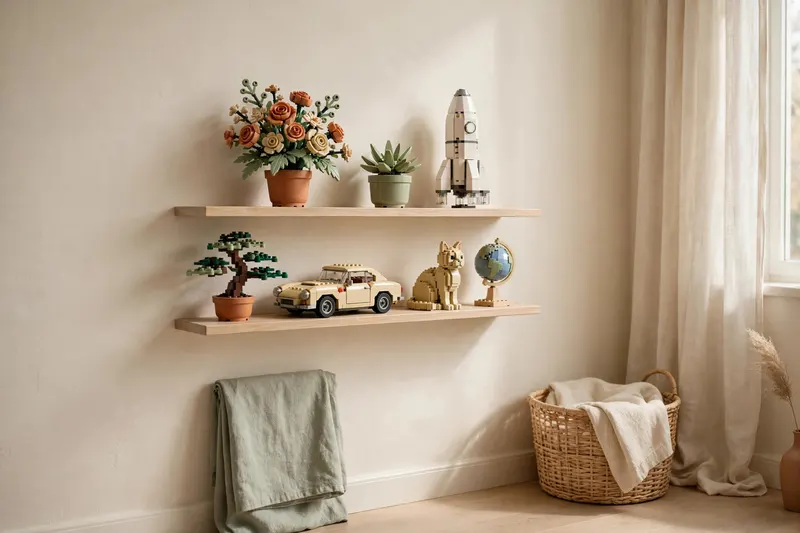
6. Mount one floating shelf as the “gallery shelf”
A single floating shelf, about 24–36 inches long and 6–8 inches deep, mounted at eye level, is the display zone. Finished builds live there; everything else lives in storage. The shelf has a hard capacity — when it is full, something must be photographed and dismantled before a new build goes up. That limit stops the collection spreading across every flat surface. For more ways to make a small living room hold both storage and display, see these small living room storage ideas for apartments.
7. Group builds by theme, not by size
Three small space sets grouped together look intentional; the same three models scattered across three shelves look like they were left behind. Group by theme — vehicles together, buildings together, animals together — and leave at least an inch of breathing room between models.
8. Add a clear acrylic cover for the builds that stay up longest
Dust is the real enemy of displayed LEGO. A model left uncovered for six months gathers a film that takes an hour to clean piece by piece. Clear acrylic display cases — sized to the model, usually 8–12 inches wide — keep the dust off and the build touchable only when someone means to touch it. Reserve covers for the two or three builds that stay up for months; a soft makeup brush beside the shelf handles quick dusting for the rest.
The build station: one tray, one mat, one contained mess
Building is messy by nature. A build station does not stop the mess — it draws a line around it.
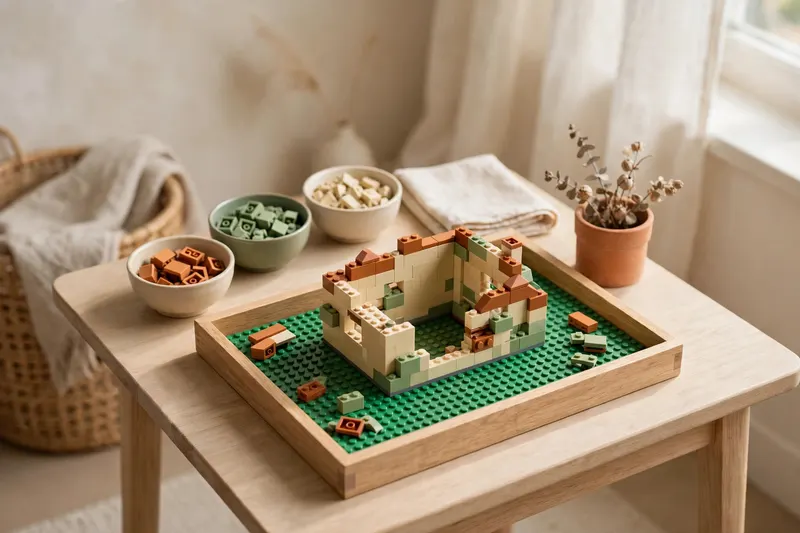
9. Build on a rimmed tray with a baseplate glued inside
A cafeteria-style tray, about 15×11 inches with a raised rim, is the single best LEGO accessory for a small home. Glue or tape a standard 10×10-inch baseplate to the center, and the build has a stable foundation that can be picked up and moved mid-build without falling apart. The rim catches runaway pieces before they hit the floor, and when build time ends the whole tray slides onto a shelf or under a bed.
10. Lay a silicone mat under the tray for the sorting pile
Sorting happens beside the build, not on it. A silicone baking mat or small desk mat (about 18×12 inches) under and around the tray gives loose pieces a slightly grippy surface so they stop sliding off the table edge, and it protects the table from scratches. At cleanup, lift two corners of the mat and funnel leftover pieces straight into the sorting bins. The mat rolls up and stores in a drawer when the table needs to be a dining table again.
Under-bed and closet LEGO storage for big collections
When the collection outgrows the drawer unit, the next space is the one you already have: under the bed and the bottom of the closet.
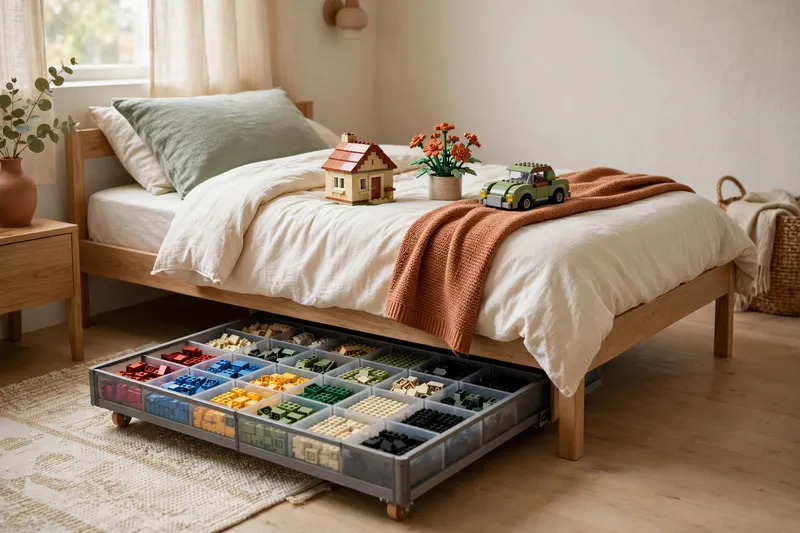
11. Slide flat, wheeled bins under the bed for bulk brick storage
The space under a standard bed fits bins about 6 inches tall and up to 30 inches long — roughly 30–40 liters each, enough for several thousand loose bricks per bin. Choose bins with wheels so they roll out without lifting, and clear lids or labels so nobody opens three bins to find the blue one. Sort these bulk bins broadly — by color only, four to six bins total. For more ways to use that dead space well, see these under-bed storage ideas for small bedrooms.
12. Turn the closet floor into the LEGO zone with a low shelf unit
The bottom 24 inches of a closet is prime LEGO territory: out of the main sightline, close to the floor where building happens, and easy to reach. A low two-tier shelf unit (about 24 inches wide, 12 inches deep) on the closet floor holds the drawer unit on one tier and the build-in-progress boxes on the other, with the build tray leaning against the side. Add a small battery-powered push light inside the closet so the zone is usable, not a dark corner where bins go to be forgotten.
Travel LEGO: kits that leave the house without losing pieces
LEGO travels badly by default: a bag of loose bricks becomes a jumble, and pieces vanish at restaurants and on planes. A travel kit is a small, closed system — a build, its pieces, and nothing else.
13. Pack a pencil-case kit with one small build and its pieces only
A hard pencil case or small zippered pouch (about 8×5 inches) holds one baseplate, a small bag of 50–100 pieces, and two or three minifigures. That is the whole kit. The case zips shut, fits in a bag pocket, and opens flat on a tray table or restaurant table as a contained building surface. Resist packing “a few extra pieces just in case” — extras are what spill, and the kit’s limit is what keeps it portable.
14. Use a divided tackle box for car and plane building
For longer trips, a small divided tackle box (about 10×7 inches, with adjustable compartments) works better than a pouch: the compartments keep piece types separated during transit, and the latched lid survives being dropped or squeezed into a bag. Load it the night before with the pieces for one specific small set, plus the instruction booklet folded in half. When the trip ends, empty it back into the main system and reload it for the next trip — it never becomes permanent storage.
The monthly brick sweep: keeping the collection edited
Every LEGO collection grows: sets arrive as gifts, pieces multiply, and broken bricks accumulate. Without a regular edit, the system fills past capacity and the sorting stops working. A monthly sweep — thirty minutes, once a month — keeps it honest.
15. Run a “keep, build, donate” sort once a month
Once a month, empty one bin or drawer at a time onto the build mat and sort into three piles: keep (pieces used in the last month), build (pieces for a set that is ready to be built now), and donate (duplicates beyond what anyone will use, broken pieces, and pieces from sets nobody plays with anymore). Duplicates are the usual surprise — most collections hold dozens of identical common bricks nobody misses. Bag the donate pile and put it by the door the same day, or it migrates back into the bins.
16. Photograph finished builds before dismantling them
The hardest part of the sweep is letting go of finished builds to free shelf space. Photograph each build from two angles before taking it apart — the photos go in a small album on the builder’s device, or printed and stuck inside the closet door. Once the build is documented, dismantling it stops feeling like losing it, and the pieces go back into circulation instead of gathering dust. The shelf limit from idea 6 only works if this step happens: a photo is what makes room for the next build.
Mistakes to avoid
Buying the giant storage system first. A 64-drawer parts cabinet looks like the answer and usually becomes a monument to a system nobody maintains. Start with the drawer unit and bins above, and add capacity only when a specific drawer is genuinely overflowing.
Sorting by set. Keeping every set’s pieces together sounds tidy, but it means opening five boxes to build anything new, and the moment a piece migrates to the wrong set the system breaks. Sort by color and piece type; the instructions and the box stay together, the bricks do not.
Storing bricks in open-top containers on high shelves. Open tubs get knocked over, and high shelves mean a step stool and a spill every time someone reaches for a bin. Lids on everything, storage at or below shoulder height.
Buying “LEGO-branded” storage at a premium when plain bins do the same job. Branded tubs cost several times more than identical plain stackable bins. Spend the difference on the display case or the build tray instead.
Letting the collection live in five places. One closet zone, one drawer unit, one shelf, one travel kit. The moment bricks live in three rooms, no system can keep up.
Frequently asked questions
Can LEGO be stored in a small apartment without a dedicated playroom?
Yes. A stackable drawer unit on a closet shelf, one floating gallery shelf, and a rimmed build tray give a full system in about four square feet. Every piece has one home, so nothing spreads to other rooms.
How do I keep LEGO pieces from ending up all over the floor?
Use a rimmed build tray and a silicone mat, and enforce the rule that building happens on the tray. Loose pieces go straight back into their bins, and the five-minute cleanup timer at the end of each session catches the rest.
Is it better to sort LEGO by color or by set?
By color, for almost every home collection. It is faster to use, easier for children to maintain, and lets builders find pieces across sets. Keep the booklet and box with the set, but let the bricks join the color-sorted system.
What is the best LEGO storage for a large collection in a small space?
Flat wheeled bins under the bed for bulk bricks, sorted by color, plus a low shelf unit on the closet floor for the drawer unit and build-in-progress boxes. Together they hold thousands of pieces with no visible floor space used.
How often should I declutter a LEGO collection?
Once a month, for about thirty minutes. Sort one bin at a time into keep, build, and donate piles, photograph finished builds before dismantling them, and take the donate bag out the same day.
Final thoughts
LEGO storage in a small space is not about buying more containers — it is about giving every brick one home, every build one shelf, and every building session one contained spot. Sort by color, display only what fits the gallery shelf, build on a tray, and sweep the collection once a month. Do that, and the bricks stop being a mess underfoot and start being what they were meant to be. Save this pin for later, and browse more ideas in the storage ideas category — if toy clutter is the wider problem, these kids toy storage ideas for small living rooms use the same one-home-per-thing logic for everything else.