Moving into a small apartment is exciting for about an hour — then the boxes take over. In a big home, a few unopened boxes can hide in a spare room for a month. In a small apartment, they block the hallway, bury the kitchen counter, and turn every evening into a maze. The fix is not unpacking faster. It is unpacking in the right order, setting up a few small systems on day one, and giving every item a home before clutter settles in. These 15 ideas walk you through your first week, one zone at a time, so that by day seven your apartment works — even if a few boxes are still waiting their turn.
Unpack in zones, not boxes: the room-by-room order that works
The most common unpacking mistake is opening boxes in whatever order they come off the truck. You end up with a half-unpacked bathroom and nowhere to sleep. Unpacking by zone — one room at a time, in a fixed order — keeps the apartment livable from night one.
1. Set the unpacking order before the first box arrives
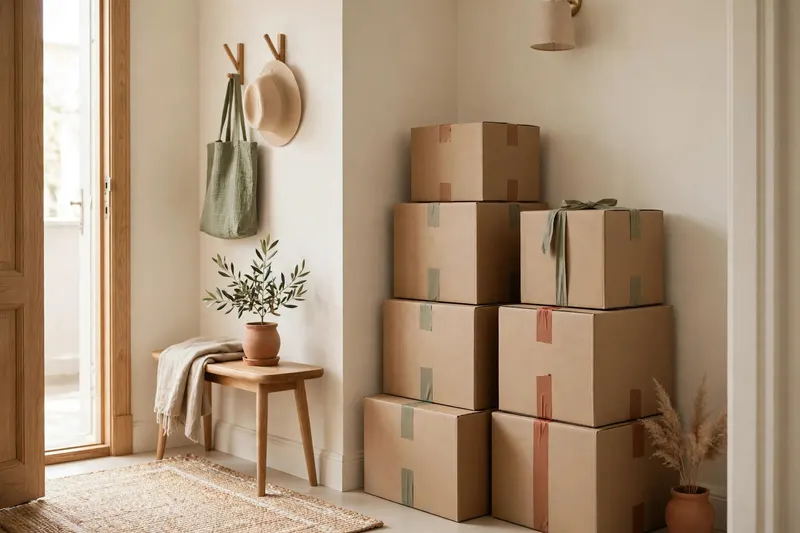
Decide the order in advance and write it on a sticky note by the door: bedroom first (so you can sleep), then bathroom, then kitchen, then everything else. Tape a room label on every box so movers stack them in the right rooms instead of piling everything by the front door.
2. Clear a “staging corner” in each room before you open anything
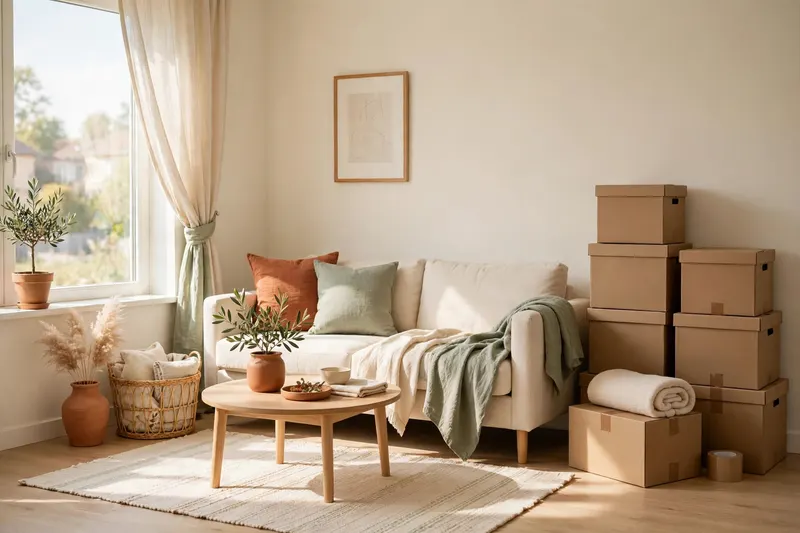
Pick one empty corner or stretch of wall in each room as its staging zone. Boxes for that room go there, and nowhere else. This single rule stops boxes spreading across every surface. Flattened boxes and packing paper collect there too, so you can carry them out in one trip.
The first-night box: what you need before anything else
Your first night should feel like moving in, not camping. The first-night box is the one box you open before any other — it holds everything you need to sleep, wash, eat, and get dressed the next morning.
3. Pack one clearly labeled first-night box and keep it with you
Pack it last and label it in big letters on all four sides, or use a brightly colored bin you cannot miss. Inside: bedding and one pillow per person, pajamas, a change of clothes, toiletries, phone chargers, medications, a towel per person, toilet paper, snacks, a water bottle, and cleaning basics — all-purpose spray, paper towels, and a trash bag. Carry it in your own car, not the moving truck, so it is the first thing through the door.
Set the entryway system on day one (it saves every other day)
The entryway is the smallest space in the apartment and the one you touch most. If it has no system on day one, shoes, mail, and bags will claim it by day three — and in a small apartment, that clutter spills straight into the living room.
4. Claim a 24-inch strip by the door as the entryway zone
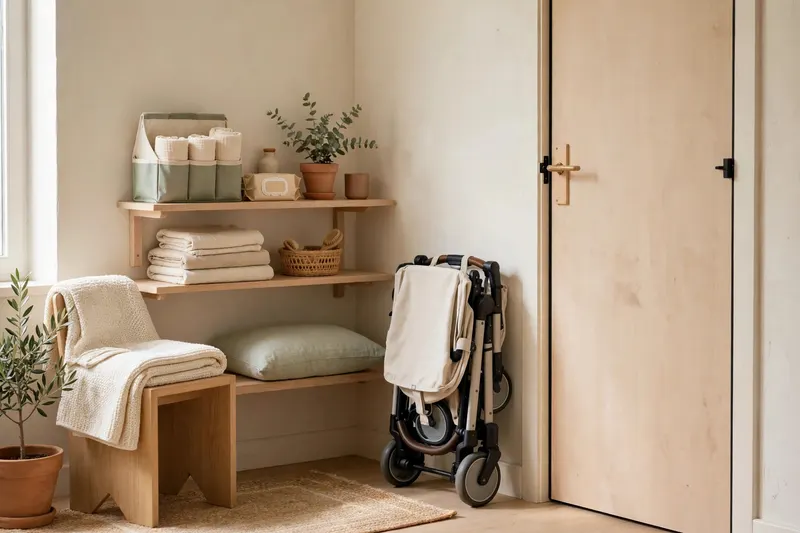
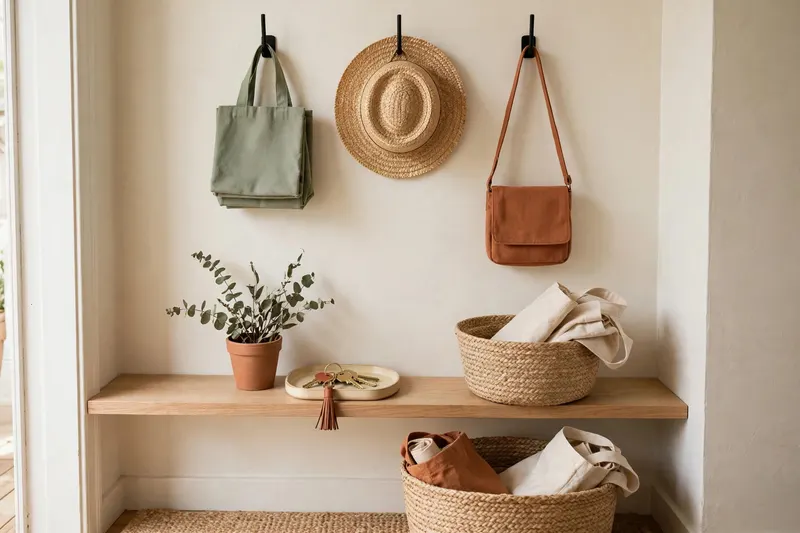
You do not need a foyer to have an entryway. A strip of wall about 24 inches wide beside the door is enough: two or three adhesive or over-the-door hooks for coats and bags, a small tray or basket for shoes, and a narrow console or wall-mounted shelf if the wall allows it. Adhesive hooks rated for 3–5 pounds each hold a coat and a tote without a single hole. Measure first — a console deeper than 10 inches will choke a narrow hallway.
5. Give every person one hook, one shelf spot, and one shoe pair at the door
The rule that keeps an entryway from collapsing is a hard limit: one hook per person, one pair of everyday shoes each at the door, everything else in the closet. Extra shoes go to a rack inside the closet or under the bed. For more ideas for a door that opens straight into the living room, our guide to 15 Small Entryway Organization Ideas (Even With No Foyer) shows renter-safe setups that fit a wall strip just like this one.
Kitchen first: zones before decorations
The kitchen is the room that punishes bad organization fastest. A kitchen without zones means cooking from boxes, losing utensils, and eating takeout for a week — which is exactly how a move-in budget disappears.
6. Set up three kitchen zones before you unpack a single dish
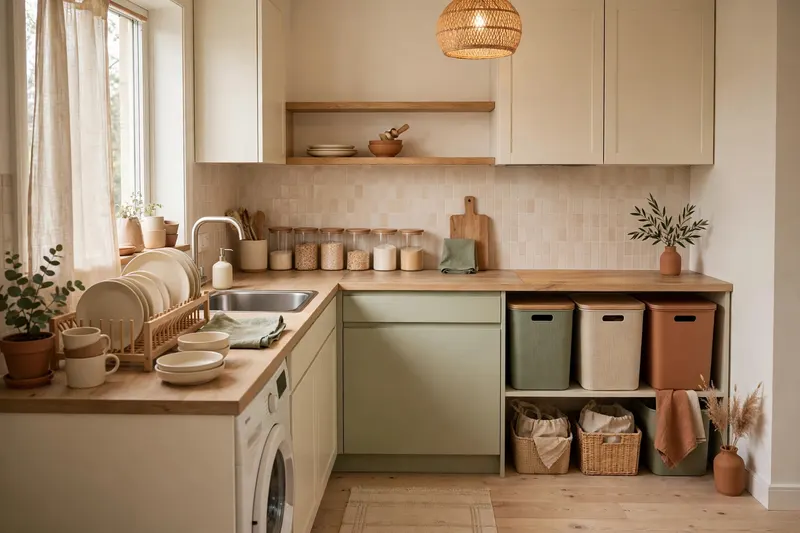
Mark three zones: cooking (stove, pots, pans, utensils), prep (counter, cutting boards, knives), and food storage (pantry shelf, fridge). Unpack each zone’s items directly into their zone — pots near the stove, not across the room. Put daily dishes on the lowest, easiest shelf and push rarely used appliances to the highest shelf. A tension rod under the sink, hung vertically, holds spray bottles upright and frees the cabinet floor for bins.
7. Unpack the “cook tonight” kit first, and leave the rest boxed
You do not need the full kitchen on day one. You need one pot, one pan, a spatula, a cutting board, a knife, two plates, two bowls, two mugs, and cutlery for each person — that is the cook-tonight kit. Cook a simple meal, then leave the rest of the kitchen boxes sealed until you have cooked two or three meals and know what you actually reach for. If your food storage is a single cabinet, our 21 Small Apartment Pantry Organization Ideas That Actually Work shows how to fit a week’s groceries into one small shelf with risers and door racks.
Closet setup: hang, fold, and leave 20 percent empty
A small-apartment closet fills up fast, and once it is full, clothes end up on chairs and the floor. Setting it up properly on day one — and deliberately leaving space empty — is what keeps it working all year.
8. Hang first, then fold, then leave 20 percent of the rod empty
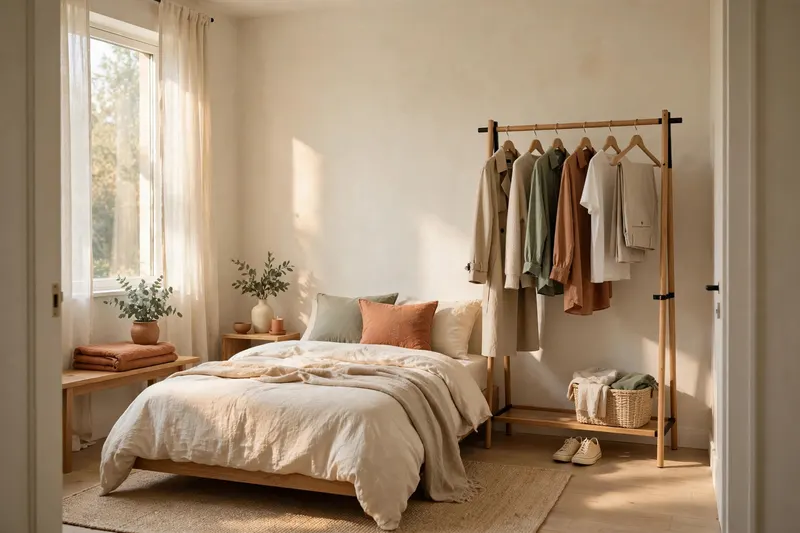
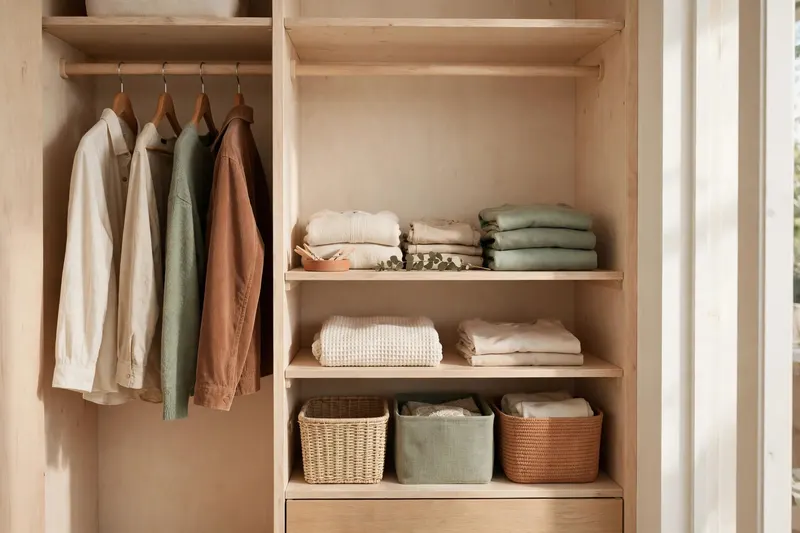
Hang everything that wrinkles or that you grab daily — work clothes, dresses, jackets — on slim velvet hangers, which take up about half the width of plastic ones. Fold knitwear, jeans, and t-shirts onto shelves or into stackable bins, since hanging stretches them out. Then stop: leave roughly 20 percent of the rod and one shelf empty on purpose. That empty space is your buffer for laundry day, seasonal swaps, and new purchases.
9. Use the closet floor and door before buying any closet furniture
The closet floor holds a low shoe rack or two flat storage bins for off-season clothes, and the inside of the door holds an over-the-door rack for scarves, belts, and bags. A double-hang rod extender — a second rod that hangs from the first — roughly doubles hanging space for shirts and costs less than a dinner out, with no drilling required. For more no-drill closet setups that protect your deposit, see our 17 Renter-Friendly Closet Organization Ideas (No Drilling Required).
The landing strip for keys, mail, and bags
Keys, mail, and bags are the three things that create daily clutter in a small apartment. They arrive every day, and if they have no fixed home, they land on the nearest flat surface — the kitchen counter, the couch, the dining table.
10. Build one landing strip with a bowl, a hook, and a mail tray
Pick one surface near the door — a shelf, a console top, or a wall-mounted pocket — and make it the only place for the daily trio: a small bowl or hook for keys, one wall hook or peg for your bag, and one tray or wall pocket for incoming mail. Sort mail the moment it lands: recycle junk mail immediately, file bills in the tray, and deal with anything that needs action within 48 hours. Put the strip where everyone passes, not tucked behind the door.
One box out per day: the unpacking pace that actually finishes
Most people unpack in one exhausted weekend burst, then stall for weeks with five boxes left. A steady daily pace finishes faster than a heroic weekend — because it survives real life.
11. Unpack one box per day, and break down each box the same day
Choose one box each evening, unpack it fully, and break the box down before bed. One box a day clears five to seven boxes a week without a single exhausting session. The key is finishing the box: a half-unpacked box is just clutter with a lid. If a box holds things with no home yet, decide where they live now, or put them in a clearly labeled “decide later” bin with a date on it.
12. Turn the last five boxes into a decision deadline, not a storage plan
When five or fewer boxes remain, set a date — the end of week two — to finish them all. Open each one and sort ruthlessly: keep and place, donate, or toss. Anything still boxed after two weeks in a small apartment is usually something you do not need in daily life. Bulky seasonal items and spare bedding can move under the bed instead: our 18 Under-Bed Storage Ideas That Turn Dead Space Into a Dresser shows flat bins and rolling drawers that turn that dead space into real storage.
Your first-week reset routine and what to buy last
The systems you set up in week one only survive if you maintain them — and the fastest way to wreck them is buying storage before you know what needs storing. Small apartment move-in organization works when you test a simple setup for a week before spending on it.
13. Run a 10-minute evening reset every night of week one
Set a timer for 10 minutes each evening: shoes to the entryway, dishes to the sink or dishwasher, mail sorted, bags hung, surfaces cleared. Ten minutes a night keeps a small apartment livable; skipping it for three nights creates a mess that takes an hour to fix. Do the reset at the same time every night — right after dinner works for most people — so it becomes a habit instead of a decision.
14. Buy storage last, after you have lived in the space for a week
Do not buy bins, baskets, or organizers before move-in day. Live in the apartment for a week first, then buy only for the problems you actually have: a shoe tray because shoes pile up, a shelf riser because a cabinet is wasted space, a hook rail because coats land on chairs. Measure each spot before ordering — a bin that is half an inch too wide is useless. Buying after the first week usually means buying half as much and using all of it.
15. Write your first apartment organization ideas list on the fridge — then follow it
Grab a sticky note and write the three systems that matter most to you — entryway, kitchen zones, evening reset — and stick it on the fridge. That list is your first-week plan, and it is also your test: if a system is not working by day seven, change the system, not your willpower. Move the hook, swap the basket, or shift the reset to a different time. Small apartment move-in organization is not about buying the perfect setup once; it is about adjusting a simple setup until it fits how you actually live.
Mistakes to avoid
Unpacking decorations first. Art, plants, and throw pillows feel like progress, but they sit on top of boxes you still need to open. Decorate after the kitchen, bedroom, and bathroom work — usually day five or later.
Buying storage before measuring. A bin that does not fit the shelf is a new piece of clutter. Measure every shelf, drawer, and closet before you buy a single container.
Keeping every box “just in case.” Empty boxes take up more space than full ones. Break boxes down the day you empty them, and keep only two or three flattened ones for the next move.
Filling the closet to 100 percent. A full closet has no room for laundry, seasonal changes, or anything new. Leave that 20 percent empty on purpose.
Skipping the first-night box. Without it, your first night becomes a dig through sealed boxes for a toothbrush at midnight. Pack it, label it, and carry it yourself.
Frequently asked questions
How long does it take to fully unpack a small apartment?
For most people, one to two weeks at a steady pace of one to two boxes a day. The essentials — bedroom, bathroom, and kitchen — should be working within the first 48 hours. If boxes remain after two weeks, set a firm finish date and sort them in one focused session.
What should I unpack first when moving into a small apartment?
Unpack in this order: bedroom, bathroom, kitchen, then living areas. The bedroom matters first because you need to sleep well on night one, and the bathroom and kitchen follow because you use them every morning. Decorations and non-essentials come last.
Can I organize a small apartment without buying new storage?
Yes — most of the systems in this guide use what you already have: a bowl for keys, a tray for mail, hooks you already own, and boxes you already packed. Buy storage only after living in the space for a week, when you know exactly which problems need solving.
How do I keep a small apartment organized after the first week?
Run a 10-minute evening reset every night: shoes away, dishes done, mail sorted, surfaces cleared. Small apartments do not stay organized on their own — they stay organized because of a short daily habit, not a big weekly clean.
Conclusion
Your first week in a small apartment sets the pattern for the year that follows. Unpack by zone, set up the entryway and landing strip on day one, keep the closet 20 percent empty, and finish one box a day. Small systems, done early, beat big organizing projects done late. Save this pin for later, and browse more ideas in our small-spaces category when you are ready for the next room.