If your front door opens onto a pile of backpacks, lunch boxes, and stray permission slips, you are not alone. In a small apartment there is no mudroom to absorb the mess, so every school bag lands exactly where you walk in. These small apartment backpack storage ideas fix that without a renovation: one landing spot per kid, one bin for lunch gear, a paper inbox, and a five-minute nightly routine.
The backpack pile problem: why it lands by the door
A backpack is heavy, a kid is tired, and the front door is the first flat surface they reach. The fix is giving the bag a home that is easier to use than the floor: a hook at the right height.
1. Give every bag a hook at kid height
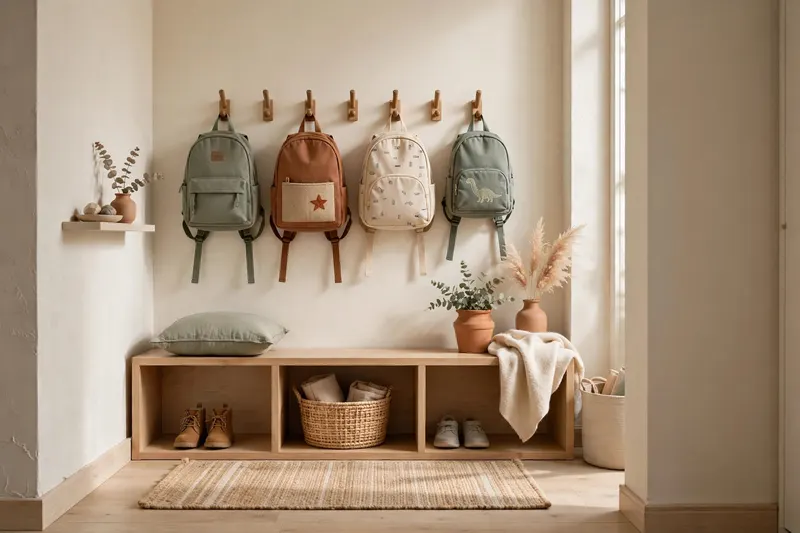
Mount one sturdy hook per child at shoulder height for the youngest — 42 to 48 inches off the floor — so hanging the bag is one motion, not a stretch. Pick hooks rated for at least 10 pounds, since a full backpack easily weighs 8 to 12 pounds.
2. Mark each hook with a name or color
Label each hook with a name tag, a colored dot, or a different hook color per child. Kids who cannot read yet can match a color or a picture.
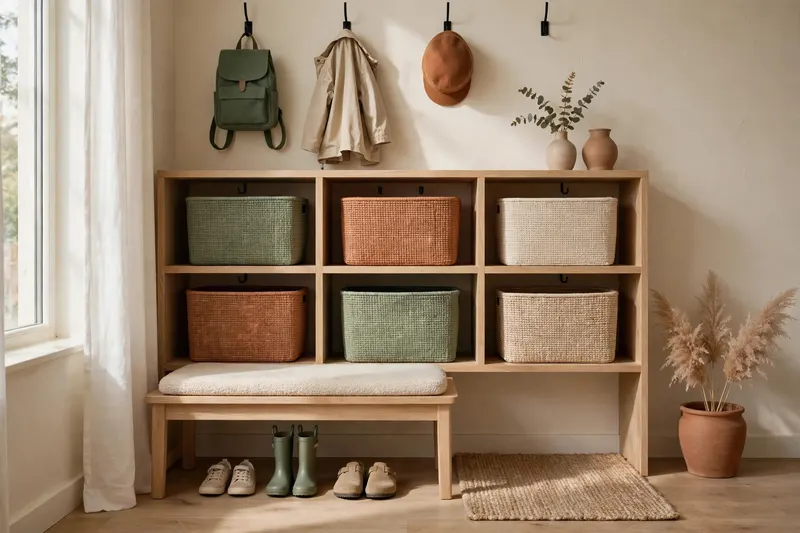
Entry hooks and cubbies: one hook per kid
Hooks handle the bag itself. Cubbies handle the rest — shoes, water bottle, hat, library book — in a landing zone of 24 inches of wall per child.
3. Build a one-cubby-per-kid wall station
A wall-mounted cubby shelf with one open cube per child — 12 by 12 inches each — gives every kid a single box for their extras: water bottle, snack container, library book, and hat. Open cubes beat doors and drawers, because kids can see what is inside. For a ready-made version of the same layout, see 16 Small Entryway Organization Ideas for Families With Kids.
4. Hang the bag, park the extras below
Pair each hook with the cubby directly underneath it, so the routine is one stop: bag on the hook, water bottle and lunch box in the cube below. This vertical pairing works in a hallway barely 36 inches wide, and a slim boot tray 30 inches wide catches wet shoes.
5. Add a small shelf for the daily essentials
One narrow shelf, 6 inches deep, mounted just above the hooks holds the things that get forgotten most: the house key, sunscreen, hand sanitizer, and the reading log. Label the shelf “out the door” so kids check it before leaving.
The homework station: supplies in one grab-and-go spot
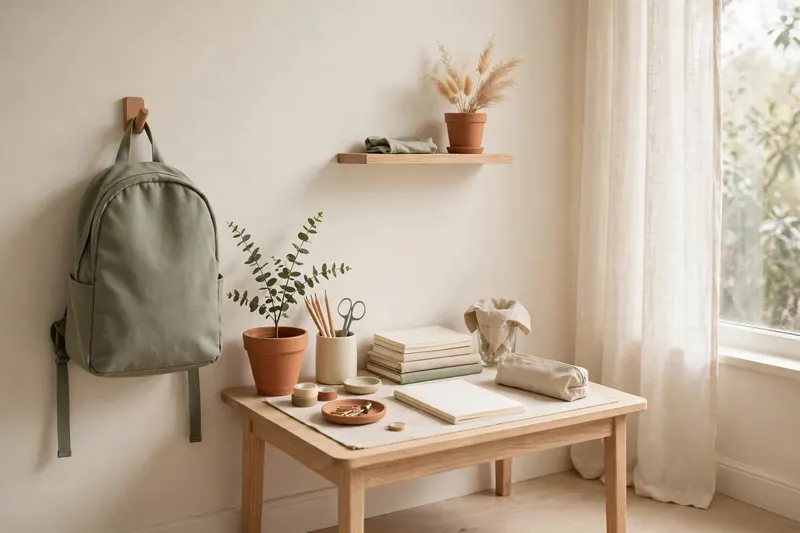
Homework fails in small apartments because the pencils are in one room, the paper is in another, and the charger is who knows where. A homework station — the heart of kids’ school gear storage in small homes — puts every supply in one grab-and-go spot near the table.
6. Keep a homework caddy that travels to the table
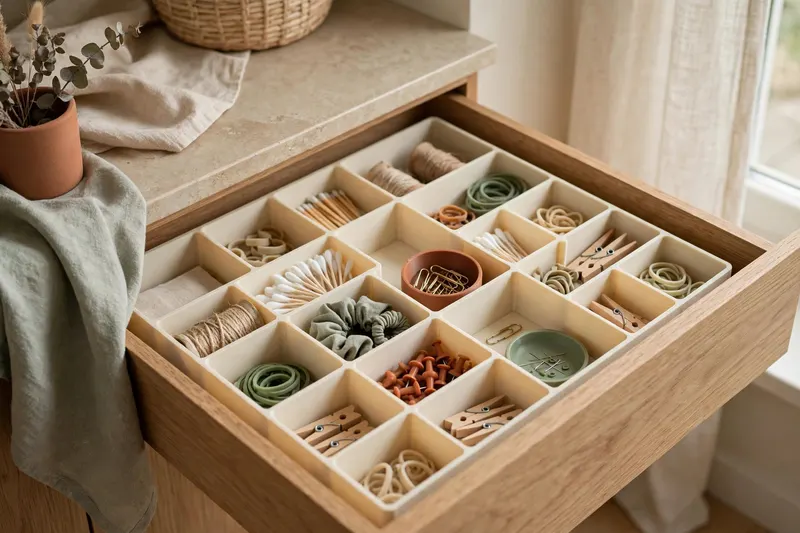
Fill a handled caddy — 12 by 8 inches — with pencils, erasers, a sharpener, scissors, glue sticks, and a ruler, and keep it near the dining or kitchen table. When homework starts, the caddy comes to the table; when it ends, the caddy goes back. Restock it every Sunday so a missing pencil never delays homework. For more supply ideas, see 18 Kids’ School Supply Organization Ideas for Small Homes.
7. Give each kid a homework folder that lives in the bag
One folder per child, labeled with their name and color-coded to match their hook, holds the day’s homework and anything that needs a signature. The folder lives inside the backpack, never on the table. At homework time it comes out; when homework is done it goes straight back in.
8. Set up a charging spot for school devices
If your kids use a tablet or laptop for school, give the charger one permanent home — a small basket or a wall-mounted charging pocket near the homework station, with a short cable that cannot wander off. Devices charge overnight there and go into the bag in the morning.
Lunch and snack gear: one bin, one shelf
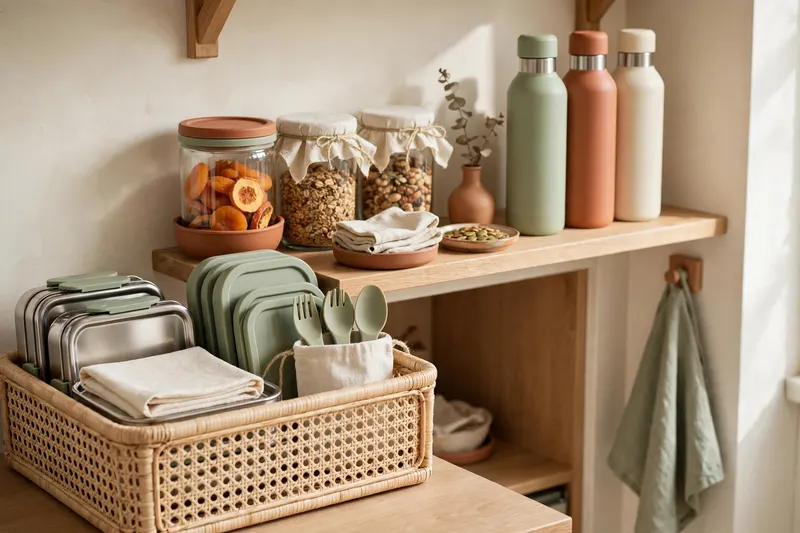
Lunch gear multiplies fast: a lunch box, a water bottle, a snack container, an ice pack, and a thermos — times two or three kids. The rule is simple: one bin, one shelf.
9. Store all lunch gear in one labeled bin
Put every lunch box, container, water bottle, and ice pack in a single bin on one kitchen shelf — a bin 14 by 10 inches holds a full set for two kids. In the morning, kids pull their gear from the bin; after school, washed gear goes straight back into it. Keep it on a low shelf kids can reach.
10. Keep a backup shelf for spare bottles and containers
One spare water bottle and one spare container per kid, stored on the shelf next to the lunch bin, saves the morning when the main bottle is still in the dishwasher. Rotate spares in on wash day.
Shoes, coats, and gear: the full grab-and-go zone
The backpack is only part of the morning exit. Shoes, coats, hats, and sports gear all leave through the same door, and they need the same treatment: one home each, in the same zone.
11. Limit each kid to one pair of everyday shoes at the door
One pair per child lives in the entry — the pair they wear to school. Everything else (sports shoes, rain boots, dress shoes) lives in the bedroom closet or a storage bin. A slim two-tier shoe rack, about 24 inches wide, holds two pairs side by side; if shoes still pile up, the rule is one in, one out. Our guide to 18 Shoe Storage Ideas for Small Apartments (No Pile by the Door) has more slim-rack options.
12. Hang coats on the same hook row as the bags
Give each kid’s coat the hook next to their backpack hook, or use a double hook — bag below, coat above — so the whole outfit hangs in one column. A coat on a hook is a coat a kid can grab.
13. Park sports and activity gear in one labeled bin per activity
One bin per activity — soccer, swimming, dance — stored on a closet shelf or under the entry bench, holds the gear for that activity and nothing else. The night before practice, the bin comes out; after practice, the gear goes back in. Label each bin with the activity and its day.
Paper and permission slips: the inbox that works
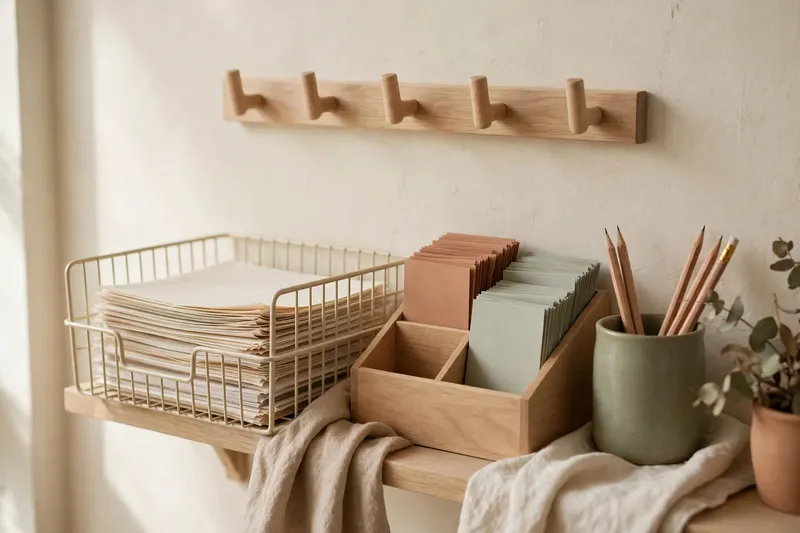
School paper is the quietest mess in a small apartment. It arrives folded in a backpack, gets set on the nearest surface, and becomes a pile nobody owns. The fix is a single inbox, emptied daily.
14. Set up one inbox tray per family, checked daily
One wall-mounted file holder or a single inbox tray on the shelf above the hooks is the only place school paper is allowed to land. Every paper comes out of the bag and into the tray the moment kids walk in. Each evening, sort it in under two minutes: sign and return, file, or recycle — signature papers go into the homework folder.
15. Photograph permission slips the day they arrive
When a permission slip or field-trip form comes home, take a phone photo of it immediately and save it to a “school” album. The paper goes in the inbox; the photo is your backup if the paper vanishes. Keep the album shared with the other parent or caregiver.
The nightly pack-the-bag routine
Every system above falls apart without the routine that runs it. The nightly pack-the-bag routine takes about five minutes, and it is the single highest-value habit in this article.
16. Pack the bag the night before, in the same order every night
Run the same five steps every night, in the same order: homework folder back in the bag, lunch box packed and in the fridge, water bottle filled and by the door, clothes laid out, and the bag hung on its hook. Post the five steps on a small card above the hooks so kids can check themselves off.
Mistakes to avoid
Buying storage before assigning homes. A pretty basket does not fix a pile — a labeled hook does. Assign every item a home first, then buy only the containers that fit.
Mounting hooks at adult height. Hooks kids cannot reach are hooks parents have to use, so the bags end up on the floor anyway. Measure from your shortest child’s shoulder.
One shared hook or cubby for all kids. Shared storage in a small apartment becomes nobody’s storage. One hook and one cubby per child is non-negotiable.
Letting the landing zone collect everything else. The moment mail, toys, or shopping bags join the entry zone, the system collapses.
Skipping the nightly routine. Hooks and cubbies organize the gear; only the routine organizes the morning.
Frequently asked questions
How can I store kids’ backpacks in a small apartment with no entryway?
Use the wall beside the front door, even if it is only a hallway. One hook per child at kid height, a slim cubby above a shoe rack, and a boot tray underneath create a landing zone in about 24 inches of wall per child.
What is the best way to organize school gear for multiple kids in a small home?
Give each child their own complete zone: one hook, one cubby, one homework folder, and one lunch bin slot, all color-coded to match. Shared storage fails because nobody owns it.
How do I stop backpacks from piling up by the front door?
Put the hook exactly where the bag already lands, at a height your child can reach, and make hanging the bag the first thing they do when they walk in. Add the nightly routine: a bag packed the night before never becomes a pile in the morning.
Can I set up a homework station without a desk?
Yes. A handled supply caddy that travels to the kitchen or dining table, a folder that lives in the backpack, and one charging spot for devices make a complete homework station with no desk at all. The station is the system.
How do I keep track of permission slips and school papers in a small apartment?
Use one inbox tray by the door for all school paper, sort it every evening in under two minutes, and photograph every permission slip the day it arrives. The photo is your backup.
Conclusion
Backpacks pile up by the door because the door is the easiest place to drop them — so make the hook even easier. One hook per kid, one cubby, one bin, one inbox, and a five-minute nightly routine — simple backpack organization ideas that work — turn a daily mess into a grab-and-go zone. Start tonight: hang the hooks where the bags already land. Save this pin for later, or browse more ideas in the storage ideas category.