Small apartment storage ideas vinyl records collectors swear by start with a simple math problem: a hundred LPs weigh roughly 35 pounds and take up about four linear feet of shelf, and the collection only grows. If your records are leaning in a stack by the door or spread across the floor, you know the feeling. Below you will audit what you own, set up shelving that fits records properly, build a ten-minute weekly habit, and cap growth.
The collection audit: keepers, flips, and the ones to sell
Find out what you actually own first.
1. Count and catalog everything you own
Pull every record out of every hiding place, count them, and catalog them in a free app like Discogs. A catalog stops duplicate buys, shows approximate resale values, and gives you a real number to plan around: 150 records need about two cube shelves, while 400 need a full wall unit.
2. Sort every record into keepers, flips, and sells
Make three piles and be honest. Keepers are records you play at least once a year; flips are records you are unsure about — crate them, revisit in 30 days, and sell anything you never reached for. This habit stops a small-apartment collection from quietly doubling every year, and it pairs well with the display rotation in our guide to 16 Small Apartment Storage Ideas for Collectors.
Cube shelving: the record collector’s best friend
An LP sleeve is 12.5 inches square, and a 13-inch cube holds it with just enough clearance to flip through.
3. Use 13-inch cube units and file spine-out
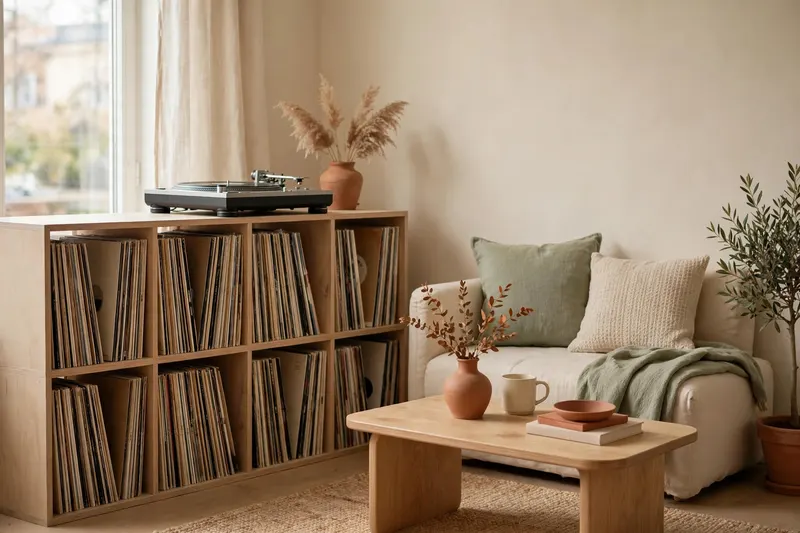
Choose cube shelving with interior openings of at least 13 inches square. File records upright, spine-out, packed snugly enough to stand straight. A single cube holds roughly 50 to 60 LPs, so a 2x2 unit stores about 200 to 240 records in four square feet of floor space. Anchor the unit to the wall; a wall repair is cheaper than a collapsed shelf.
4. Organize by genre first, then alphabetically
Sort by broad genre, then alphabetically by artist within each genre. Genre-first filing means you only search one cube, and it survives new arrivals without a full reshuffle. Use divider cards — stiff cardstock cut to LP size — labeled with a marker to mark each genre boundary.
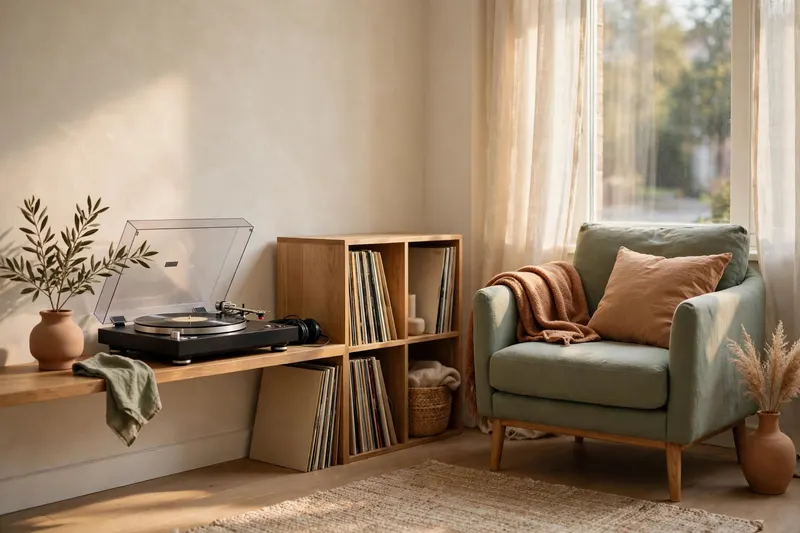
5. Put the turntable on top and the records below
The most space-efficient setup is a cube unit with the turntable on top and the records filed in the cubes underneath — one piece of furniture doing two jobs. Keep the turntable level with two inches of side clearance, and route cables down the back with a small adhesive clip.
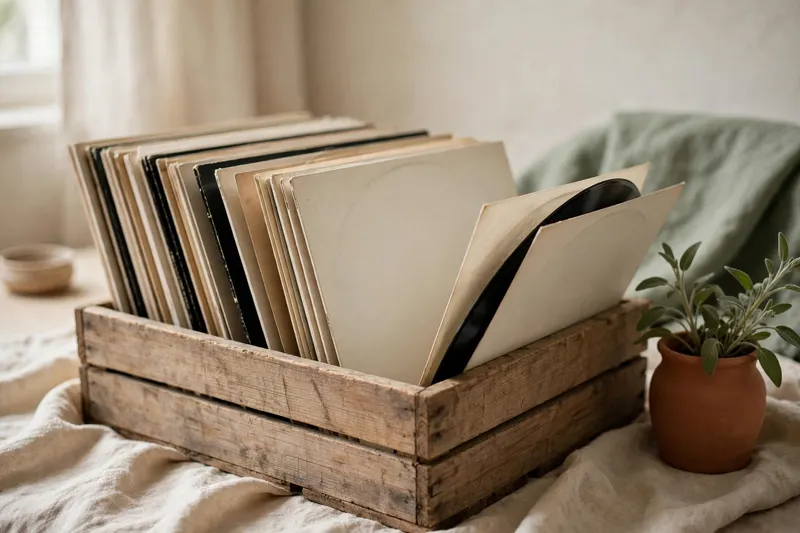
Flip bins and crates: browsing without the floor pile
Cube shelves are for storage; flip bins are for browsing.
6. Keep a tabletop flip bin for new arrivals and heavy rotation
Place a flip bin on a console table or the top of your cube unit, and load it with your 30 to 50 most-played records plus anything new. This is your active collection — no more digging through the archive to find tonight’s album. A wooden crate or purpose-made flip bin for 12-inch records costs far less than a new shelf, and a full bin signals time to re-file the least-played records.
7. Use a wheeled crate for records that live under furniture
If your cube unit is full, a low wooden crate on caster wheels slides under a console table, bench, or bed, and pulls out like a drawer. Choose a crate with an interior width of about 13 inches and a depth that fits your clearance — measure first, since many bed frames only clear 6 to 7 inches.
Wall displays: showing off favorites without losing space
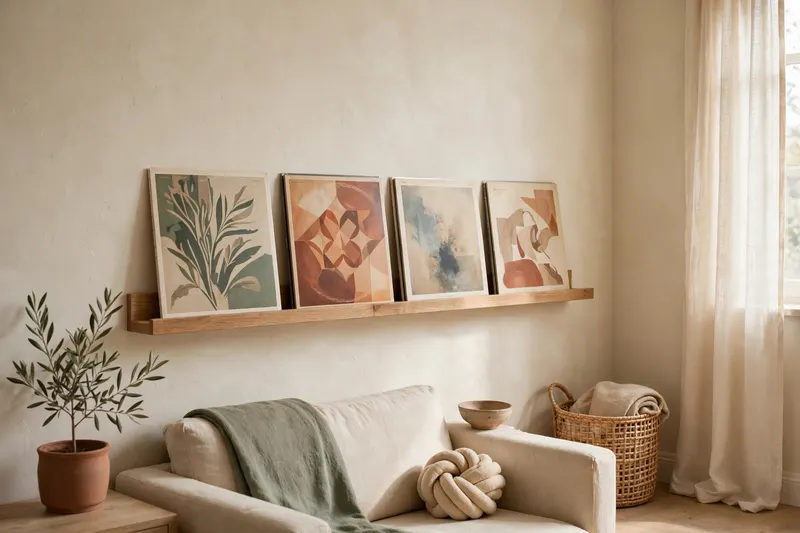
Wall space is the one surface a small apartment usually has to spare.
8. Hang a now-playing ledge by the turntable
Mount a narrow picture ledge — about 3 inches deep — beside or above your turntable, and stand the record you are playing on it, cover facing out. It costs almost nothing and turns the album art into decor that changes every time you flip a side. Use a ledge with a small front lip, and mount it with wall anchors rather than adhesive strips.
9. Rotate a small set of framed covers instead of hanging them all
Pick four to six favorite covers and hang them in lightweight frames, swapping one a month or when you buy a new favorite. Rotating a small display keeps the wall fresh, protects the rest of your covers from sun fading, and — critically for renters — limits the number of holes in the wall. Display a spare copy of the cover or a printed reproduction so the record itself stays safely filed.
Sleeves and cleaning: protecting records in a small apartment
Protection is mostly cheap habits, not expensive gear.
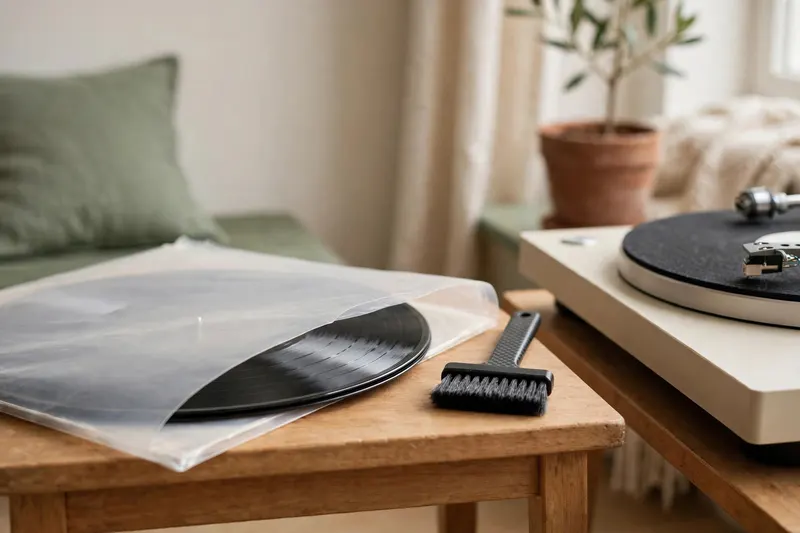
10. Replace paper inners with anti-static sleeves and add outer sleeves
Most records ship in paper inner sleeves that shed fibers and scratch over time. Swap them for anti-static polyethylene inners and add a clear outer sleeve. Outer sleeves keep dust and cooking grease off the cover. Start with new purchases, then work through your collection ten records at a time.
11. Build a five-minute cleaning routine before every play
Before each play, run a carbon fiber brush lightly across the spinning record two or three times. Once a month, deep-clean your most-played records with cleaning solution and a microfiber cloth, wiping along the grooves. The Library of Congress recommends the same basics — gentle, regular cleaning and upright storage in a cool, dry place.
Turntable placement: a listening corner that doubles as storage
The turntable needs a level surface, still air, and distance from speakers. Give it a dedicated corner.
12. Claim one corner and keep everything in arm’s reach
Choose the corner closest to your main seating: cube unit against the wall, turntable on top, flip bin beside it, brush and sleeves within reach. Everything you need should be within two steps of your listening chair. It is the difference between a setup you use every evening and one you abandon. Keep the unit a foot from windows — direct sun can soften black vinyl on a hot afternoon.
13. Isolate the turntable from speaker vibration
In a small room, bass vibration travels through shared furniture into the stylus, muddying the sound. Place the turntable on a different surface from the speakers whenever possible. If they must share a surface, use a dense isolation pad or a thick cutting board with rubber feet. Our guide to 15 Small Apartment Media Storage Ideas for TVs, Consoles, and Cables covers speaker and cable storage in tight living rooms.
Overflow rules: one-in-one-out and the off-site box
A collection without a growth rule will eventually outgrow the apartment.
14. Enforce one-in-one-out once your shelves are full
The day your cube unit fills up, the rule starts: every new record in means one record out — to the flip pile, the sell bag, or a friend. It sounds harsh until you try it. It makes every purchase deliberate, keeps the collection at a size your apartment can actually hold, and stops the slow drift toward floor stacks.
15. Keep one off-site box for overflow and seasonal rotation
Pack a sturdy record box with records you rarely play, and store it at the top of a closet, under the bed, or at a family member’s home. Label it and rotate seasonally. One box holds about 60 records — the space of an extra cube shelf without new furniture. The same rotation works for other hobbies — see 16 Bookshelf Organization Ideas for Small Apartments.
The weekly reset: re-filing new arrivals in 10 minutes
The weekly reset is a ten-minute habit that prevents the slow slide back into floor piles.
16. Re-file new arrivals the same week you buy them
Records left in the shopping bag are records that end up in a floor stack. Set a fixed ten-minute slot once a week to sleeve every new arrival, file it in its genre section, and update your catalog. Ten minutes a week covers five to ten new records; if you bought more than that, you have found your next audit.
17. Do a monthly shelf check for leaning, dust, and damage
Once a month, check each cube: straighten leaning sections, re-sleeve damaged records, dust shelf tops, and move any record in direct sun or next to a heat source. Ten minutes for a 200-record collection catches warping, moisture, and sleeve damage while it is still fixable.
Mistakes to avoid
Never store records flat; the weight warps the bottom ones. Never lean a half-empty shelf at a steep angle; that lean causes ring wear and a permanent bow. Never put a cube unit against a damp exterior wall or next to a radiator; heat and moisture warp vinyl fastest. Never buy cubes smaller than 13 inches — a protruding sleeve collects dust and bends. Never skip outer sleeves; a torn cover loses most of its resale value.
Frequently asked questions
How many vinyl records fit in one cube shelf?
A 13-inch cube holds about 50 to 60 LPs; a 2x2 unit about 200 to 240, and a 4x2 about 400 to 480. Leave breathing room — overstuffed cubes damage sleeves.
Can I store vinyl records in a small apartment without warping them?
Yes: store records upright, never flat or leaning; keep them cool and dry, away from radiators, damp walls, and direct sunlight. Warping comes from heat and pressure, not small spaces.
How do I display records on a wall in a rental?
Use a narrow picture ledge or lightweight frames on removable hooks. A rotating display of four to six covers keeps holes low, and reproduction covers protect your originals.
What is the cheapest way to clean vinyl records?
A carbon fiber brush before each play costs under 15 dollars and handles most surface dust. For a deeper clean, use record-cleaning solution with a microfiber cloth, wiping along the grooves. Avoid tap water and household cleaners.
Final thoughts
A vinyl collection in a small apartment works when the system is smaller than the collection’s ambitions: one audit, cube shelves that fit LPs, a flip bin for daily browsing, sleeves and a cleaning habit, and a one-in-one-out rule that stops the growth. Start with the audit this weekend — the rest is ten minutes a week.
Save this pin for later, and browse more ideas in our small-spaces category to keep the rest of your apartment working just as hard.