Rain walks in with you whether you invite it or not. One wet umbrella leaning in the corner, and within an hour there is a puddle creeping toward your shoes, a damp smell in the air, and a dark ring on the floor that will not come out. These small entryway umbrella storage ideas fix that problem: every one is sized for a tight entryway, most need no drilling, and all give a wet umbrella somewhere to drip that is not your floor. Pick two or three, set them up once, and rainy days stop leaving a mess behind.
The Drip Problem: Why Umbrellas Need a Real Home, Not a Corner
A leaning umbrella is not storage — it is a slow leak. Water runs down the canopy, pools at the tip, and soaks into whatever it touches: baseboards, shoe leather, the rug you actually like. In a small entryway there is nowhere for that water to hide. The fix is a defined spot where wet goes and dry stays dry.
1. Draw a wet zone before you buy anything
Decide where wet things are allowed to live, and make it small: a strip about 12 inches deep by 24 inches wide right inside the door. Everything that drips — umbrellas, rain boots, wet dog leashes — stays inside that strip, and everything else stays out. Once the zone exists, every idea below has a place to sit.
2. Give every umbrella a named spot — one per person
Count the umbrellas your household actually uses on a rainy day, then give each one a slot. In most apartments that number is two or three, not the six tangled in the corner. Move the extras to a closet shelf or a storage bin, and keep only the daily users at the door. Fewer umbrellas means each one dries faster, because air can move between them.
Slim Umbrella Stands That Fit a 12-Inch Entryway
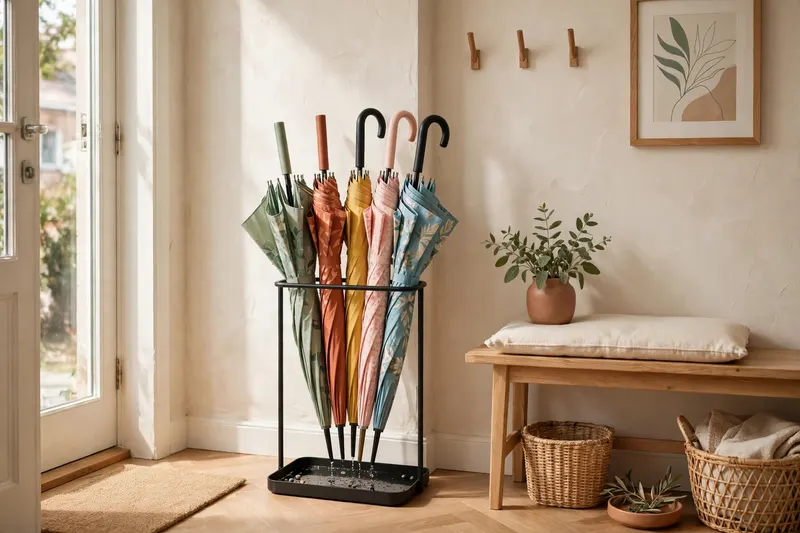
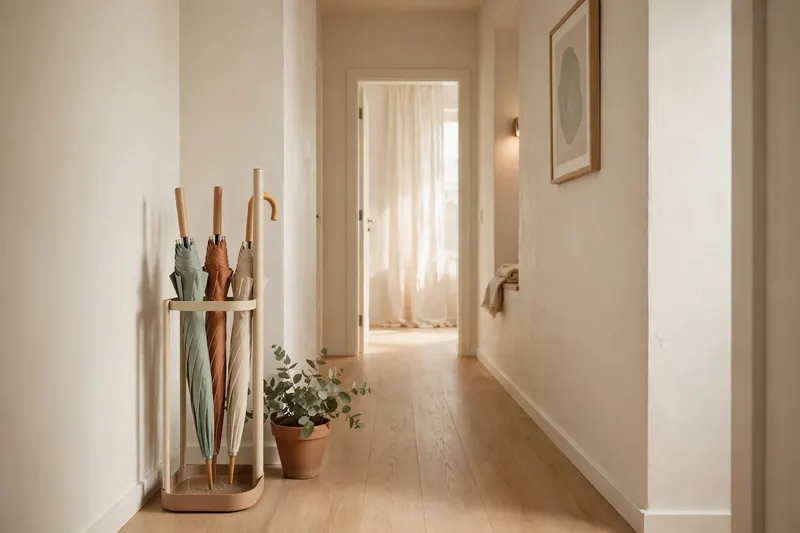
A good stand for a small entryway is tall and narrow, not wide and decorative. Look for a footprint under 8 inches across and a height of at least 20 inches, so a full-size umbrella stands upright without tipping. Weight matters more than looks: a stand under 2 pounds will slide every time you pull an umbrella out, so choose ceramic, cast iron, or steel with a weighted base.
3. Use a slim weighted stand with a removable drip cup
A narrow cylinder stand — roughly 7 inches in diameter — slides into the gap between the door frame and the wall in most apartments. The feature that matters most is a removable drip cup at the bottom: you lift it out, dump the water, and wipe it dry in ten seconds. Without one, water sits in the base, goes stale, and the stand starts to smell.
4. Pair a short stand with a shoe tray underneath
If your stand is shorter than 18 inches, set it inside a low boot tray about 16 by 12 inches. The tray catches the drips the stand misses and gives muddy shoes the same wet zone. One tray, two jobs, zero extra floor space.
Wall-Mounted Umbrella Holders and Hooks
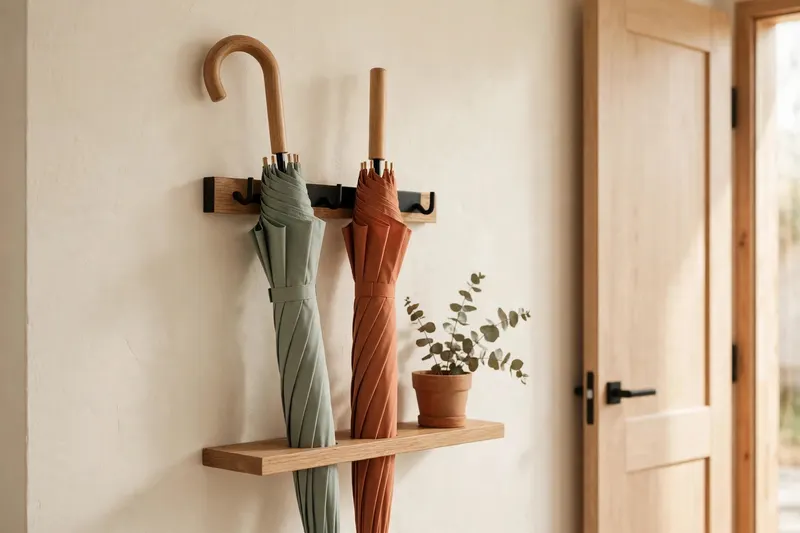
When the floor is full, the wall is free. Wall storage keeps umbrellas off the ground entirely, so nothing drips onto the floor — and in a 12-inch-deep entryway, that reclaimed floor space is the difference between tripping and walking through.
5. Mount a wall holder at handle height
A wall-mounted umbrella holder — a short open tube or a pair of curved brackets — mounts about 36 inches off the floor, where your hand naturally reaches. The umbrella slides in tip-first and hangs vertically, so water runs into the holder’s drip cup instead of onto the floor. Choose a model with a drain hole or a removable cup at the bottom, and mount it on the wall beside the door, not behind it, so the door swing never knocks it.
6. Hang foldable umbrellas on adhesive hooks by the door
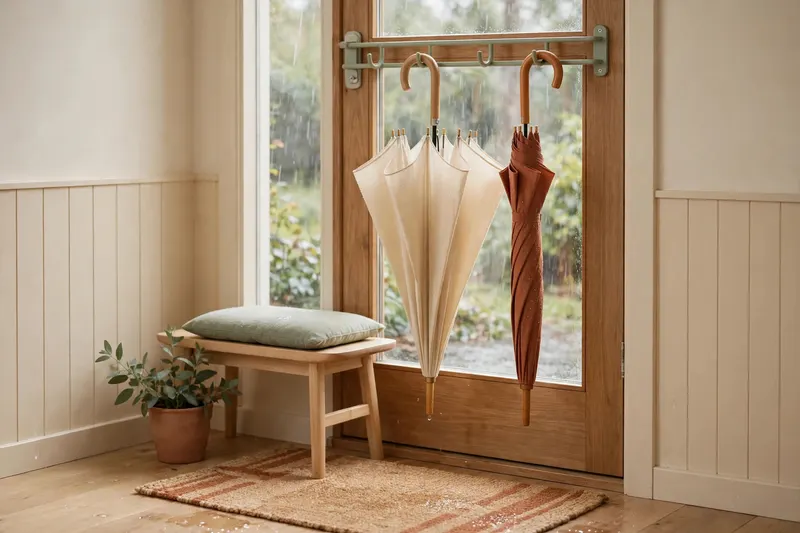
Foldable umbrellas are too short for a floor stand and too small to justify one. A pair of strong adhesive hooks (rated for at least 3 pounds each) on the wall or the side of a console table holds one folded umbrella each, right at eye level where you grab it on the way out. No drilling, and the hooks come off cleanly when you move. Hang them with the handle down so trapped water drains out of the canopy instead of pooling inside the fold.
Drip Trays and Mats: Containing the Wet
Stands and hooks hold umbrellas. Trays and mats catch what they shed. This layer is what protects your floor, and it is the cheapest part of the whole system — skip it and even the best stand will leave a ring.
7. Put a ribbed drip tray under every stand
A ribbed tray — about 12 by 24 inches for a stand plus shoes, or 10 by 10 inches for a stand alone — lifts the umbrella tips off standing water so the fabric dries instead of sitting in its own runoff. Choose a tray with a raised edge of at least half an inch; anything lower lets a heavy-rain day overflow onto the floor.
8. Layer a washable mat over the tray on muddy days
On the worst rainy days, add a thin washable doormat or a microfiber drying mat on top of the tray. It soaks up the first splash, and you can toss it in the washing machine once a week instead of mopping. Keep a second mat in rotation so there is always a dry one ready while the other washes.
Over-Door and Behind-Door Umbrella Storage
The back of the entry door is dead space in almost every apartment. Over-door storage turns it into an umbrella station that costs zero floor space and zero wall holes.
9. Hang an over-door umbrella rack on the entry door
An over-door rack with two or three hooks or short tubes slides over the top of the door and holds umbrellas vertically on the inside face. Check two things before you buy: the bracket must fit your door’s thickness (most interior doors are 1⅜ inches, entry doors are often 1¾ inches), and the rack must sit flat enough that the door still closes and locks. See our guide to Over-the-Door Organization Ideas for Every Room for more of what the back of a door can hold.
10. Use the closet door for overflow umbrellas
If the entry door is too thick or too busy, the hall closet door takes the overflow. A slim over-door hook rack on the closet door holds the umbrellas you use less often — the big golf umbrella, the spare for guests — while the daily users stay by the front door. If your closet itself needs a system, our 16 Hall Closet Organization Ideas for Tiny Entry Closets shows how to zone a small closet so umbrellas, coats, and shoes each have a place.
Drying Wet Umbrellas in a Small Space (Without the Smell)
Storage is only half the job. An umbrella that goes away wet and stays wet grows mildew, and mildew is the smell that makes a small entryway feel dirty even when it is clean.
11. Open the umbrella halfway for 30 minutes before storing it
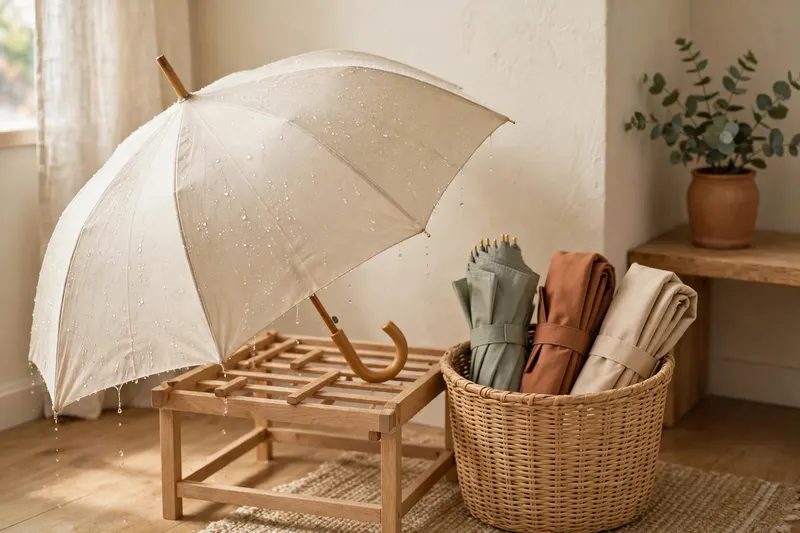
When you come in from heavy rain, open the umbrella halfway — just enough that the panels separate — and lean it in the stand or against the wall inside your wet zone for about 30 minutes. Half-open dries far faster than fully closed, and it takes up barely more space than a closed umbrella. After half an hour, close it and slide it into its slot. This one habit prevents most umbrella mildew.
12. Point airflow at the wet zone on rainy days
Air movement does more than heat for drying fabric. If your entryway has a vent, a small clip fan, or a hallway ceiling fan, aim it toward the umbrella area on rainy days. Never store a wet umbrella inside a closed closet or a sealed bin — trapped damp air is exactly how mildew starts, and it can spread to coats stored beside it. Our 16 Entryway Coat Storage Ideas for Apartments Without a Closet covers how to keep coats and umbrellas from sharing dampness in the same tight space.
Foldable Umbrellas: The Pocket-Sized Backup System
Full-size umbrellas are better in a storm, but foldable umbrellas are better for small-space living: they fit in a bag, a coat pocket, or a drawer, and they never need floor space at all.
13. Keep one foldable umbrella per bag, not per person
Instead of one foldable per person, keep one in each bag you actually carry — your work bag, your gym bag, the tote by the door. That way the umbrella is already with you when the rain starts, and it never has to come home to the entryway at all.
14. Set up a grab-and-go basket by the door
A small basket, about 10 by 8 inches, on a console, a wall shelf, or the floor inside the wet zone holds two or three folded umbrellas plus a spare plastic bag for wrapping a wet one on the way home. Wet foldables go to the drying spot in idea 11, never straight into the basket.
The Rainy-Day Reset: A 2-Minute Entryway Routine
A two-minute routine, done the same way every rainy evening, is what keeps the entryway dry all season.
15. Run the two-minute reset every rainy evening
Before bed on any day it rained: empty the drip tray, shake each umbrella once over the tray, leave the wettest one half-open for the night, and wipe the wet zone dry with a rag. Two minutes, four moves, done. Pair it with something you already do — hanging up your coat, or taking off your shoes — and it becomes automatic within a week.
Mistakes to Avoid
Storing umbrellas closed and wet. This is the number-one cause of mildew smell in small entryways. Always give a wet umbrella at least 30 minutes half-open before it goes into a stand or closet.
Buying a stand wider than your entryway. A decorative 12-inch-wide stand in a 12-inch-deep entryway blocks the walkway. Measure the gap first, then buy.
Skipping the drip tray. A stand without a tray, or a tray without a raised edge, just moves the puddle to a slightly different spot on the floor.
Hanging wet umbrellas inside a closed closet. Coats, umbrellas, and shoes all shedding moisture into a sealed space is how a whole closet starts to smell. Wet stays in the open wet zone until it is dry.
Keeping umbrellas you never use. A broken umbrella, a promotional one with a torn panel, and three spares nobody reaches for are clutter, not backup. If it has not been used in a full rainy season, let it go.
Frequently Asked Questions
How do you store umbrellas in a small entryway without a closet?
Use a slim weighted stand with a removable drip cup, or a wall-mounted holder if floor space is tight. Keep the stand inside a ribbed drip tray in a defined wet zone by the door, and store only the two or three umbrellas you actually use.
Can you hang umbrellas on the wall in a rental?
Yes. Adhesive hooks rated for 3 pounds or more hold folded umbrellas with no holes, and over-door racks need no drilling at all. For a wall-mounted holder that screws in, use removable mounting strips rated for the holder’s weight, and check your lease for any restriction on wall anchors first.
How do you dry a wet umbrella in a small apartment?
Open it halfway and lean it in the wet zone for about 30 minutes, with airflow pointed at it if you can. Once the canopy feels dry to the touch, close it and store it. Never put a wet umbrella in a closed closet or a sealed bin.
What size umbrella stand fits a small entryway?
Look for a stand under 8 inches in diameter and at least 20 inches tall, with a weighted base. Measure the gap where it will sit and the door’s swing arc before buying, so the stand fits the space without blocking the door.
How do you stop umbrellas from smelling musty?
The smell is mildew from being stored wet. Wash the canopy with warm water and a drop of dish soap, dry it fully open, and change the habit: always half-open a wet umbrella for 30 minutes before storing it, and empty the drip tray after rainy days.
Conclusion
A dry entryway is not about owning the perfect stand — it is about giving every umbrella a place to drip, a chance to dry, and a routine that empties the tray. Start with the wet zone and one slim stand, add a drip tray, and run the two-minute reset on rainy nights. If you want more ideas for the rest of the space, browse our small-spaces ideas — and save this pin for later, so the next rainy day finds you ready instead of mopping.