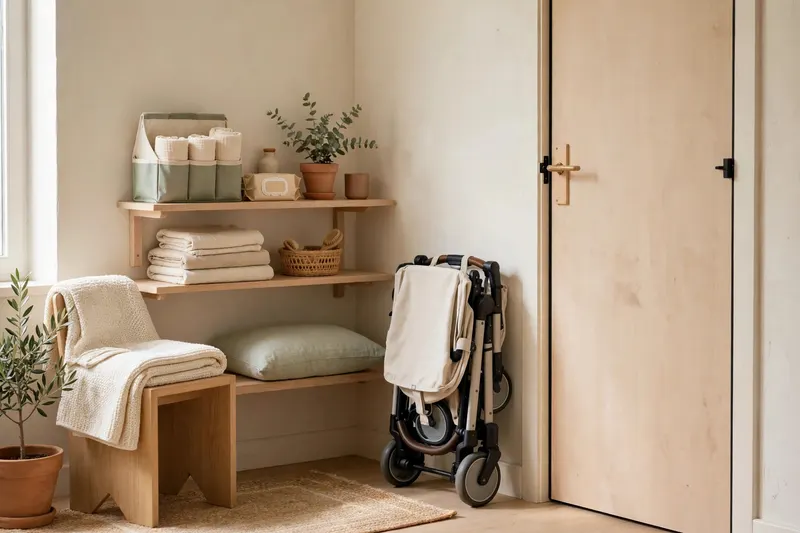
A kids’ bathroom has one job: survive bath time twice a day without becoming a wet toy graveyard. If yours holds a floating armada of rubber ducks, half-empty shampoo bottles, and towels on the floor, you are not disorganized — the room was just never set up for its smallest users. These small kids bathroom storage ideas follow one rule: put everything a child needs at their height, give everything wet a way to drain, and keep everything dangerous out of reach. Most cost less than a bath toy set.
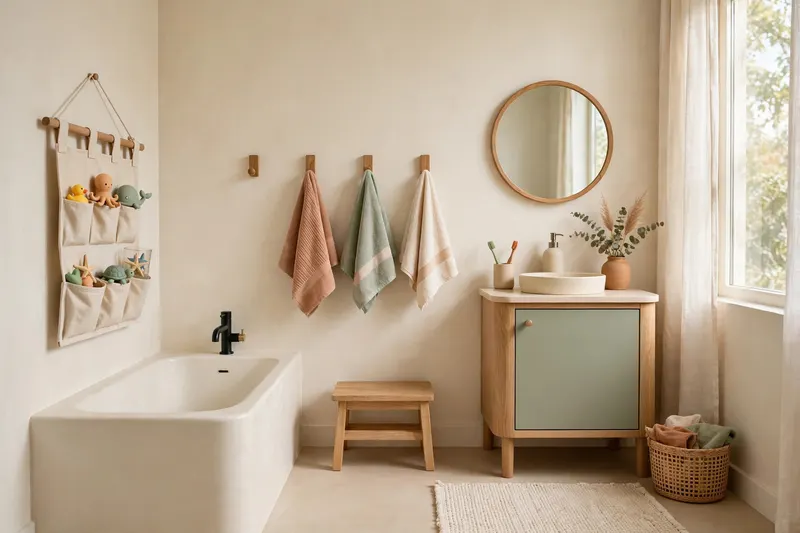
The kids’ bathroom triage: what kids actually use
Before you buy a single bin, empty the bathroom: take everything out of the tub surround, vanity, and cabinet, and sort it into three piles — used daily, used weekly, and really yours. Most of the clutter is grown-up products at kid height and kid products no small arm can reach.
1. Give every child one low shelf or caddy they own. Assign each child one shelf, basket, or suction caddy at eye level — roughly 36 to 42 inches up for a 4- to 7-year-old. Their shampoo, body wash, and washcloth live there and nowhere else. Full shelf? Something goes before anything new comes in.
2. Move all grown-up products up and out of the tub zone. Your razor, face wash, and styling products do not belong in the splash zone. Move them to a high shelf, the medicine cabinet, or a small lidded caddy on the vanity’s far side — freeing the tub edge for kids.
Bath toy storage that drains and dries
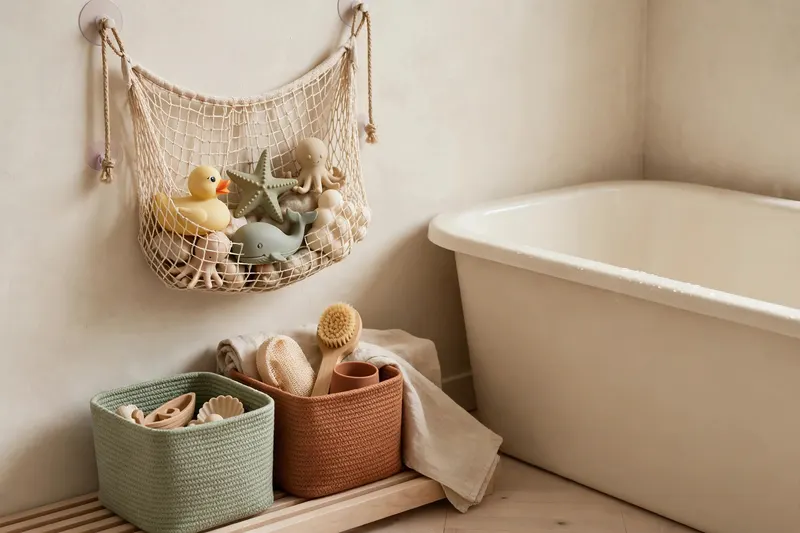
Bath toys are the number one source of bathroom mess — not because there are too many, but because wet toys in a solid container grow mildew within days. Every toy system here must drain, dry, and be usable one-handed.
3. Use a mesh suction bag on the tub wall. A mesh bag with two or three strong suction cups holds plenty of toys and drains straight back into the tub. Hang it within reach from the bath, so tidy-up becomes part of play. Rinse weekly; replace when the mesh sags.
4. Rotate toys with a small “this week” bin. Keep only five to eight bath toys in the tub area; store the rest in a ventilated bin on a closet shelf and swap every week or two. Kids play more with fewer toys, and rotation makes old ones feel new. A 10-by-8-inch mesh laundry bag works — it breathes, fits on a shelf, and goes in the washing machine.
5. Add a drill-free drain tray under the toy bag. If the toy bag drips onto the floor or the tub ledge stays damp, slide a narrow plastic drip tray — the dish-rack kind, about 12 inches long — under it on the tub edge. It catches the last drips; empty it in two seconds. No drilling, no adhesive, no mildew patch.
Kid-height hooks and towel zones
Towels on the floor are almost never a discipline problem — they are a height problem. Standard towel bars sit at 48 inches, above the reach of most children under eight. Lower the target and the towels land on it.
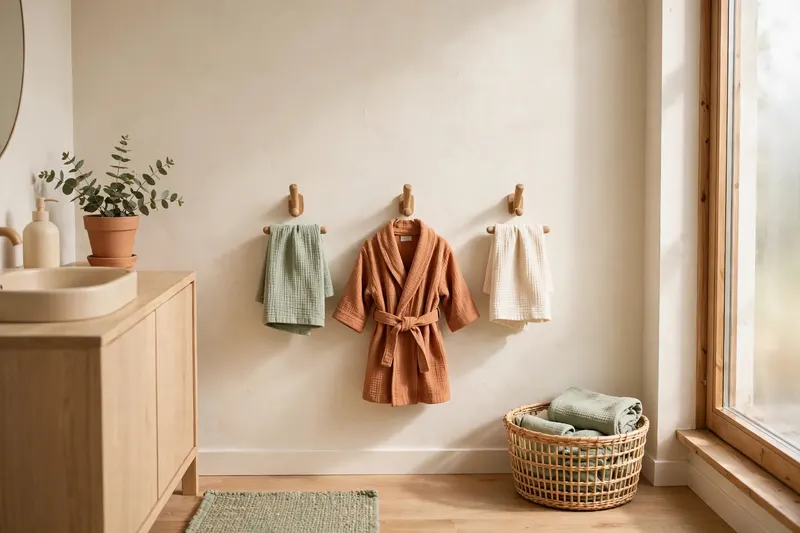
6. Mount hooks at 36 inches, one per child. Install two or three hooks at about 36 inches high, one per child, each with a color or animal tag the child picks. A hook beats a towel bar: hanging a towel on a hook is one motion; folding it over a bar is three. In a rental, heavy-duty adhesive hooks rated for 5 pounds or more hold a wet towel and come off cleanly.
7. Give each child a labeled towel spot and a washcloth ring. A small adhesive ring or second hook at the same height holds the washcloth. If two kids share the bathroom, color-code everything: one towel color per child, matching hook tag, matching washcloth. You can tell at a glance whose towel is missing, and kids hang up what is visibly theirs. More towel ideas for tight bathrooms: our 16 Small Bathroom Towel Storage Ideas.
Step stools that store (and don’t become clutter)
A step stool is essential — and the item most likely to end up kicked into a corner or blocking the door. Give the stool a home as obvious as the stool itself.
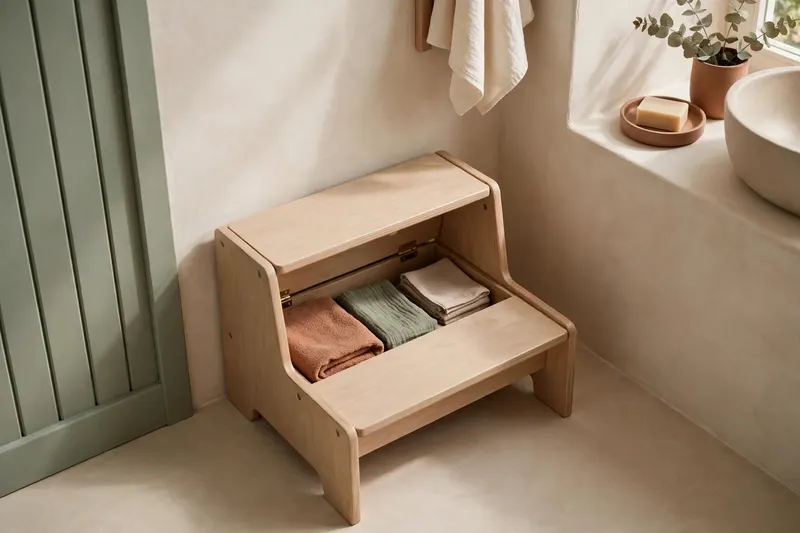
8. Choose a stool with a built-in storage cubby. A two-step stool with an open cubby underneath holds washcloths, a spare bath toy, or a hairbrush — the stool earns its floor space by storing something. Look for one about 13 inches high, non-slip top, rubber feet; anything taller tips too easily under a wet child. One category in the cubby only, or it becomes a junk drawer on legs.
9. Park the stool in a taped or painted floor spot. Mark its parking spot with removable floor tape or a peel-and-stick decal by the vanity. Kids understand “stool goes on the square” far better than “put the stool away.” Same spot every day and it stops being an obstacle — no more tripping over it at midnight.
Toothbrush and hair stations per child
The vanity counter is where kids’ bathrooms fall apart fastest: toothbrushes in a shared cup, hair ties everywhere, toothpaste smeared across it. A per-child station the size of a saucer fixes most of it.
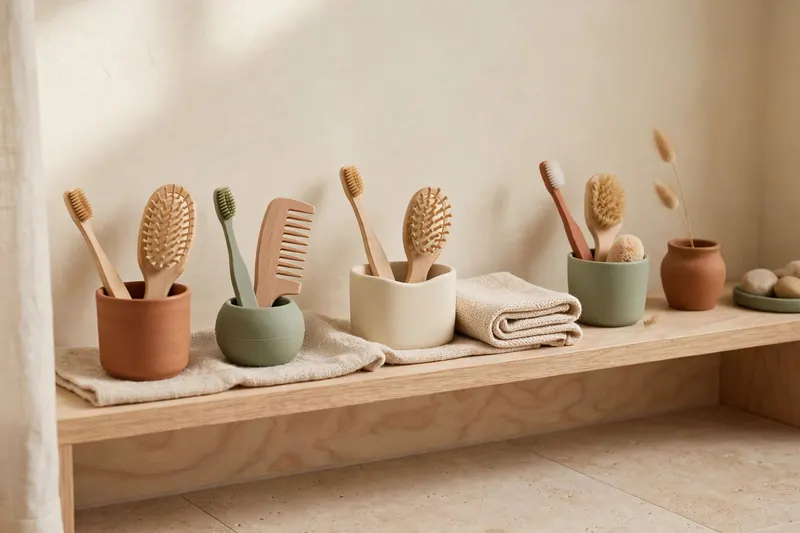
10. One suction cup per child, mounted at their height. Give each child their own suction-cup toothbrush holder on the mirror or tile at eye level, holding brush and toothpaste. Shared cups tip over, mix up brushes, and collect a puddle. Individual holders cost a few dollars each and end the morning “that’s mine” standoff — rinse weekly, as toothpaste residue builds fast.
11. A hair station in a single drawer caddy. Put all hair things — brush, comb, elastics, clips — in one narrow drawer caddy that lives in the vanity drawer, not on the counter. Add a tiny cup inside for bobby pins. No drawer? A hanging organizer on the back of the door, one pocket per category, does the same job. Hair stuff leaves the counter after every use; the caddy is the only place it goes.
Keeping medicines and grown-up products out of reach
This is the section that matters most. A kids’ bathroom must be safe before it is tidy — and “out of reach” differs for a child on a step stool versus one on the floor.
12. Lock medicines in a high, latched box — never in a low drawer. Store all medicines, vitamins, and supplements in a small lockable box or latched cabinet at adult eye level, at least 60 inches from the floor. A step stool plus curiosity defeats any “high shelf” that is not also latched. The American Academy of Pediatrics recommends storing medicines up, away, and out of sight, with the Poison Help number saved in your phone. Child-resistant caps slow a child down; they do not stop one.
13. Move the dangerous everyday items up with the medicines. Nail clippers, razors, tweezers, and any product with a warning label belong in the same high, latched spot — not in the vanity drawer a child opens every morning. Keep them in one small labeled pouch. If your bathroom has a medicine cabinet, add a magnetic child lock — a few dollars, five minutes to install.
The 3-minute post-bath reset
No kids’ bathroom stays tidy on its own — it stays tidy because of a short reset every night, ideally done by the kids themselves. Three minutes: long enough to work, short enough that nobody argues.
14. Toys in the bag, towels on the hooks, stool on the square. Make it the chant after every bath: toys in the mesh bag, towels on the hooks, stool on its square. Say it the same way every time — a routine a child can recite is a routine a child will do.
15. One nightly wipe of the counter and faucet. Keep a cloth in the stool cubby or drawer caddy. After the bath, wipe the counter, faucet handles, and mirror’s bottom edge — the three spots toothpaste and water hit daily. Thirty seconds of wiping prevents buildup that later takes twenty minutes and a scrub brush to remove.
16. Sunday 5-minute toy and product check. Once a week, pull the toy bag down, toss any toy that smells musty or has black spots inside, and check the kids’ shelf for empties. Five minutes stops the slow creep of broken toys and empty bottles taking over the tub ledge. Let kids pick which toys stay in rotation and which go to donation.
The same zone-and-reset logic works everywhere kids live — our 17 Kids Bedroom Storage Ideas for Small Rooms and 18 Kids Toy Storage Ideas for Small Living Rooms use it for bedrooms and living rooms.
Mistakes to avoid
Buying storage before triaging. A new caddy does not fix a bathroom full of products nobody uses. Empty the room first, then buy only for a real gap.
Choosing solid bins for wet toys. Any container that holds water grows mildew. If it cannot drain, it does not belong near the tub.
Mounting hooks at adult height. A hook a child cannot reach is wall decoration. Measure from your child’s shoulder, not from the standard towel-bar height.
Storing medicines “high” but unlocked. A determined child on a step stool can reach any open shelf. High plus latched is the standard — high alone is not.
One big shared bin for everything. A single bin for toys, toiletries, and hair stuff becomes a junk pit within a week. Small, single-purpose homes beat one big container every time.
Frequently asked questions
How do I organize a very small kids’ bathroom with no storage?
Use the walls and the door: adhesive hooks at kid height, a mesh suction bag on the tub wall, and an over-the-door organizer with clear pockets add storage without taking floor space. Our 16 Shower Storage Ideas for Small Bathrooms has more no-drilling options for rentals.
Can kids really keep a bathroom tidy?
Yes — if everything they use is at their height, with one obvious home. Kids fail at tidying when the target is too high, too vague, or shared. A reachable hook and a bag for toys is a system a five-year-old can run.
What is the best bath toy storage to prevent mold?
A mesh bag or basket that drains completely and hangs where air circulates. Solid bins, sealed squeeze toys, and toys left in standing water are the three biggest mold risks. Rinse weekly and retire any toy you cannot see inside.
How high should hooks be in a kids’ bathroom?
About 36 inches for ages 4 to 7, and about 42 inches for ages 8 to 10. When in doubt, mount at shoulder height — they should hang a towel without stretching or standing on tiptoes.
The bottom line
A kids’ bathroom does not need more space — it needs lower zones, storage that drains, and a three-minute reset after every bath. Start with the triage, hang hooks at kid height, and let the mesh bag do the heavy lifting. Save this pin for later, and browse more in our small-spaces category.