A small kitchen baking station sounds simple until bake day arrives and the sheet pans are stacked behind the roasting tin, the flour is in three half-open bags, and the piping tips are somewhere in the junk drawer. Baking supplies scatter because they were never given one home. A small kitchen baking station fixes that: one compact zone where pans, bowls, ingredients, and tools live together, so you can start baking without a twenty-minute hunt first. These 16 ideas show you how to build that zone in a cabinet, on a shelf, or on a small cart, for everyday bakers.
The baking zone: picking one cabinet, shelf, or cart
The first decision is not what to buy. It is where baking lives.
1. Choose one home base, and defend its borders
Pick the single spot closest to your oven: one cabinet, one shelf run, or one rolling cart. Everything you use for baking at least once a month belongs there, and everything else moves out. A defined border is what keeps a baking station small instead of letting it slowly take over the kitchen.
2. Put the station beside the oven, not across the kitchen
The best baking zone is within two or three steps of the oven and the sink, so you can slide a tray straight into the oven without dripping batter across the floor. If your only free cabinet is far from the oven, a narrow rolling cart parked beside it during bake day is a better home base than a distant cabinet you never use.
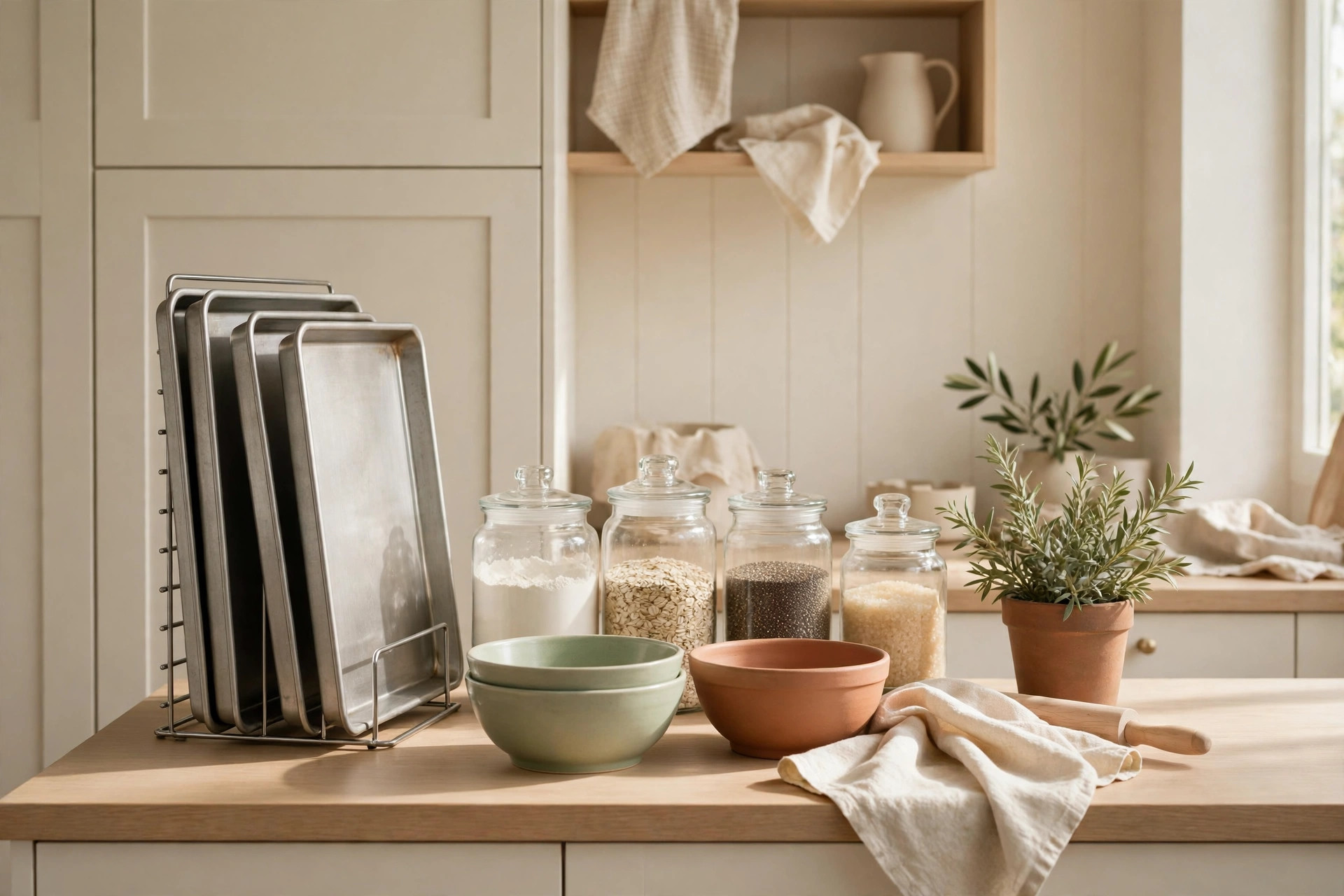
Sheet pans and baking trays: vertical filing that works
Stacked pans are the classic baking frustration: you need the one at the bottom, so the whole stack comes out.
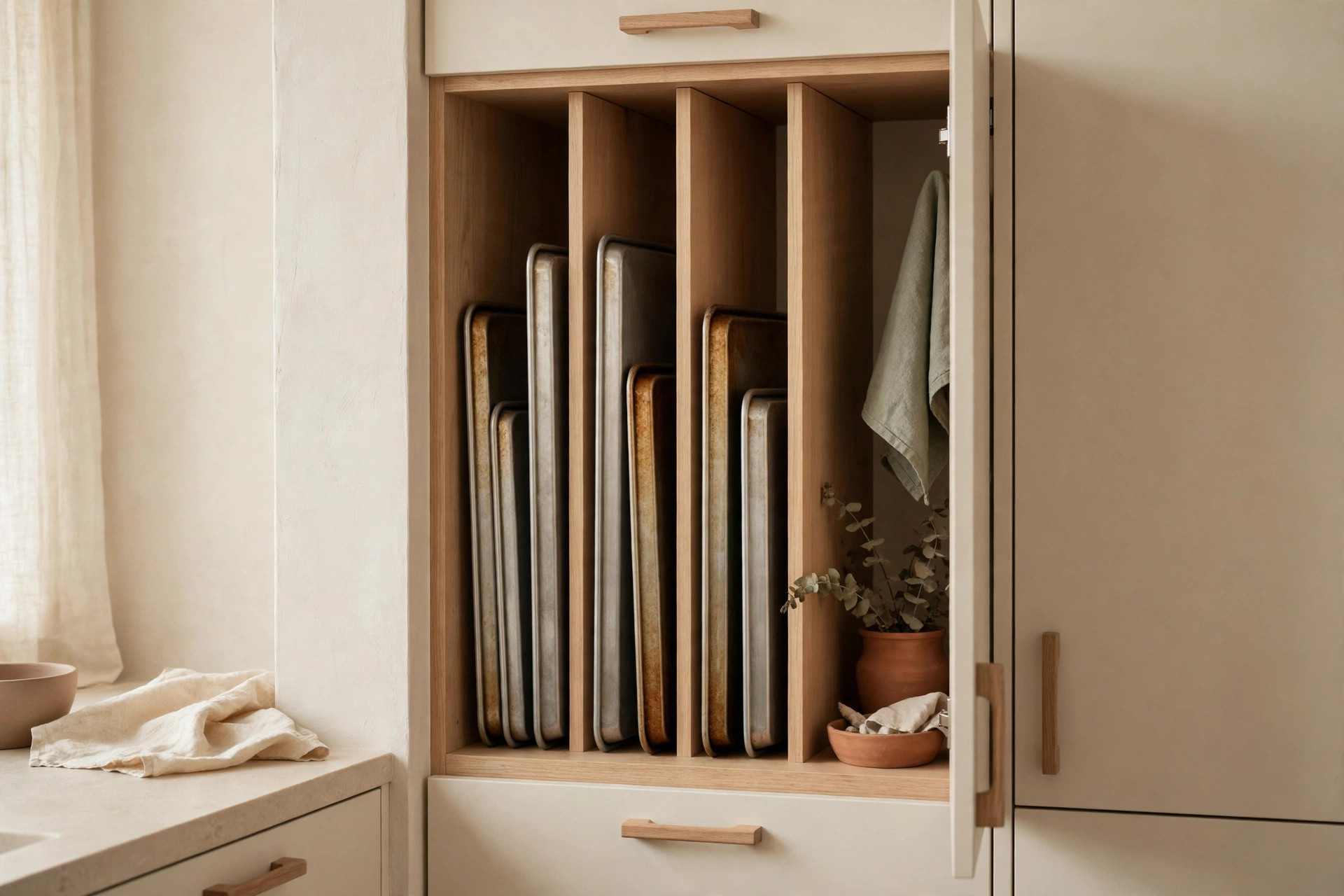
3. File pans vertically like books, not in a stack
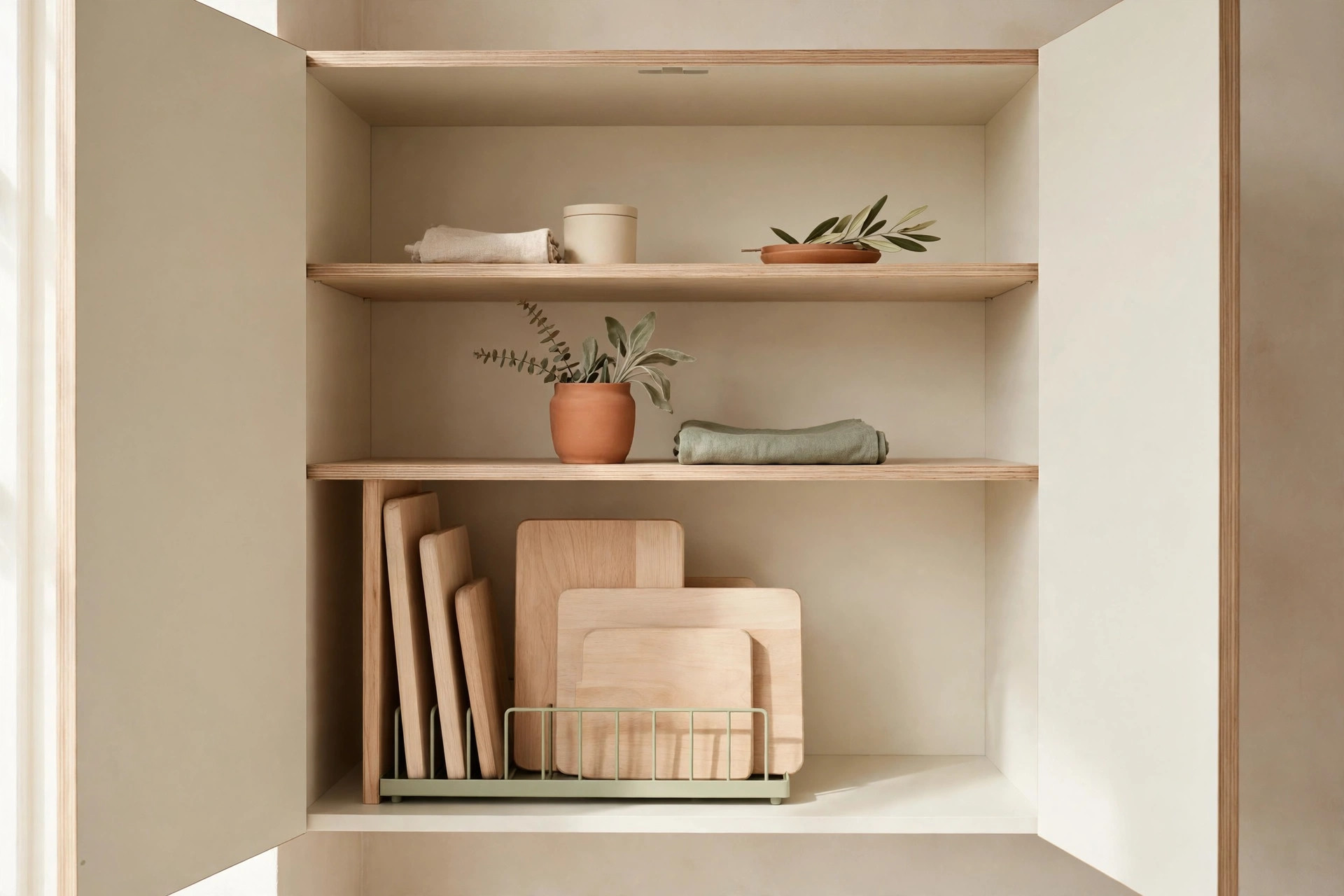
Stand sheet pans, baking trays, and cooling racks upright in a vertical file rack or a tension-rod divider inside a cabinet. A standard half-sheet pan is about 18 by 13 inches, so measure your cabinet height before buying a rack and leave roughly an inch of clearance above the tallest pan. Filed vertically, you can pull one pan out without disturbing the rest.
4. Give muffin tins and loaf pans their own slot
Muffin tins, loaf pans, and round cake tins are the odd shapes that jam a vertical file. Keep them in one lidded bin or a single upright divider slot at the end of the pan row, sorted by shape. If a tin has not been used in a year, it does not earn a slot in a small kitchen, because one rarely used tin can block the pans you reach for weekly.
5. Park cooling racks and parchment where you actually use them
Cooling racks slide neatly behind the vertical pan file, and a roll of parchment paper fits in the gap beside it or in a tall container on the shelf above. Cut parchment sheets in advance and store them flat in a large zip bag, so you are not wrestling with a curling roll while the oven preheats. Keeping parchment with the pans saves a trip across the kitchen mid-recipe.
Bowls, mixers, and heavy gear: what goes low
Heavy gear belongs low. A stand mixer on a high shelf is a hazard and a reason you stop baking.
6. Store the stand mixer low, with its attachments beside it
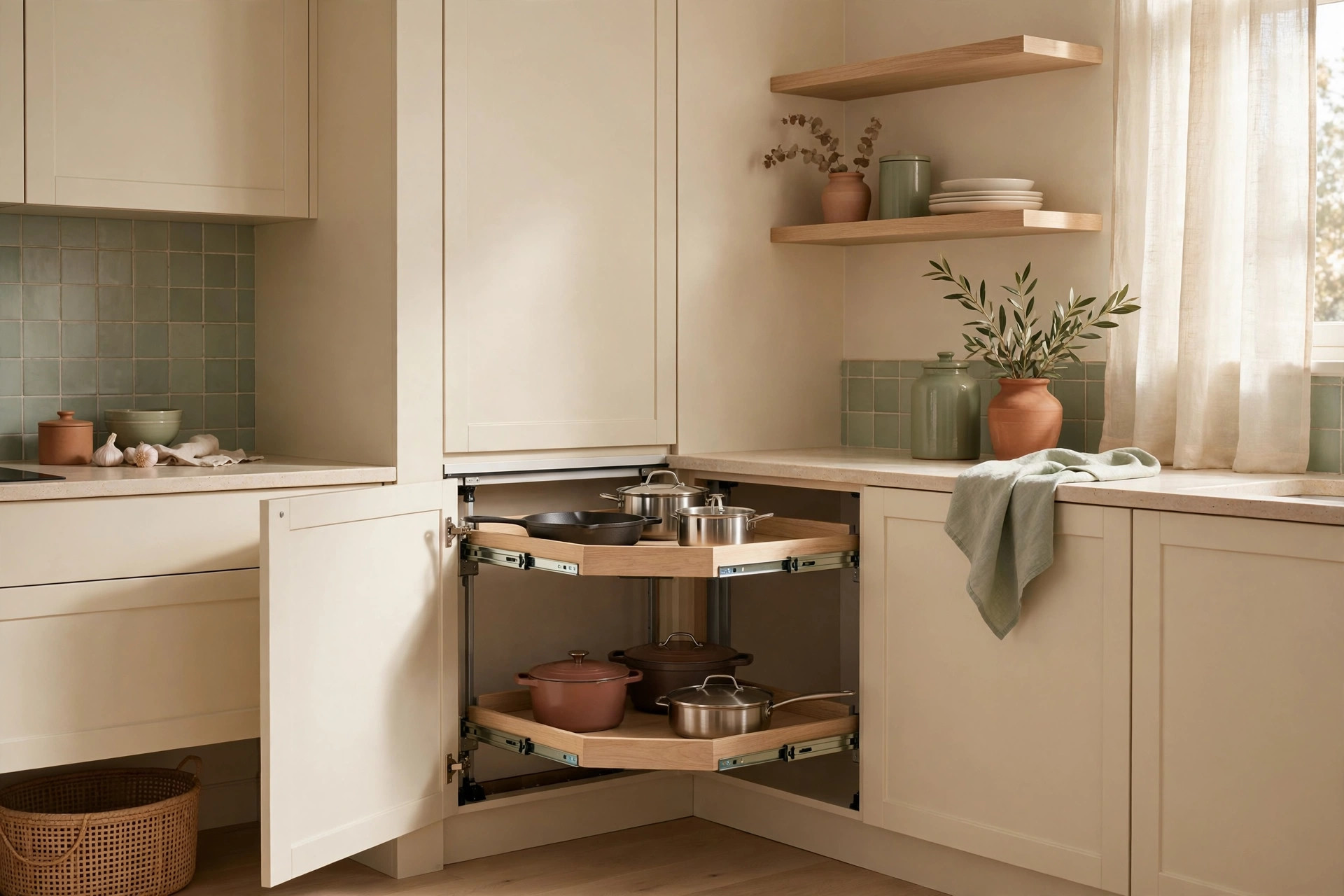
Keep a stand mixer on the lowest shelf of your baking cabinet or on a sturdy cart shelf, never above shoulder height. Store its bowl on the mixer or directly beside it, and keep the paddle, whisk, and dough hook in a small lidded container on the same shelf. If lifting the mixer still puts you off, a cart you can roll to the counter turns a heavy chore into a one-minute setup. The same low-shelf logic applies to a food processor and a heavy cast-iron baking dish.
7. Nest bowls by size, and cap the set at what you use
A nesting set of three or four mixing bowls, roughly 1.5, 3, and 5 quarts, covers most home baking. Nest them with a folded tea towel between each bowl to stop sticking, and keep measuring cups inside the smallest bowl so no piece wanders. If you own two full bowl sets, keep the set you reach for and move the other elsewhere; duplicate bowls are one of the fastest ways a small baking zone overflows. For more ideas on keeping small drawers workable, see these kitchen drawer organization ideas for tiny drawers.
Flour, sugar, and dry ingredients: decanting for bakers
Bags tear, spill, and hide how much is left. Decanting is about knowing, at a glance, whether you can bake today.
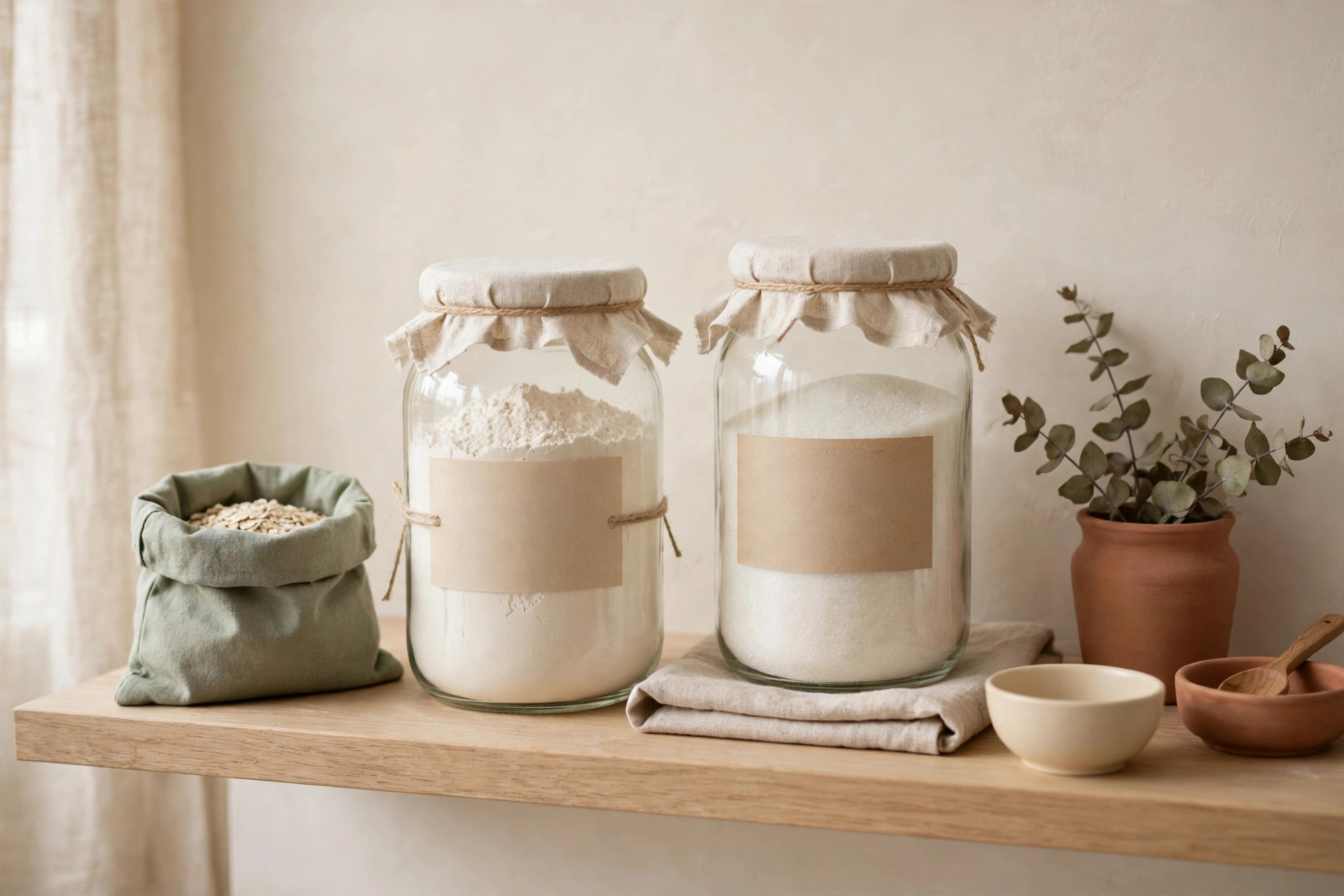
8. Decant flour and sugar into square, stackable canisters
Move flour, sugar, and powdered sugar into square canisters of about 4 to 6 quarts, with wide mouths that fit a measuring cup. Square canisters waste far less shelf space than round ones, and a flat lid lets you stack a second row. Label each canister with the ingredient and the date you filled it, and keep a scoop inside the flour and sugar canisters.
9. Keep a small baker’s pantry within the zone
Cocoa powder, baking powder, baking soda, salt, vanilla, and yeast earn a small tray or bin inside the baking zone, separate from everyday cooking spices. Stand small jars upright in a bin about 10 by 6 inches, labels facing out, and check dates twice a year: baking powder loses strength after about six to twelve months once opened, and weak leavener is a common reason cakes fall flat. These pantry organization ideas for small pantries apply the same logic beyond baking.
10. Store chocolate chips, nuts, and dried fruit in one clear bin
Baking add-ins scatter fastest because each bag is small. Decant chocolate chips, chopped nuts, and dried fruit into small clear jars or one divided bin, kept on the same shelf as your flour canisters. When you can see every add-in at once, you stop buying a third bag of chocolate chips you already own.
Small tools: cutters, tips, and decorating supplies
Small tools cause the most clutter per square inch. They need small, closed homes, not an open drawer.
11. Contain cutters in one tin and tips in one pouch
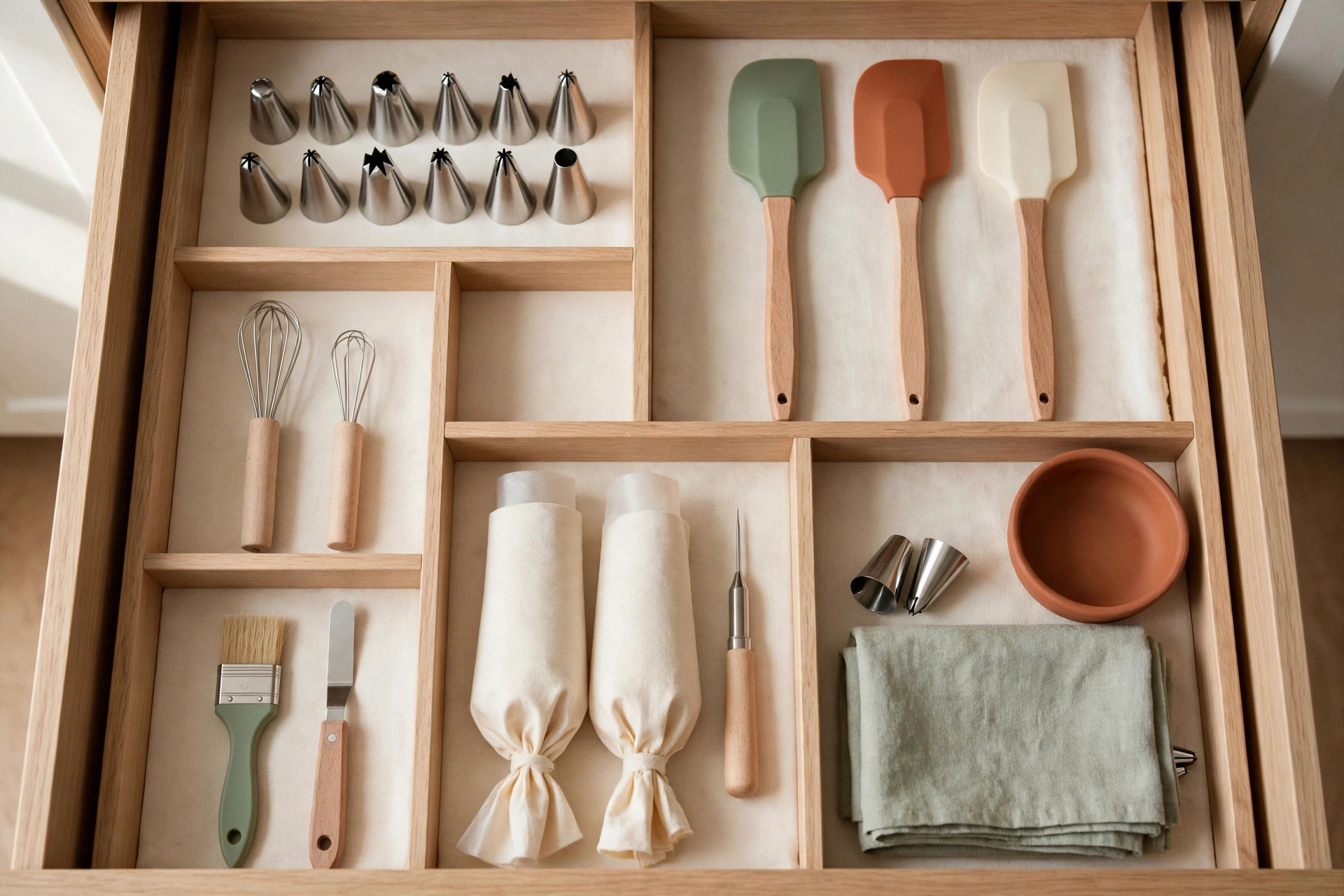
Keep cookie cutters in a single deep tin or lidded container, sorted roughly by season or shape, rather than loose in a drawer. Piping tips belong in a small zip pouch or a lidded jar, with couplers and piping bags beside them, so a decorating session starts with one pouch instead of a drawer search. Keep only the shapes you actually bake with in the zone.
12. Give measuring spoons, spatulas, and thermometers one drawer section
Assign one drawer divider section, about 12 by 6 inches, to baking hand tools: measuring spoons on a ring, two spatulas, a whisk, and an instant-read thermometer. Hanging measuring spoons on a small hook inside a cabinet door frees the same space if drawer room is tight. Tools that do not fit in that one section live somewhere else in the kitchen.
The bake-day workflow: setup, bake, and reset
A station earns its keep on bake day. A station that takes longer to set up than to bake in will not survive a month.
13. Set up in the same order every time
Work in a fixed sequence: pans and parchment first, then bowls and mixer, then measured dry ingredients, then tools. Setting up in the same order every time means you notice a missing item before the oven is hot, not halfway through mixing. Lay a tea towel under your mixing area to catch flour dust, and keep a damp cloth in reach for spills.
14. Build a five-minute reset into the recipe, not after it
While the bake is in the oven, wash the mixing bowl, return dry-ingredient canisters to their shelf, and wipe the counter. That five-minute reset uses waiting time you already have, so the kitchen is nearly clean when the timer rings. If you wait until everything is baked, the station stays messy until the next bake, when you have to clean before you can start.
Keeping a baking station stocked without clutter
A stocked station is not a full station. It is one where the right things are present and nothing extra competes for space.
15. Keep a short restock list on the zone itself
Stick a small list inside the cabinet door or on the side of the cart: flour, sugar, butter, eggs, baking powder, and whatever add-in you use most. When a canister runs low, mark it on the list immediately instead of trusting memory at the shop. A list of six to eight staples keeps shopping focused and stops impulse buys of gadgets with no assigned home.
16. Audit the station once a season, and remove one thing
Every three months, pull everything out of the baking zone, wipe the shelf, and remove at least one item you have not used: a duplicate pan, a novelty cutter, a gadget that promised more than it delivered. A seasonal audit takes about fifteen minutes and is the difference between a station that stays compact and one that quietly refills with clutter.
Mistakes to avoid
The most common mistake is buying organizers before choosing the zone, which fills a cabinet with bins that fit nothing you own. Measure first, then buy one divider or rack at a time. Another mistake is storing baking supplies where they look good rather than where you bake: a high open shelf of pretty jars is useless if you cannot reach the flour while the mixer is running. Finally, do not keep every baking gadget you have ever owned in the zone; the tools you use weekly get buried under the ones you use yearly.
Frequently asked questions
Can a baking station work in a kitchen with no spare cabinet?
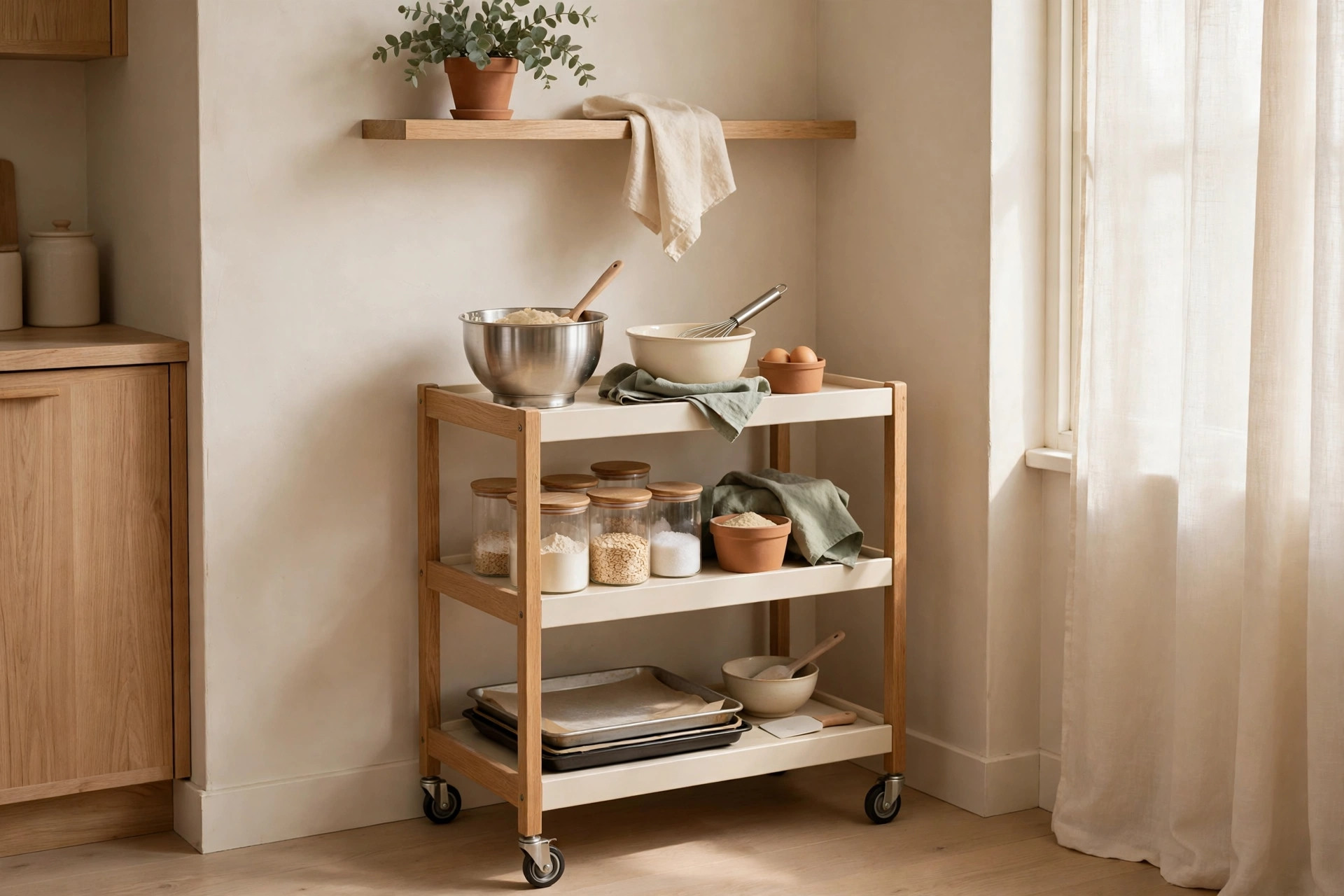
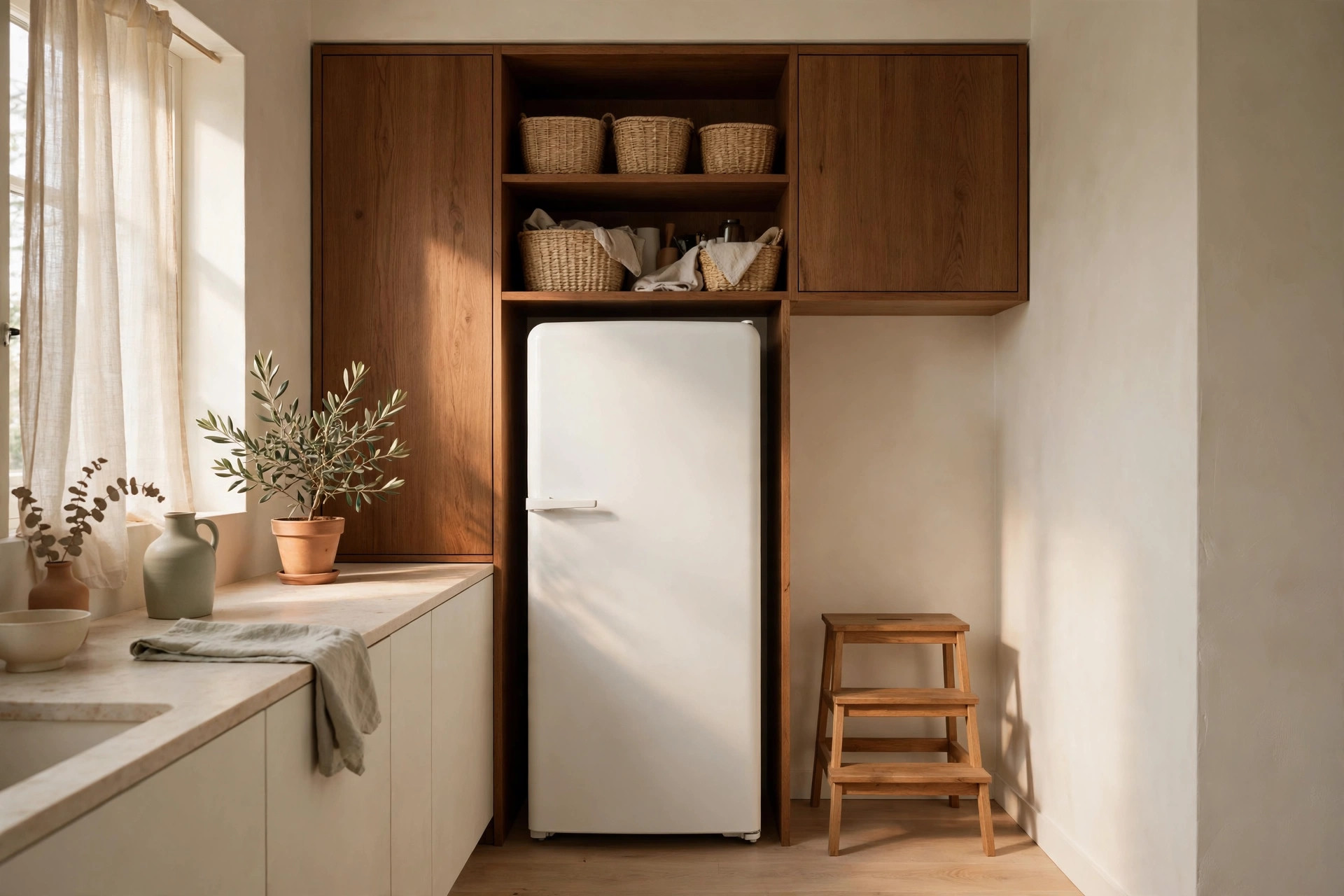
Yes. A narrow rolling cart, roughly 15 by 24 inches, parked beside the oven or in a gap between the fridge and the counter, can hold pans below, canisters in the middle, and tools on top. A small shelf above the counter can cover the rest, as long as everything still lives in that one zone.
How do I keep flour fresh in a small kitchen?
Use an airtight canister in a cool cabinet, away from heat and sunlight, rather than beside the oven. White flour keeps for about six to twelve months at room temperature, while whole-grain flour goes stale faster and does better in the fridge or freezer.
What if I only bake once a month?
A smaller zone still pays off, because setup time is the barrier for occasional bakers. Keep one pan, one bowl set, flour, sugar, and a basic tool kit in the zone, and store specialty tins elsewhere. You will bake more often when starting takes five minutes instead of twenty.
Should the baking station share space with a coffee station?
It can, if the two zones stay separate: coffee on one shelf or tray, baking on another, with no shared bins. Mixing the two sets of supplies in one bin recreates the scatter you are trying to fix. These small kitchen coffee station ideas show how a compact drinks zone can sit beside, not inside, your baking setup.
Conclusion
A small kitchen baking station is one defined zone, vertical pan filing, decanted staples, and small tools in closed homes, kept honest by a seasonal audit. Build it around the way you actually bake, and bake day gets shorter, calmer, and far less messy. Save this pin for later, and browse more ideas in the kitchen category.