Tea bags in three different cupboards, loose-leaf tins sliding around a shelf, a kettle parked where the cutting board should go — in a tiny kitchen, tea takes over fast. You do not need more counter space — or much money — to fix it for good. You need one defined spot where everything tea-related lives, and a system simple enough that you actually put things back. With these small kitchen tea station ideas, build that spot from a spare shelf, one drawer, or a stretch of wall, and the kettle, your favourite mug, and every tea you own sit within one arm’s reach.
The tea audit: bags, loose leaf, and tools
Before you buy a single tray or tin, find out what you actually own. Pull every tea bag, box, tin, and tool out of every cupboard and lay it on the counter. Most people find they own twice as much tea as they thought — and a third of it is stale.
1. Count every tea you own, then cut the collection in half. Sort into daily drinkers, occasional favourites, and boxes untouched for a month. Keep daily drinkers at the station; move the rest to a back-of-cupboard basket. Throw out anything stale, torn, or older than about a year.
2. List the tools you actually use, not the ones you own. A kettle, two or three mugs, a teaspoon, and maybe a small infuser are the working set for most people. A teapot or milk frother earns its place only if you reach for it weekly. Everything else — novelty infusers, the spare teapot — goes in a labelled box on a high shelf.
The tea zone: one shelf, tray, or drawer
Pick one spot — a shelf, a tray, or a drawer — and declare it the tea zone. Everything tea-related lives inside it; anything that does not fit does not belong.
3. Claim one shelf, and keep it at arm’s height. The shelf nearest the kettle is best, between waist and shoulder height. Clear it completely, then put back only tea items. If the shelf is deep, add a small riser at the back so second-row tins stay visible.
4. Use a tray to define the station on an open counter. A rimmed tray — about 12 by 16 inches — turns a scatter of tins into a station: if it does not fit on the tray, it lives somewhere else. Choose a wipeable material, since tea drips are inevitable, and leave a finger’s width of space so you can lift a tin without knocking its neighbours over.
Drawer inserts and dividers for tea bags
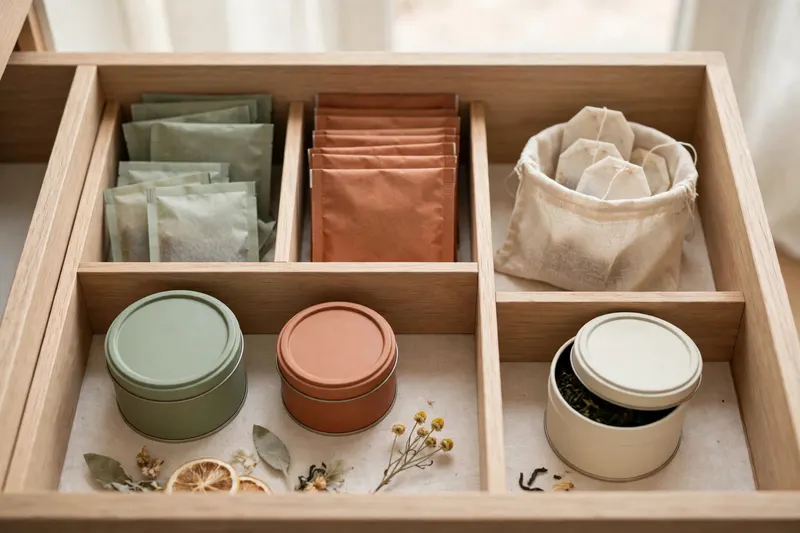
If counter space is scarcest, a drawer is the best tea station you can build: tea bags are flat and light, and closing the drawer hides the whole collection in one motion.
5. File tea bags upright like index cards. Stand bags upright in rows, sorted by type — black, green, herbal, fruit — in a drawer insert with dividers or small boxes. Upright filing lets you read every label at a glance. A standard drawer about 18 inches wide holds roughly 60–80 bags this way.
6. Reserve one divider slot for the “today” tea. Keep the tea you drink most in the front slot and refill it from back stock once a week. This stops the daily shuffle of moving boxes to reach the one bag you want, and shows at a glance when you are running low. For more on shallow drawers, see Kitchen Drawer Organization Ideas for Tiny Drawers.
Wall-mounted racks and mug hooks
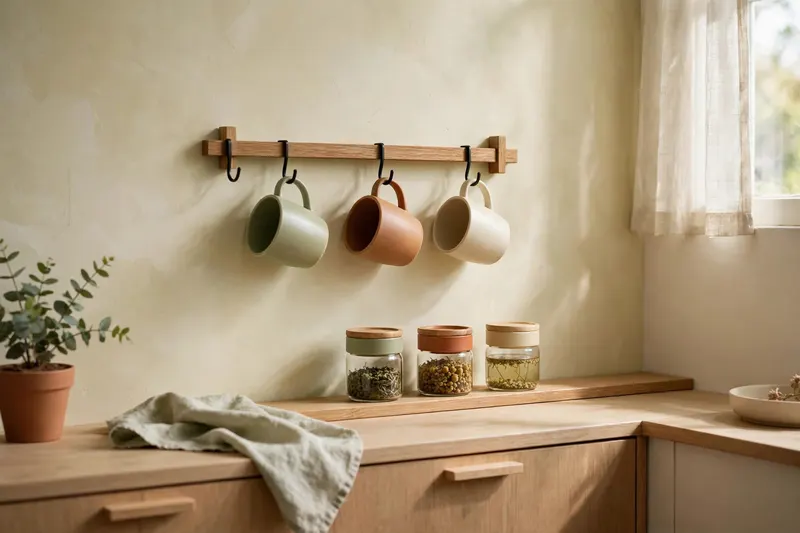
When counter and drawers are both full, the wall is the only space left. Wall storage keeps mugs and tea within reach without taking a single inch of work surface.
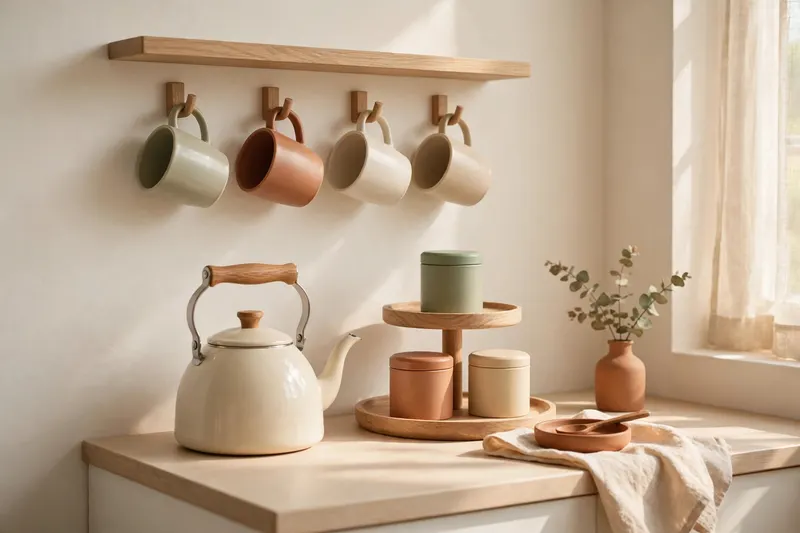
7. Hang mugs on hooks under the cabinet, not on the counter. A row of small adhesive or screw-in hooks under a wall cabinet holds four to six mugs in about 18 inches of width. Hang your two or three daily mugs closest to the kettle; keep rarely used mugs in a cupboard. Renter-friendly adhesive hooks rated for at least 2 pounds per hook work well — check the rating before hanging a heavy ceramic mug.
8. Mount a narrow spice-style rack for tea tins. A rack about 4 inches deep and 12–18 inches wide — the kind sold for spice jars — fits tea tins and small boxes. Mount it beside the kettle or inside a pantry door, heaviest tins on the lowest rail so nothing slides off. If you are short on wall space too, our guide to 15 Under-Cabinet Kitchen Storage Ideas (Free Hidden Space) has more ways to use the space you already have.
Kettle and teapot placement: the hot zone
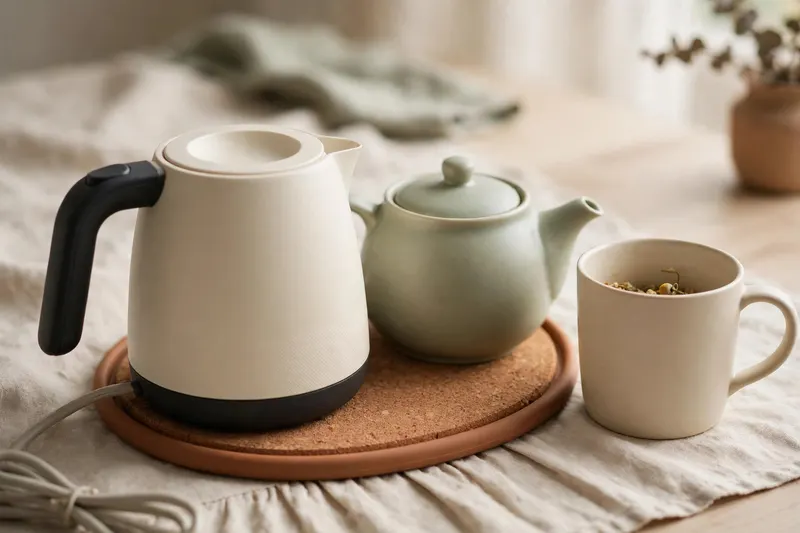
The kettle is the anchor. Everything else — mugs, tea, spoons — should sit within one step of it, so making tea is one smooth motion, not a walk across the kitchen.
9. Give the kettle a permanent home near the outlet. Keep it within about 12 inches of an outlet, cord tucked behind it, on a heat-resistant mat. Leave at least 3 inches of clear space above it if it sits under a cabinet — steam needs somewhere to go, or it will warp the cabinet base.
10. Keep the teapot and mugs in a triangle with the kettle. Picture a small triangle: kettle at one corner, mugs at the second, tea at the third, each side no longer than about 18 inches. When the three points sit that close, you can fill the kettle, grab a mug, and drop in a bag without taking a step. A shared hot-drinks corner works well if you also brew coffee — see 15 Small Kitchen Coffee Station Ideas for Tiny Counters for how to run both side by side.
Loose-leaf storage: tins, jars, and labels
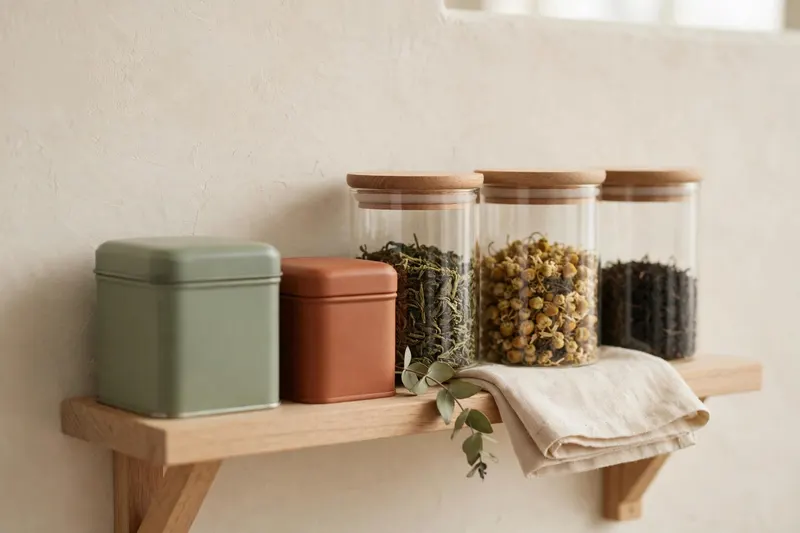
Loose leaf is where most tea stations fall apart. Bags are self-contained; loose leaf needs a home that keeps it dry, dark, and easy to scoop — and a label, because three brown teas in identical jars look the same after a week.
11. Store loose leaf in small, airtight, opaque tins. A 4-ounce tin holds about a month’s worth of one daily tea. Opaque metal beats clear glass: light fades flavour fast. Fill each tin only about three-quarters full so the lid seals cleanly, and keep a small scoop inside the tin you use most.
12. Label every tin with the tea name and the date you opened it. A strip of masking tape and a marker is enough: name, date opened, and steep time if you always forget it. Loose leaf stays at its best for roughly six months once opened, so the date tells you when to finish a tin. Label lid and side, so you can read it on a shelf or in a drawer.
13. Keep one small jar of your daily tea at the front, and the rest behind it. The front jar is the working jar — the one you open every morning. Backup tins live behind it and refill the front jar, not the other way round. This stops you opening five tins a day and keeps the rest of your stock fresh. For more on keeping counters clear, read Small Kitchen Counter Organization: What to Keep Out (and What to Hide).
The daily tea ritual reset
A station only stays organised if resetting it takes less than a minute. Build the reset into the ritual: while the kettle boils, you have about two minutes to put the station back to its starting point.
14. Reset while the kettle boils. Used bag in the bin, spoon rinsed and back in its spot, mug on its hook, tin lids closed. Two minutes, every time, and the station never drifts into clutter. If someone else makes tea too, agree on the same reset — a station only works when everyone puts things back in the same place.
15. Do a five-minute weekly tidy, not a monthly overhaul. Once a week, wipe the tray, check the front slot for low stock, and toss any bag that fell out of its box or got damp. A weekly five-minute tidy beats a monthly thirty-minute rescue.
Mistakes to avoid
Buying storage before auditing. Pretty tins and tiered trays are tempting, but storage sized for a guess usually fits nothing. Audit first, measure second, buy last.
Storing tea above the stove. Heat and steam are tea’s worst enemies. The cupboard above the stove looks convenient and quietly ruins every box in it within weeks.
Keeping every tea on display. A station with forty tins is a shop shelf, not a station. Display the five or six you drink; store the rest out of sight.
Choosing a station far from the kettle. If the tea lives across the kitchen from the kettle, you will stop using the station within a week and the bags will scatter again.
Skipping labels. Unlabelled tins turn every morning into a guessing game — and guessing is how the good tea sits untouched while the wrong tea gets used up.
Frequently asked questions
Where should I put a tea station in a tiny kitchen?
As close to the kettle and an outlet as possible — one shelf, a tray, or a shallow drawer within about 18 inches of the kettle. With no spare shelf or drawer, a wall rack and hooks beside the kettle work just as well.
How do I keep tea bags organised in a drawer?
File them upright in rows with dividers, sorted by type, so you can read every label at a glance. Keep your daily tea in the front slot and refill it weekly from backup stock.
Can I store loose-leaf tea in glass jars?
You can, but opaque, airtight tins are better for daily storage because light fades flavour. If you love glass jars, keep them inside a cupboard or drawer away from direct light.
How long does loose-leaf tea stay fresh once opened?
Roughly six months at its best, stored airtight, cool, dry, and away from light and strong smells. Label each tin with its opening date so you know when to finish it.
What is the smallest tea station that actually works?
A tray about 12 by 16 inches holding a kettle, two mugs, one tin of your daily tea, and a spoon — or a single drawer with dividers for bags and a hook for one mug.
Conclusion
A tea station is not about buying more storage — it is about giving your tea one home, close to the kettle, with a boundary you can keep. Audit what you own, claim one shelf, tray, or drawer, file the bags upright, hang the mugs, and label the tins. Start with the audit today, and browse more ideas in our kitchen organization collection — and save this pin for later.