You found the perfect student flat: close to campus, decent rent. Then you arrive with your bike and discover the “cycle storage” is a rusty hoop behind the bins, already full, with no cover. Your bike is your transport home after late library sessions — and student accommodation cycle racks are where it lives or dies. This guide covers the communal rack types you will meet, which ones protect your bike and which ones bend wheels, how to lock up properly, and the questions to ask before you sign a tenancy.
What ‘cycle racks’ means in student housing: communal, not in-flat
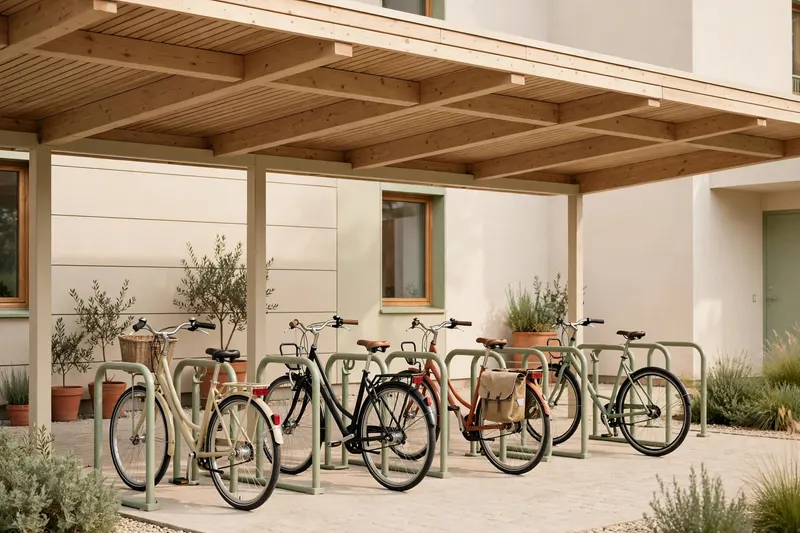
In student accommodation, “cycle racks” almost never means a rack inside your flat. It means a shared area — a bike store, a courtyard rack, a basement room or a fenced compound — used by every cyclist in the building. You do not own a spot. Your bike sits in a shared space, often outdoors, competing with dozens of other bikes, including abandoned ones. Access control, lighting, cover and capacity matter as much as the rack. Stores work on a first-come, first-served basis, so the best spots — under cover, near the light — go to whoever arrives first in September.
Rack types: Sheffield stands, two-tier, wall hooks, lockers
Not all communal cycle rack types are equal — here are the four you will meet most often.
Sheffield stands
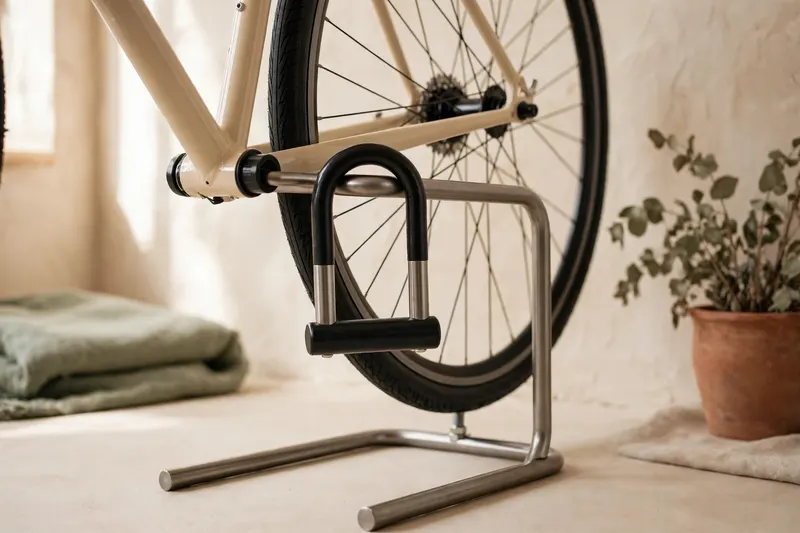
The inverted-U stand — often called a Sheffield stand — is the gold standard. It is a steel hoop, roughly 800 mm wide and 750 mm tall, bolted down. Park your bike alongside it and lock the frame and a wheel to the bar; two bikes fit per stand, one each side, and it holds the bike upright without touching the wheel.
Two-tier racks
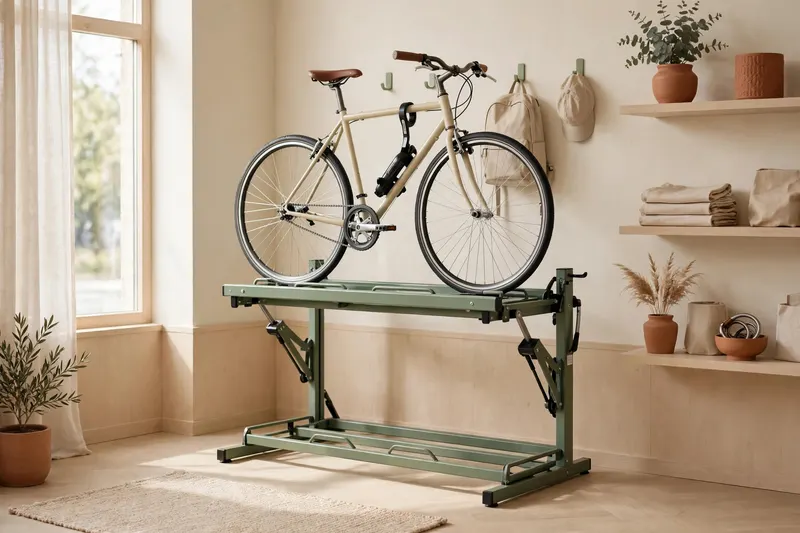
Two-tier racks stack bikes on two levels: ground slots and a raised channel you pull out, lift onto, and slide back. They pack twice as many bikes into the same space. The catch is the lift: a loaded bike weighs 12–15 kg, and hoisting it chest-high is awkward in the rain.
Wall hooks and vertical hangers
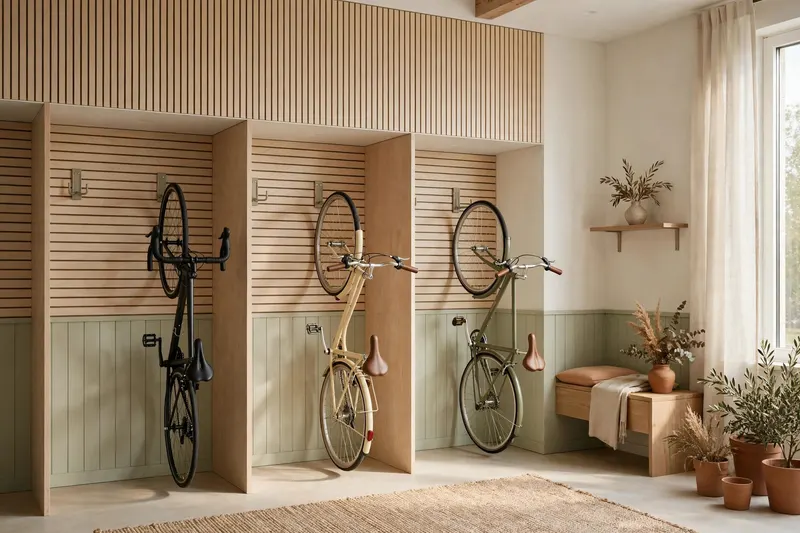
Some stores use wall-mounted hooks that hold the bike upright by its front wheel. They save floor space, but the whole weight hangs from one rim, and a thin road rim can bend over a semester. They are fiddly with a heavy lock and panniers.
Lockers and individual cages
The best option, and the rarest, is a lockable individual locker or cage that only you can open. Lockers keep the bike dry, hidden and fully secure, but they cost far more per bike, so they are usually few or extra-charge. If a property offers them, ask the price and whether one is free — waiting lists are common.
Which rack actually protects your bike (and which bends wheels)
The rack that protects your bike lets you lock the frame — not just a wheel — to something solid. Sheffield stands win: they hold the bike upright and take a D-lock through frame and stand in one motion. Two-tier racks are a reasonable second choice with a locking loop — just check the rail fits your tyres. Wall hooks and wheel-slot racks are the ones to worry about: a wheel-slot rack grips only the tyre, so a sideways knock bends the rim.
Locking right: D-lock through frame and wheel, every time
Good student bike storage is half rack and half lock. A great rack cannot save a bike on a thin cable lock, and a great lock cannot save a bike attached by its front wheel alone. Buy a Sold Secure Silver or Gold rated D-lock with a shackle of roughly 13 mm hardened steel — expect to spend around £30–£60. A cable lock is not a lock for overnight storage; it is a deterrent for a five-minute coffee stop, and it will be cut in seconds.
Lock the D-lock through the rear wheel and frame, then through the rack: the rear wheel costs more to replace, and one lock secures both. Add a second lock through the front wheel and the frame. Two locks mean a thief needs two tools and twice the time. Always lock to the rack, never to a fence or a signpost, and never leave the lock hanging on the rack when you ride away. For more ideas on keeping a bike safe in a small living space, see our 15 Bike Storage Ideas for Small Apartments.
Covered vs open: what rain does to a bike left outside
Rain is the slow thief: it eats your bike over a semester, not in a night. A bike left under open sky through autumn and winter comes back with a rusted chain and seized brakes. A roof keeps the worst of the rain off, but wind-blown rain still reaches the bike. What cover buys you is time: a covered bike dries between showers, so rust forms slowly. An open rack in a windy courtyard is worst: the bike never fully dries and road salt accelerates corrosion. Wipe the chain dry after wet rides and re-oil it weekly in winter — lube costs a few pounds and takes two minutes. If your bike lives outside all year, budget for a new chain each spring.
What to ask before you sign: racks, CCTV, access, capacity
The bike store is one of the few things you can check before you sign — and one of the easiest to forget. Ask these six questions, and get the answers in writing. How many rack spaces are there for how many residents? A block of 200 students with 20 stands has a capacity problem. Is the store covered and lit? Who can get in — and do guests share that access? Is there CCTV, and does anyone monitor it? What happens to abandoned bikes — are they cleared each summer? Is there an extra charge for storage or lockers, and what does the agreement say about bikes indoors?
Watch for red flags: no cover, no light, a broken gate, wobbling stands, and bikes with flat tyres and rusted chains. That means nobody manages this space. Also watch for “bike storage” that is really a corridor or stairwell: a bike in a shared hallway is usually a fire-safety breach, and the building can remove it without warning. If the agent cannot answer the six questions, treat the store as unusable.
If the racks are full: overflow options that still work
Full racks are normal by October. Ask the accommodation office first about a second store, an overflow area, or a locker waiting list. Ask when abandoned bikes get removed — a clearance frees plenty of stands. If the building has a residents’ group, ask there too — someone may be moving out or happy to share a slot.
Many universities run their own secure cycle hubs on campus, often free — check your university’s transport pages. Some cities have secure public cycle parking near campus for a small fee. A sturdy Sheffield stand on a well-lit public street is a workable fallback, but only with two locks and foot traffic and CCTV nearby. Do not lock to a railing, a tree or a fire exit, and never leave a bike unlocked or on the street overnight without a D-lock through the frame.
In-flat backup: when the communal racks fail you
Sometimes the communal racks simply do not work — full, uncovered, unsafe, or all three. Then the backup is bringing the bike inside — with a plan that respects your flatmates, your deposit and your lease. Some agreements ban bikes indoors outright; others allow them in bedrooms but not in hallways or shared areas. Read the clause before you carry a muddy bike inside — a bike you cannot store is a bike you will stop riding. A vertical wall hook or a freestanding floor stand keeps a bike off the floor; a folded towel under the wheels catches drips, and a cheap bike cover keeps grease off walls and carpet. Store it near the door and agree the spot with your flatmates — see our 18 Dorm Room Storage Ideas for Tiny Rooms and 15 Small Apartment Storage Ideas for Renters for renter-safe ways to make room without drilling.
Mistakes to avoid
The most common mistake is locking only the wheel: a thief takes the frame and leaves the wheel behind. Always lock the frame — even for five minutes. Next, do not buy a lock that costs less than a pizza: a £5 cable lock protects a £500 bike for about as long as it takes to cut it. Do not ignore the weather all term — a bike that never gets wiped down or oiled will need a new chain and brake pads by spring. Ten minutes of care a week beats a £100 service in March. Do not choose the flat and forget the bike: check the racks on the viewing. And never store a wet, muddy bike on carpet without a mat — carpet stains come out of deposits, and a £10 bike mat or an old towel under the wheels solves it.
Frequently asked questions
Can I keep a bike in my student flat?
It depends on the tenancy agreement. Many blocks allow bikes in bedrooms but ban them from hallways and shared areas. Read the clause before you move in, and agree a spot with your flatmates.
What is the best type of cycle rack for student accommodation?
Sheffield stands are the best widely available option: they hold the bike upright, let you lock the frame and a wheel to something solid, and never bend wheels. Two-tier racks are a good second choice, while wheel-slot racks and wall hooks are weakest.
How do I stop my bike being stolen from student accommodation?
Use a Sold Secure rated D-lock through frame and rear wheel to a solid rack, add a second lock through the front wheel, and park under cover in a lit store. Never leave it unlocked “just for a minute”.
What should I do if my student accommodation has no cycle storage at all?
Ask the accommodation office about a second store or a locker waiting list, and check your university’s cycle hubs or a fob-accessed public compound near campus. As a last resort, store the bike in your room — but check your lease first.
Conclusion
Student accommodation cycle racks decide whether your bike survives the year. Choose a building with solid Sheffield stands or good two-tier racks under cover, lock the frame with a rated D-lock every time, and ask about capacity, CCTV and access. If the racks are full or unsafe, have a backup: a campus hub, a locker waiting list, or an in-flat spot. Save this pin for later, and browse more ideas in our storage ideas collection.