A tennis racquet behind the door, a basketball rolling under the sofa, a snowboard leaning on the balcony rail, and a gym bag you trip over every morning. That is what sports gear storage small apartment life looks like when every sport gets its own pile. The problem is not that you own too much gear — it is that gear lives wherever it was last dropped instead of in a spot built for it. These 16 ideas give every ball, board, racquet, and bag a home that fits a rental: wall racks for vertical space, ball bins that stop the rolling, grab-and-go kits that stay packed, and drying zones that keep wet gear from stinking up the place.
The gear audit: what you play, what you store, what goes
Before you buy a single rack or bin, lay every piece of sports gear on the floor — all of it, from every closet, balcony corner, and under-bed hiding spot. You cannot store what you cannot see, and most apartments hold at least one sport’s worth of gear nobody has touched in a year.
1. Audit by sport, not by item
Group gear by sport first — all the tennis things together, all the swim things together — then count what each sport actually needs. A sport you play weekly earns prime space by the door. A sport you play twice a year earns a labeled bin on a high shelf.
2. Measure the gear before you buy the storage
Measure your longest item — a snowboard is roughly 55 to 62 inches, a golf bag stands about 36 inches tall, a hockey stick runs about 57 inches — and the wall or closet space you plan to use. Write the numbers on your phone before shopping. A rack that is 6 inches too short for your board is a rack you will return, or worse, keep and never use.
Wall racks: boards, racquets, bats, and skis on vertical space
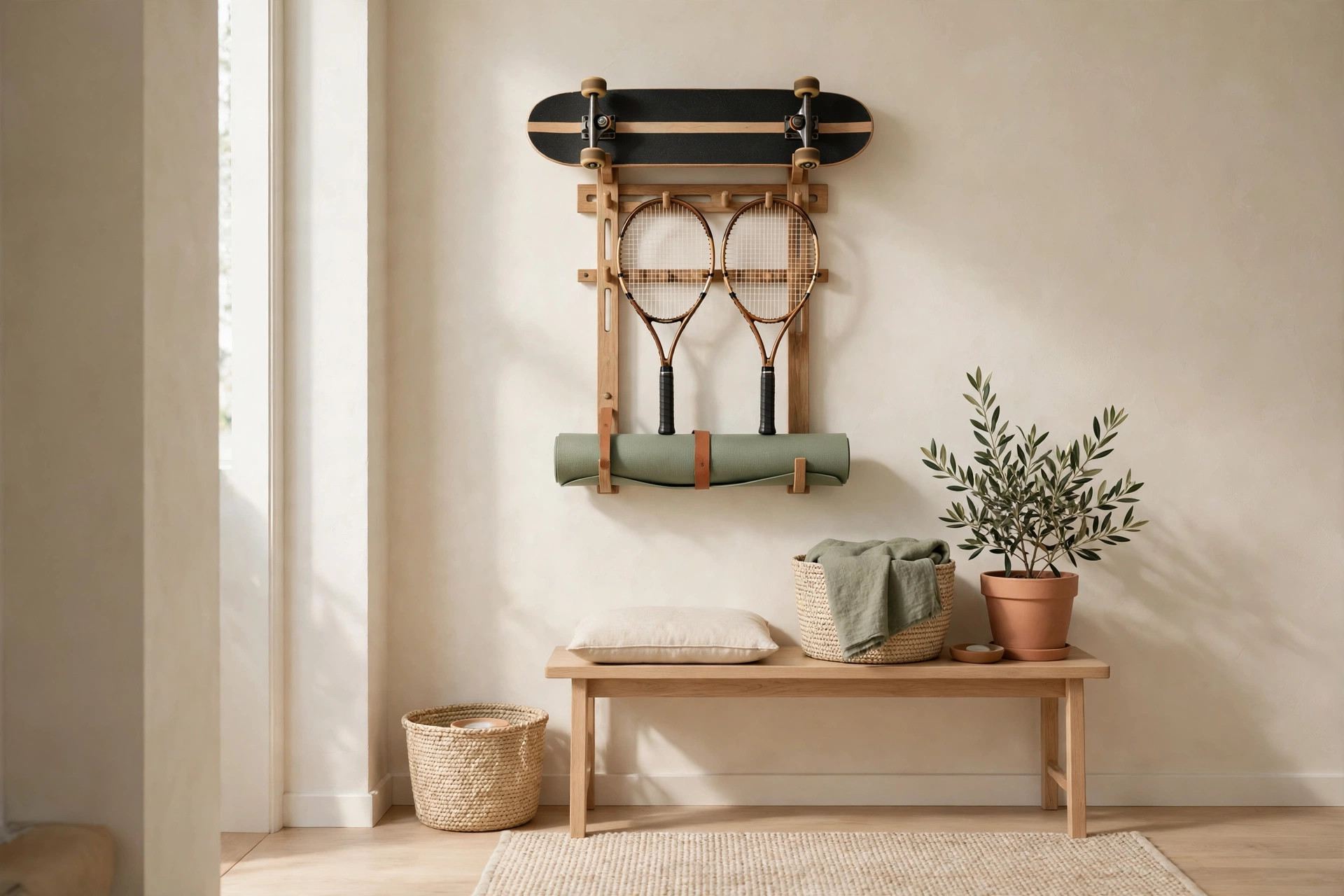
Walls are the most underused storage surface in a small apartment, and sports gear is made for them. Boards, racquets, bats, and skis are long, flat, and awkward on the floor — but on a wall they take up almost no room and look intentional.
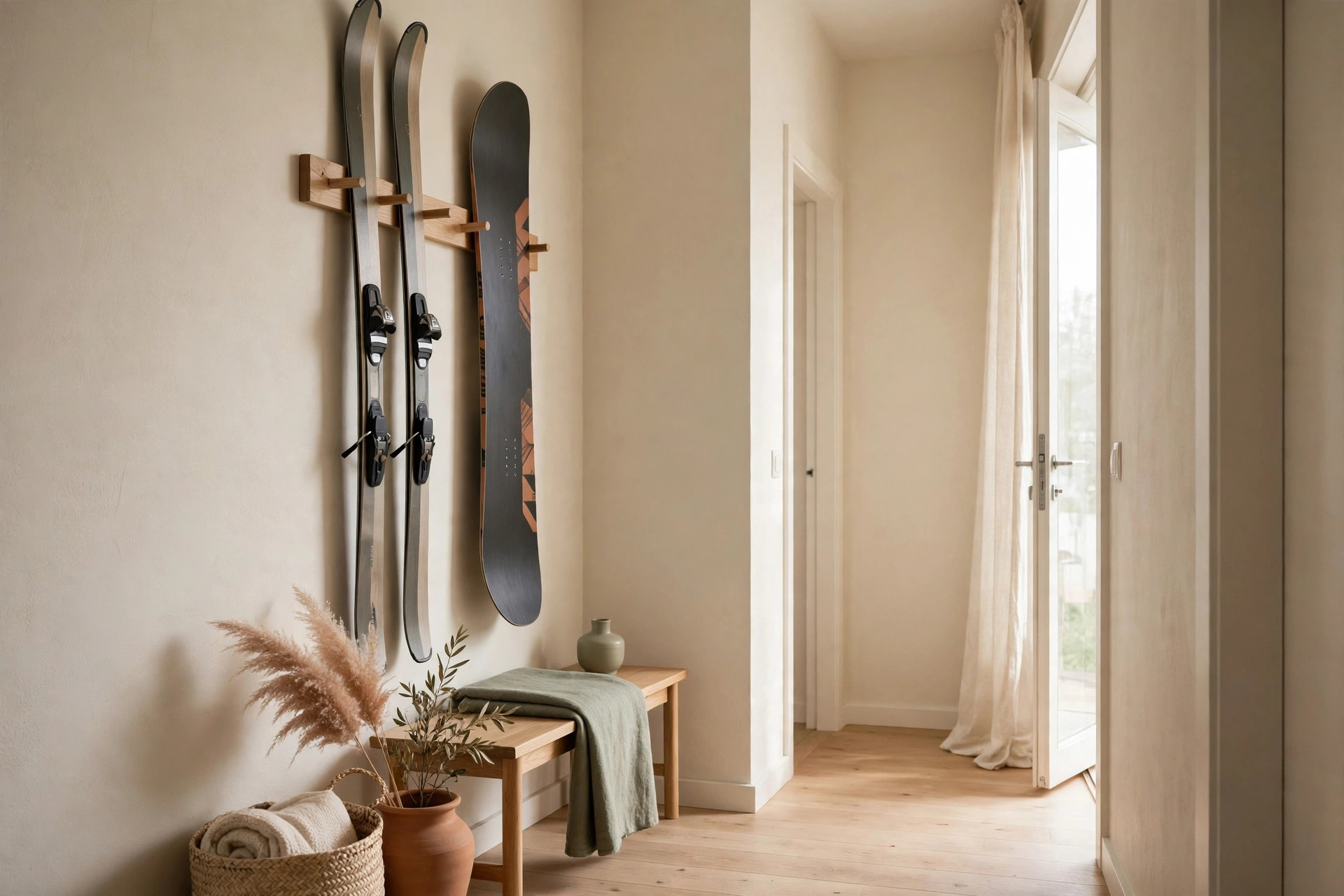
3. Mount a horizontal rack for boards and skis
A pair of padded wall arms, spaced about 24 to 36 inches apart, holds a snowboard, skateboard, or pair of skis flat against the wall. Mount the arms at chest height so you can lift the board on and off without a step stool, and keep the bindings facing out so they do not scrape the paint.
4. Hang racquets and bats on a peg rail
A 24-inch wooden peg rail with 4 to 6 pegs turns a hallway wall into racquet storage. Hang tennis and badminton racquets by their handles, bats by their barrels, and lacrosse sticks by their shafts. Space the pegs about 5 inches apart so grips do not overlap, and add a small adhesive hook below the rail for the bag of balls that goes with them.
5. Use the back of a door for the gear you grab most
Over-the-door hooks rated for 10 pounds or more hold a gym bag, a rolled yoga mat, or a pair of boxing gloves without touching a single wall. This is the best spot for gear you use three or more times a week, because it lives where you already walk past.
Ball storage: bins, nets, and the one-ball-out rule
Balls are the hardest sports gear to store because they roll, they multiply, and they never stack neatly. A basketball, two soccer balls, a volleyball, and a bag of tennis balls can fill a whole closet corner if you let them — or fit in one bin if you give them a boundary.
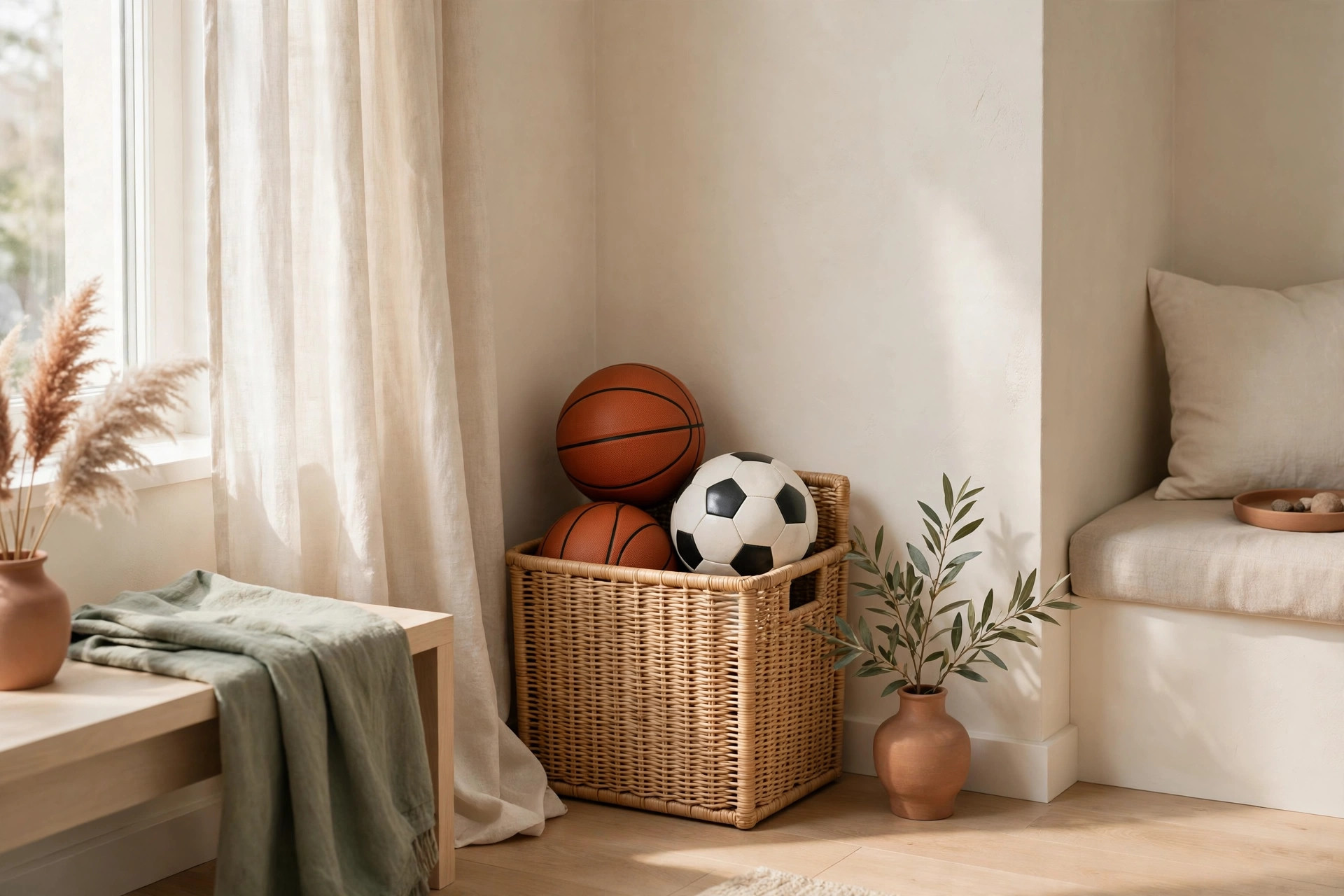
6. Corral balls in a tall, narrow bin
A tall mesh laundry hamper or a 16-inch-diameter ball bin holds four to six full-size balls in about one square foot of floor space. Mesh matters: it lets air circulate so a damp ball dries instead of smelling, and you can see what is inside without opening anything.
7. Keep one ball out, the rest stored
Pick one ball per sport to stay out for daily play, and store the rest. The one-ball-out rule is what keeps a small apartment from looking like a sporting goods aisle: one basketball by the door, one soccer ball in the bin’s top slot, and the spares stay put. When the out ball wears out, promote a stored one. For more ideas on keeping kids’ equipment contained, see these kids toy storage ideas for small living rooms.
The grab-and-go kit: one bag per sport, always packed
The grab-and-go kit is the single best idea on this list for anyone who plays more than one sport. Instead of hunting for shin guards, a water bottle, and a towel every time you leave, each sport gets one bag that stays packed with everything that sport needs. You grab the bag, you go.
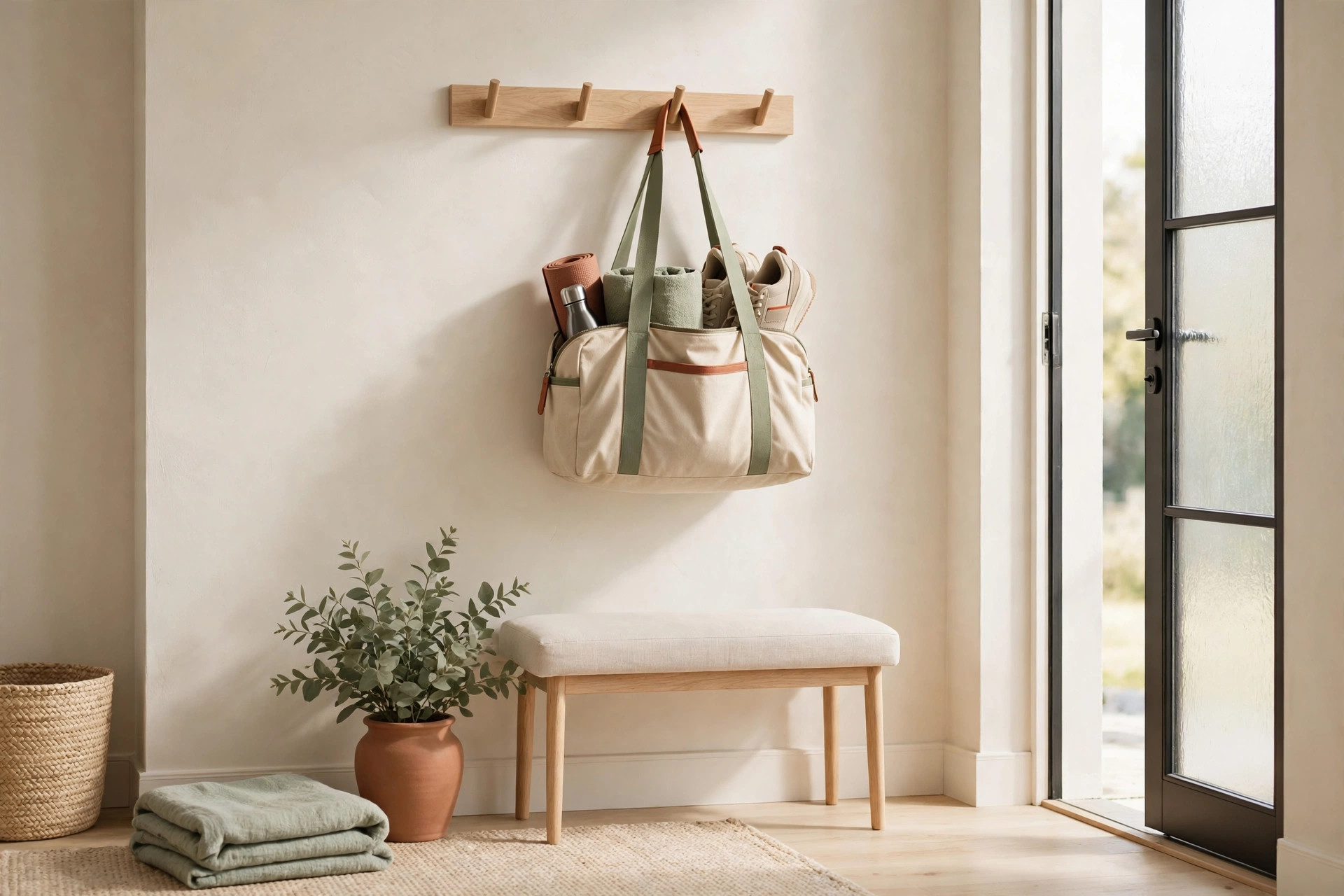
8. Build one packed bag per sport
Use a medium duffel or drawstring bag — roughly 18 to 22 inches long — for each sport you play regularly. Inside goes the full kit: racquet and balls for tennis, gloves and wraps for boxing, goggles and cap for swimming, cleats and shin guards for soccer. Add a small zip pouch for the extras that always go missing: hair ties, a lock, sunscreen, and a spare pair of socks.
9. Stage the bags on one hook row by the door
Mount a row of 3 to 4 heavy-duty hooks — or a freestanding coat rack if you cannot drill — within arm’s reach of the front door. The bag for tomorrow’s sport goes on the front hook the night before, so your morning is a grab, not a search. If your entryway is tight, a small mudroom setup for apartments shows how to build this zone in as little as 24 inches of wall.
Closet and under-bed zones for seasonal gear
Seasonal gear — skis in July, a wetsuit in January — does not deserve prime space. It deserves a labeled zone where it waits quietly until its season comes back. A hall closet shelf or the space under the bed holds a surprising amount of gear if you use flat bins and vacuum bags.
10. Give seasonal gear one labeled bin per season
Use one clear, flat bin per season — roughly 32 x 17 x 6 inches fits under most beds — and label it in big letters: WINTER or SUMMER. Winter holds ski gloves, base layers, and a beanie; summer holds swim gear, snorkel masks, and a beach towel. When the season changes, swap the bins: the out-of-season bin slides under the bed, the in-season bin moves to the closet shelf. See these seasonal storage rotation ideas for the full swap routine.
11. Store flat gear flat, and pads in compression bags
Skis, snowboards, and yoga mats store best flat, not leaning, when they are out of season — leaning boards warp and slide. Slide them flat under the bed in a soft board bag to protect edges and the floor. Bulky pads, life jackets, and ski jackets go in compression bags that shrink them to about half their volume; squeeze the air out, seal, and stack them like books on a closet shelf.
Wet and muddy gear: drying zones that don’t stink up the apartment
Wet gear is where small-apartment sports storage usually fails. A damp towel in a closed bag, muddy cleats by the door, and a sweaty gym kit in a closet will make the whole apartment smell within a day.
12. Build a drying station by the door
Set up a small boot tray (about 18 x 12 inches) by the door for muddy shoes and cleats, plus two adhesive hooks above it for a wet towel and a damp jacket. The tray catches mud and drips, the hooks give airflow, and the whole station takes up about two square feet.
13. Air out bags before you zip them shut
Never zip a gym bag closed while the contents are still damp. When you get home, open the bag fully, pull out the towel and sweaty clothes, and hang them on a drying rack or a shower rod for a few hours. Keep a small mesh laundry bag in the kit for dirty clothes so they never touch the clean gear, and drop a dryer sheet or a small sachet of baking soda in the bag between uses.
Kids’ sports gear: rotation by season, not by pile
Kids’ sports gear multiplies faster than any other kind: this season’s soccer kit, last season’s swim bag, a bike helmet, a skateboard, and a ball for every sport they tried once. The pile grows because nothing ever leaves.
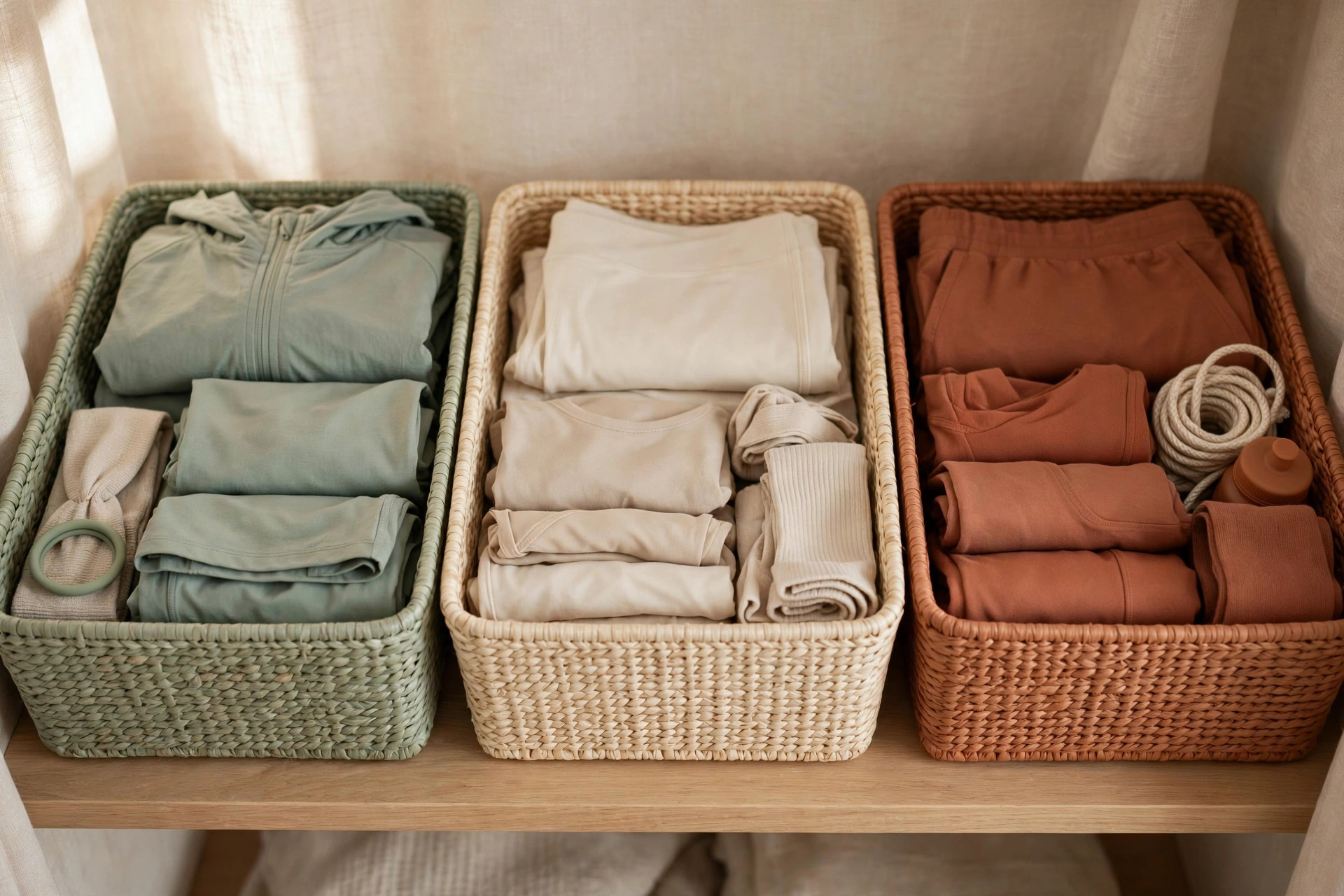
14. Give each child one cubby, one sport at a time
Assign each child one cubby, shelf, or bin — about 12 x 12 x 12 inches — for their current sport only. Cleats, shin guards, and the team shirt live in the cubby; everything else goes in the seasonal bin. When the season changes, the cubby gets emptied and refilled with the next sport’s kit.
15. Let kids pack their own bag — with a checklist
Tape a short picture checklist inside the cubby door: ball, water bottle, shoes, shirt. Kids old enough to play a sport are old enough to pack it, and a checklist means you stop being the person who remembers everything. Check the bag together the first two weeks, then let them own it.
16. Retire outgrown gear the day the season ends
Outgrown cleats, a too-small helmet, and a cracked bat do not need a storage solution — they need an exit. On the last practice day of the season, try everything on, and anything that does not fit goes straight into a donate bag by the door. Do it the same day, while the season is still fresh, because “I’ll sort it later” is how outgrown gear lives in your closet for two more years.
Mistakes to avoid
Buying storage before auditing. A rack for gear you no longer play is money and wall space wasted. Audit first, buy second — always.
Storing wet gear in sealed bins. Damp gear in a closed container grows mildew in days. Dry everything fully before it goes into a bin, a bag, or under the bed.
Using one giant bin for everything. A single huge bin becomes a pit where the thing you need is always at the bottom. One bin per sport, or one bin per season, beats one bin for all of it.
Hanging heavy gear on weak hooks. A snowboard on a 3-pound adhesive hook will fall. Match the hook rating to the real weight, with a margin — and use a stud or a freestanding rack for anything over 10 pounds.
Ignoring the lease. Drilling into a wall your lease forbids can cost part of your deposit.
Frequently asked questions
How do I store sports gear in a small apartment with no garage?
Use the walls and the space under the bed. Wall racks hold boards, racquets, and skis; a tall bin holds balls; flat under-bed bins hold seasonal gear. Keep the sport you play this week by the door in a packed grab-and-go bag.
Can I store sports gear in a small apartment without drilling holes?
Yes. Freestanding leaning racks, over-the-door hooks, tension-rod shelves, and heavy-duty adhesive hooks rated for the real weight cover most sports gear. Reserve drilling for heavy items over 10 pounds, and only where your lease allows it.
How do I keep sports gear from smelling in a small apartment?
Dry everything before storing it. Hang wet towels and clothes where air can reach them, keep a mesh bag for dirty kit inside your gym bag, and never zip a damp bag shut. A boot tray by the door catches mud and drips before they reach the floor.
Where should I store a bike if I already have other sports gear?
Bikes deserve their own guide — they are bigger and heavier than everything else on this list. See these bike storage ideas for small apartments for wall mounts, ceiling hoists, and renter-safe stands.
How often should I rotate seasonal sports gear?
Twice a year is enough for most people: once when the warm-weather season starts, once when the cold-weather season starts. Swap the labeled bins, check everything for damage and fit,.
Conclusion
Sports gear does not need a garage — it needs a system. Audit what you play, hang the long gear on the wall, bin the balls, pack one bag per sport, and give wet gear a place to dry. Start with one idea from this list tonight — the gear audit takes twenty minutes and costs nothing — and your apartment will feel bigger by the weekend. For more ideas in this series, browse the storage ideas category, and save this pin for later so the next season’s swap is already planned.