Winter accessory storage ideas sound like a small problem until the first cold snap hits. Suddenly every hat, scarf, and glove in the house is living in a damp heap by the front door. The fix is not a bigger entryway. Good hat scarf glove storage comes down to three parts: a hook for every person, a bin for their overflow, and a drip zone for wet things. Once those three parts exist, the pile stops forming — and mornings get faster, because nobody digs for a missing glove. These 16 ideas for small entryway winter storage show you how to build that system in a rented entryway with no closet at all, using hooks, baskets, and a boot tray, set up in a single weekend.
The winter pile problem: why accessories multiply by the door
Coats have a closet. Shoes have a rack. But hats and gloves have no obvious home, so they land on the nearest flat surface — the bench, the radiator, the shoe pile — and stay there. Add a second person and the pile doubles.
1. Count the real load before you buy anything
Before you shop, gather every winter accessory in the house onto the bed and count them per person: hats, scarves, gloves, and mittens. A family of four typically owns 15–25 pieces. That number decides your hook and bin count — most people underestimate it by half. If the count is above 20, you need two storage layers (hooks plus bins), not one.
2. Give every item a “wet” or “dry” status
Wet gloves and dry scarves should never share a spot — a wet glove left on a dry scarf leaves both musty by morning. Wet items go to the drip zone only; dry items go to hooks and bins. This single rule prevents the sour smell that makes people blame the entryway instead of the system.
One hook per person: the peg rail rule
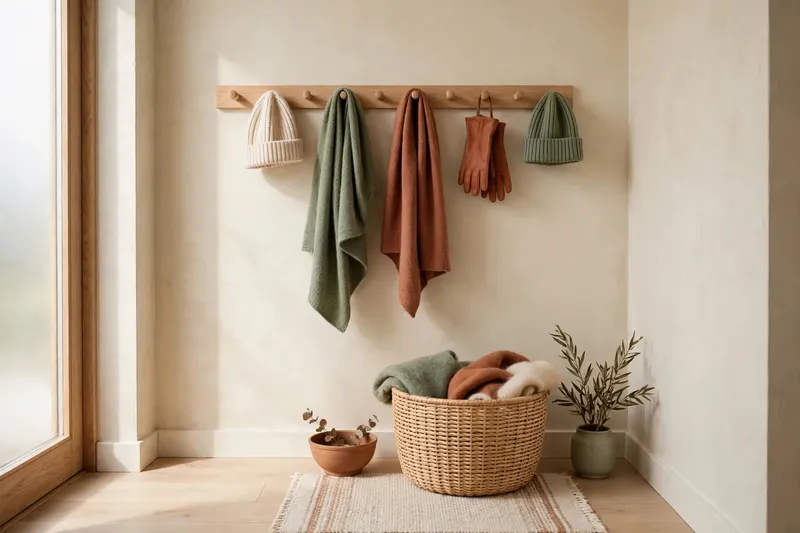
Hooks are the workhorse here: hats and scarves hang dry, stay visible, and take zero floor space. The rule is simple — one hook per person for the daily set, plus one spare for guests.
3. Mount a peg rail at two heights
A single rail at 60 inches works for adults but strands kids. Mount one rail at 60 inches for adults and a second, shorter rail or a row of adhesive hooks at 40–44 inches for children. A 36-inch rail with 5–6 pegs spaced 6 inches apart holds one person’s daily set: hat, scarf, and clipped-together gloves.
4. Use double hooks, not single pegs
A double-prong hook holds a hat on the front prong and a scarf looped over the back one, so one hook does the work of two. Choose hooks rated for at least 5 pounds each — a wet wool scarf is heavier than it looks. For renters, heavy-duty adhesive hooks rated for 7 pounds work on smooth painted walls and tile, but fail on textured plaster — test one hook with a wet scarf for 24 hours first.
5. Clip glove pairs together
The single lost glove is the most common winter accessory failure. Clip each pair together with a small carabiner, mitten clip, or clothespin, and hang the pair on the owner’s hook. It takes five seconds and ends the morning glove hunt entirely.
Baskets and cubbies: one bin per family member
Hooks handle the daily set. Baskets handle everything else: spare gloves, the second scarf, and the extras guests leave behind. One bin per person keeps baskets from becoming junk drawers.
6. Assign one labeled basket per person
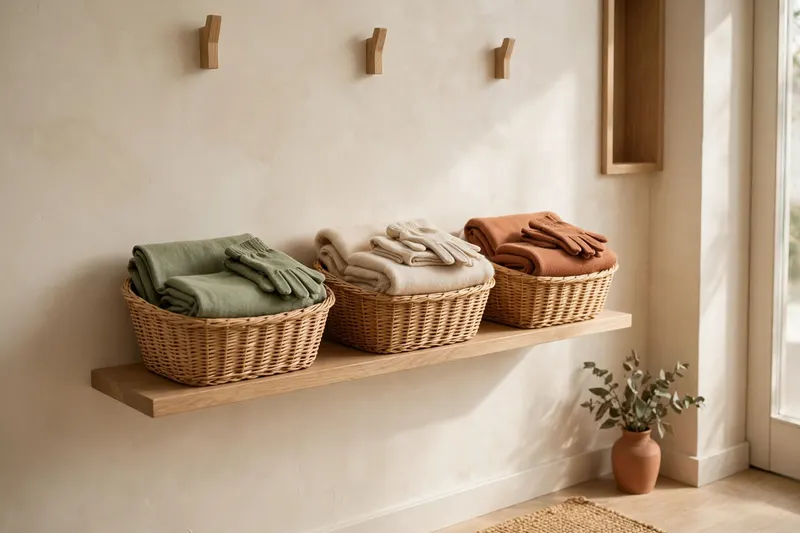
Give each person a basket roughly 10×8×6 inches — big enough for two hats, a scarf, and a glove pair, too small to hide clutter. Label it with a clip-on name tag. Open-front bins work on a shelf above the rail; woven baskets work under a bench. When a basket is full, something must leave before anything new goes in.
7. Add a “spares” bin for the whole household
One extra bin, labeled “Spares,” holds backup gloves and cheap knit hats bought on sale. This is the only communal bin, and it has a hard limit: when it’s full, the spares get donated.
8. Use a narrow cubby shelf above the rail
A 10-inch-deep shelf mounted 12 inches above the peg rail holds the baskets at eye level and keeps them off the floor. In an entryway under 36 inches wide, one 24-inch shelf with two baskets beats a floor-standing unit that eats walking space. It slots right above an existing coat rail — and if the coat side needs sorting first, see these 16 entryway coat storage ideas.
Drying wet gloves and hats: the drip zone
Wet accessories are the part of winter storage most people skip — and the reason entryways smell like a locker room by February. Gloves soaked in slush need airflow and a surface that can get wet.
9. Build a drip zone with a boot tray and a drying rack
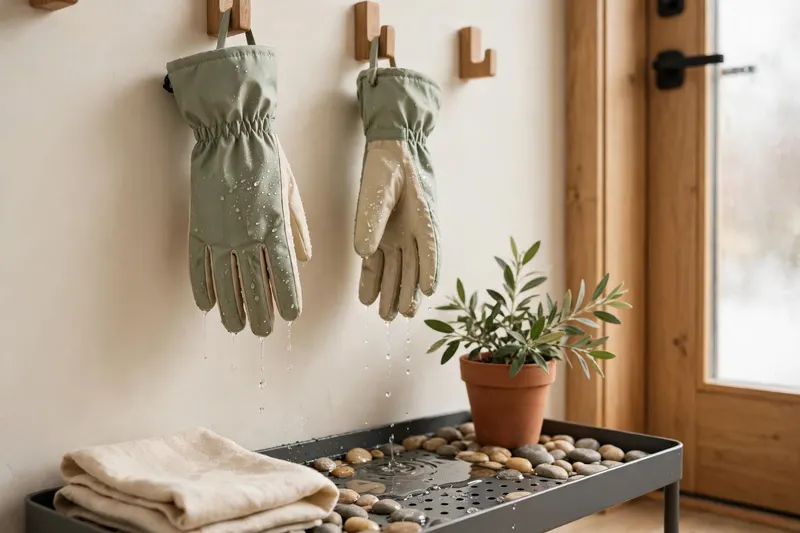
Place a boot tray with a raised grid (about 16×28 inches) just inside the door, with a small folding drying rack standing on it. Wet gloves go fingers-up on the rack; hats sit crown-down on the tray’s grid. Water drips into the tray, and air circulates so gloves dry overnight instead of staying damp for two days. Empty the tray every couple of days — standing water is what causes the smell.
10. Keep a “wet bag” by the door for slush days
On heavy snow days, gloves come home soaked through. Keep a mesh laundry bag hanging on the last hook for the truly soaked pair. They go straight into the bag, the bag goes on the drying rack, and the wet pair never touches the dry baskets. A mesh bag costs under $5.
Off-season rotation: summer storage for winter gear
Winter accessories take up prime entryway real estate for five months and need to vanish for seven. The rotation keeps the system from bursting every November.
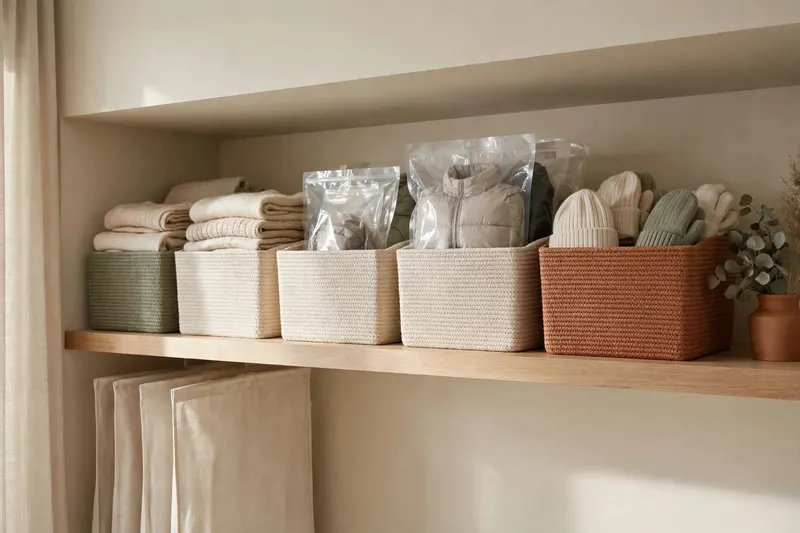
11. Pack off-season gear in one labeled vacuum bag per person
At the end of winter, each person’s accessories go into one vacuum-seal bag or a 12-quart lidded bin labeled with their name and the year. Vacuum bags compress bulky knit scarves to about a third of their volume, so four people’s gear fits on one shelf.
12. Do a 10-minute purge before you pack
Before anything goes into the bag, hold each item and ask three questions: did I wear it this winter, is it still in good shape, and does it still fit? Anything with a “no” goes into a donate bag immediately. Most families find 3–5 items to let go each spring. The same three questions work for the rest of the closet — see this declutter of your closet before January.
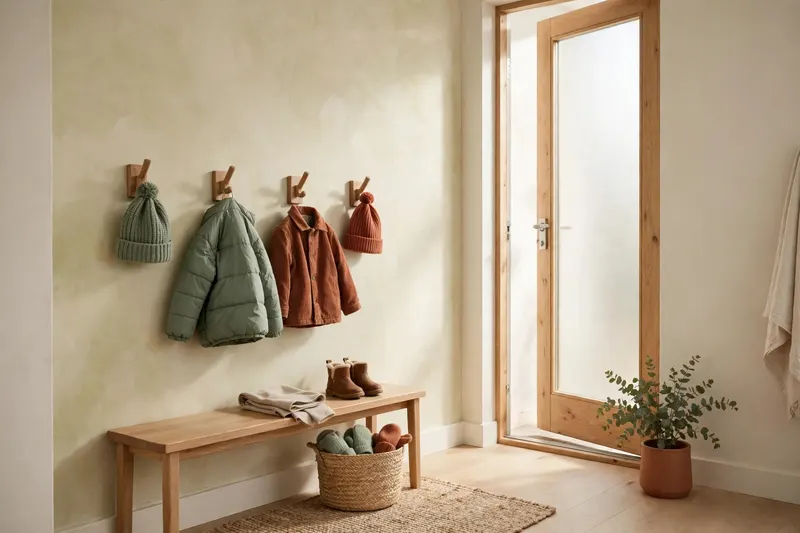
Kids’ winter gear: low hooks they can reach
Kids’ winter gear fails for one reason: it’s stored at adult height. A child who can’t reach their hook drops their hat on the floor — and the floor is where the pile starts.
13. Put kids’ hooks at their shoulder height
Mount 3–4 hooks at 40–44 inches for children under 8, and 48 inches for older kids. Use chunky wooden pegs or rounded hooks — no sharp edges. When a child can hang their own hat, they will.
14. Give each child a color-coded bin
Assign each child a bin in their own color, matched to their hook tag, glove clips, and boot tray spot. Color coding works before kids can read, and it ends the “that’s mine” argument at the door. Keep the bins on the floor or on the lowest shelf so a small child can reach theirs without climbing. The same one-bin-per-child logic works in these 17 kids bedroom storage ideas for small rooms.
The nightly reset: 2 minutes that keeps the entry clear
No storage system survives without a reset. The winter accessory reset takes about two minutes, and it’s the cheapest habit in this whole list.
15. Run the 2-minute reset before bed
Every evening, each person hangs their hat and scarf on their hook, clips their gloves together, and puts wet items on the drying rack. Set a phone reminder for the first two weeks until it becomes automatic.
16. Pair the reset with the shoe line-up
Shoes and winter accessories share the same doorway, so reset them together: shoes on the tray, accessories on their hooks, wet items on the rack. If the shoe side is still a pile, these 18 shoe storage ideas for small apartments sort that half with the same logic.
Mistakes to avoid
Buying a big coat rack and calling it done. A coat rack holds coats — hats and gloves slide off its pegs and end up on the floor. Winter accessories need their own hooks and bins, not the coat system’s leftovers.
Storing wet and dry gear together. One wet glove in a basket of dry scarves makes the whole basket smell. Keep the drip zone separate for the first month; after that, it’s habit.
Using open baskets with no labels. Unlabeled baskets become communal dumping grounds within days. A name tag is the difference between a system and a pile with nice containers.
Choosing a “one size fits all” hook height. A rail at adult height puts the kids’ gear on the floor. Two heights cost one extra rail and save the whole system.
Skipping the off-season purge. Every item kept “just in case” takes a hook or basket slot next winter. Ten minutes each spring keeps the system the same size every year.
Frequently asked questions
How many hooks do I need for winter accessories in a small entryway?
One hook per person for the daily set, plus one spare for guests — a family of four needs five minimum. For gloves on hooks too, add a second hook per person or use double-prong hooks.
Can I store winter accessories in a small entryway without drilling?
Yes. Heavy-duty adhesive hooks rated for 7 pounds hold a hat and scarf on smooth painted walls and tile, and stackable bins on an existing bench need no drilling at all. Over-the-door hook racks are another renter-safe option.
How do I stop wet gloves from smelling?
Dry them fingers-up on a mesh rack with air circulating underneath, never flat in a basket or coat pocket. Stuff them with newspaper overnight, and empty the drip tray every couple of days so water doesn’t sit and stagnate.
Where should I store winter accessories in summer?
Pack each person’s gear in one labeled vacuum-seal bag or 12-quart lidded bin, purge anything unworn or damaged first, and store the bags on a high shelf or under the bed.
What is the best basket size for hats and gloves?
About 10×8×6 inches per person — big enough for two hats, one scarf, and a glove pair, small enough to stop clutter building up. Open-front bins suit shelves; woven baskets suit the floor under a bench.
Wrapping up
Winter accessory storage is not about buying more organizers — it’s about giving every hat, scarf, and glove one obvious home by the door. One hook per person, one bin per person, a drip zone for wet gear, and a two-minute nightly reset will keep a small entryway clear all winter. Start with the peg rail and drip tray this weekend. Save this pin for later and browse more ideas in the small spaces category.