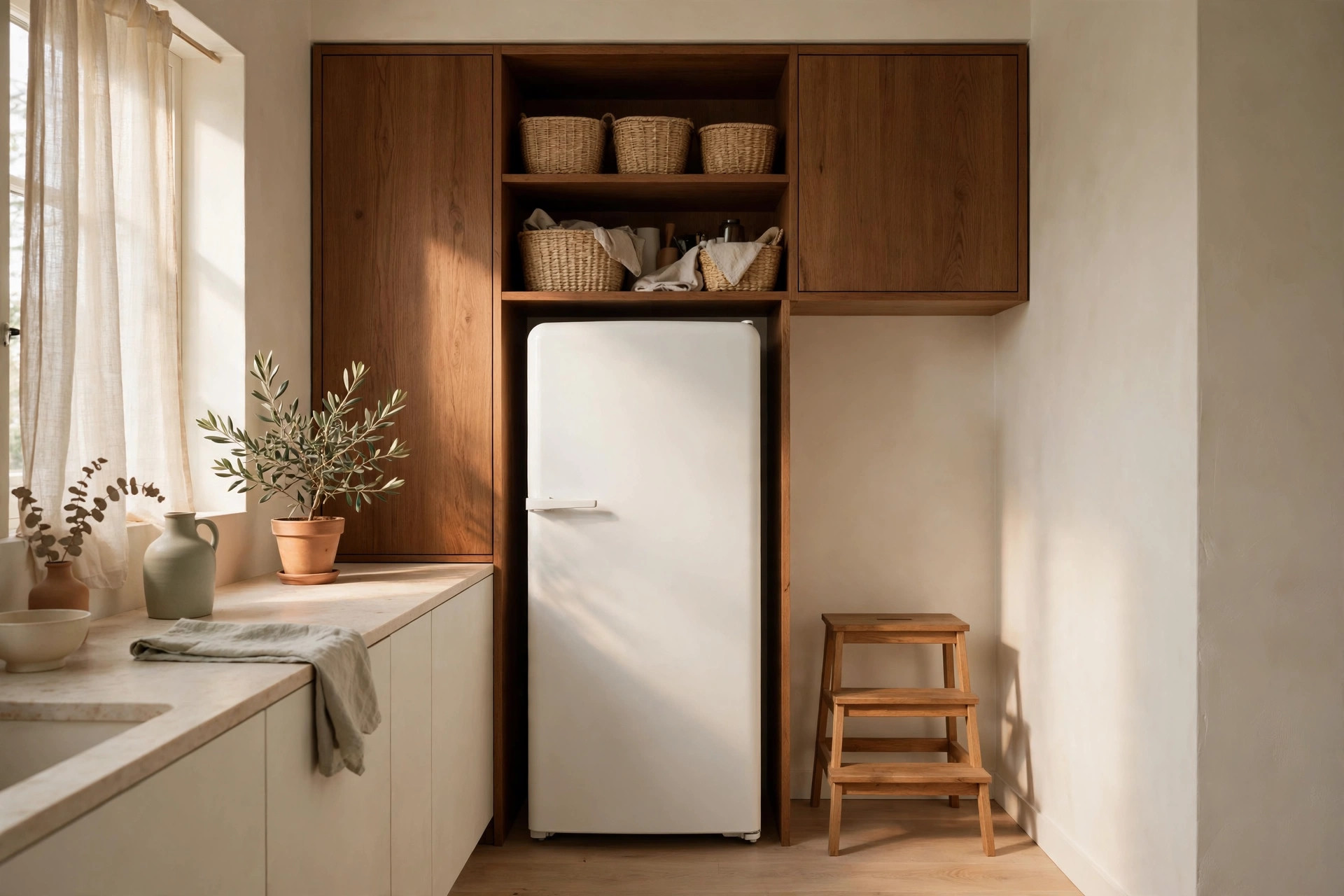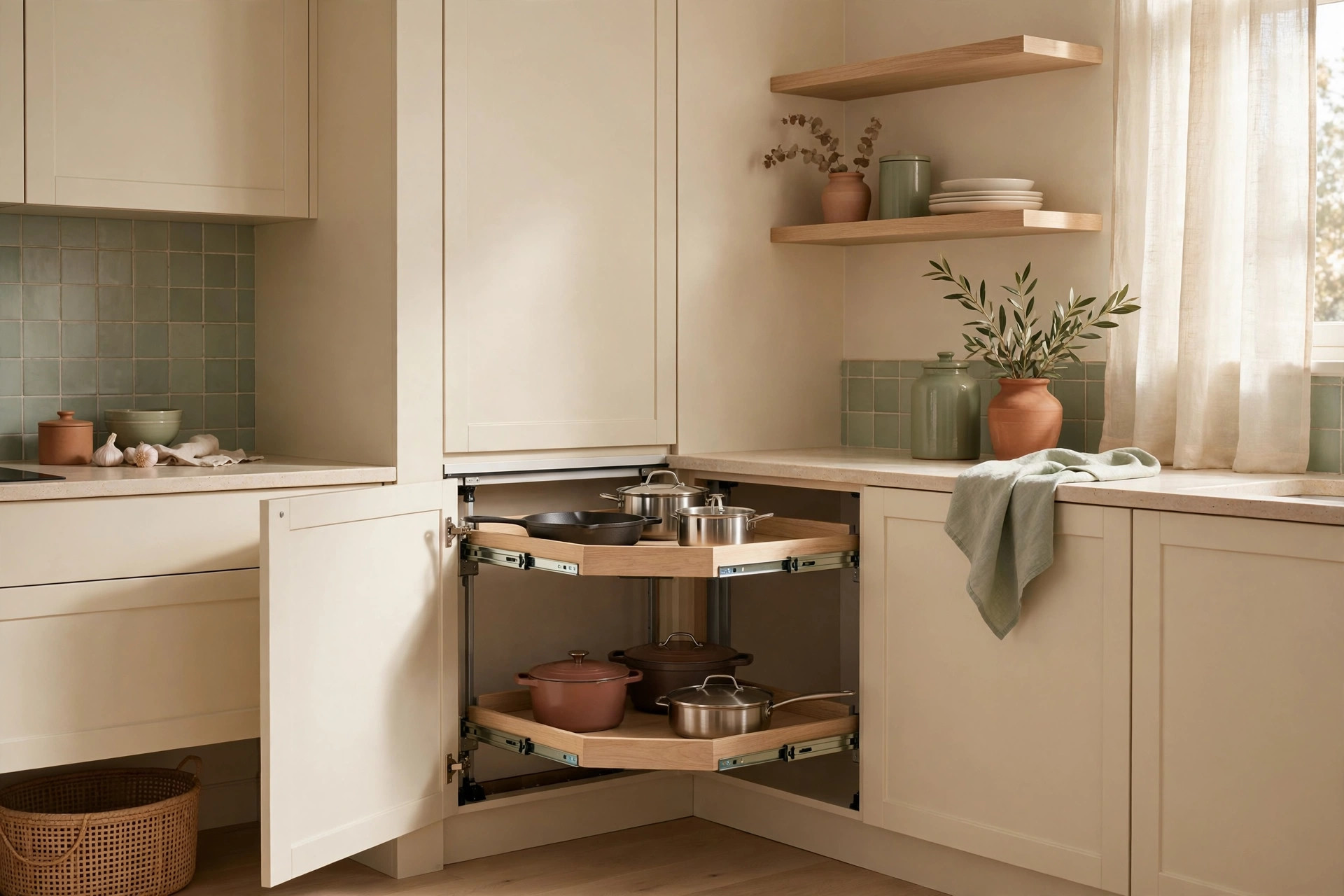
In a tiny kitchen, the bin is never just a bin. It blocks the one walkway, bumps against the oven door, and sits in full view while you cook, eat, and try to relax at the end of the day. If you are hunting for kitchen trash bin ideas small kitchen layouts can actually handle, the fix is not a prettier bin in the same bad spot. It is a system that hides the bin, fits the space you actually have, and makes emptying it painless. These 16 ideas cover measuring, hiding, sorting, and keeping the setup fresh, so the bin stops running your kitchen.
Measure first: bin size, bag size, and the swing or slide space
Before you buy anything, measure the spot, not the bin you wish you had. A bin that looks slim online can still block a drawer or catch on a door frame. Ten minutes with a tape measure prevents most bin regrets.
1. Measure the width, depth, and height of the real spot
Measure the cabinet opening, the gap beside the fridge, or the floor space by the counter, and write down all three dimensions. Then subtract about half an inch on each side for clearance. A pull-out bin needs slide room as well as width, and a freestanding bin needs room for the lid to open fully.
2. Match the bin to your bag size, not the other way around
Count how many days your household usually fills a bag, then choose a bin that matches that rhythm. A bin that is too big holds smells for a week; a bin that is too small overflows by Tuesday. Standard kitchen bags are roughly 13 gallons, but slim and cabinet bins often take 8-gallon or 5-gallon bags, so check the bag size before you commit.
Pull-out cabinet bins: the cleanest hide for small kitchens
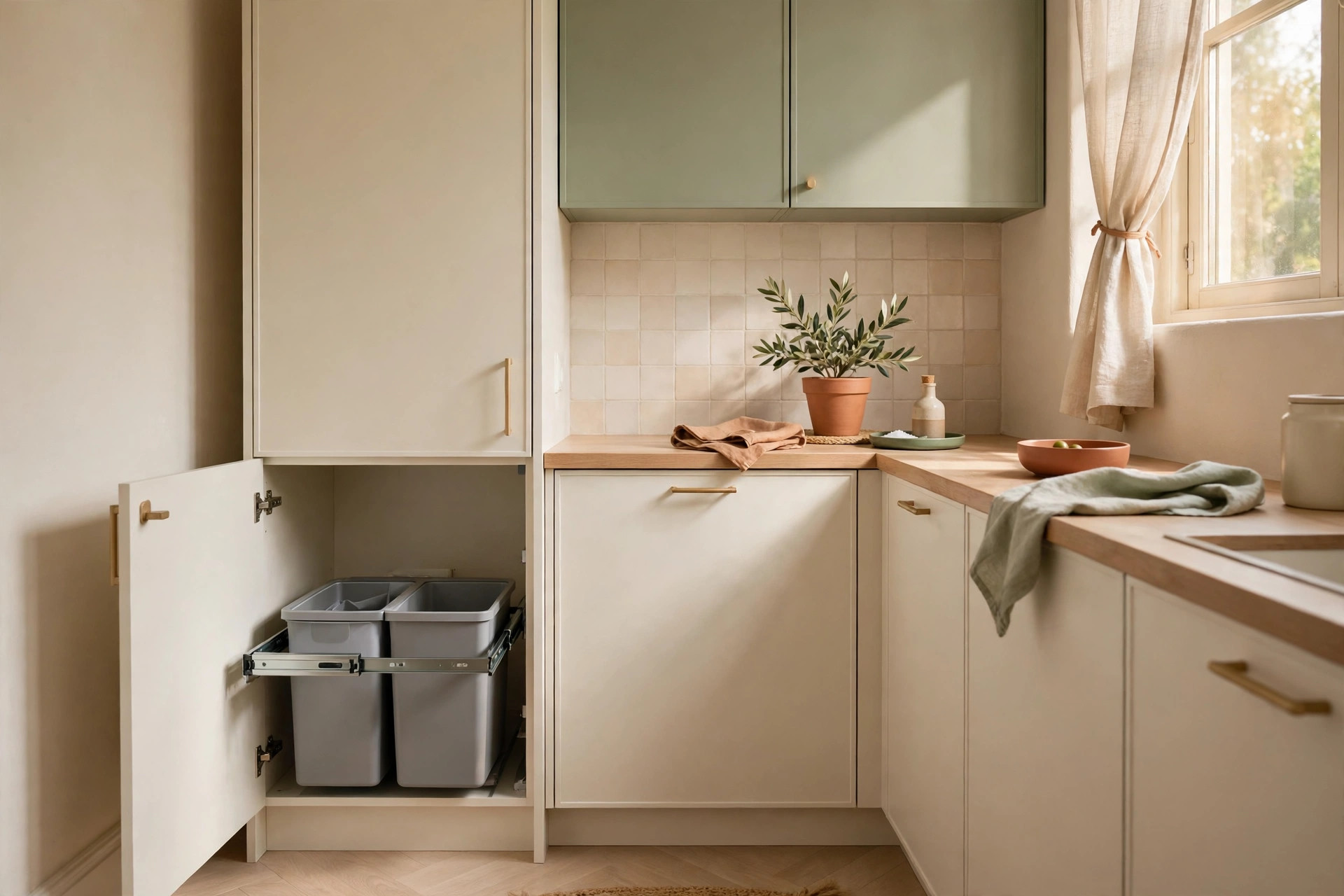
A pull-out bin disappears behind a cabinet door, keeps smells contained, and frees the floor completely. It is the closest thing to having no bin at all.
3. Install a single pull-out bin in a base cabinet
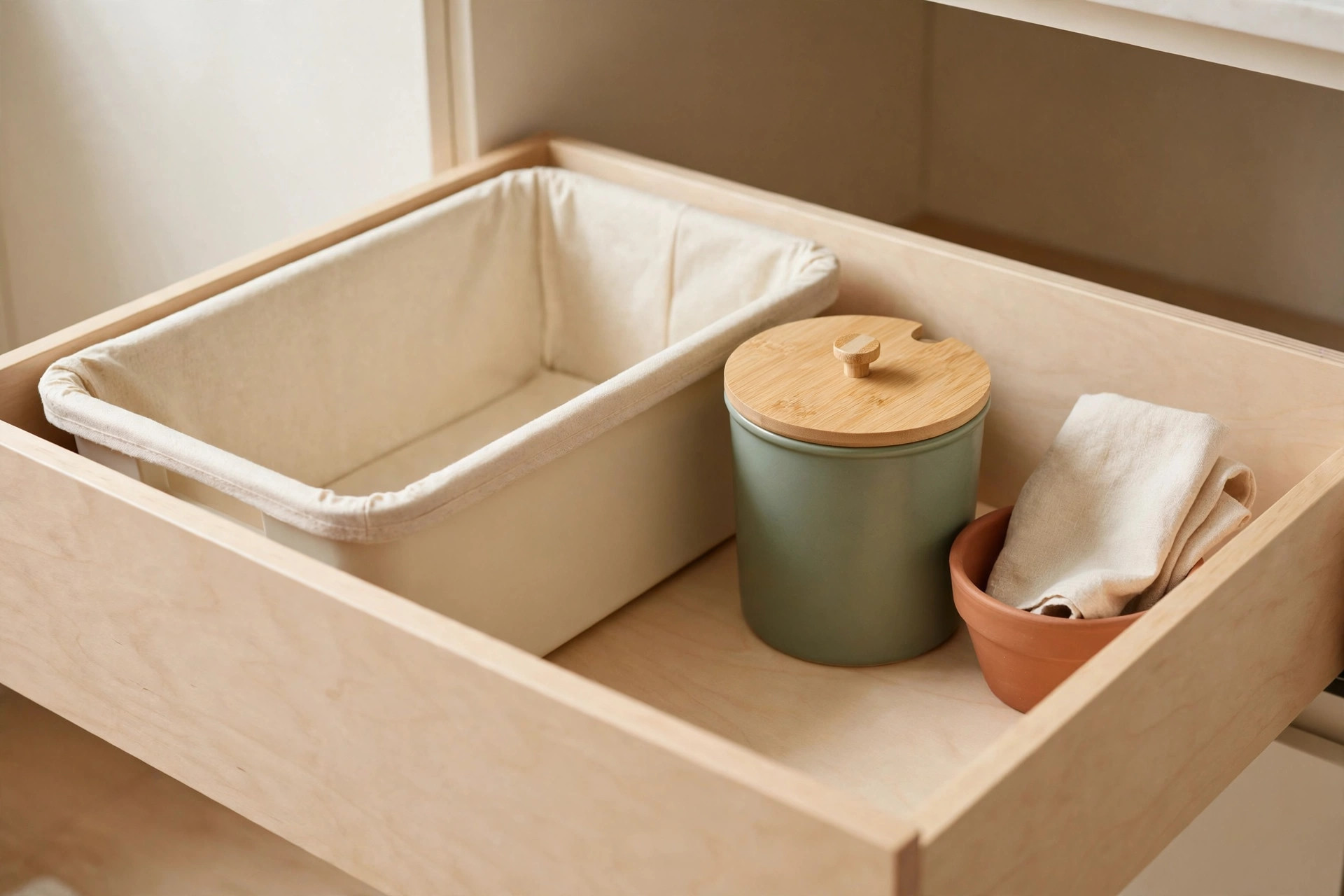
A single pull-out on a sliding rail turns an ordinary cabinet into a hidden bin station. Look for a unit sized to your cabinet width, usually 12 to 15 inches wide, with a bin of about 8 to 13 gallons. The bin slides out for use, pushes back flush, and the cabinet door hides everything.
4. Choose a double pull-out for trash and recycling
If your cabinet is at least 15 inches wide, a double pull-out holds trash on one side and recycling on the other, both hidden behind one door. Label the bins clearly, even with a strip of tape, so guests and family sort without asking. Empty the recycling side on a schedule, not when it overflows.
5. Retrofit a pull-out frame instead of replacing the cabinet
Renters and budget-conscious cooks do not need new cabinetry. A retrofit pull-out frame screws into the base of an existing cabinet and carries a standard bin on a rail. Measure the interior height carefully, because hinges and shelf supports eat space, and choose a frame with soft-close slides so the bin does not slam. For more on making every cabinet work harder, see these small kitchen cabinet organization ideas.
Cabinet-door and over-door bins for renters
When you cannot drill, cut, or remodel, the cabinet door itself becomes the bin’s home. These options cost little and install in minutes.
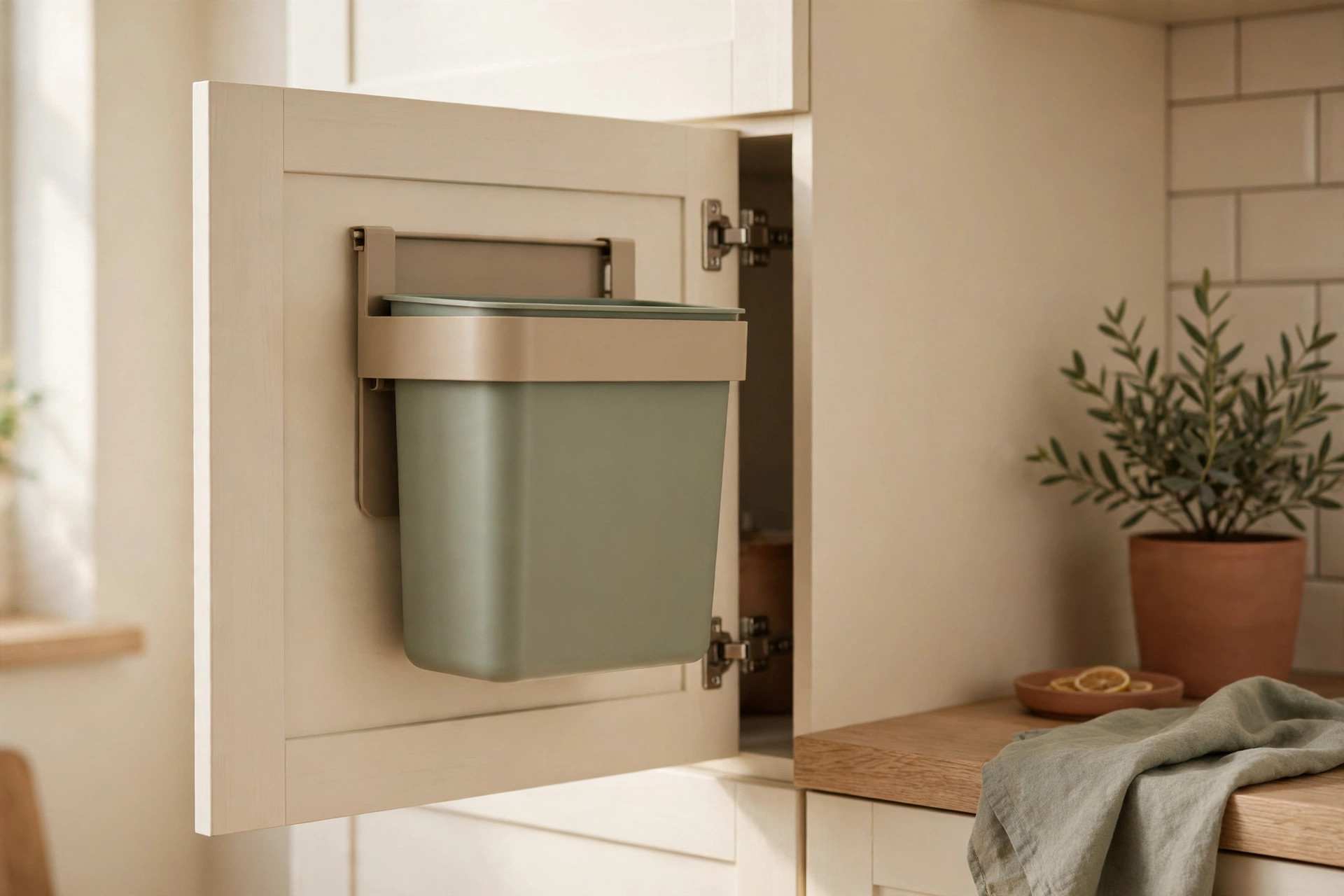
6. Hang a bin on the inside of a cabinet door
A cabinet-door bin hooks over the door and hangs inside the cabinet, invisible when the door closes. It works best for small daily trash, roughly 2 to 3 gallons. Keep it for food scraps and wrappers while cooking, then empty it into the main bin each evening so it never smells.
7. Use an over-door bin on a pantry or utility door
An over-the-door bin hangs on any sturdy door without tools, giving you a bin where no cabinet exists. Choose one with a lid if it sits in view. Avoid a door you open constantly during cooking, because a swinging bin spills.
Slim freestanding bins and narrow-gap carts
Sometimes no cabinet is free, and the bin has to live in the open. Then the shape matters more than the style: slim, tall, and stable beats wide and decorative.
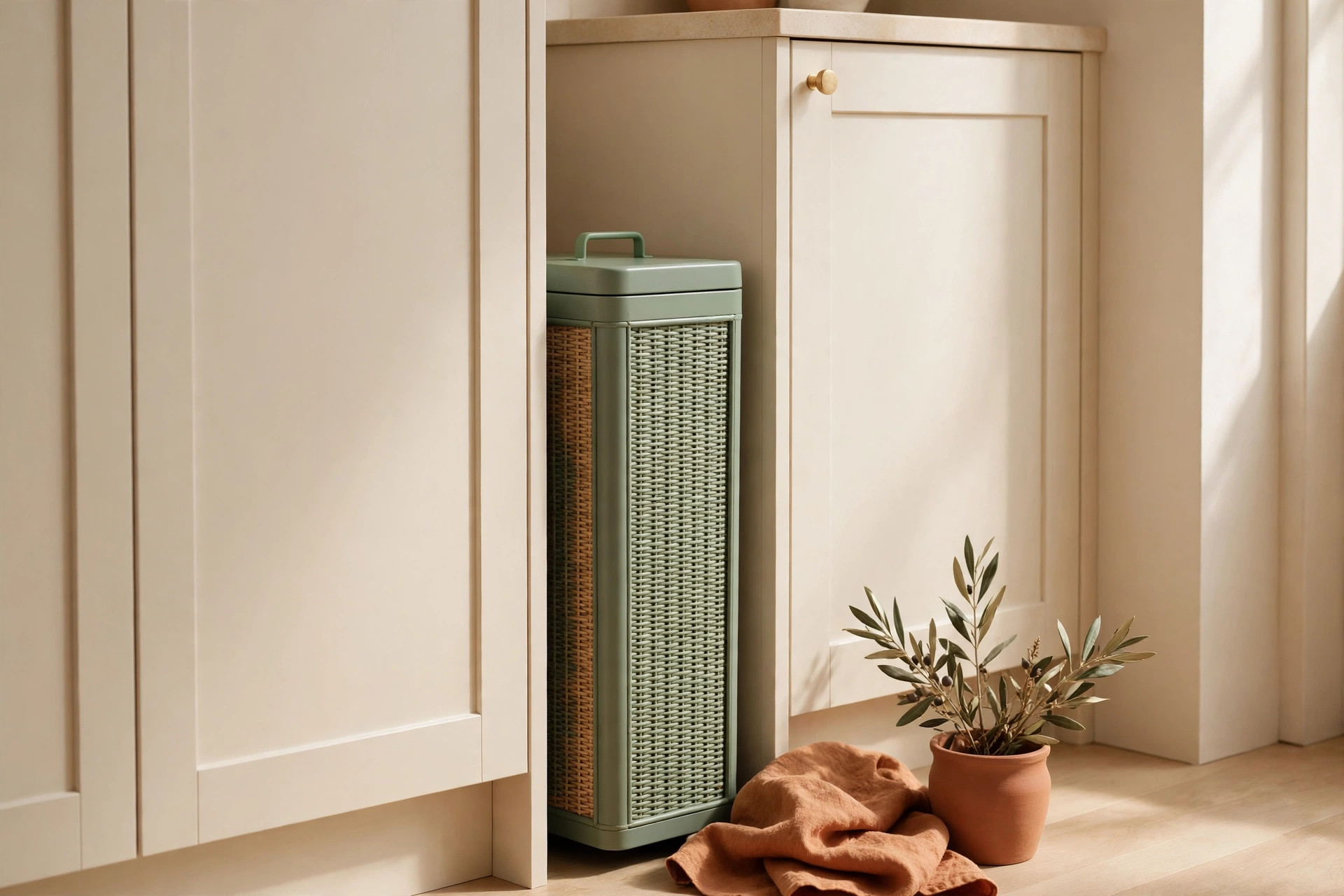
8. Pick a slim rectangular bin for the gap beside the fridge
The gap beside the fridge or between the counter and the wall is often 8 to 12 inches wide, which fits a slim rectangular bin perfectly. A rectangular shape hugs the wall, wastes no corner space, and holds more than a round bin of the same footprint. Look for a step pedal or touch lid so your hands stay free. For more renter-safe storage that needs no drilling, see these over-the-door organization ideas.
9. Slide a narrow cart into the gap for bags and extras
A narrow rolling cart, roughly 5 to 8 inches wide, can hold spare bags, recycling, and cleaning cloths in a gap too small for a bin. Roll it out when you need it, push it back when you do not, and store the heaviest items at the bottom so it does not tip when pulled out one-handed.
10. Hide a small bin under the sink, around the pipes
The cabinet under the sink is awkward, but a small bin fitted beside the pipes can work if you measure around them first. A short, wide bin often fits better than a tall one here, because the pipes and the trap steal height. If you want to plan that cabinet properly, these under sink kitchen organization ideas show how to fit bins around pipes without a daily wrestling match.
Sorting trash, recycling, and compost in one small footprint
Good tiny kitchen garbage storage only works if sorting takes no extra floor space.
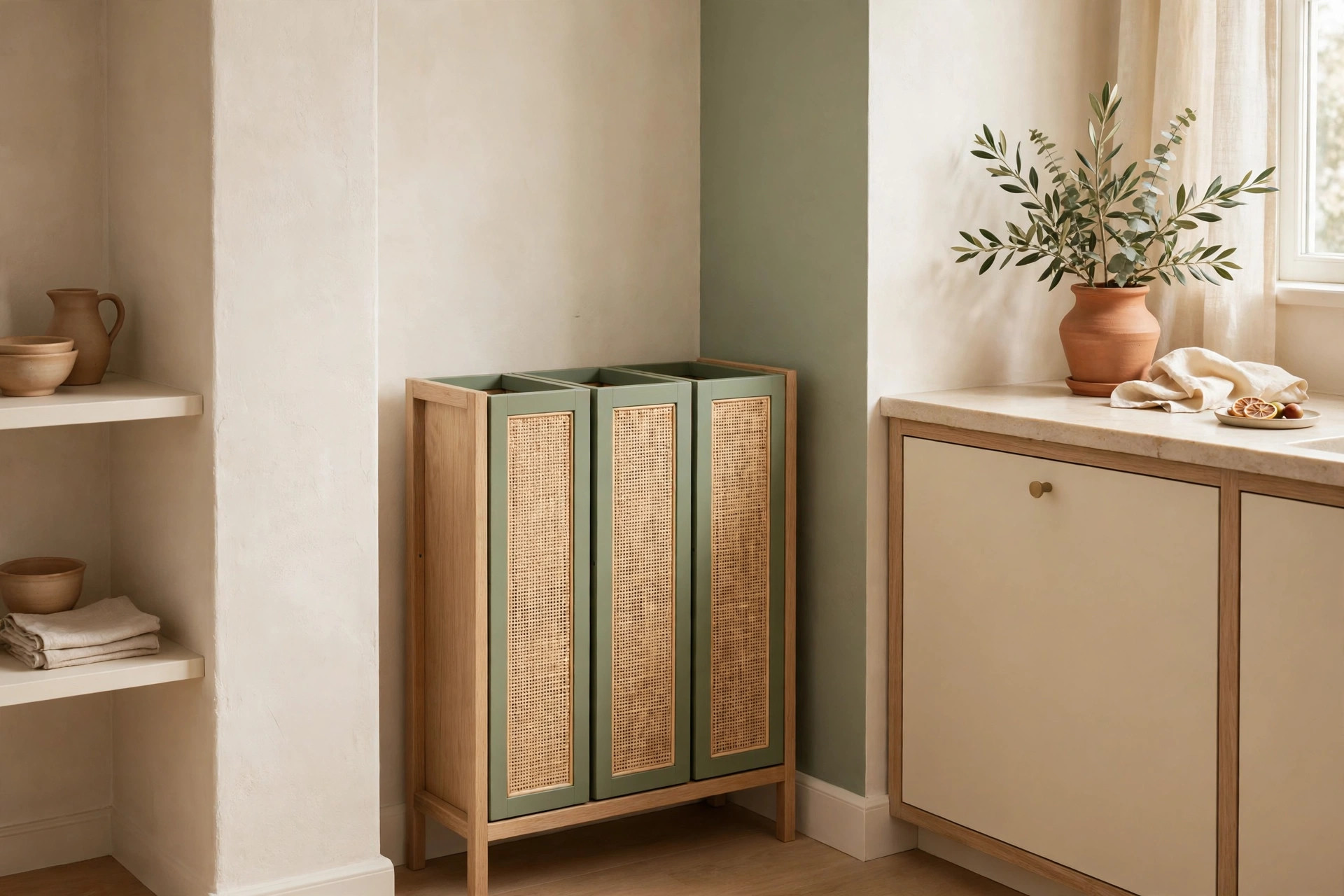
11. Stack sorting bins vertically instead of side by side
A two- or three-tier stacking sorter holds trash, recycling, and compost in the footprint of a single bin. Put the stream you use most on top for easy access, and the least-used stream at the bottom. Label each tier.
12. Split one cabinet into trash and recycling zones
If a double pull-out will not fit, split a single cabinet with two small bins side by side, or a bin plus a hanging bag for recycling. A cloth bag hooked inside the door can hold cans and bottles until recycling day.
13. Keep a small countertop compost caddy with a lid
A lidded countertop caddy, about 1 to 2 gallons, collects food scraps without a trip to the main bin every time you peel a carrot. Empty it daily into your compost or outdoor bin, rinse it, and leave the lid off for an hour to dry so it never smells. For a fuller sorting setup that works in small apartments, see these small apartment recycling station ideas.
Odor control and easy cleaning routines
A hidden bin that smells is worse than a visible one, because you discover the smell late. Odor control is mostly routine, not products: a good lid, a dry bin, and a cleaning habit that takes two minutes.
14. Use a lidded bin and a baking soda routine
A tight-fitting lid traps smells far better than any scented bag. Sprinkle about a tablespoon of baking soda into the bottom of a fresh bag, and wipe the bin’s rim and lid once a week with warm soapy water.
15. Line the bin and clean the spot underneath
Always line the bin, even if you use compostable bags, because a bare bin absorbs smells and stains fast. Once a month, pull the bin out and wipe the floor or cabinet base beneath it, where drips collect unseen.
The nightly bin reset that keeps tiny kitchens fresh
The best bin system still fails if it is left to overflow. A two-minute nightly reset is what keeps a tiny kitchen feeling fresh, and it is the habit that makes all 16 ideas actually work.
16. Run a two-minute nightly bin reset
Each night, take out the main bag if it is more than three-quarters full, empty the cabinet-door bin and the compost caddy, and put a fresh liner in each. Push every bin fully back into place. Two minutes tonight saves a smelly, overflowing morning.
Mistakes to avoid
- Buying a bin before measuring the cabinet, the gap, or the door swing.
- Choosing a bin that takes a bag size you cannot easily buy locally.
- Hiding the bin so well that emptying it becomes a chore you avoid.
- Mixing recycling into the trash bin because the sorting spot is inconvenient.
- Skipping the lid to save space, then fighting smells all week.
- Letting a cabinet-door bin overflow instead of emptying it each evening.
Frequently asked questions
How big should a trash bin be for a small kitchen?
A 10- to 13-gallon bin suits most small kitchens for two to four people, emptied every two to three days. If you cook daily, a 13-gallon bin emptied daily works better than a smaller bin that overflows. For a single person, an 8-gallon bin is often plenty.
Can I hide a trash bin in a rental kitchen without drilling?
Yes. Cabinet-door bins, over-door bins, and freestanding slim bins need no drilling or permanent changes. A retrofit pull-out frame does need a few screws into the cabinet base, so check with your landlord first.
Where should the trash bin go in a tiny kitchen?
Put it as close to the prep area as possible, ideally inside a cabinet next to the sink or in the gap beside the fridge. The best spot is the one you reach without crossing the room, because a bin that is hard to reach gets emptied late.
How do I stop my kitchen bin from smelling?
Use a lidded bin, change bags before they are completely full, sprinkle baking soda in a fresh bag, and wash the bin and lid weekly. Empty food scraps daily in warm weather, and keep the bin dry, since dampness causes lingering smells.
Conclusion
A tiny kitchen does not need a big bin or a remodel to feel tidy. It needs a bin that fits the space, hides behind a door or in a slim gap, and gets emptied on a simple nightly routine. Pick the one idea from this list that fits your kitchen today, measure the spot, and start there. For more small kitchen bin organization ideas, browse the full kitchen collection, and save this pin for later.