A sliding-door closet looks generous until you try to use it. You can only open half of it at a time, so the clothes you need are always behind the panel you cannot move. Sliding door closet organization is different from organizing a hinged-door closet because access, not space, is the real limit. These 15 ideas work with that limit: split zones, a double-hang setup, slim bins that clear the door track, and a weekly reset. No renovation or drilling is needed, and the system fits a small bedroom without taking floor space from the rest of the room — just a rod, a few slim bins, and ten minutes a week.
Why sliding doors change the closet math: half-access at a time
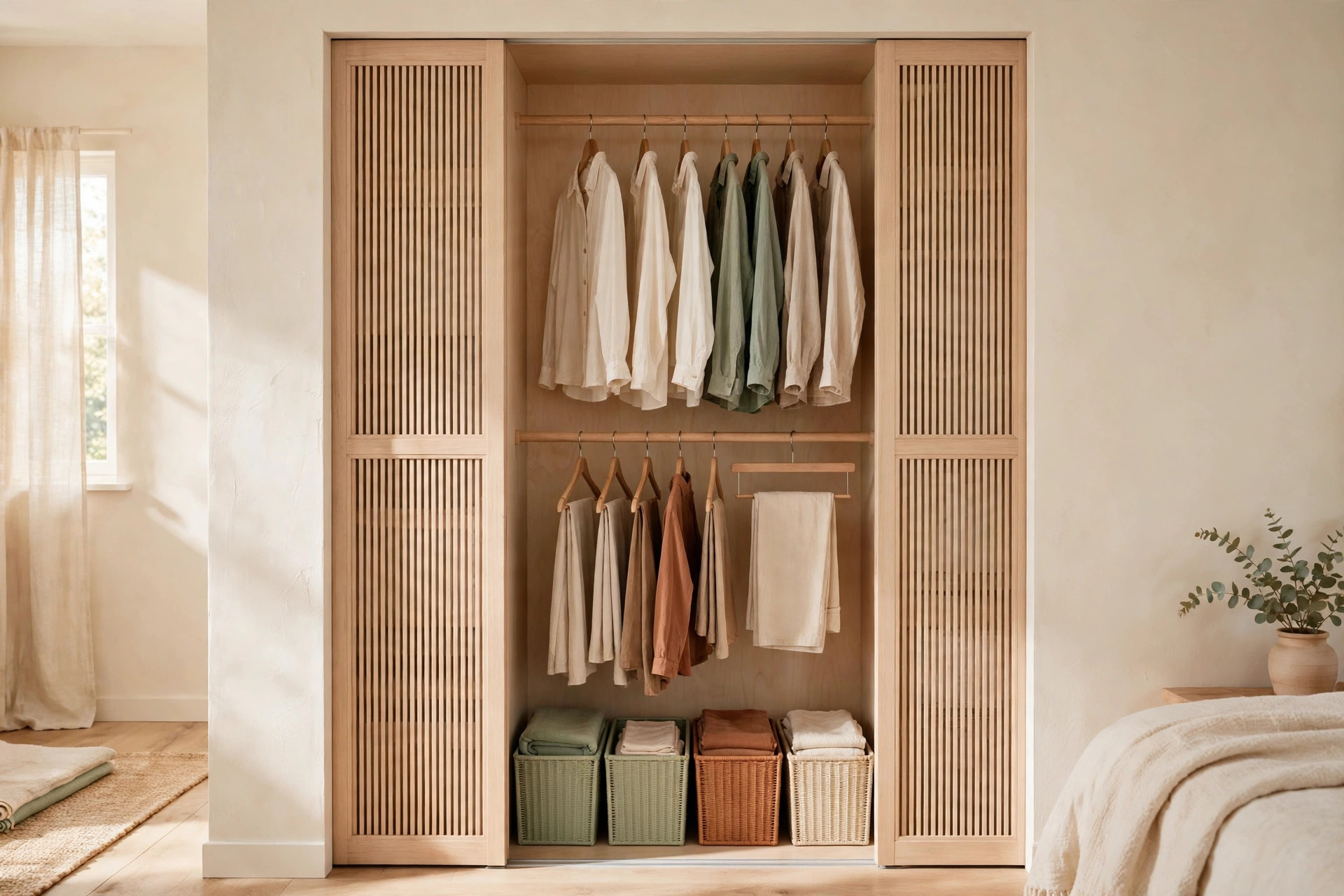
A hinged door opens the whole closet at once. A sliding door opens about half of it, and the panel you slide across covers the other half. You cannot reach anything on the covered side without sliding the door again. The fix is deciding, before you buy anything, which half you will open most often.
1. Map the overlap zone and keep it low-priority. Slide each door fully left, then fully right, and note the strip in the middle that stays covered in both positions — usually 12 to 18 inches wide. That strip is for things you touch once a month or less: off-season coats or spare bedding — never daily clothes.
2. Put your most-used side on your dominant-hand side. If you dress standing on the right side of the closet, make the right panel the daily side. It removes one slide from every morning. Test it for a week with your five most-worn outfits on one side only.
Split the closet: daily zone on one side, seasonal on the other
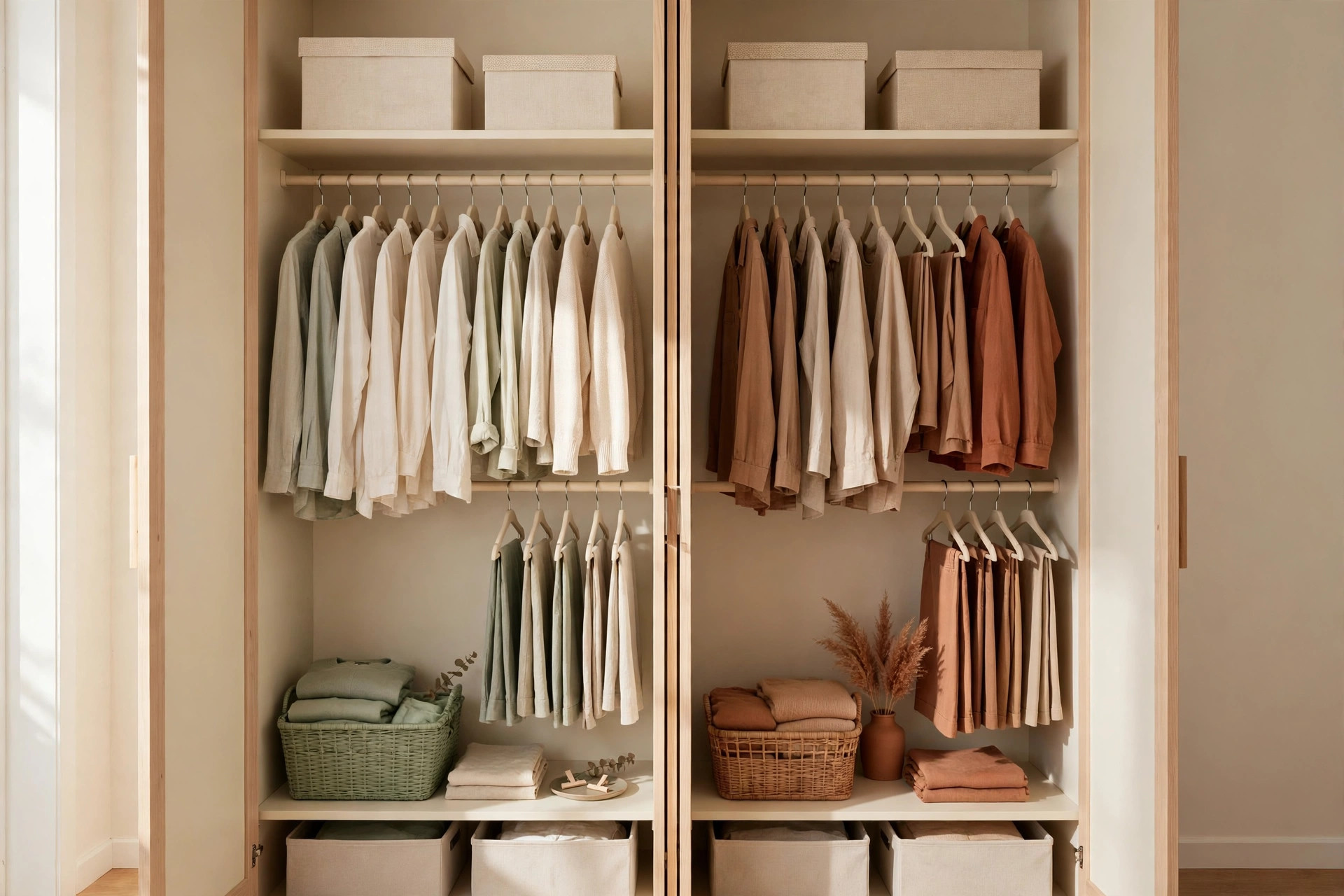
Once you accept half-access, the split becomes obvious. One side is the working closet you open every day; the other is storage you open once or twice a week.
3. Give the daily side your current-season clothes only. Move out-of-season clothes to the far side. In a 6-foot closet, that leaves roughly 3 feet of daily hanging space — about 25 to 35 garments on slim hangers.
4. Label the seasonal side by season, not by item type. A bin marked “Winter” is faster to find than three bins marked “Sweaters,” “Scarves,” and “Coats” during a seasonal swap. Use two or three large labeled bins on the top shelf of the seasonal side — see our 18 Small Apartment Seasonal Storage Rotation Ideas (Swap, Don’t Stack) guide for a matching rotation schedule.
Double-hang conversion behind sliding panels
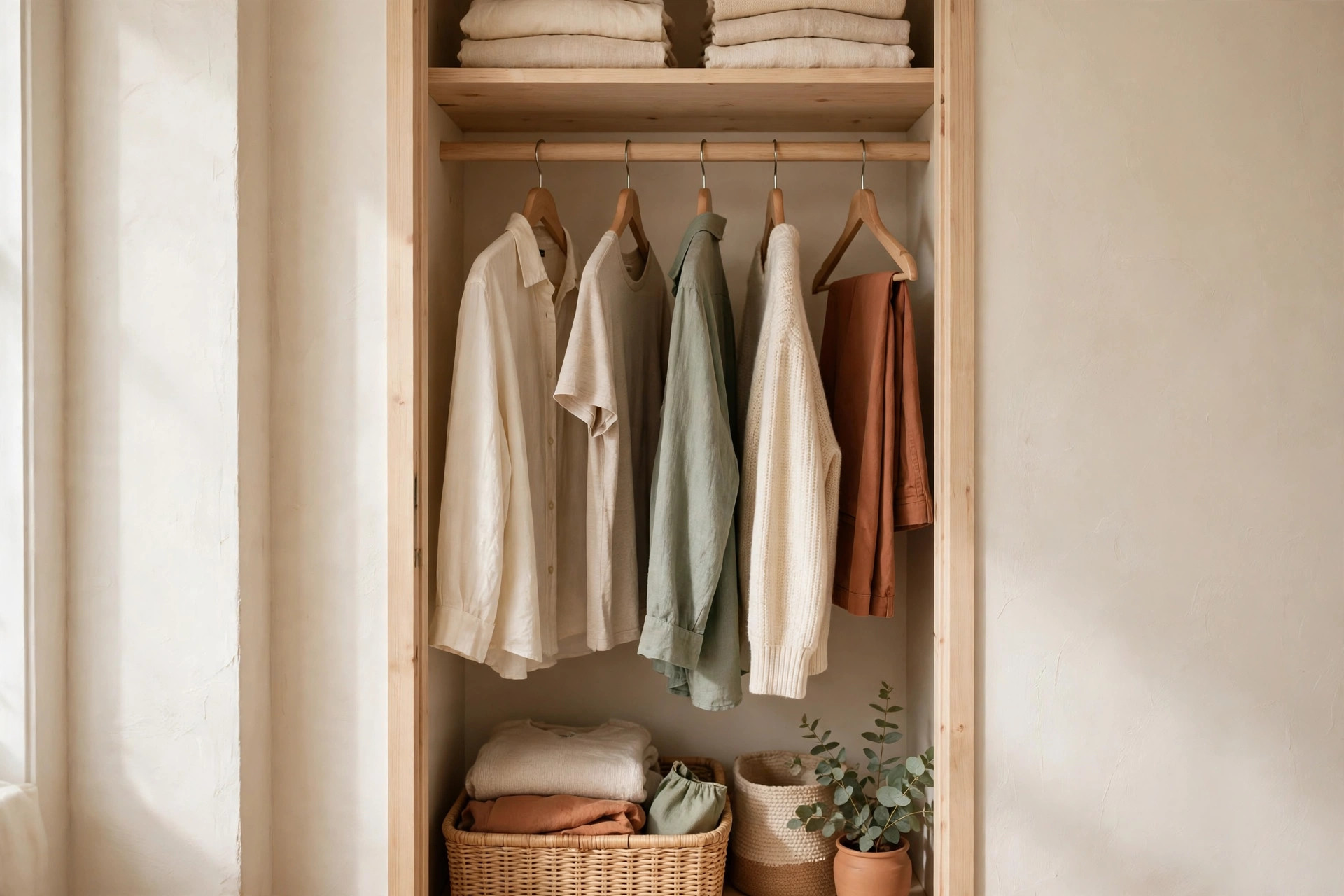
The single rod that came with most sliding closets wastes the bottom half of the closet. A double-hang conversion — a second rod hung below the first — roughly doubles hanging capacity in the same width, and each tier stays visible when its panel is open.
5. Hang the second rod 40 to 42 inches below the top rod. That spacing fits shirts, blouses, and folded trousers on both tiers. A no-drill rod extender costs about $20 to $30 and installs in about ten minutes. See our 17 Renter-Friendly Closet Organization Ideas (No Drilling Required) guide for no-drill options.
6. Reserve one short stretch of full-length hanging. Dresses, long coats, and jumpsuits need about 54 inches of clear drop. Give them 18 to 24 inches of rod at the end nearest the wall, and double-hang everything else.
Slim bins and baskets that clear the door track
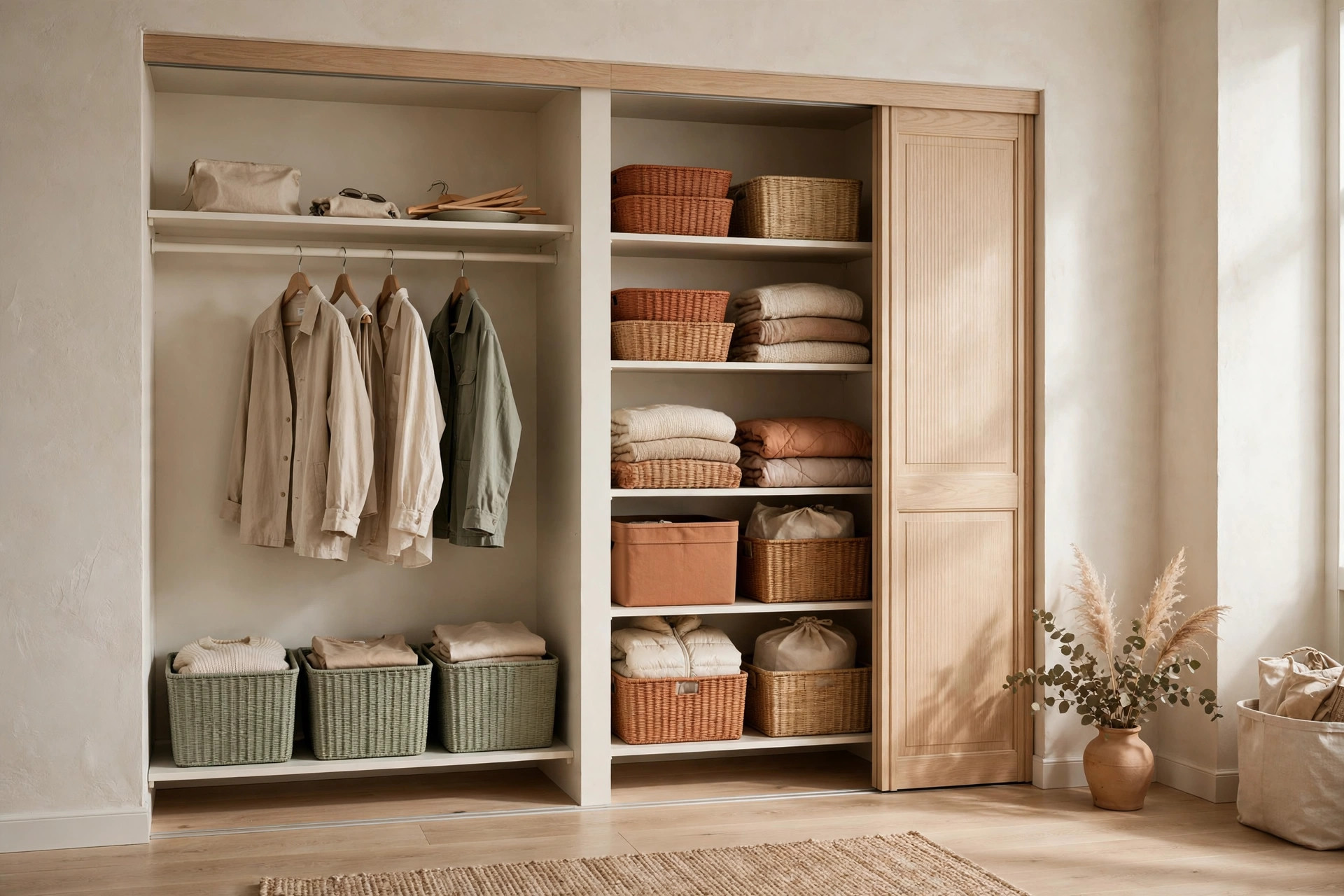
The floor of a sliding closet is not free space. The door track runs across it, and anything tall or wide near the front edge will catch or block the door. Bins for a sliding closet have to be slim, low, and set back from the track.
7. Use bins no deeper than 10 to 12 inches on the floor. The front 4 to 6 inches of a 24-inch-deep closet belong to the door track. Stackable bins about 10 inches deep, 12 inches wide, and 6 to 8 inches tall sit safely behind the track line and still hold folded T-shirts, workout clothes, or underwear.
8. Put the top shelf to work with labeled, front-facing bins. The shelf above the rod is the easiest space to waste, because it is above eye level and out of reach. Use open-front or clear bins with large labels on the end that faces you, one bin per category — hats, swimwear, spare linens. See also our 17 Closet Shelf Organization Ideas That Turn Dead Space Into Storage.
Shoe, bag, and accessory zones in a sliding closet
Shoes, bags, and accessories are what turn a tidy sliding closet into a pile, because they have no natural home on a rod. They need their own zones, with daily items on the daily side and everything else across the divide.
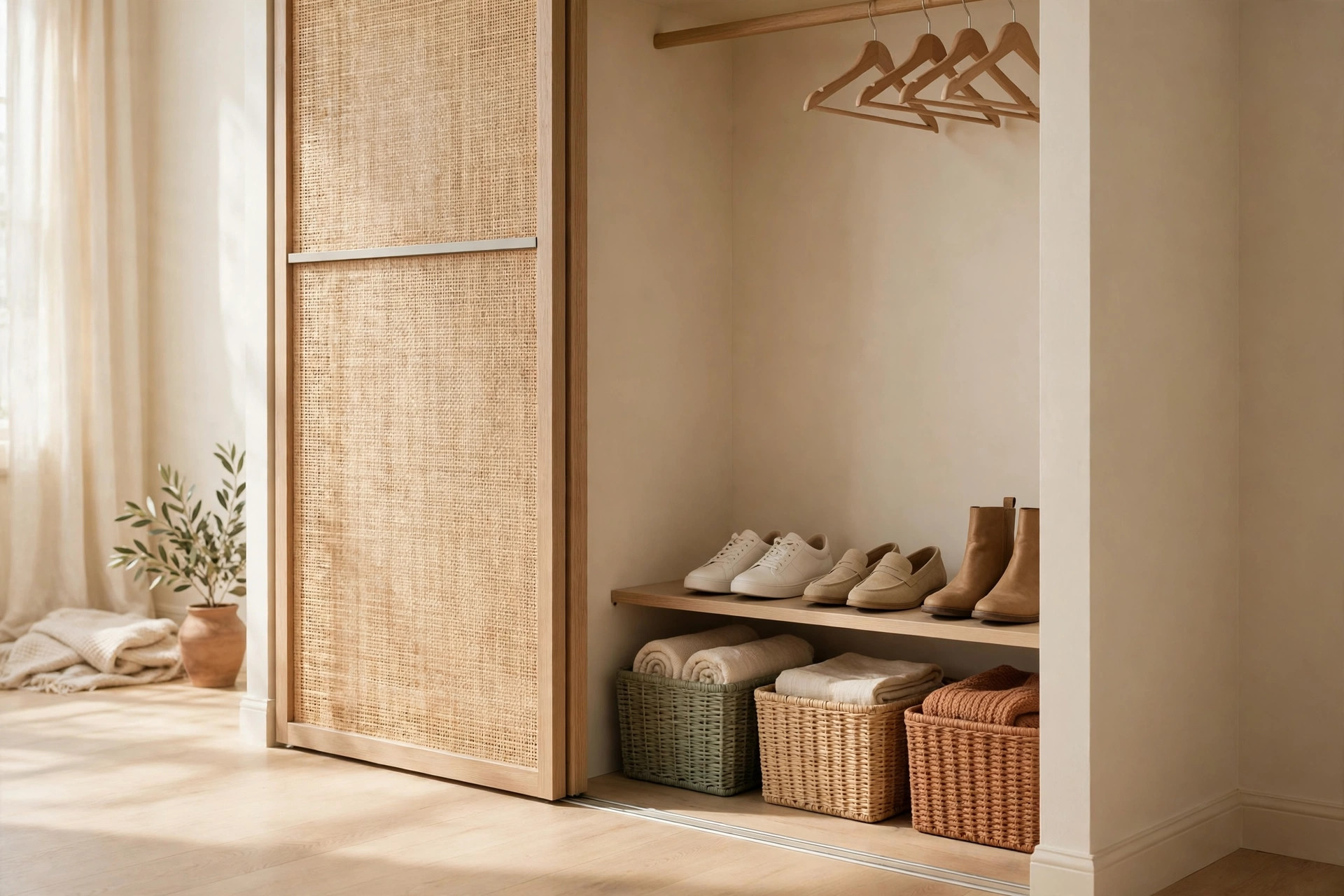
9. Build a two-tier shoe zone on the daily side only. A low two-tier rack about 24 inches wide and 12 inches deep holds roughly 6 to 8 pairs without blocking the hanging tier above it. Keep the two or three pairs you wear each week on the top tier at ankle height. Move occasion shoes and out-of-season boots to the seasonal side in labeled boxes. See our 18 Shoe Storage Ideas for Small Apartments (No Pile by the Door) guide for more layouts that fit this footprint.
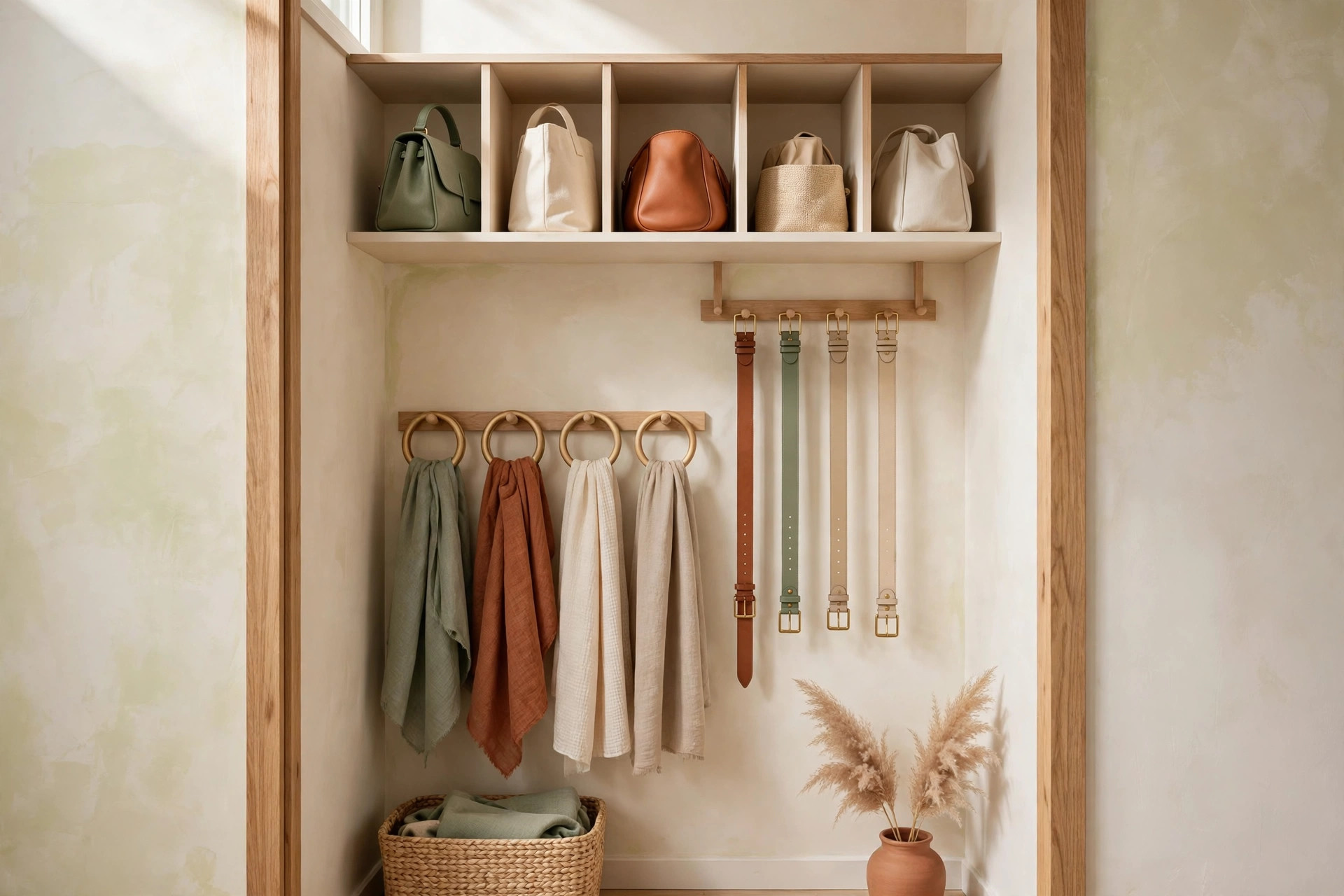
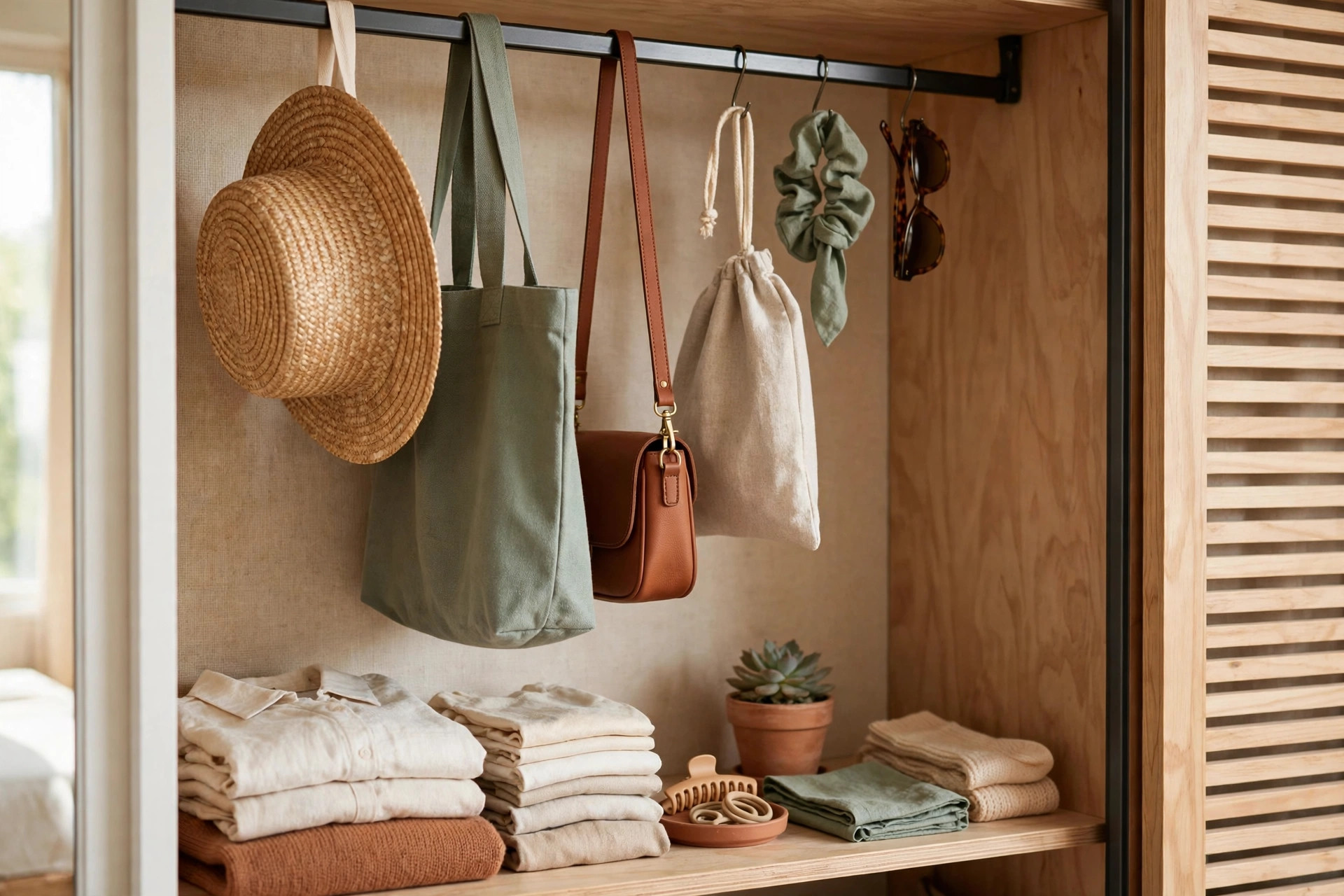
10. Hang bags on hooks at the side wall, not on the rod. Bags hung on the rod eat hanging space and swing into the door panel every time it slides. Instead, use two or three adhesive or S-hooks on the closet’s side wall, one bag per hook, handles up.
11. Give small accessories one shallow tray per category. Scarves, belts, and sunglasses do not need a drawer — they need a shallow tray about 12 by 8 inches that sits on a shelf or on top of a bin, with one category per tray. Roll scarves so you can see every color at a glance, coil belts instead of hanging them where they tangle, and keep sunglasses in a hard case inside the tray. See our 17 Accessory Organization Ideas for Small Closets (Scarves, Bags & Belts) guide for more detail.
Keeping sliding doors gliding: what never to block
A sliding door that sticks or jumps its track is almost always a storage problem, not a door problem.
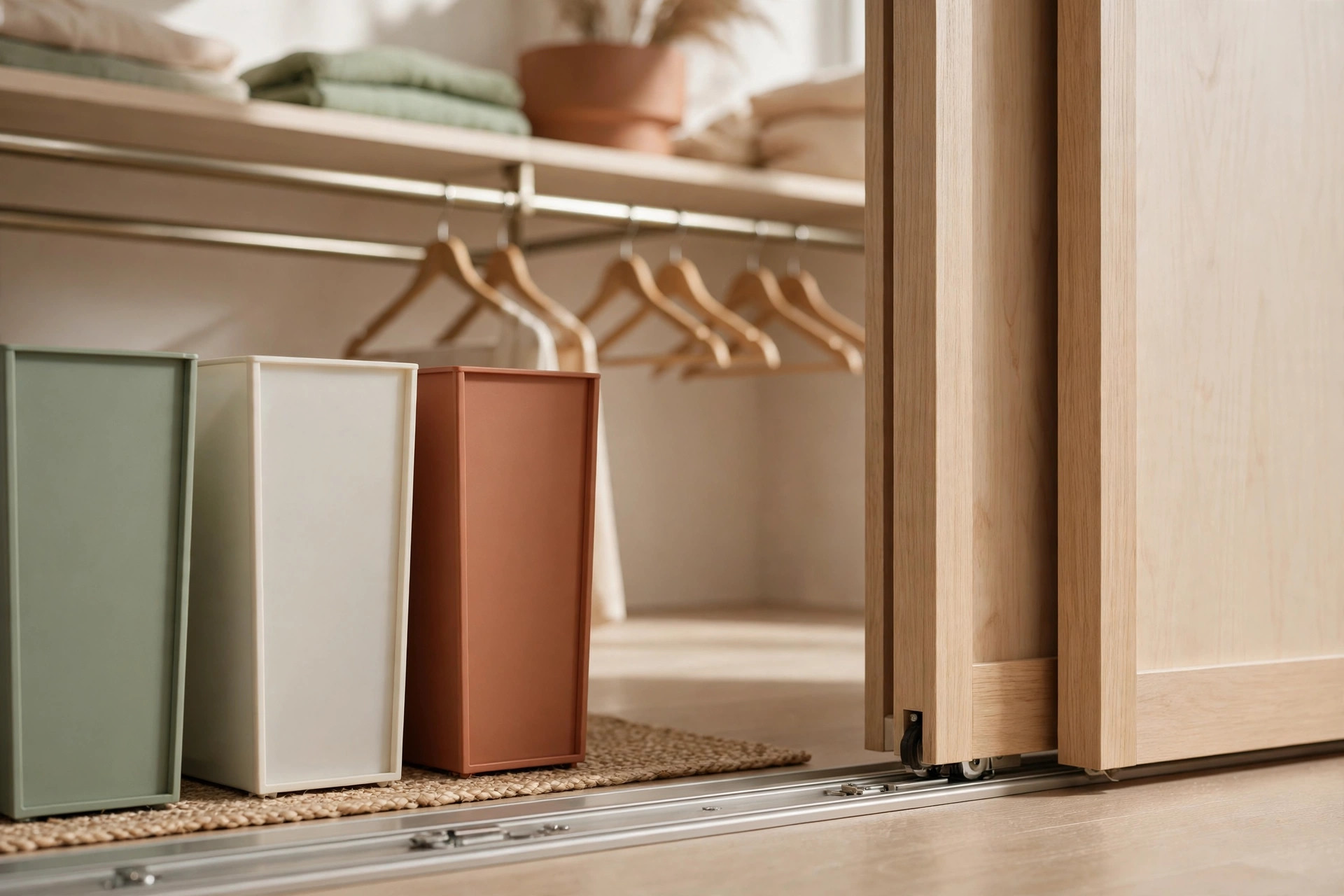
12. Keep a clear 2-inch lane in front of the track. Nothing — no bin, shoe, basket, or hanging sleeve — should sit within 2 inches of the floor track. Vacuum the track monthly — dust and hair are the most common reason a door starts to drag.
13. Never hang anything on the sliding doors themselves. Over-the-door hooks and hanging organizers seem like free storage, but on a sliding door they add weight to the panel, pull it off balance, and stop it from sliding fully closed. Use the fixed side walls or back wall instead.
The weekly reset for a half-access closet
Every slide nudges hangers, shifts bins, and hides one side from view. A short weekly reset — ten minutes, same day each week — keeps the split-zone system working.
14. Do a five-minute slide-through every week. Open one side fully, return stray items, rehang anything that fell, and push bins back behind the track line. Then do the other side.
15. Run a one-in, one-out check at the reset. Every week, look at the daily side and ask one question: is there anything here I did not wear in the past two weeks? If the answer is yes and it is not a special-occasion piece, move it to the seasonal side or out of the closet entirely. Small closets stay organized because of what leaves them, not because of what is added. Pair it with a bigger twice-a-year edit using our How to Declutter Your Closet Before January guide.
Mistakes to avoid: what NOT to buy for a sliding-door closet
The most common mistake is buying storage sized for a hinged closet. Deep 16-inch bins, wide drawer units, and rolling carts block the door track at home. Buy for the clear opening of one panel, not the full closet width. Skip over-the-door organizers on sliding panels, bulky vacuum bags that bulge past the track line, and a second full-length rod when a double-hang would fit. Do not buy matching bins before you have done the zone split.
Frequently asked questions
Can you organize a sliding-door closet without removing the doors?
Yes, and in most rentals you should leave the doors in place. Every idea above works with the doors on. Removing the doors gives you a reach-in closet instead.
How do you reach clothes in the middle of a sliding closet?
You mostly do not, which is why the middle overlap zone should hold low-priority items only. Slide one panel fully to one side to reach the other. If you reach into the middle every day, that item belongs on the daily side instead.
What size bins fit in a sliding-door closet?
Floor bins should be no deeper than 10 to 12 inches so they sit behind the door track, and no taller than 8 inches under a lower hanging tier. Shelf bins can be deeper. Test a bin by sliding both doors across before you fill it.
How much does it cost to organize a sliding-door closet?
A basic setup — a no-drill double-hang rod, slim velvet hangers, four to six slim bins, and a low shoe rack — costs about $60 to $100 in total. Start with just the rod and hangers for about $40.
Can sliding-door closets work for two people sharing one closet?
Yes, if each person gets one side as their daily zone instead of splitting top and bottom. Each side works like a small single-person closet, with shared seasonal storage on the top shelf.
Conclusion
A sliding-door closet works when you stop fighting half-access and start designing for it: daily on one side, seasonal on the other, double-hang where it fits, slim bins behind the track, and a ten-minute reset every week. Start with the zone split this weekend. Save this pin for later, and browse our closet organization collection.