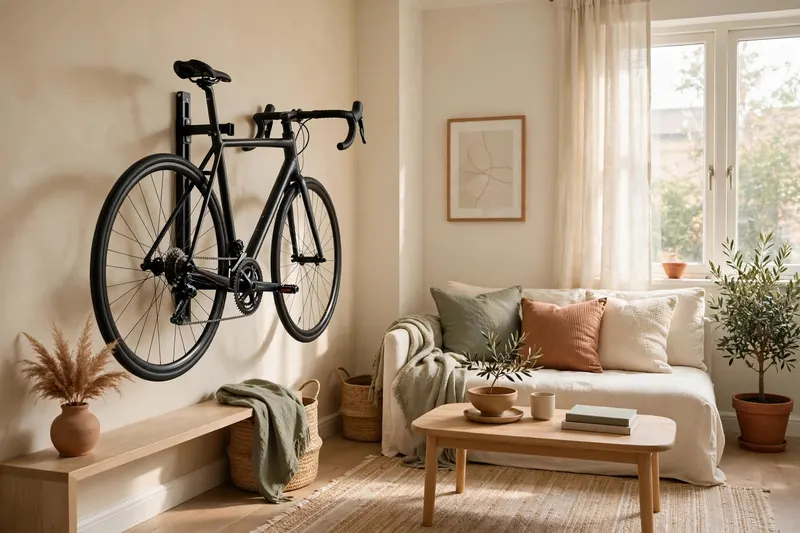
Sharing a small apartment with roommates is a storage puzzle with a people problem attached: the mess is not really about stuff — it is about unclear ownership. Small apartment storage ideas for roommates work only when every shelf, hook, and bin has a name on it, and every shared space has a simple rule attached. These small apartment storage ideas roommates actually agree on give you exactly that: labeled personal zones, fair shared shelves, and ground rules that keep shared spaces working for everyone.
The roommate storage audit: shared, personal, and no-man’s-land
Before you buy anything, sort every storage spot into three buckets: shared (everyone uses it), personal (one person), or no-man’s-land — flat surfaces where stuff lands because nobody owns them.
1. Do a 20-minute walk-through audit together
Set a timer for 20 minutes and walk every room together, noting what lives where and who uses it. Write the list in a shared phone note.
2. Assign every no-man’s-land surface a job or a ban
For each flat surface where mystery items appear — the microwave top, the entryway table, the windowsill — decide: a named person’s zone, or a clear-surface zone where nothing lives overnight.
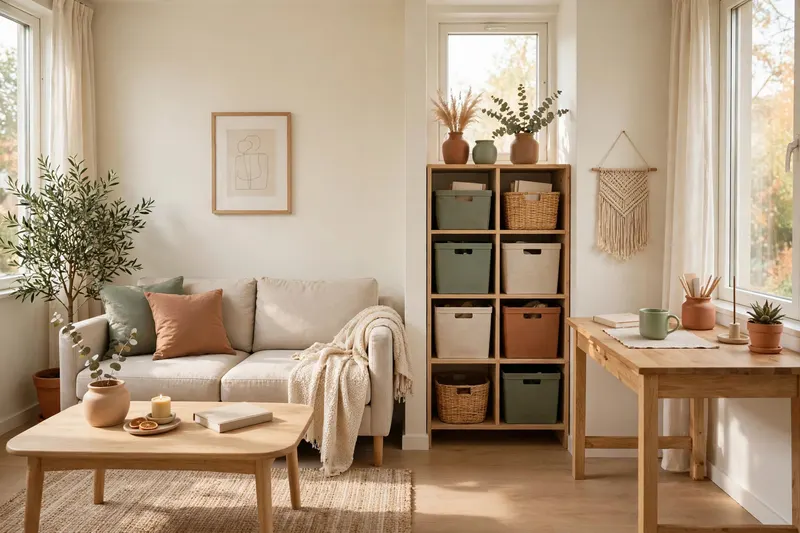
Labeled zones: one shelf, one hook, one bin per person
Labeled zones are the most effective shared apartment storage idea there is: when a shelf has a name on it, the “whose mess is this” argument disappears. Use chalk labels, label-maker strips, or washi tape in a different color per person.
3. Give each person one shelf, one hook, and one bin in every shared zone
In each shared area — entryway, bathroom, kitchen — every roommate gets exactly one shelf, one hook, and one bin. Equal space is fair space. A 12-inch shelf, one hook, and a 10×6×6-inch bin per person covers daily essentials; anyone needing more negotiates for a specific extra spot.
4. Use a different color per person for bins, towels, and labels
Assign each roommate a color — sage, terracotta, navy, mustard — for their bins, bathroom towels, and labels. A blue bin in the shared closet is never a mystery, and a terracotta towel never gets borrowed by accident. Buy solid colors, not patterns, so the color stays the signal.
Shared shelves that stay fair: the rotation and restock rule
Shared shelves fail when one person stocks them and everyone else uses them. The fix is a written rotation — this week’s restocker is not last week’s. Keep shelves shallow, 10 to 12 inches deep, so things stay one row deep.
5. Put shared supplies on one shelf, with a written restock rotation
Keep shared items — toilet paper, dish soap, cleaning spray, trash bags — on one designated shelf or in one caddy. Tape a rotation list inside the cabinet door — “Week 1: Alex, Week 2: Sam, Week 3: Jordan” — and whoever is on rotation buys that week’s supplies.
6. Use the “one in, one out” rule for every shared shelf
Every shared shelf gets a capacity limit, not a growth plan: when a new item arrives, an old one leaves — the half-empty sauce bottle, the expired spice jar, the third bottle of dish soap. Check shelves weekly and toss anything past its date.
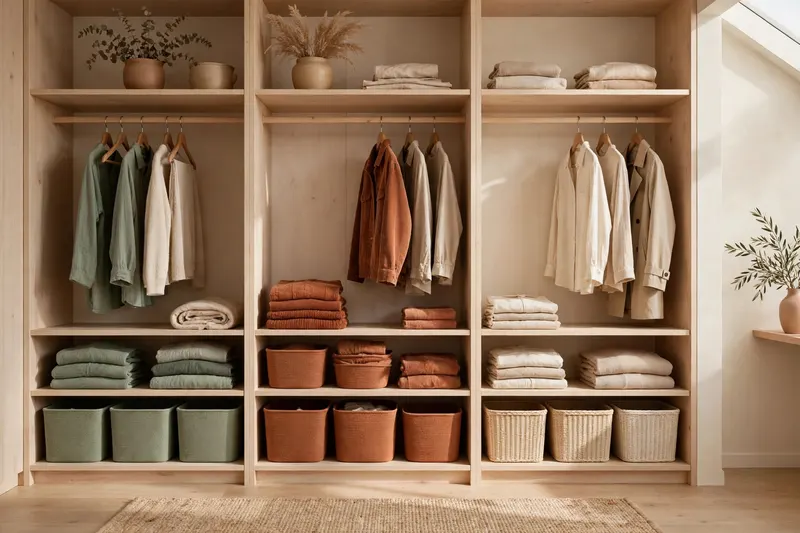
Personal bins in shared closets: color-coded and contained
A shared closet works when each person’s stuff is contained in their own bins and nothing is loose — loose items drift, bins stay put. For more closet-sharing tactics, see 15 Closet Organization Ideas for Couples Sharing One Closet.
7. Contain every person’s closet items in matching bins
Each roommate gets two or three stackable bins, roughly 12×8×6 inches — one for accessories, one for out-of-season items, one for miscellaneous. Nothing loose on the shelf means nothing migrates onto a roommate’s half.
8. Add a shelf divider for every person’s zone
A vertical shelf divider, about 8 inches tall, turns one long closet shelf into clearly marked territories. Without one, folded clothes slowly spread across the whole shelf; with one, each person’s stack stays in its lane. They cost a few dollars and need no tools.
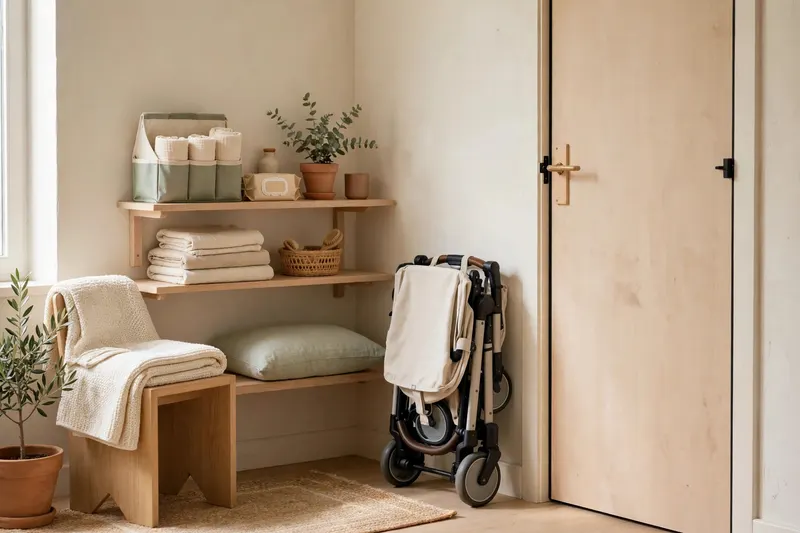
The entryway truce: hooks, cubbies, and the shoe limit
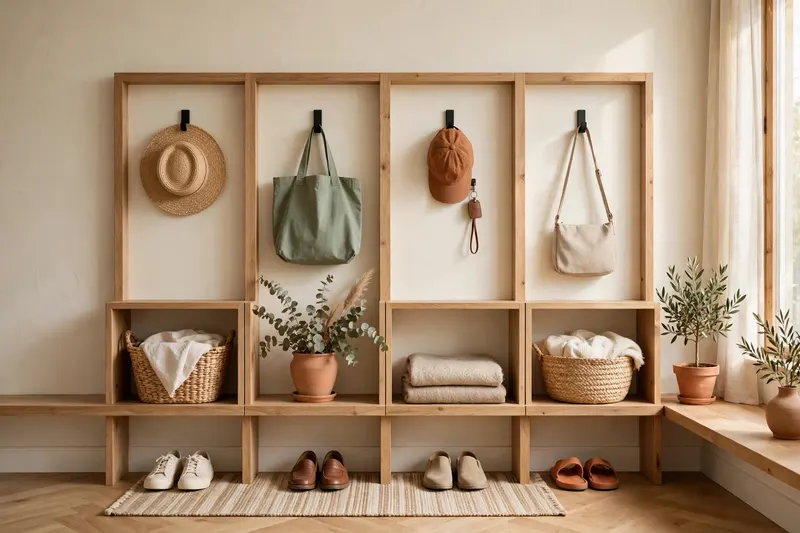
The entryway is where roommate friction shows first, because everyone passes through it and nobody owns it. The fix: assigned spots plus a hard limit. For coat ideas that work without a closet, see 16 Entryway Coat Storage Ideas for Apartments Without a Closet.
9. Assign one hook and one cubby per person at the door
Mount a row of hooks at eye level — one per roommate, labeled — plus a small cubby or basket underneath for each person’s bag, keys, and mail. A rail with four hooks takes up about 24 inches of wall.
10. Set a two-pair shoe limit per person at the door
Agree on a limit: two pairs per person by the door, the rest in the bedroom closet or under the bed. A slim two-tier shoe rack, about 24 inches wide, holds four to six pairs. For more shoe solutions, see 18 Shoe Storage Ideas for Small Apartments (No Pile by the Door).
Kitchen sharing: one shelf each plus a shared zone
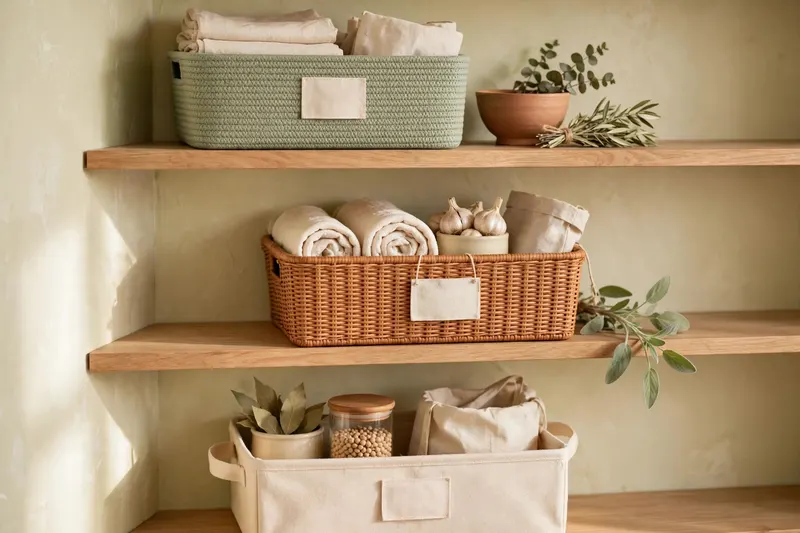
A shared kitchen needs the same structure: personal zones for personal food, one shared zone for shared food — divide the pantry and the fridge the same way. For pantry-specific ideas, see 21 Small Apartment Pantry Organization Ideas That Actually Work.
11. Give each roommate one pantry shelf and one fridge shelf
One labeled pantry shelf per person holds their dry goods; one fridge shelf, plus a door shelf each, holds their perishables. Shared staples — oil, salt, butter, milk — live on a separate shelf the restock rotation covers. Shelf risers, about 6 inches high, double the usable space on each shelf.
12. Keep personal cooking tools in labeled bins, not loose in drawers
Each roommate’s specialty tools — the good knife, the cast-iron pan, the blender — go in a labeled bin or on a labeled hook, not loose in the shared drawer. Shared tools — the cutting board, the mixing bowls, the baking sheet — live in one agreed spot, washed and returned after every use.
Bathroom sharing: caddies, hooks, and the 10-minute reset
The bathroom is the smallest shared room with the tightest schedule. Personal caddies solve the counter problem: each person’s products live in their own caddy on their own hook. For a deeper plan, see 16 Small Bathroom Storage Ideas for Shared Bathrooms (No More Counter Wars).
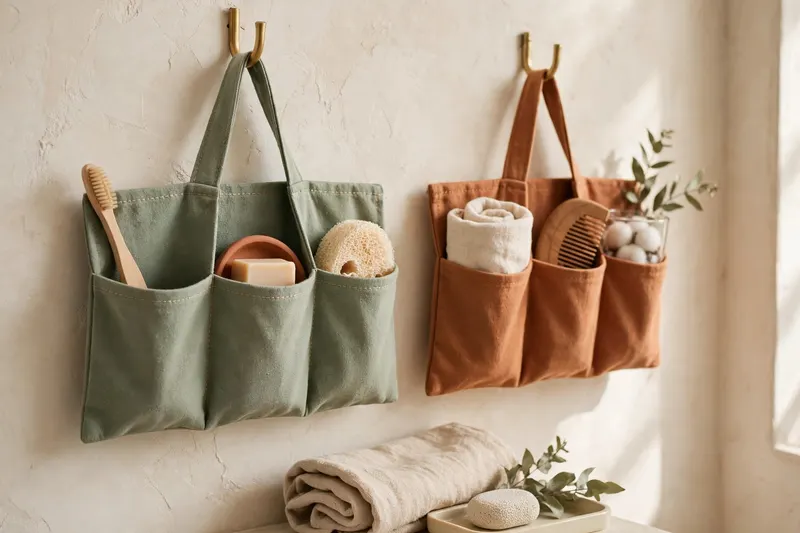
13. Use one shower caddy per person, hung on its own hook
Give every roommate a hanging shower caddy — mesh or plastic, hooked over the showerhead pipe or suctioned to the tile — in their color. It holds shampoo, conditioner, and body wash, and comes out of the shower when the person is done.
14. Run a 10-minute bathroom reset every night
Before bed, the last person to use the bathroom spends 10 minutes on the reset: counters wiped, towels on the right hooks, caddies back on their hooks, floor clear. Rotate who does it, or make it the job of whoever showers last.
Ground rules that stick: the monthly 15-minute reset
Systems only work if someone maintains them. The monthly reset is the maintenance: 15 minutes, once a month, all roommates together, walking the apartment with the audit list from idea 1. Put it on the calendar like a bill.
15. Hold a 15-minute monthly reset with all roommates present
Set a recurring calendar event — first Sunday of the month, 15 minutes, everyone home — and walk the audit list together, fixing any label that fell off. Fifteen minutes a month is cheaper than the argument that follows three months of drift.
16. Keep a shared “needs” list on the fridge
A small whiteboard or shared phone note on the fridge holds the running list of shared supplies to buy. Anyone who notices something running low writes it down instead of announcing it and forgetting it. The restock person shops from the list.
17. Agree on a “claim it or lose it” rule for unclaimed items
Anything left in a shared zone for more than a week with no owner gets a label with the date. If nobody claims it within seven days, it goes in the donation box or the trash — no detective work needed.
Mistakes to avoid
Buying storage before the audit. Bins bought blind end up the wrong size for the wrong shelf. Audit first, measure second, buy third.
Splitting space unequally. Giving the person with the most stuff the biggest share breeds resentment within a month. Equal zones, negotiated extras — not silent takeover.
Using one big shared bin for everything. A single communal bin becomes a junk bin within two weeks. Separate bins per category, or one small shared caddy with a strict capacity.
Skipping labels because “everyone knows.” Everyone knows for about a week. Labels are what make the system survive the third month, when the novelty is gone.
Frequently asked questions
How can roommates share a small closet without fighting?
Split the closet into equal zones with shelf dividers and color-coded bins, one set per person, and label every zone. Keep the split equal even if one wardrobe is bigger — the overflow goes under the bed.
How do you organize a shared apartment kitchen with roommates?
Give each roommate one labeled pantry shelf and one fridge shelf, plus one shared shelf for staples covered by a written restock rotation. Keep personal tools in labeled bins and shared tools in one agreed spot, washed and returned after every use.
Can roommates share bathroom storage in a tiny bathroom?
Yes — with one shower caddy per person in their own color, one hook per person for towels, and a 10-minute nightly reset. Nothing personal lives on the counter; everything personal lives in a caddy or on a hook.
How can I keep shared spaces tidy when my roommates are messy?
Make the system the enforcer, not you: labeled zones, a two-pair shoe limit, and a monthly 15-minute reset give messy roommates a structure to follow instead of a person to argue with.
Conclusion
Roommate storage is not really about bins — it is about boundaries. Labeled zones, fair shared shelves, and a monthly reset turn a small apartment from a shared mess into a shared home. Start with the 20-minute audit this weekend, save this pin for later, and browse more small-space storage ideas when you are ready for the next room.