Finding small apartment storage ideas seniors can actually use starts with one honest question: can you reach everything you use every day without stretching, climbing, or bending low? If the answer is no, your storage is working against you. A small apartment can be the easiest home to keep safe — everything is close at hand — but only when the things you need most live where your hands naturally fall. These 16 ideas follow one rule: waist-height zones, easy-grip bins, better light, and clear paths. You do not need a bigger apartment or expensive furniture — just a few small changes.
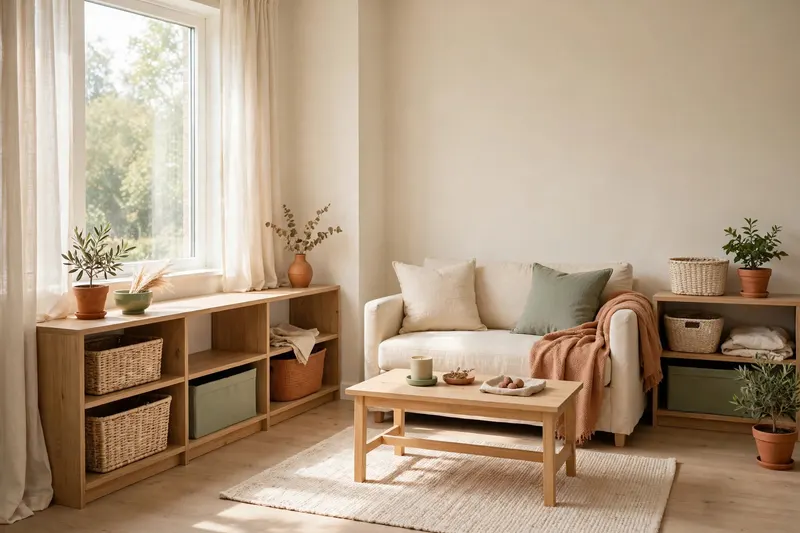
The accessibility audit: reach, grip, light, and clear paths
Before you buy a single bin, spend 20 minutes reaching for the things you touch daily and noting what makes you stretch, stoop, or fumble.
1. Do the reach test in every room
Raise your hands to shoulder height, then lower them to knee height. Everything between those two points is your prime zone — the band where daily items belong. Most people find 10 to 15 items in the wrong place, and moving just those solves half the daily strain.
2. Walk your paths at night with the lights off
With a flashlight in hand, walk the routes you take after dark — bedroom to bathroom, bed to kitchen for a glass of water. Note every dark stretch, cord, and chair leg in the path, and mark each spot with painter’s tape. Do it with your walker or cane if you use one — a path that feels fine empty can feel tight with it.
Waist-height zones: daily items between knee and shoulder
The prime zone — knee to shoulder — is where daily life happens. Anything you touch daily earns a spot there; everything else can live higher or lower.
3. Map one prime zone per room
Give each room a single waist-height home base. In the kitchen, one shelf and one drawer at counter level for daily dishes. In the bedroom, the top dresser drawer and nightstand for glasses, phone, and pills. In the bathroom, one shelf at chest height for toothbrush, soap, and daily creams.
4. Demote the seasonal and the spare
Anything you use less than once a week does not deserve prime real estate. Move spare linens, holiday dishes, and extra cleaning supplies to the top shelf or the bottom of the closet — spots you only visit when you have time and help. Daily items go at waist height, weekly items within easy reach, everything else out of the way. The 18 Small Apartment Storage Ideas for One-Bedroom Apartments guide shows how to zone every room.
Easy-grip bins and pull-outs: no heavy lifting overhead
Grip strength and shoulder reach change with age, and storage should change with them. The fix is lighter containers, better handles, and hardware that brings the shelf to you.
5. Switch to small bins with big handles
Replace large, heavy totes with bins no bigger than about 12 × 8 × 6 inches and 5 to 7 pounds each. Choose bins with wide cut-out handles on both ends, in a light color so you can see the contents at a glance. Use one per job: breakfast items, toiletries, scarves and gloves.
6. Add pull-outs instead of reaching in
Deep cabinets hide things at the back, so you lean in and dig. A pull-out drawer insert, roughly $15 to $30, turns a deep cabinet into a shallow drawer that slides toward you. Use one under the kitchen sink for cleaning supplies and one in the bathroom vanity for medicines. Renters: choose no-drill versions — see the 15 Small Apartment Storage Ideas for Renters (No Drilling, No Damage) guide.
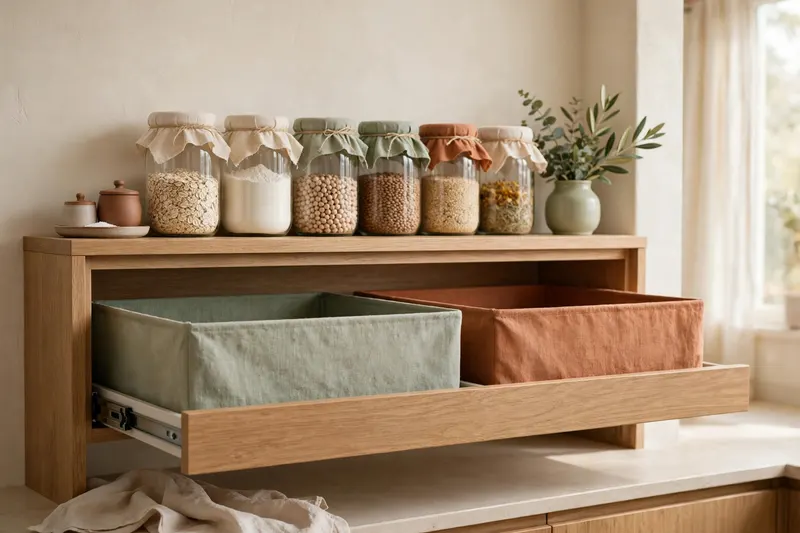
Lighting every storage spot: the $10 fix that prevents falls
Most storage accidents are about not seeing the shelf. A dark closet turns a simple grab into a fumble, and lighting is the cheapest safety upgrade there is.
7. Stick battery LED strips inside every dark storage spot
Battery LED strip lights, about $8 to $12 a pack, stick under closet shelves, pantry shelves, and inside the wardrobe door. Choose motion-sensor versions so they switch on when you open the door and off when you close it. Start with the three darkest spots: the hall closet, the pantry shelf, and the wardrobe.
8. Put a motion light on the floor path, not just the ceiling
Overhead lights leave the floor in shadow, and the floor is where trips happen. A small motion-sensor night light plugged in at ankle height along the bedroom-to-bathroom path lights the floor itself. Use warm-white bulbs so the light is gentle on sleepy eyes, and place one every 8 to 10 feet.
Clear paths: furniture and clutter rules for safe movement
A clutter-free apartment is not about minimalism — it is about keeping every walking path open. One stray box or one chair pulled out too far can close a path completely.
9. Keep every walking path 36 inches wide
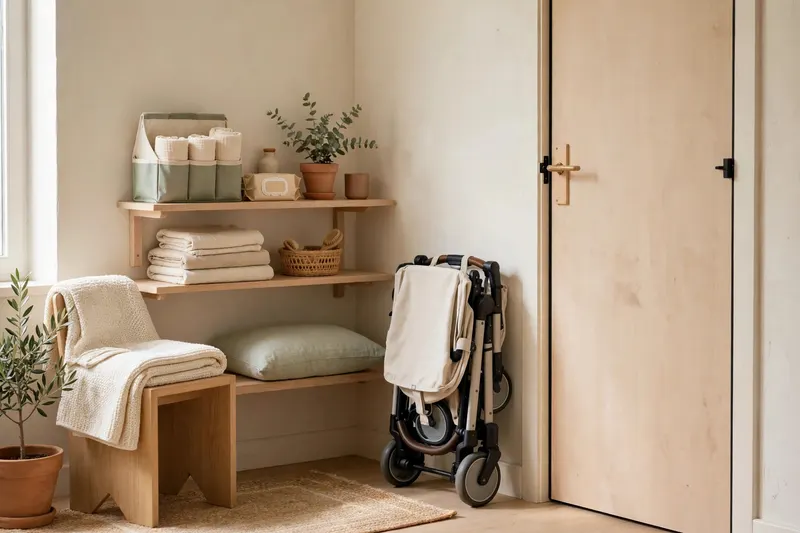
Keep your main paths — front door to kitchen, bedroom to bathroom, sofa to kitchen — at least 36 inches wide, the width a walker needs. Push furniture to the walls and remove whatever juts into the path.
10. Anchor it, cord it, or remove it
Three things cause most indoor trips: loose rugs, trailing cords, and furniture that slides. Put non-slip rug pads under every rug, or remove small throw rugs. Run cords along the wall with adhesive cord clips, never across a walkway. Anchor tall shelves and dressers with anti-tip straps, under $10, two screws each.
Medicine and paperwork: one visible, grab-and-go system
Medicine and important papers are the two things you must find fast, every time. They deserve their own system — visible, simple, and always in the same spot.
11. Build one weekly pill station at waist height
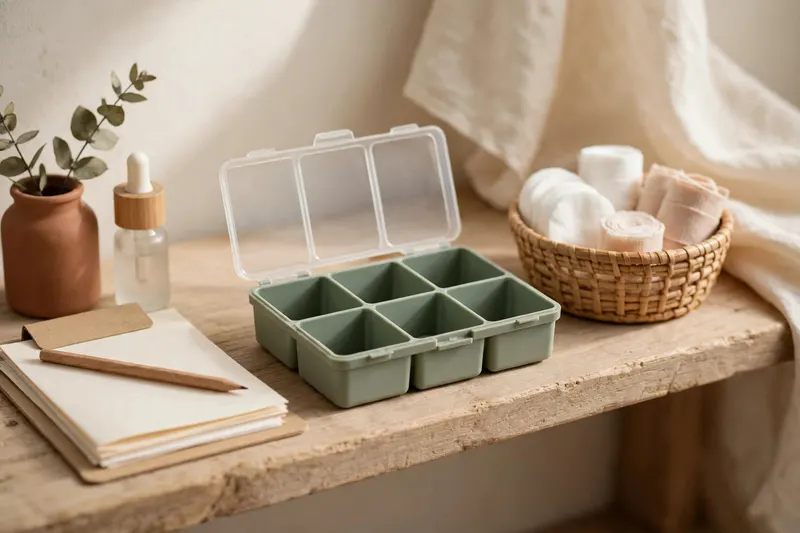
Set up one fixed spot — a tray on the kitchen counter or a shelf at chest height — holding only this week’s pills in a seven-day organizer with large, easy-open lids. Keep the refill bottles in a labeled bin right behind it, so refilling is a two-minute job once a week. Never store daily medicine up high or deep in a drawer.
12. Keep one grab-and-go folder by the door
Use a slim, clearly labeled folder or a wall-mounted file pocket beside the front door for the papers that matter in a hurry: ID, insurance card, medication list, emergency contacts, and a copy of your advance directive if you have one. See the 16 Home Paperwork Organization Ideas for Small Spaces (Bills, Files, No Piles) guide for a slim one-inbox filing system.
Seasonal rotation without the step stool
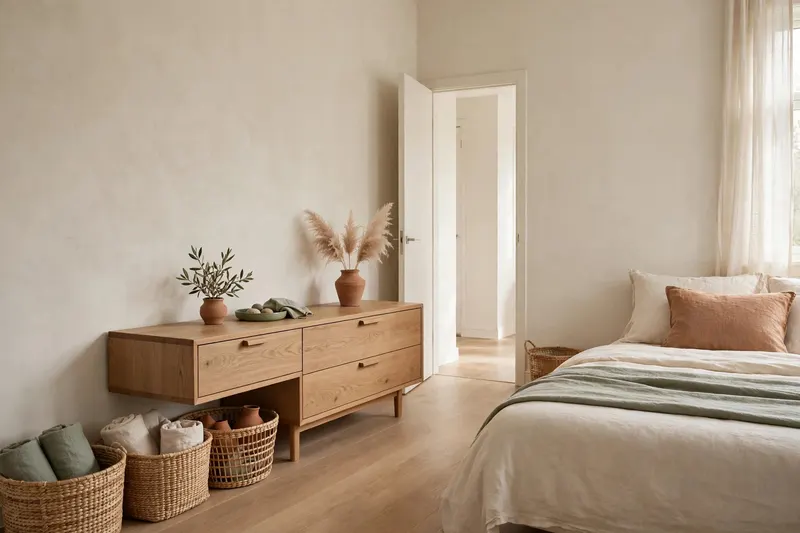
Seasonal swaps — winter coats for summer clothes, heavy blankets for light ones — are the classic step-stool job. With a two-bin system, you can do the whole rotation standing on the floor.
13. Use the two-bin swap, twice a year
Keep exactly two labeled bins for each seasonal category: one marked “winter” and one marked “summer,” stored on a low closet shelf or under the bed on a rolling tray. In spring and autumn, swap the contents — out-of-season items go into the stored bin, in-season items come out. Do the swap sitting down, bins on the floor beside you. The 18 Small Apartment Seasonal Storage Rotation Ideas (Swap, Don’t Stack) guide covers the same swap for clothes, gear, and decor.
14. Ask for the one lift, and plan it
Some jobs need a second pair of hands — the heavy bin to the top shelf, the air conditioner into the closet. Put those jobs on a short list on the fridge, and do them all in one visit when a family member, neighbor, or friend comes by. Keep the list to five items or fewer, and plan the visit in advance.
The weekly 10-minute tidy that keeps it safe
A safe apartment is not organized once; it is reset weekly, ten minutes at a time.
15. Run the same 10-minute reset every week
Pick one day and time, and set a phone reminder. Each week, walk the same loop: return strays to their home bases, clear the floor paths, wipe the pill tray, and check the folder is still by the door. Ten minutes a week beats a three-hour clean-out every few months.
16. Practice one-in, one-out from now on
Every time something new comes into the apartment — a gift, a gadget, a new pair of shoes — something old leaves, the same day. Keep a donation bag on a closet hook for the outgoing item. This one habit stops the slow creep that fills paths and shelves over months.
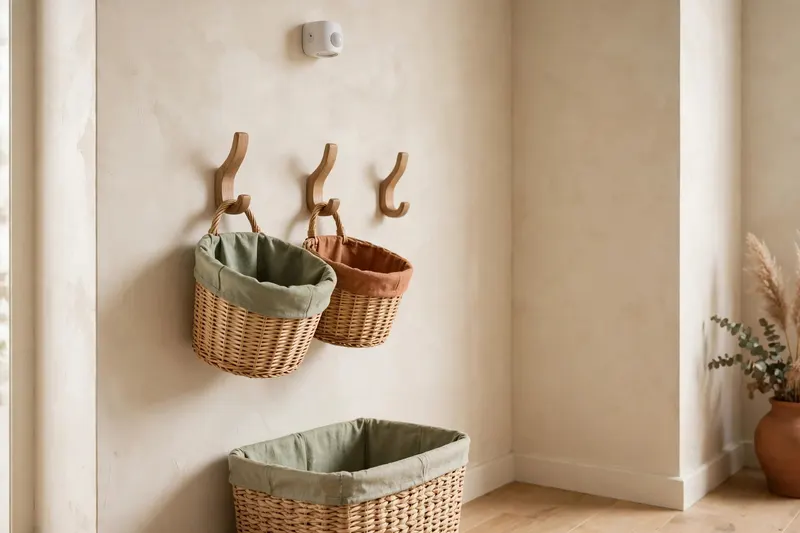
Mistakes to avoid
Buying tall, deep storage furniture. The top half is unreachable and the back half becomes a black hole.
Storing daily items above shoulder height. If you need it every day, it does not belong on the top shelf.
Keeping the step stool “just in case.” If the step stool is the only way to reach something you use weekly, the storage is in the wrong place.
Choosing bins without handles. A bin you cannot grip with both hands is a bin you will drop.
Lighting the ceiling and ignoring the floor. Bright overhead light with a dark floor is a trip waiting to happen.
Frequently Asked Questions
Can seniors organize a small apartment without help?
Yes — the audit, waist-height zones, small bins, and weekly tidy are all jobs you can do alone, sitting down, one shelf at a time.
What is the best storage height for seniors?
Between knee and shoulder height — roughly 24 to 54 inches from the floor for most adults. Daily items belong in that band; anything higher or lower should be touched only a few times a year.
How do I stop clutter from coming back in a small apartment?
Use one-in, one-out: every new item in means one old item out the same day. Keep a donation bag on a closet hook, and run the 10-minute weekly reset so strays never settle.
What storage should seniors avoid buying?
Avoid tall bookcases you cannot see into, deep bins without handles, heavy lidded totes, and anything that needs a step stool. Choose low, shallow storage with big handles — and test the grip before you buy.
Conclusion
Safe, reachable storage is not about owning less — it is about putting the right things in the right band, lighting every spot you open, and keeping every path clear. Start with the reach test tonight and the 10-minute reset this week. Save this pin for later, and explore more ideas in our small-spaces collection.