Student gear is small but endless. One semester of textbooks, chargers, notebooks, and winter clothes has to fit into a dorm room or shared flat where the “bedroom” might be ten feet wide. These small apartment storage ideas students can put to work in a dorm or shared flat are built for that reality: no drilling, no lost damage deposit, and nothing that takes more than an afternoon to set up. Work through the 16 ideas below and you will end up with a desk you can actually study at, shelves that hold a whole semester of books, and a room that still feels like yours.
The student audit: what you actually use vs what came from home
1. Sort everything into “weekly,” “monthly,” and “never”
Empty one surface at a time — desk first, then the closet shelf — and sort each item into three piles: used at least once a week, used about once a month, and not used since you arrived. The weekly pile stays within arm’s reach, the monthly pile goes into a labeled bin on a high shelf or under the bed, and the “never” pile gets boxed for the trip home or donated within the week. If you share a room, this same three-pile sort is the starting point for 18 Dorm Room Storage Ideas for Tiny Rooms (No Drilling, No Damage).
2. Set a one-in, one-out rule for the semester
Every new item that enters the room — a notebook, a club hoodie, a second water bottle — means one similar item leaves. Keep a small donation bag on the back of the door so the “out” half of the rule takes ten seconds. Students who skip this rule usually buy a second set of bins by midterms; students who keep it can go a whole term on the setup they built in week one.
Desk zones: study, charging, and supplies in one small footprint
3. Split the desk into three zones with a tray and a riser
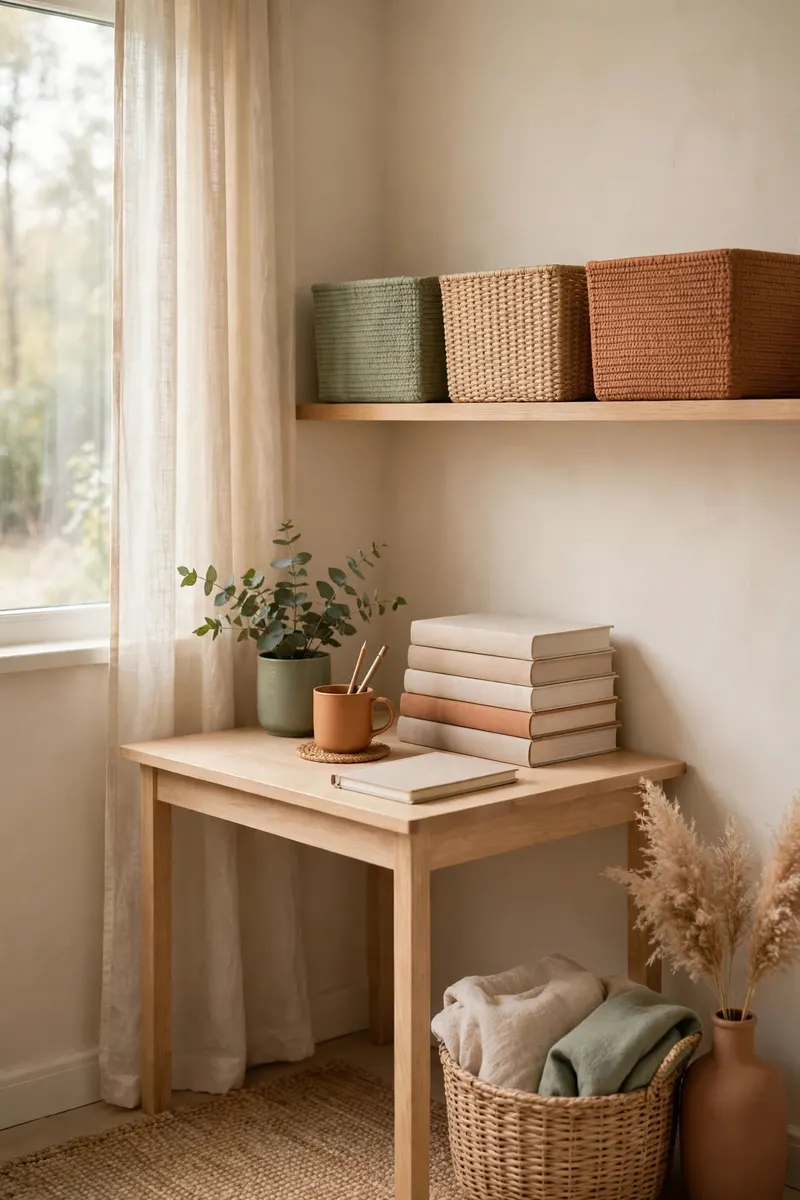
A student desk is usually 40 to 48 inches wide, so give each job a defined patch: a laptop riser at the back center for the study zone, a small tray or desk caddy on your non-dominant side for supplies (pens, sticky notes, highlighter), and the front six inches completely clear as the writing zone. A riser — or a stack of two thick textbooks — lifts the screen about 4 to 6 inches and frees the space underneath for a notebook. For supply-level detail, see 17 Small Desk Supply Organization Ideas for Tiny Home Offices.
4. Build a charging station in a shoebox-sized spot
Pick one corner of the desk or a small bedside shelf and put a 4-port power strip and a short cable organizer there. Coil each cable with a reusable tie and label the plug with masking tape (“laptop,” “phone,” “earbuds”) so you never unplug the wrong thing in the dark. A small lidded box, roughly 10×6×4 inches, hides the strip — and charging everything in one spot stops cables from colonizing the whole desk by week three.
Textbook and binder storage: shelves, crates, and the rotation pile
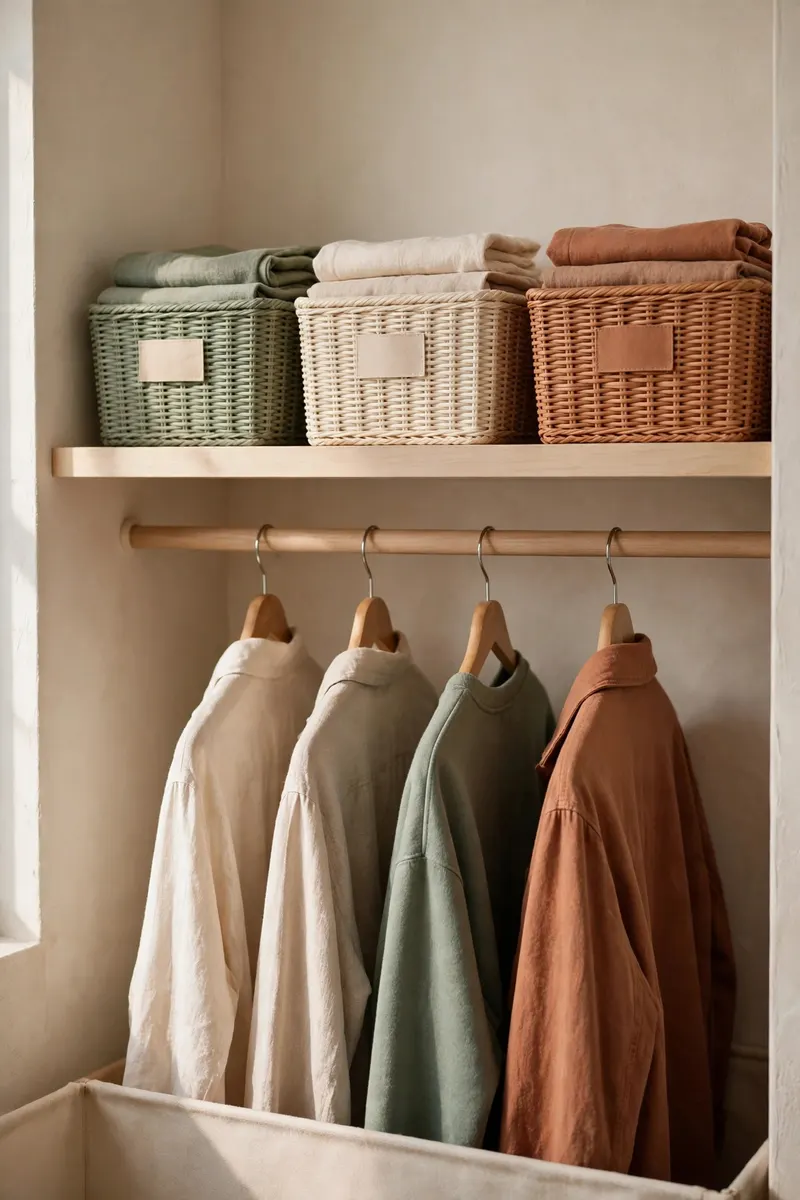
5. Shelve this term’s books vertically, spine out, by subject
A single 24-inch floating shelf or a two-tier desktop shelf holds four to six textbooks if they stand upright, spine out, grouped by subject with a bookend at each end. Keep only the current term’s books on the shelf; older editions go into a crate under the bed. If you have no shelf at all, 18 Small Apartment Book Storage Ideas (No Bookshelf Required) shows how to store a full reading list without one.
6. Keep a rotation pile for the books in active use
Keep a “rotation pile” of no more than three books on the desk or the top shelf, and swap books in and out of it every Sunday night based on the coming week’s classes. Binders follow the same rule: one active binder per subject on the desk, finished modules filed into a labeled magazine holder. The Sunday swap takes five minutes and stops the desk from becoming a textbook graveyard by midterms.
Under-bed bins: off-season clothes, extra bedding, and bulk snacks
7. Use low, labeled bins that slide out like drawers
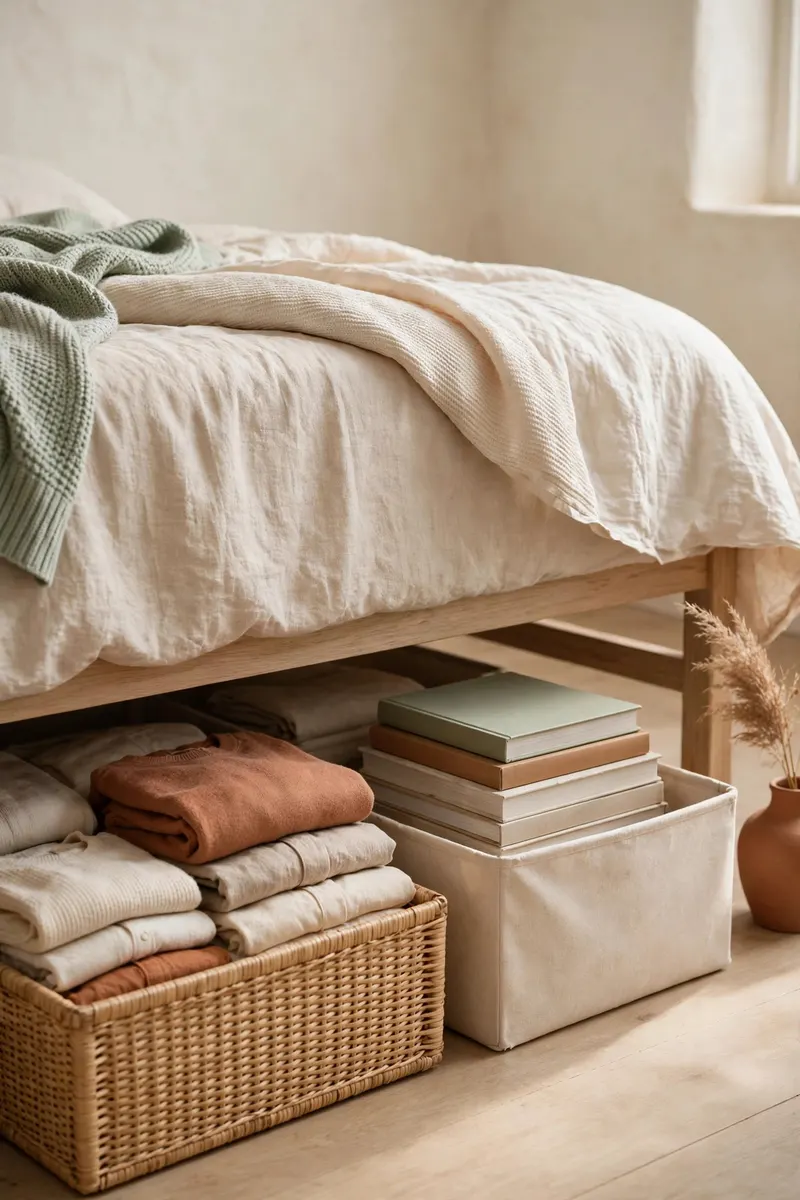
The space under a standard dorm or twin bed is roughly 70×36 inches, and most of it sits empty. Choose flat bins about 28×16×6 inches tall so they slide under the bed without lifting the mattress, and label the short end facing out with painter’s tape: “winter clothes,” “extra bedding,” “bulk snacks.” If your bed sits low, bed risers that add 5 to 7 inches of clearance create room for a second layer of bins.
8. Pack off-season clothes in vacuum bags inside the bins
Fold off-season clothes flat, slip them into a vacuum-seal bag, and press the air out until the bag is about a third of its original thickness. Two compressed bags fit in one under-bed bin, where loose clothes would fill three. Add a small cedar block or lavender sachet so clothes come out smelling fresh at the season change. For the full twice-a-year swap, see 18 Small Apartment Seasonal Storage Rotation Ideas (Swap, Don’t Stack).
Vertical walls: hooks, pegboards, and over-door organizers
9. Hang a pegboard above the desk for supplies and headphones
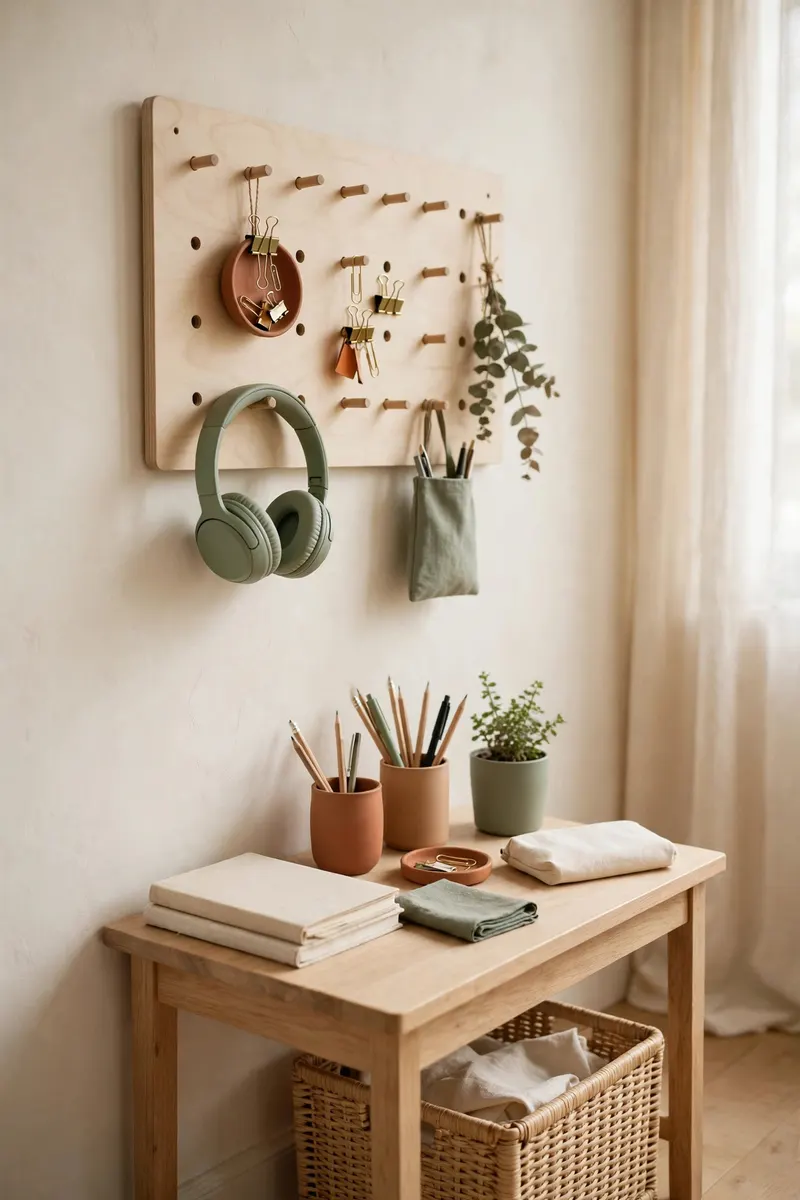
When the floor is full, the walls are the only direction left. A 16×24-inch pegboard mounted with four large adhesive strips holds scissors, a ruler, cables, headphones, and a small shelf for a plant or a mug. Hang the items you reach for daily at eye level and the rarely used ones near the top. Because everything is visible, you stop buying duplicates of things you already own — a common student budget leak.
10. Put an over-door organizer on the bedroom and closet doors
A clear-pocket over-door organizer with 20 to 24 pockets turns a door into a full storage wall: toiletries and chargers on the bedroom door, shoes and accessories on the closet door. Keep the heaviest items in the bottom rows so the organizer does not pull away from the hooks. If your door is a sliding closet door, use a hanging organizer designed for closet rods instead.
Shared spaces: labeling and zones when flatmates share shelves
11. Give every flatmate one labeled shelf and one labeled bin
Shared flats fail on storage for one reason: nobody knows whose shelf is whose. In the kitchen and the bathroom, assign each person one shelf (or one half-shelf) and one bin for shared-area overflow. Write names on painter’s tape — not permanent labels — so the system survives a flatmate moving out mid-year. Shared items like cleaning supplies and toilet paper get one communal shelf, restocked on a rotating schedule. For ground rules that keep shared spaces working, see 17 Small Apartment Storage Ideas for Roommates (Shared Spaces That Work).
12. Agree on a shared-zone reset every Sunday night
Pick one evening a week — Sunday works for most students — when everyone spends ten minutes returning shared spaces to their labeled zones: dishes to the right shelf, shoes to the rack, laundry to the right basket. Put it on a shared calendar so it is a habit, not a nag. Ten minutes a week beats a three-hour blow-up clean before an inspection or a parent visit.
The grab-and-go study kit: one bag that holds a whole library trip
13. Pack a single tote with the library-day essentials
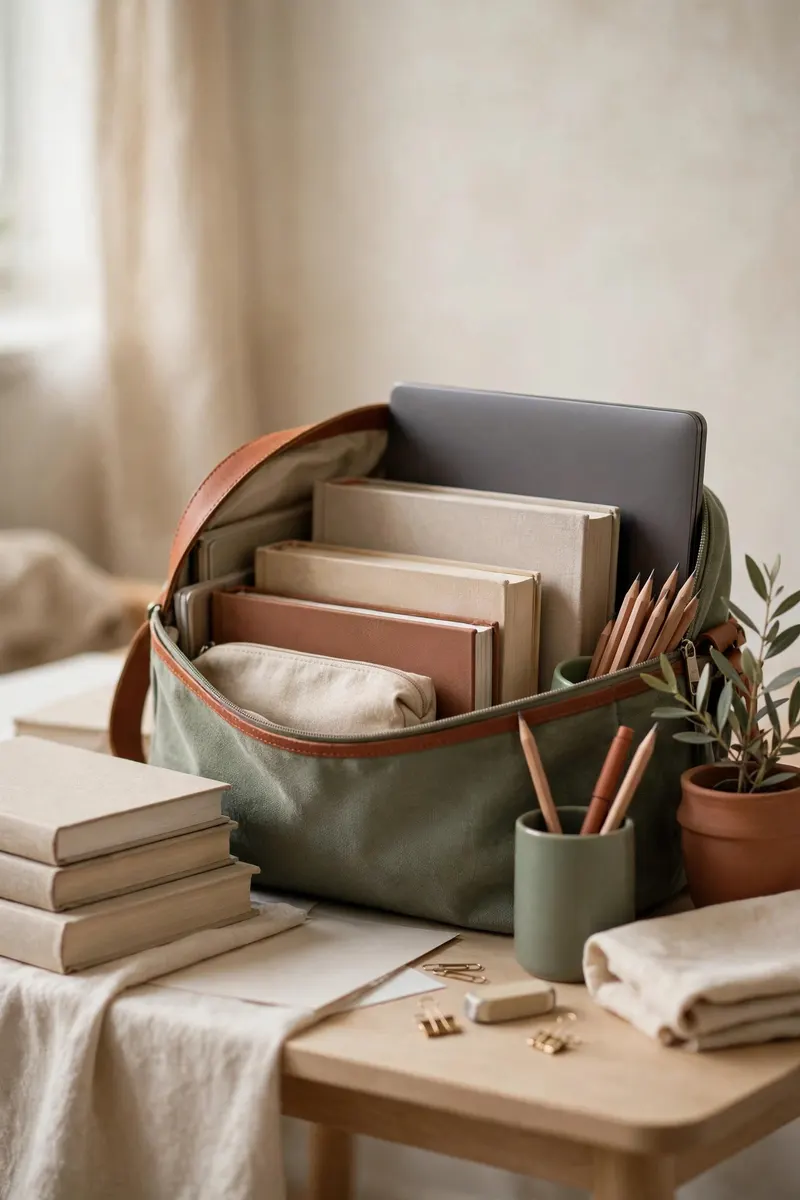
Studying in the library, a café, or a friend’s flat means packing and unpacking your desk every day, so use one sturdy tote or backpack that never gets unpacked: laptop and charger, one notebook, pens, a water bottle, earbuds, and a small snack. Everything else — textbooks, binders, reference books — stays in the room and gets swapped in only when a specific class needs it. Keep the tote by the door on a hook so leaving takes thirty seconds instead of ten minutes of hunting for a charger.
14. Keep a mini restock station by the door
A small basket or wall pocket by the door holds the things the kit runs out of: spare pens, sticky notes, a phone charger, and a granola bar. Restock it on Sunday night when you do the textbook rotation, so the kit is always ready. This one station also catches the small things that otherwise end up scattered across the desk — keys, student ID, and the library card all live here, not in three different pockets.
The end-of-term reset: pack, donate, and reset in one afternoon
15. Pack by zone, not by item type
The end of term is when student storage either pays off or collapses: if every bin is labeled and every shelf has a zone, packing takes an afternoon. Work through the room zone by zone — desk, shelves, under-bed, closet — and pack each zone into its own labeled box or bag, writing the zone and a short contents list on the outside (“desk zone: lamp, riser, cables”). Photograph each shelf before you pack it; the photos become your setup guide in September.
16. Donate, sell, or recycle before you pack a single box
Before anything goes into a box, pull out the “never” pile from your first audit: clothes that no longer fit, textbooks for finished modules, the third water bottle, the broken charger. Bag donations for a campus charity bin, list sellable textbooks the same week, and recycle dead electronics at the campus e-waste point. Students who donate first pack one box fewer on average — and start next term with a room that already has space in it.
Mistakes to avoid
- Buying bins before the audit. Measure the under-bed gap and the shelf depth first, then buy bins that fit. A bin two inches too tall is a bin that lives on the floor in the way.
- Stacking textbooks flat in tall piles. Flat stacks slide, bury the book you need, and damage spines. Stand books upright with bookends, or store them in a crate.
- Using the desk as a dumping ground. If something does not belong to a desk zone, it does not live on the desk. The “I’ll move it later” pile is how a desk disappears by week four.
- Ignoring the shared-space labels. A label system only works if everyone uses it. The first week someone stores food on your shelf without asking is the week to speak up, not the third month.
- Packing everything for the holidays. Take home only what you need for the break. Leave the labeled bins in the room — they are the reason next term starts organized.
Frequently asked questions
How can I organize a small student apartment with no budget?
Start with the free moves: the three-pile audit, the Sunday textbook rotation, and labeling zones with painter’s tape. Then spend on one thing only — a set of flat under-bed bins — because that is the biggest storage gain per dollar in a student room. Cardboard boxes cut to size work as a stopgap until you can afford proper bins.
Can I store textbooks under the bed without damaging them?
Yes, if they stand upright or lie flat in a rigid crate, not loose in a bag. Keep them off the bin floor with a thin foam mat or a folded towel, and never store books in a damp corner — a bin near the window wall is the worst spot in most dorms. Rotate the books you use weekly out of the bin so the ones at the bottom never sit untouched for a whole term.
What is the best way to share storage with flatmates?
One labeled shelf and one labeled bin per person, plus one communal shelf for shared supplies. Agree on the split in the first week, write it on tape, and run a ten-minute shared reset every Sunday. The system matters less than the agreement — any clear split beats a generous but unspoken one.
How do I keep a tiny desk clear during exam season?
Shrink the desk to one job at a time. During exams, the rotation pile holds only the subject you are revising today, and everything else goes back to the shelf or the crate. Use the pegboard for the overflow so the desk surface stays clear for writing, and clear the desk completely every night — a five-minute reset buys a clean start every morning.
Conclusion
A student room does not need more furniture — it needs a system. Audit what you actually use, give the desk three zones, rotate the textbooks, fill the space under the bed, and let the walls and the door do the work the floor cannot. Do it once at the start of term, keep it up with a ten-minute Sunday reset, and the room stays usable right through exams. Save this pin for later, and browse more ideas in the small-spaces category.